
Do Steam Mops Get Rid of Smells? What Steam Can and Can’t Fix

Quick Answer
Yes, a steam mop can reduce some floor smells when the odor comes from removable surface grime, food residue, greasy footprints, or similar buildup. However, steam is not a true deodorizer, and it will not reliably fix odors trapped in grout, seams, wood, underlayment, or pet urine residue. Current steam mop guidance from Consumer Reports also stresses matching steam cleaning to a compatible floor surface.
What Steam Can and Cannot Do
- Surface food odors: Steam may help when you completely remove the residue causing the smell.
- Greasy buildup: Heat can loosen compatible surface grime so a clean microfiber pad can lift it away.
- Dirty mop odors: Steam will not help if the pad itself is sour, oily, or contaminated.
- Pet urine: Steam alone does not remove odor-producing residue hidden in seams or porous materials.
- Musty smells: A recurring musty odor can point to excess moisture that needs investigation.
Quick Fix
- Vacuum first, install a freshly washed pad, steam only a compatible floor, and let the area dry completely.
Steam mops can make a room smell fresher, but the reason matters. In my floor-cleaning tests, odor problems usually return when I treat the smell instead of removing its source.
This guide explains which odors steam can help, when it can make smells more noticeable, and what to do when steaming is not enough.
In This Guide
- Do Steam Mops Actually Remove Smells?
- Which Floor Smells Can a Steam Mop Help Remove?
- Why Does My Floor Smell Worse After Steam Mopping?
- Which Floors Can You Steam Mop Safely?
- How Do You Remove Floor Odors With a Steam Mop?
- Will a Steam Mop Get Rid of Pet and Urine Smells?
- What Should You Do When Steam Does Not Remove the Smell?
- Steam Mop Smell FAQ
- Final Takeaway
Do Steam Mops Actually Remove Smells?
Steam mops can remove some smells indirectly by removing the material producing the odor. They work best when the smell comes from dirt or residue sitting on a compatible hard surface.
Definition: A steam mop is an electric floor cleaner that heats water and sends vapor through a cleaning pad. The steam loosens soil while the pad collects the released grime.
The important word is remove. Heating an odor source without lifting it away does not necessarily solve anything.
Steam loosens residue rather than absorbing odors
Think about dried cooking residue on kitchen tile. Heat may soften the film, while the microfiber pad lifts the loosened material.
Once that residue disappears, its odor may disappear too. That feels like deodorizing, although the cleaning action did the real work.
- Steam supplies heat and moisture: This can soften compatible dried soil.
- The pad supplies removal: Microfiber collects loosened grime from the surface.
- Drying finishes the process: Good airflow prevents unnecessary moisture from lingering.
- A clean pad matters: A dirty pad can spread odor-producing residue instead of collecting it.
Cleaning is not the same as disinfecting
Do not assume a hot steam mop automatically disinfects every surface. Machine design, surface temperature, contact time, and manufacturer instructions all affect performance.
The CDC’s cleaning and disinfecting guidance separates ordinary cleaning from disinfecting. For routine homes, cleaning is often the first and most important step.
Safety note: Follow the steam mop manual and your flooring manufacturer’s care instructions before relying on any sanitizing or disinfecting claim.
Which Floor Smells Can a Steam Mop Help Remove?
Steam is most useful for odors connected to removable surface residue. Deep, recurring, or moisture-related odors need a different approach.
| Odor Source | Can Steam Help? | Better First Step | Main Caution |
|---|---|---|---|
| Dried food residue | Often | Remove crumbs and spills first | Use only on steam-safe flooring |
| Light greasy film | Sometimes | Dry-clean surface debris | Change pads as they soil |
| Dirty mop-pad smell | No | Wash or replace the pad | Heat can make the odor noticeable |
| Pet urine residue | Usually not enough | Blot and use a floor-safe odor treatment | Residue may sit below the surface |
| Musty moisture odor | No | Find and correct moisture | Possible hidden dampness |
| Odor below seams | No | Identify the contamination source | Extra moisture may worsen damage |
One easy test is to smell the floor after it has dried completely. If the odor disappears while wet but returns later, the source probably remains.
Why Does My Floor Smell Worse After Steam Mopping?
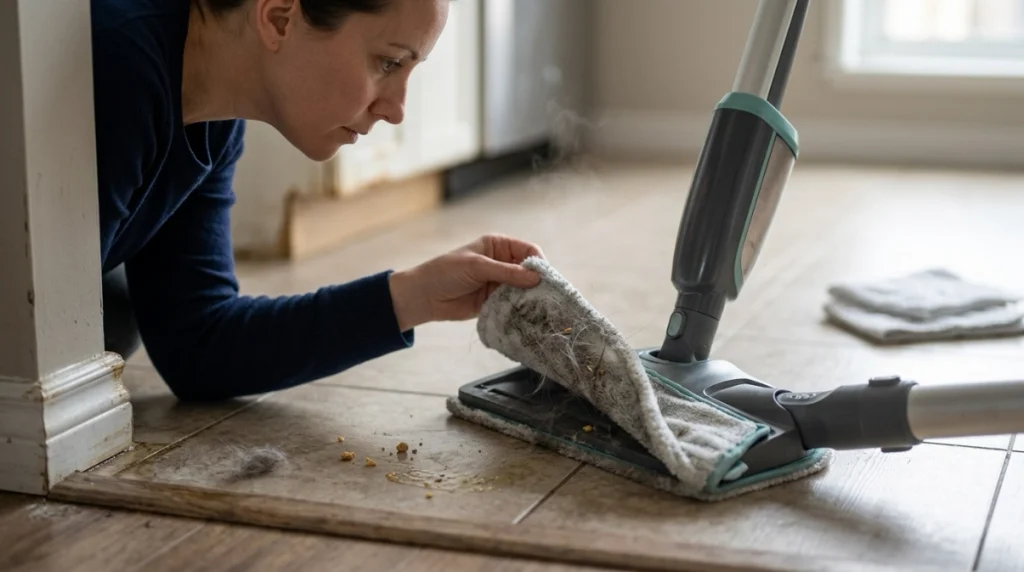
A floor can smell worse after steaming when heat and moisture reach residue that was already present. The machine may expose the problem rather than create it.
Your steam mop pad is dirty
This is the first thing I check. A pad that smells sour when damp should not go back onto the floor.
Once saturated, microfiber also stops collecting grime efficiently. Replace it with a clean pad instead of trying to finish another room.
You steamed over hair, grease, or old spills
Vacuuming first makes a noticeable difference. Steam mops are designed to wash surfaces, not collect piles of crumbs, hair, and dust.
- Vacuum or sweep loose debris.
- Wipe up concentrated spills.
- Use a fresh steam pad.
- Change the pad when visibly dirty.
- Dry the room with normal ventilation.
Moisture is trapped somewhere
A persistent earthy or musty smell deserves more attention. Moisture may be sitting around grout, baseboards, seams, or beneath damaged flooring.
The EPA’s mold and moisture guidance emphasizes controlling the water or moisture source. Repeatedly adding steam does not correct a hidden moisture problem.
Safety note: If flooring stays damp, shows swelling, or has a recurring musty smell, stop wet cleaning until you identify the moisture source.
Which Floors Can You Steam Mop Safely?
Floor compatibility matters more than odor removal. A smell is not worth damaging a finish, adhesive, seam, or wood core.
As of 2026, steam-mop advice still varies between appliance makers and flooring manufacturers. I follow the flooring warranty and care guide when those instructions conflict.
Tile and other compatible sealed surfaces
Glazed ceramic and porcelain tile are common steam-cleaning candidates. Grout condition and sealant still matter, especially around cracks or damaged joints.
Hardwood and engineered wood
I avoid steam on wood unless the flooring manufacturer explicitly approves it. Steam and moisture can enter joints where the surface finish offers less protection.
National Wood Flooring Association maintenance guidance advises avoiding wet and steam mopping on wood floors. It recommends manufacturer-approved cleaning methods instead.
Laminate flooring
Laminate often contains a moisture-sensitive core beneath its wear layer. Steam entering an edge or damaged joint can create swelling that cannot simply be mopped away.
Vinyl and LVP
Some vinyl floors tolerate steam, while others do not. Heat can also be a concern for adhesives, joints, and certain installation systems.
Natural stone
Stone surfaces vary widely by material and sealer. Use the stone or sealer manufacturer’s instructions instead of assuming heat and water are harmless.
Safety note: Test an inconspicuous area and check the floor manufacturer’s instructions before using steam on any unfamiliar surface.
How Do You Remove Floor Odors With a Steam Mop?
The best steam-mop odor routine starts before you switch on the machine. You want steam to contact the floor, not a layer of loose contamination.
- Identify the odor. Check whether it smells like food, grease, pets, dirty fabric, mildew, or chemicals.
- Vacuum thoroughly. Remove hair, crumbs, dust, grit, and debris from corners and edges.
- Spot-clean obvious messes. Remove concentrated residue with a product approved for the floor.
- Install a clean pad. Never begin an odor-removal job with yesterday’s damp pad.
- Fill the machine correctly. Use the water type and fill method required by the manufacturer.
- Use the correct steam setting. More steam is not automatically more effective.
- Work in manageable sections. Keep moving instead of holding the mop stationary.
- Change dirty pads. A loaded pad can transfer soil from one area to another.
- Let the floor dry. Use normal ventilation and keep traffic away until the surface is dry.
Should you add fragrance, vinegar, or cleaner to the tank?
Do not put vinegar, essential oils, detergent, disinfectant, or fragrance into the reservoir unless your machine’s instructions specifically permit it. Many steam mops are designed for water only.
A scented tank may mask a smell without removing its cause. It can also leave residue or create a maintenance problem inside an incompatible machine.
Safety note: Follow both the steam mop product label and the flooring care guide before introducing any chemical cleaner.
Will a Steam Mop Get Rid of Pet and Urine Smells?
A steam mop may help with ordinary tracked-in pet grime on compatible flooring. It is not my first choice for urine odor.
Urine can reach grout, joints, edges, underlayment, and other porous materials. Cleaning only the visible surface may leave the odor source behind.
What to do with a fresh pet accident
- Blot first: Absorb as much liquid as possible without spreading it.
- Check the floor type: Wood, laminate, vinyl, tile, and stone require different treatments.
- Use a compatible product: Choose an odor or enzyme treatment approved for that flooring.
- Follow contact directions: Do not improvise stronger concentrations or longer soak times.
- Dry the area: Avoid leaving extra moisture around seams or board edges.
I also avoid mixing cleaning products in an attempt to overpower pet odor. More chemistry does not always produce a cleaner floor.
What if the smell keeps returning?
Recurring urine odor often means contamination reached somewhere your mop cannot reach. Inspect seams, grout, transitions, baseboards, and nearby porous materials.
If the affected flooring is expensive or under warranty, contact the flooring manufacturer before trying aggressive treatments.
Safety note: Never mix bleach with ammonia, acids, or other household cleaners. Follow every cleaner’s label and your flooring manufacturer’s instructions.
What Should You Do When Steam Does Not Remove the Smell?

Stop repeating the same cleaning method when the odor survives two careful cleanings. At that point, identifying the source is more useful than adding more steam.
Check the mop before blaming the floor
- Smell the clean pad before attaching it.
- Inspect reusable pads for permanent sour odors.
- Empty old reservoir water if the manual recommends it.
- Clean the mop according to its maintenance instructions.
- Let reusable pads dry fully before storage.
Look along seams and room edges
Odor can hide where a flat mop cannot reach. Pay attention to grout, toilet bases, appliance edges, transitions, and gaps near baseboards.
Check for cleaner residue
Using too much floor cleaner can leave a film that traps grime. If the floor feels tacky or looks hazy, investigate residue before applying another product.
Treat musty smells as a moisture clue
A musty odor that returns after cleaning can signal ongoing dampness. Look for leaks, wet grout, plumbing issues, damaged seals, or moisture below the floor.
EPA guidance makes moisture control central to preventing mold growth. Cleaning the visible surface without correcting the water problem can allow the condition to return.
Practical rule: If the odor returns only after the floor becomes damp, investigate moisture before steam-mopping again.
Safety note: Persistent odor accompanied by swelling, loose flooring, visible growth, or a known leak may require professional inspection rather than repeated mopping.
Steam Mop Smell FAQ
Does steam kill the bacteria that cause bad smells?
Heat may reduce some microorganisms under specific conditions, but you should not assume every steam-mop pass disinfects a floor. Sanitizing performance depends on the machine, temperature, contact time, and manufacturer directions.
Why does my steam mop smell like a wet dog?
A dirty microfiber pad, pet hair, skin oils, or old floor residue may be heating up during cleaning. Vacuum first and replace the pad with a freshly washed, fully dried one.
Can I put vinegar in a steam mop to remove odors?
Only if the steam mop manufacturer explicitly allows it. Many machines are intended for water only, and vinegar may also be unsuitable for certain flooring finishes or natural stone.
Can I put essential oils in a steam mop?
Do not add essential oils unless your machine’s manual specifically permits them. Oils may leave residue in the appliance or on the floor, and fragrance only masks odors if the original contamination remains.
Will steam remove cooking smells from kitchen floors?
It can help when the odor comes from removable food or greasy residue on a steam-safe surface. Vacuum first, remove concentrated spills, and use a clean pad so the softened grime is lifted away.
Can a steam mop remove musty smells?
Not when the musty smell comes from ongoing moisture, mold, or damp material beneath the surface. Find and correct the water source instead of repeatedly introducing more moisture.
How often should I change the steam mop pad while cleaning?
Change it whenever it becomes visibly dirty, saturated, or starts spreading grime. Large or heavily soiled rooms may require several pads, even during one cleaning session.
Final Takeaway
Steam mops can get rid of some smells, but only when cleaning removes the material causing the odor. They work best on compatible hard floors with light surface grime, food residue, and similar removable buildup.
They are much less useful for urine below the surface, recurring musty odors, dirty mop pads, and contamination trapped in flooring seams. Those problems require source-specific cleaning or moisture correction.
Start with a clean pad, vacuum first, use only the steam level your floor can handle, and let the surface dry fully. If the smell keeps coming back, stop steaming and find out what is feeding the odor.