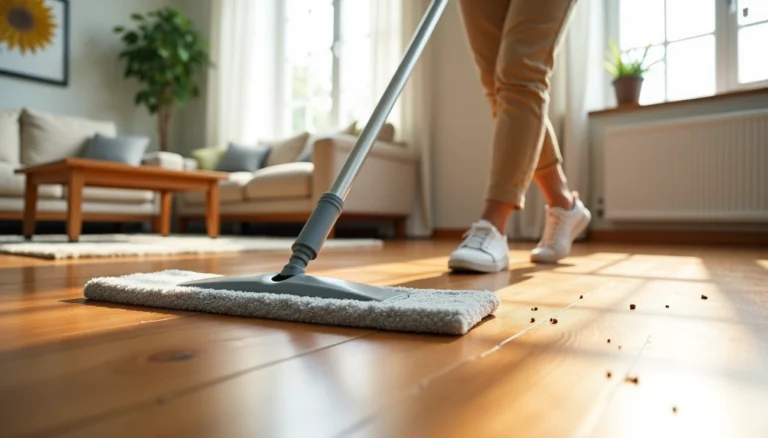
Hardwood floors should be mopped once per week to remove dirt, grime, and allergens without causing water damage. High-traffic areas such as kitchens and entryways require light damp-mopping every 3–7 days. Low-traffic rooms can be mopped every 2–4 weeks to maintain finish and cleanliness. How Often to Mop Hardwood Floors […]
Mopping Technique
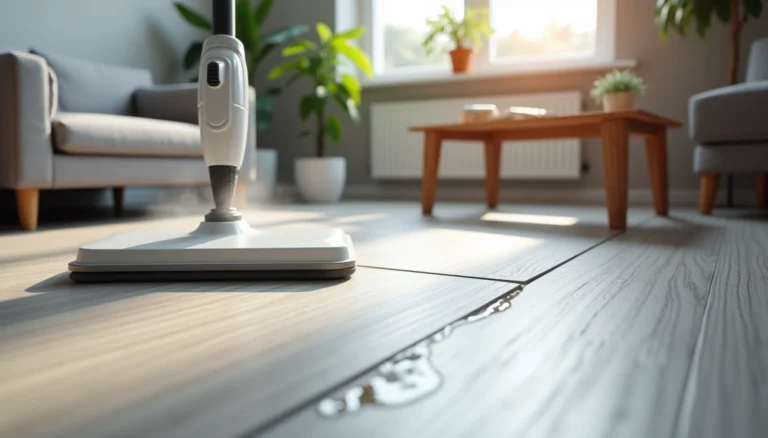
No, you should not use a steam mop on LVP (luxury vinyl plank) flooring. Steam heat and moisture melt adhesives, warp planks, and damage the waterproof wear layer. Steam also penetrates seams, causing swelling and loosening. Clean LVP floors with a microfiber mop, warm water, and a mild, manufacturer-approved cleaner. […]
Yes, you can mop concrete floors, and mopping is a recommended maintenance method, especially for sealed surfaces. Clean concrete floors with a microfiber mop and a pH-neutral cleaner or mild detergent. Avoid excess water and acidic cleaners, as they erode concrete and strip protective sealants. Can You Mop Concrete Floors? […]
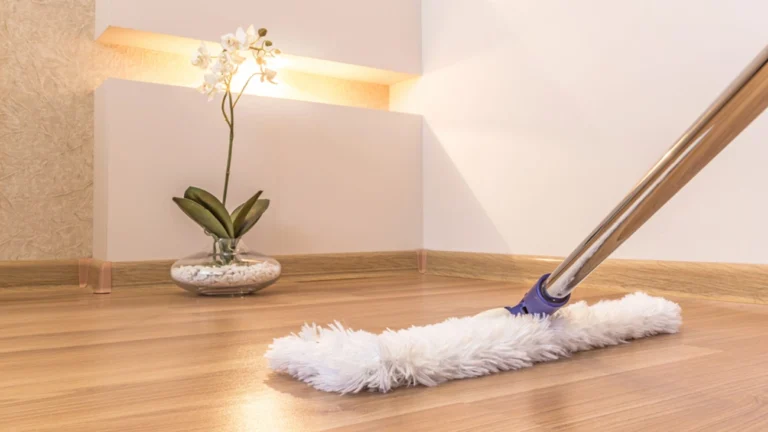
Dry mopping is a floor-cleaning technique that uses a dry microfiber or cotton mop head to remove dust, hair, and light debris without water or cleaning agents. Dry mopping works best for daily maintenance on hardwood, laminate, or tile floors and provides a quick alternative to sweeping, operating about 25% […]
Use a dust mop by assembling a clean, dry mop and keeping the head flat on the floor. Start at the farthest corner and push debris forward using straight, overlapping lines in a figure-8 motion. Shake out the mop frequently to prevent redepositing dust and maintain effective debris removal. What […]
Yes, you can use a steam mop on carpet for refreshing, sanitizing, and removing odors, but not for deep stain removal. Use a carpet glider attachment to prevent over-saturation and fiber damage. Vacuum thoroughly before steaming and test a small hidden area to protect carpet fibers from heat or moisture […]
No, steam mops are not good for vinyl floors. High heat can warp, melt, or discolor vinyl planks or sheets. Excess moisture can seep into seams, weaken adhesive, and cause curling or mold growth. Clean vinyl floors with a damp microfiber mop and a pH-neutral cleaner to prevent damage. Are […]
Dry a floor after mopping by using a two-step method. Follow a damp mop with a clean, dry microfiber mop or towel to absorb excess water and prevent streaks. Clean in 5×5 foot sections to control moisture. Increase evaporation by opening windows, using fans, or running a dehumidifier. Avoid walking […]
Mop floors with vinegar by mixing ½ cup of white vinegar with 1 gallon (3.8 liters) of warm water. Sweep first to remove loose dirt. Use a damp mop in an “S” motion to clean tile, vinyl, or sealed hardwood. Avoid vinegar on natural stone or unsealed floors to prevent […]
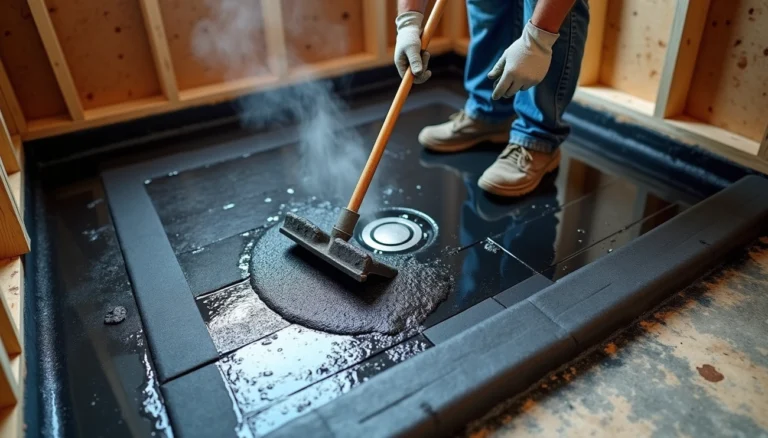
Hot mopping a shower pan is a waterproofing method that applies layers of hot liquid asphalt and roofing felt over a sloped mortar bed. Contractors alternate asphalt and felt to create a seamless, watertight barrier before tile installation. This heavy-duty system, common on the West Coast, can last 20–40 years […]