
How to Mop Floors With Vinegar: Ratios by Floor Type and Step-by-Step Method

Disclosure: FloorsMop is reader-supported. As an Amazon Associate, we earn from qualifying purchases. If you buy through a link on this page, we may earn a small commission at no extra cost to you. Learn more.
Quick answer: Mix 1/2 cup of distilled white vinegar with 1 gallon of warm water. Vacuum first, then mop with a well-wrung microfiber mop, changing the water when it gets dirty. Vinegar works well on ceramic and porcelain tile, sealed concrete, and most vinyl. Do not use it on marble, granite, travertine, or other natural stone, and check your manufacturer’s care guide before using it on hardwood or laminate.
Vinegar-to-Water Ratio by Floor Type
| Floor | Vinegar per gallon of warm water | Notes |
|---|---|---|
| Ceramic and porcelain tile | 1/2 cup | Up to 1 cup for heavy soap scum; rinse after |
| Vinyl and linoleum | 1/2 cup | Check the maker’s care guide; some prefer pH-neutral cleaners |
| LVP (luxury vinyl plank) | 1/4 to 1/2 cup | Barely damp mop; keep water off seams |
| Sealed concrete | 1/2 cup | Fine for routine cleaning |
| Laminate | 1/4 cup, only if allowed | Barely damp mop, dry right away; many makers recommend their own cleaner |
| Sealed hardwood | Not recommended | Acid can dull polyurethane over time; use a wood floor cleaner |
| Natural stone (marble, travertine, limestone, granite) | Never | Acid etches stone and breaks down sealers |
| Waxed or unsealed floors | Never | Strips wax and soaks into the surface |
Spray bottle mix for spot cleaning: 1 tablespoon of vinegar in 2 cups (16 oz) of warm water.
What You Need
- Distilled white vinegar (5% acidity). Cleaning vinegar is stronger (about 6%), so use a little less.
- Warm water
- A microfiber mop or a spin mop, and a bucket
- A vacuum or broom
- Optional: 1 or 2 drops of dish soap per gallon for greasy kitchen floors
How to Mop With Vinegar, Step by Step
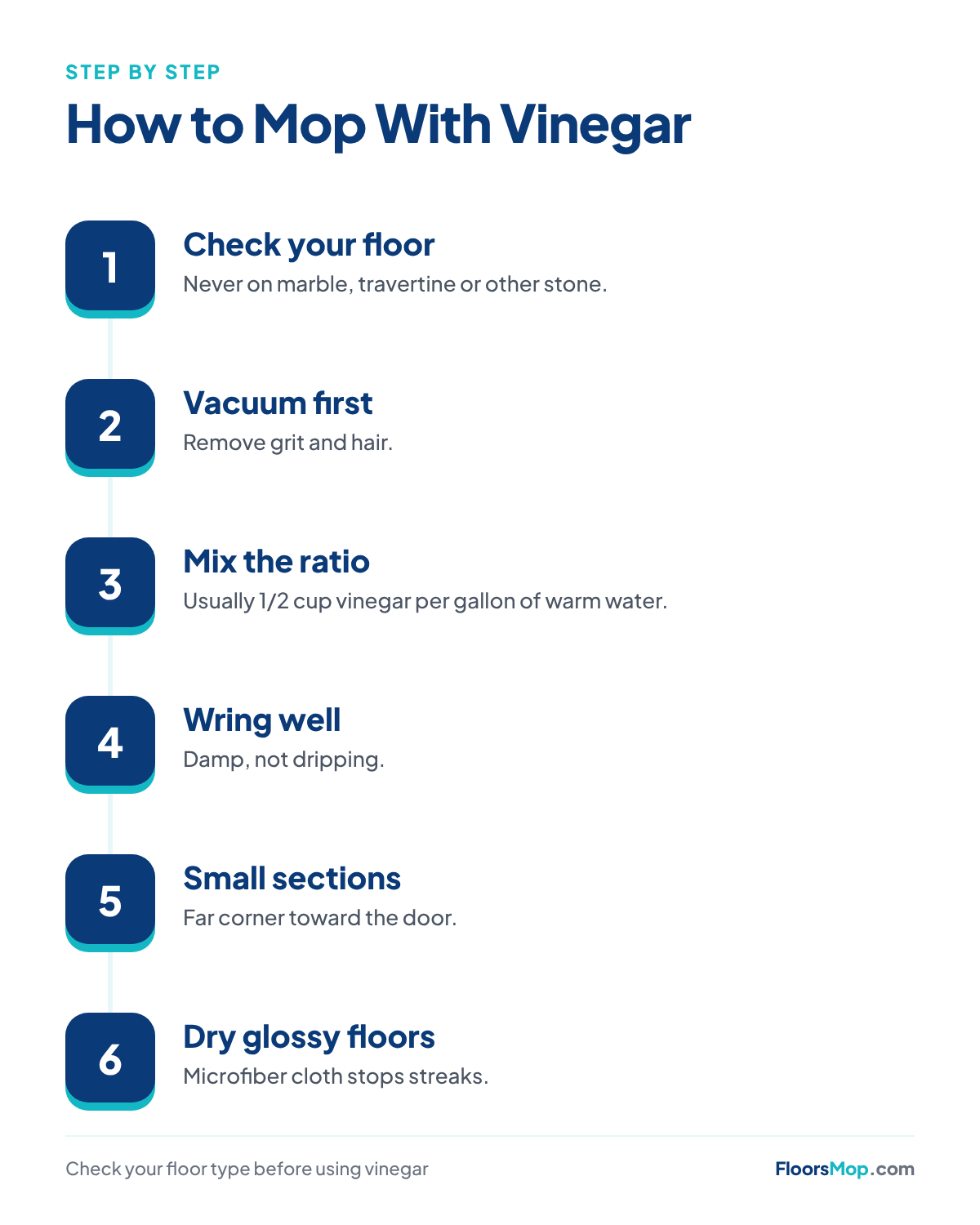
- Check your floor type in the table above.
- Vacuum or sweep to remove grit and hair.
- Mix the solution at the right ratio in a clean bucket.
- Wring the mop well. It should be damp, not dripping.
- Mop in small sections, starting at the far corner and working toward the door.
- Rinse the mop often and change the solution when it looks cloudy.
- Dry glossy or dark floors with a microfiber cloth to prevent streaks.
What Vinegar Is Good For (and What It Is Not)
Good for: cutting soap scum, hard-water haze, and light residue; leaving no soapy film behind.
Not good for: disinfecting. Household vinegar is not an EPA-registered disinfectant. If you need to disinfect, see what to mop floors with to disinfect. It is also weak against heavy grease; a drop of dish soap helps there. See can you mop with dish soap.
Safety Rules
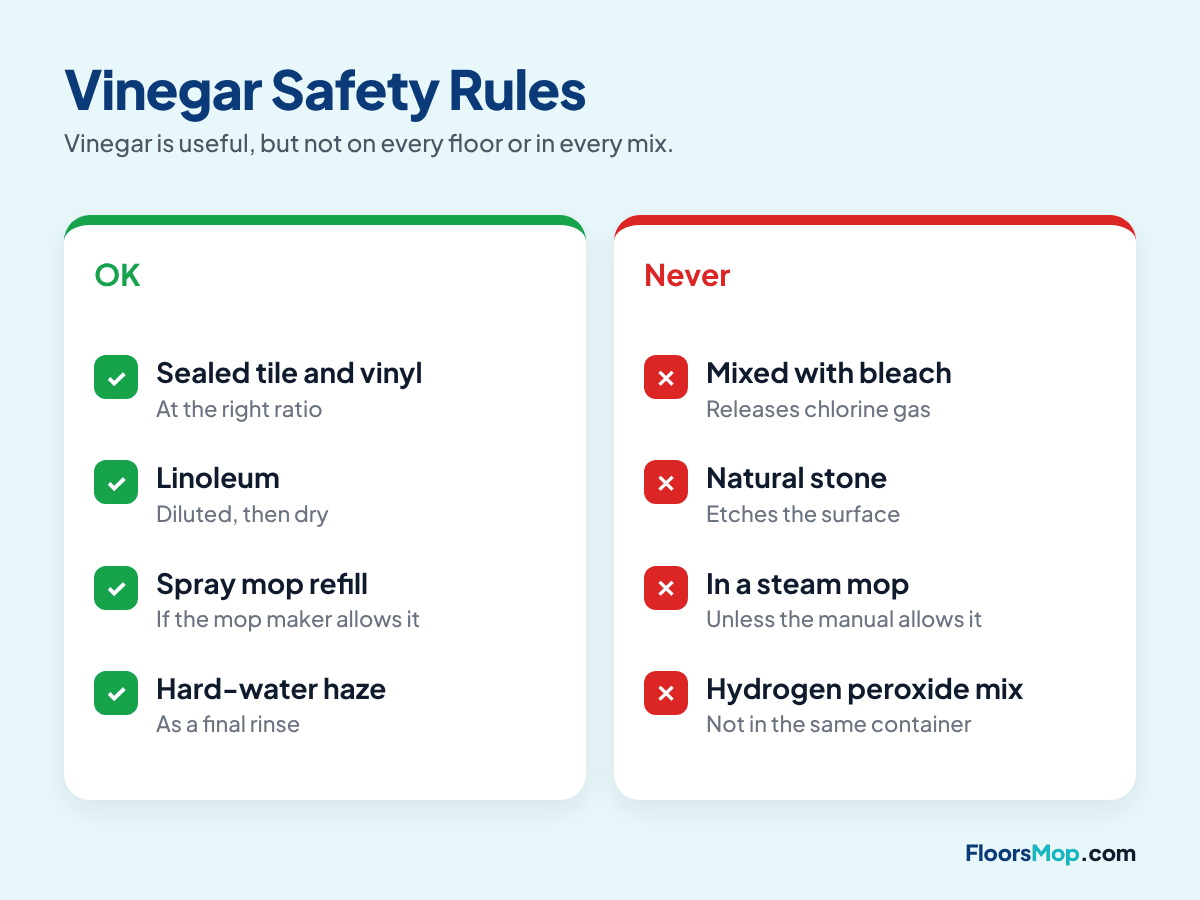
- Never mix vinegar with bleach. It releases chlorine gas.
- Do not mix vinegar and hydrogen peroxide in the same container.
- Do not put vinegar in a steam mop unless the manual allows it. See can you put vinegar in a steam mop.
- Skip essential oils on wood, laminate, and vinyl; oils can leave a slippery film.
Does Vinegar Leave a Smell?
The vinegar smell fades as the floor dries, usually within an hour with a window open. Using the right ratio, not more, keeps the smell mild.
Vinegar in a Spray Mop
You can use a diluted vinegar mix in most refillable spray mops on tile and vinyl. Use the spray-bottle ratio and rinse the tank afterward. See what liquid to put in a spray mop and make your own spray mop cleaner.
Products That Help
- Distilled white vinegar or cleaning vinegar.
- A spin mop for tile and vinyl. Read our O-Cedar EasyWring review.
- A refillable microfiber spray mop for light, controlled moisture. See best spray mops.
- For hardwood, a dedicated cleaner such as Bona Hardwood Floor Cleaner. See how to use Bona with a regular mop.
FAQs
How much vinegar do I put in mop water?
1/2 cup of white vinegar per gallon of warm water for most tile and vinyl floors.
Can I mop hardwood with vinegar?
It is not recommended. Over time, acid can dull a polyurethane finish. Use a cleaner made for hardwood instead.
Can I use apple cider vinegar to mop?
It works similarly but can leave more smell and color. Distilled white vinegar is the better choice.
Do I need to rinse after mopping with vinegar?
Not usually at 1/2 cup per gallon. If you used a stronger mix for soap scum, rinse with plain water.
Does vinegar make floors sticky?
No. Sticky floors after a vinegar mop usually mean old soap residue or dirty mop water. See why floors are sticky after mopping.