
What Is the Best Spray Mop for Laminate Floors?

Quick Answer
The best spray mop for laminate floors is a lightweight microfiber spray mop that releases a fine, controlled mist instead of soaking the floor. Look for a washable microfiber pad, an easy-to-control trigger, and compatibility with a laminate-safe floor cleaner.
What matters most
- Fine spray: A controlled mist limits moisture around laminate seams.
- Microfiber pad: Microfiber lifts dust and residue while using less liquid.
- Flat mop head: A low-profile head reaches under furniture and covers wide areas quickly.
- Washable pads: Reusable pads are economical and let you start each cleaning session with a clean surface.
- Refillable bottle: A refillable reservoir gives you more control over the cleaning solution.
My default choice
- For most laminate homes, I would choose a simple manual spray mop over a steam mop, traditional wet mop, or heavily saturated disposable-pad system.
If you have laminate flooring, moisture control matters more than fancy features. I have found that a good spray mop makes routine floor cleaning faster while keeping the surface only lightly damp.
This guide explains what to look for, which mop styles work best, what cleaners to use, and which mistakes can shorten the life of laminate flooring.
In This Guide
- What type of spray mop is best for laminate floors?
- What features should a laminate spray mop have?
- Spray mop vs other mops for laminate floors
- What cleaner should you put in a spray mop?
- How should you use a spray mop on laminate?
- What should you avoid when mopping laminate?
- Which spray mop brands are worth considering?
- How often should laminate floors be mopped?
- Frequently asked questions
What Type of Spray Mop Is Best for Laminate Floors?
The best choice is a manual microfiber spray mop with a refillable reservoir. It gives you direct control over how much liquid reaches the floor.
A spray mop is a flat mop with a built-in liquid reservoir and trigger-operated spray nozzle. You squeeze the handle trigger, release a small amount of cleaner, and wipe it immediately with the microfiber pad.
Why microfiber works so well
Microfiber is made from very fine synthetic fibers that grab dust, hair, and light grime. It cleans effectively without requiring a flooded surface.
That is important on laminate because the plank joints are more vulnerable to moisture than the decorative wear layer on top.
- Dust pickup: Fine fibers capture grit that could otherwise scratch the finish.
- Low moisture: The pad spreads a light mist rather than leaving puddles.
- Streak control: Clean microfiber absorbs excess solution before it dries into residue.
- Reusable: Most pads can be machine washed and reused many times.
Why I prefer manual spray mops
Electric mops can work, but they add weight, cost, batteries, and moving parts. For ordinary laminate cleaning, those features are rarely necessary.
I also like being able to control each spray manually. Around plank joints, cabinets, and transitions, I may use almost no liquid at all.
Section Takeaway: For laminate, moisture control beats scrubbing power. A basic microfiber spray mop is often the safest and most practical design.
What Features Should a Laminate Spray Mop Have?
Focus on the parts that control moisture and surface contact. Extra accessories matter much less.
1. A fine, even spray pattern
The nozzle should create a mist across a useful area instead of shooting a concentrated stream. A narrow stream can leave wet spots between planks.
When testing a mop, I spray once over about two to three feet of flooring. The pad should absorb the liquid within a few passes.
2. A washable microfiber pad
The pad should feel soft, dense, and flat. Avoid abrasive scrubbers unless the flooring manufacturer specifically approves them.
Keeping two or three pads is useful. Once one pad becomes dirty, replacing it is better than pushing soil around the room.
3. A refillable reservoir
A refillable bottle lets you choose a cleaner approved for your laminate. It also avoids locking you into one proprietary cleaning formula.
Check whether the bottle can be removed easily. Small openings can make rinsing and refilling frustrating.
4. A swiveling, low-profile head
A swivel joint helps the mop move around chair legs and along baseboards. A low head also reaches beneath beds and sofas.
I prefer a mop head wide enough to cover ground quickly but not so wide that it becomes awkward in bathrooms or kitchens.
5. A comfortable trigger
You may squeeze the spray trigger dozens of times during a large cleaning session. A stiff trigger becomes tiring surprisingly fast.
If anyone in the household has limited hand strength, this feature deserves extra attention.
Spray Mop vs Other Mops for Laminate Floors
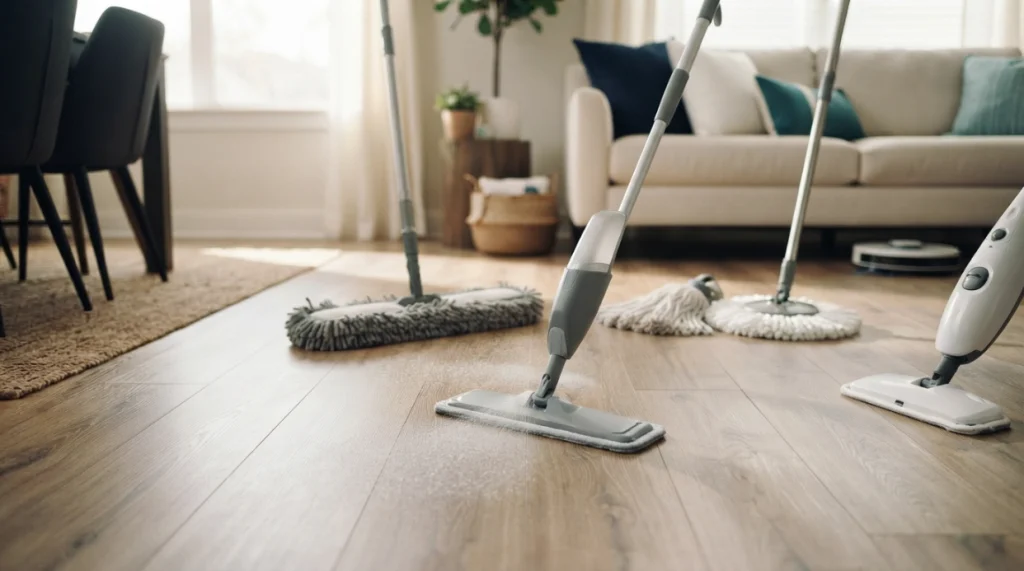
A spray mop is not the only way to clean laminate. It is usually the easiest way to balance cleaning power with controlled moisture.
| Mop Type | Moisture Level | Laminate Suitability | Best Use |
|---|---|---|---|
| Microfiber spray mop | Low | Excellent when used lightly | Routine cleaning |
| Dry microfiber mop | None | Excellent | Dust, hair, daily debris |
| Traditional string mop | High | Poor unless extremely well wrung | Water-tolerant surfaces |
| Spin mop | Medium | Acceptable if nearly dry | Larger mixed-floor homes |
| Steam mop | Steam and heat | Usually not recommended | Only manufacturer-approved surfaces |
| Robot mop | Low to medium | Model-dependent | Light maintenance |
Why not a steam mop?
Steam introduces both heat and moisture. That combination can be risky around laminate seams and the fiber-based material below the wear surface.
Even water-resistant laminate should not automatically be treated as steam-safe. Always follow the flooring manufacturer’s care instructions.
Can a spin mop work?
Yes, but the mop head must be wrung until it is barely damp. That requires more discipline than using a controlled spray system.
I would choose a spin mop mainly when one tool needs to clean tile, vinyl, and laminate throughout the same home.
What Cleaner Should You Put in a Spray Mop?
Use a cleaner specifically labeled for laminate or sealed hard floors. A mild, residue-free, pH-neutral formula is usually the easiest choice.
EPA’s Safer Choice program can also help shoppers identify cleaning products whose ingredients meet its program requirements.
Avoid using too much cleaner
More solution does not mean a cleaner floor. Concentrated cleaner can leave a film that makes laminate look dull, streaky, or sticky.
If your spray mop has a refillable bottle, follow the cleaner’s dilution directions exactly.
Should you use vinegar?
Vinegar is common in homemade floor-cleaning recipes, but laminate manufacturers vary in what they allow. Some finishes may not tolerate repeated acidic cleaning well.
*Safety note: Check your flooring manufacturer’s care guide before using vinegar, ammonia, bleach, disinfectants, or homemade cleaning mixtures.*
Do laminate floors need disinfectant?
Usually, routine cleaning is enough. The CDC’s cleaning and disinfecting guidance notes that household disinfection is generally most important when illness is present or another specific need exists.
*Safety note: Never mix household cleaning chemicals. Follow every product label, especially when using disinfectants or bleach-based products.*
Section Takeaway: Use the smallest practical amount of a laminate-compatible cleaner. Preventing residue and moisture buildup matters more than using a strong formula.
How Should You Use a Spray Mop on Laminate?
Start with dry debris removal, then mop with a light mist. The floor should never look soaked.
- Vacuum or dry mop first. Remove grit, crumbs, hair, and dust.
- Check the microfiber pad. Start with a clean pad rather than a previously soiled one.
- Spray sparingly. Use one or two trigger pulls over a small section.
- Mop immediately. Spread the mist using smooth passes along the plank direction.
- Inspect seams. Wipe away any visible droplets or pooling.
- Change dirty pads. A loaded pad can create streaks instead of removing them.
- Let the floor air-dry. Normal light dampness should disappear quickly.
How much spray is enough?
I use just enough solution to loosen surface grime. After one or two passes, the floor should look lightly damp rather than visibly wet.
If moisture remains for several minutes, reduce the amount of spray during your next section.
Work in manageable sections
Clean about 10 to 20 square feet at a time. Smaller areas make it easier to control both moisture and residue.
In kitchens, I give sticky areas an extra pass instead of repeatedly spraying them.
What Should You Avoid When Mopping Laminate?
The biggest problems come from excess water, residue, abrasive cleaning, and incompatible chemicals. These mistakes can make good laminate look worn long before its time.
- Do not soak the floor: Standing water can migrate into plank edges and joints.
- Do not pour cleaner directly onto laminate: Spray onto the working area in small amounts.
- Do not use abrasive pads: Rough scrubbers can dull or scratch the wear layer.
- Do not assume steam is safe: Water-resistant flooring is not necessarily steam-approved.
- Do not overuse cleaner: Excess product creates haze and attracts new dirt.
- Do not mop over loose grit: Sand and debris can act like abrasive particles beneath the pad.
- Do not leave spills sitting: Blot liquids promptly, especially near plank seams.
What causes streaks after spray mopping?
Streaks usually come from too much cleaner, a dirty microfiber pad, or failing to remove dry debris first.
Hard water can also leave visible marks. If streaking continues, try less solution and a freshly washed pad.
What causes sticky laminate floors?
Sticky floors usually indicate cleaner residue. Applying another heavy coat often makes the problem worse.
Use a clean microfiber pad with the smallest amount of manufacturer-approved cleaner needed to loosen the residue.
*Safety note: Before trying a stronger residue-removal solution, test an inconspicuous area and check the flooring manufacturer’s instructions.*
Which Spray Mop Brands Are Worth Considering?
Several major brands make spray mops suitable for sealed hard floors. The right choice depends more on design than the logo.
Bona
Bona is strongly associated with hard-floor care and sells microfiber spray-mop systems. Its broader floor-care range is worth comparing when you want one branded system for mop, pad, and cleaner.
Swiffer
Swiffer spray systems are convenient and widely available. They can make sense for quick cleaning and smaller spaces.
Check the exact solution label before using any proprietary refill on your laminate.
O-Cedar
O-Cedar offers microfiber floor-cleaning tools, including refillable systems. I like this style when washable pads and reusable bottles are priorities.
Other refillable spray mops
You do not need a premium brand to clean laminate effectively. A well-built generic spray mop can perform well if the nozzle, pad, and handle are good.
Before buying, inspect these points:
- Replacement microfiber pads are easy to obtain.
- The bottle is genuinely refillable.
- The nozzle creates a mist rather than a strong jet.
- The mop stands up to repeated trigger use.
- The head swivels without feeling loose.
- Replacement parts do not cost nearly as much as a new mop.
For broader flooring-care standards, organizations such as the National Wood Flooring Association are useful references when comparing manufacturer care requirements for wood-based flooring systems.
Section Takeaway: Choose the design first and brand second. Controlled mist, clean microfiber, and easy replacement parts matter most.
How Often Should Laminate Floors Be Mopped?
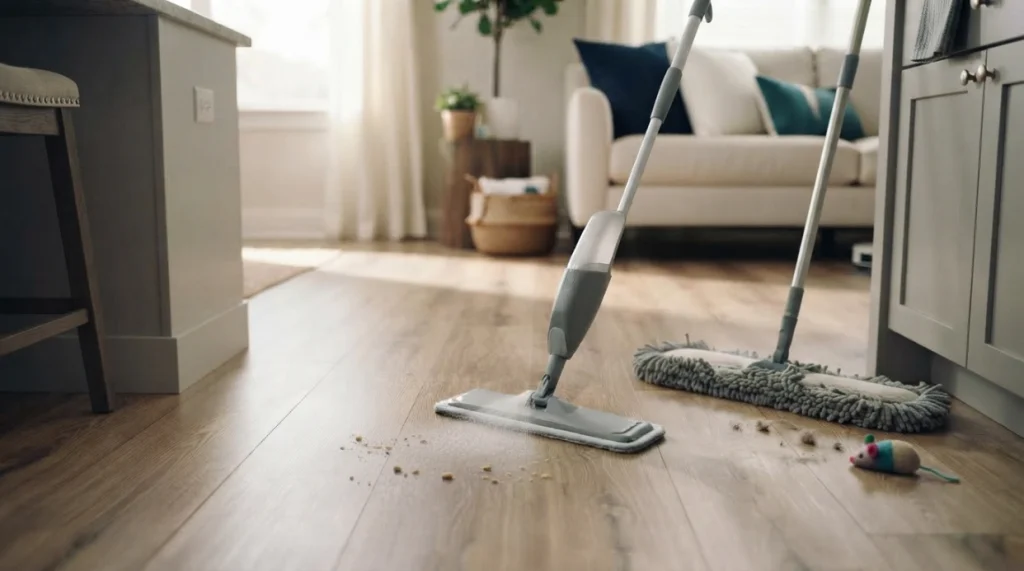
Most laminate floors do not need wet cleaning every day. Dry debris removal should happen more often than damp mopping.
| Household Situation | Dry Cleaning | Spray Mopping |
|---|---|---|
| Low-traffic home | 1–2 times weekly | About every 1–2 weeks |
| Busy household | Several times weekly | About once weekly |
| Pets or children | Daily as needed | 1–2 times weekly as needed |
| Entryway or kitchen | Frequent spot cleaning | Spot mop when visibly dirty |
These are practical starting points rather than strict rules. Traffic level, pets, weather, and flooring color all affect how quickly dirt becomes noticeable.
Spot cleaning is often better
If one kitchen area is dirty, you do not need to mop the entire floor. A spray mop is especially useful for small targeted cleanups.
This approach also reduces the total amount of moisture your laminate sees over time.
Frequently Asked Questions
Can you use any spray mop on laminate floors?
Not every spray mop is ideal. Choose one that uses a soft microfiber pad and lets you control the amount of liquid. Avoid models that saturate the floor, use aggressive scrubbers, or require a cleaner your flooring manufacturer does not approve.
Is a spray mop better than a steam mop for laminate?
For most laminate floors, yes. A spray mop uses a small amount of room-temperature cleaning solution, while steam adds both heat and moisture. Unless your flooring manufacturer specifically approves steam, a lightly damp microfiber spray mop is the safer default.
Can I use only water in a spray mop?
For light dust, footprints, and routine maintenance, plain water may work if your manufacturer allows damp cleaning. Use very little. Grease or sticky residue will usually require a laminate-compatible cleaner rather than repeated passes with more water.
Can spray mops damage laminate?
A spray mop can cause problems if you over-spray, leave liquid standing, use an abrasive pad, or fill it with an incompatible cleaner. Used correctly, its controlled moisture is one of the main reasons spray mops work well on laminate.
What is the best mop pad for laminate?
A soft washable microfiber pad is the best all-purpose choice. It captures fine debris, spreads cleaner evenly, and absorbs moisture quickly. Keep separate clean pads available so you do not continue mopping once the first pad becomes loaded with dirt.
Why does my laminate look dull after mopping?
Dullness often comes from cleaner buildup, dirty mop water, excess solution, or repeated mopping with a contaminated pad. Start by using less product and a clean microfiber pad. Avoid adding polish unless your flooring manufacturer specifically recommends it.
How quickly should laminate dry after spray mopping?
A lightly spray-mopped section should begin drying within minutes under normal indoor conditions. If you see puddles or prolonged wetness, you are probably applying too much liquid. Wipe excess moisture with a dry microfiber cloth rather than waiting for it to evaporate.
Which Spray Mop Should You Buy?
For most households in 2026, I would choose a refillable manual spray mop with washable microfiber pads and a fine-mist trigger. It offers the moisture control laminate needs without unnecessary complexity.
Do not shop only by brand name. Check the spray pattern, microfiber quality, replacement-pad availability, bottle design, and how easily you can control each application.
Most importantly, match the cleaning solution and mopping method to your flooring manufacturer’s care instructions. A simple mop used correctly will protect laminate better than a feature-packed tool used with too much water.