
What Type of Mop Is Best for Home Use? A Practical 2026 Guide

Quick Answer
For most homes, a microfiber flat mop is the best all-around choice because it controls moisture, works on many floor types, and handles everyday floor cleaning with little setup. A steam mop is better as a specialized second mop for sticky grime on floors that the manufacturer specifically approves for steam. The CDC’s cleaning and disinfecting guidance also makes an important distinction between routine cleaning and disinfection.
What I would choose
- Best overall: Choose a reusable microfiber flat mop for routine cleaning across mixed hard floors.
- Best for quick messes: A spray mop gives excellent moisture control without a bucket.
- Best for dirty tile: A spin mop provides more rinsing capacity and scrubbing flexibility.
- Best for sticky grime: A steam mop works well on compatible, sealed, heat-resistant flooring.
- Best for automation: A robot mop can maintain open floors between deeper cleaning sessions.
One rule matters most
- Match the mop, moisture level, and cleaner to your flooring manufacturer’s care instructions.
I’ve tested enough mop styles to know there isn’t one perfect tool for every floor and mess. The best mop for home use depends on your flooring, how much moisture it tolerates, and how much cleaning effort you want each week.
This guide compares microfiber, spray, spin, steam, electric, string, and robot mops. I’ll also show you where steam mops make sense and where I’d leave them in the closet.
In This Guide
- What type of mop is best for most homes?
- Which mop type is best for each cleaning job?
- Are steam mops good for home use?
- What mop is best for each floor type?
- Which mop fits your household and cleaning routine?
- What cleaning solution should you use with a mop?
- How do you mop without streaks or floor damage?
- Frequently asked questions
- Which mop should you choose?
What Type of Mop Is Best for Most Homes?
A microfiber flat mop is my first choice for most households in 2026. It gives you precise moisture control without limiting you to one particular floor-cleaning method.
Definition: A microfiber flat mop uses a low-profile rectangular head covered by a reusable pad made from fine synthetic fibers. The pad collects dust and soil while spreading a controlled amount of water or cleaner across the floor.
I especially like flat mops in homes with several surfaces. You can dry-mop dust in one room, switch pads, then damp-mop another area without hauling a bucket around.
Why microfiber works so well for everyday cleaning
- Good moisture control: You can keep the pad barely damp for moisture-sensitive surfaces.
- Low-profile head: It reaches under beds, sofas, cabinets, and other furniture.
- Reusable pads: Washable pads reduce dependence on disposable refills.
- Easy handling: Flat mop heads usually feel lighter than a saturated string mop.
- Flexible cleaning: The same mop can handle dry dusting, damp cleaning, and spot work with the correct pad.
A spray mop is a close second. It adds a refillable reservoir and trigger, which makes quick kitchen or entryway cleaning faster.
I keep one caution in mind: the mop itself doesn’t make a floor-safe cleaning system. The pad, cleaner, moisture level, and floor finish all matter.
Which Mop Type Is Best for Each Cleaning Job?
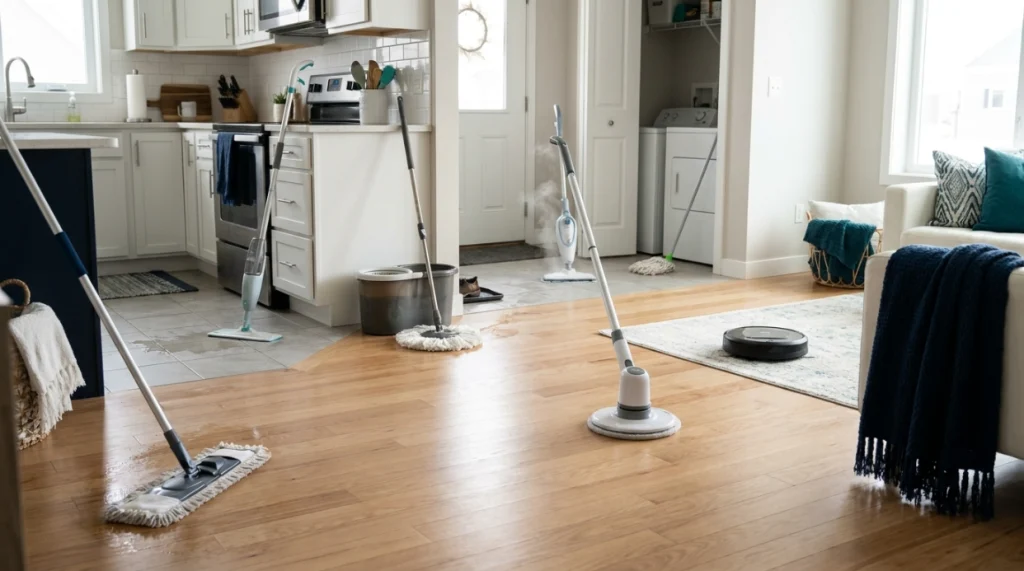
Different mops solve different problems. I choose the tool based on the mess before I choose it based on features or brand.
| Mop type | Best use | Moisture control | Main advantage | Main limitation |
|---|---|---|---|---|
| Microfiber flat mop | Routine cleaning | Excellent | Works across many floors | Needs separate cleaner application |
| Spray mop | Quick daily messes | Excellent | Fast setup | Small reservoir and pad capacity |
| Spin mop | Large or dirtier areas | Good | Easy rinsing and wringing | Bucket takes storage space |
| Steam mop | Sticky grime on approved floors | Machine-controlled | Heat helps loosen residue | Restricted floor compatibility |
| String mop | Large washable floors and spills | Fair | High liquid capacity | Can leave excessive water |
| Electric spinning mop | Low-effort scrubbing | Good | Powered pads reduce scrubbing effort | Battery or cord management |
| Robot mop | Maintenance cleaning | Model-dependent | Automated routine cleaning | Doesn’t replace detailed mopping |
Brands such as O-Cedar, Swiffer, Bona, Shark, Bissell, Tineco, and iRobot offer different versions of these systems. Brand matters less to me than pad quality, floor compatibility, maneuverability, and moisture control.
If I could own only one mop, I’d still choose microfiber. If my home had large areas of approved tile, I’d consider adding steam or a spin mop.
Are Steam Mops Good for Home Use?
Steam mops are useful home-cleaning tools, but they aren’t the best universal mop. I treat steam as a specialized cleaning method because it introduces both heat and moisture.
What does a steam mop do?
A steam mop heats water and directs vapor through a floor pad. The combination of heat, moisture, and wiping can soften dried spills and sticky residue.
On compatible tile, I’ve found steam especially useful around cooking areas where plain damp mopping needs repeated passes. I still vacuum first because most steam mops don’t collect crumbs, grit, or pet hair.
When would I choose steam?
- Sealed ceramic or porcelain tile: Steam can loosen stubborn surface grime when the floor maker allows it.
- Sticky kitchen residue: Heat can reduce the amount of manual scrubbing needed.
- Low-detergent cleaning: Many steam mops operate with water rather than conventional floor cleaner.
- Quick drying: A correctly used steam mop should leave a light film of moisture rather than puddles.
When would I avoid steam?
I don’t assume a hard floor is automatically steam-safe. Wood, laminate, luxury vinyl, natural stone, waxed surfaces, damaged seams, and adhesive-backed flooring can require more cautious care.
The National Wood Flooring Association is a useful starting point for wood-floor care information. Your exact flooring manufacturer should still make the final call.
Safety note: Check your floor manufacturer’s care guide and your steam mop manual before applying heat or moisture to any floor.
What Mop Is Best for Each Floor Type?
Floor material should drive your decision. A cleaning method that works beautifully on porcelain tile can be too aggressive for a moisture-sensitive floor.
Hardwood and engineered wood
Choose a microfiber flat or spray mop that lets you use minimal liquid. I want the pad damp enough to clean, but never wet enough to leave water sitting between boards.
Laminate
A barely damp microfiber mop is usually the safest practical choice. Avoid flooding seams, and follow the laminate manufacturer’s approved-cleaner guidance.
Vinyl and luxury vinyl plank
Use a microfiber flat or spray mop with controlled moisture. Don’t assume that a water-resistant floor automatically tolerates high heat or every cleaning chemical.
Ceramic and porcelain tile
Tile gives you more options. A flat mop works for maintenance, a spin mop helps with larger dirty areas, and a steam mop can tackle sticky grime when the installation is approved for steam.
Natural stone
Use a soft microfiber mop with a cleaner approved for that exact stone and sealer. Marble, limestone, travertine, and similar surfaces deserve more caution than ceramic tile.
Concrete
Sealed concrete can usually tolerate more moisture than wood or laminate. A spin or microfiber mop works well, although the correct cleaner still depends on the coating or sealer.
Safety note: Floor finishes, adhesives, sealers, and warranties vary. Check the manufacturer’s care instructions before changing your mop, cleaner, or moisture level.
Which Mop Fits Your Household and Cleaning Routine?
Your lifestyle matters almost as much as your floor. The best mop is one you’ll use often enough to prevent dirt from becoming a larger job.
Homes with pets
Start with dry debris removal because hair can turn into wet clumps under a damp mop. I like a microfiber dust mop or vacuum first, followed by a separate damp pad.
For urine or other organic messes, an appropriate enzyme cleaner may be more useful than steam alone. Follow the cleaner label and floor-care instructions.
Apartments and small spaces
A spray mop is hard to beat when storage is limited. It eliminates the bucket and can handle a small kitchen in minutes.
Large homes with tile
A spin mop becomes more attractive when you need to rinse a dirty mop head repeatedly. A steam mop can also be worthwhile if large portions of the floor are steam-approved.
Busy households
A robot mop can reduce visible dust and light soil between manual sessions. Models such as iRobot Braava-style systems are maintenance tools rather than replacements for edge cleaning and stubborn spots.
People who dislike scrubbing
An electric spinning mop from brands such as Bissell or Tineco can reduce hand pressure during routine cleaning. Powered pads are especially handy for broad smooth floors.
Whatever you choose, keep at least two clean pads available. A saturated, dirty pad eventually moves soil around instead of collecting it.
What Cleaning Solution Should You Use With a Mop?
The safest cleaner is one approved for the floor you own. I don’t use the same bottle automatically on wood, vinyl, stone, and tile.
When a pH-neutral cleaner makes sense
A pH-neutral cleaner sits near the middle of the acidity scale and is often chosen for surfaces that need gentler chemistry. Always confirm compatibility with your floor and finish.
For shoppers comparing household cleaners, the EPA Safer Choice product search provides another way to identify products that meet its program criteria.
Should you use vinegar?
I don’t treat vinegar as a universal floor cleaner. Acidity can be unsuitable for natural stone and may conflict with care instructions for some finishes.
Do you need disinfectant every time?
Routine cleaning and disinfection are different jobs. In an ordinary home, I wouldn’t choose a mop mainly because marketing language makes it sound more hygienic.
If disinfection is necessary, use a product that is suitable for the surface and follow its label contact time. Don’t combine household chemicals unless the product instructions specifically direct you to do so.
Safety note: Never mix cleaning products casually. Check both the floor manufacturer’s guidance and the cleaning-product label before use.
How Do You Mop Without Streaks or Floor Damage?
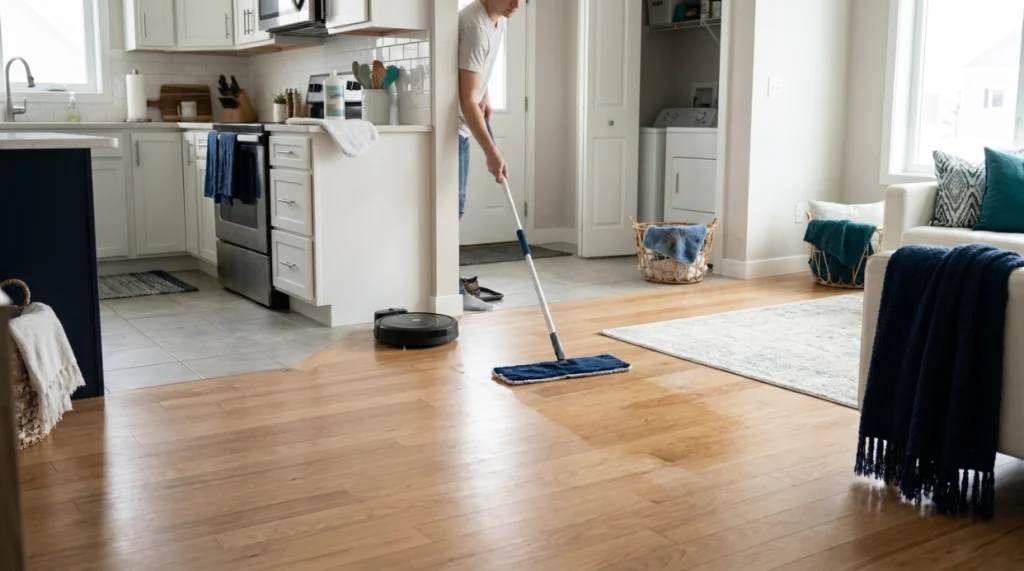
Technique often matters more than buying a more expensive mop. Most streaking problems I see come from excess cleaner, dirty pads, loose grit, or too much water.
- Remove loose debris first. Vacuum, sweep, or dry-mop grit and hair before adding moisture.
- Use the correct cleaner amount. More concentrate doesn’t automatically mean a cleaner floor.
- Keep the mop damp, not dripping. Moisture-sensitive floors need especially careful control.
- Work in small sections. This lets you see residue before it dries across the whole room.
- Change dirty pads. Replace or rinse the pad when it becomes visibly loaded with soil.
- Let the floor dry before heavy traffic. Good ventilation can speed drying and reduce footprints.
On a typical lightly soiled floor, I often start with one clean pad for the first room and inspect it before continuing. Kitchens and entryways usually need a fresh pad sooner than bedrooms.
Wet floors also create a slip hazard. OSHA’s workplace guidance identifies wet floors and spills as slip-and-fall risks, which is a useful reminder to keep people off freshly mopped areas until they dry.
For more detail, see the OSHA guidance on slips, trips, and falls.
Frequently Asked Questions
Is a steam mop better than a regular mop?
A steam mop is better for certain sticky messes on steam-approved floors. A microfiber regular mop is more versatile because it lets you control moisture and use a floor-specific cleaner without adding heat.
What is the easiest mop to use at home?
A spray mop is usually one of the easiest choices for routine cleaning because it needs no bucket. Fill the reservoir with an approved solution, attach a clean pad, and spray only as much liquid as the floor needs.
What mop is best if I have several floor types?
A reusable microfiber flat mop is my preferred option for a mixed-floor home. You can change pads, adjust moisture, and select a different approved cleaner for each surface.
Are spin mops worth buying?
Spin mops are useful when you clean larger areas that tolerate damp mopping. The bucket’s wringing system makes it easier to remove excess water, although the setup takes more space than a flat or spray mop.
Can I steam mop every day?
I wouldn’t make daily steaming the default unless the flooring manufacturer and steam-mop maker support that routine. Frequent heat and moisture aren’t appropriate for every finish, seam, adhesive, or flooring material.
How often should floors be mopped?
Mop when the floor is visibly dirty and adjust frequency for traffic, pets, children, and outdoor dirt. Busy kitchens and entryways may need weekly or more frequent cleaning, while lightly used rooms can often go longer.
Do robot mops replace regular mopping?
Not completely. Robot mops are excellent for maintaining open floor areas, but manual cleaning still works better along edges, around difficult furniture, and on stubborn spills.
Which Mop Should You Choose?
For most homes, I’d buy a microfiber flat mop first. It offers the best balance of floor compatibility, moisture control, low storage needs, and everyday convenience.
Choose a spray mop if speed matters most. Choose a spin mop if you regularly clean larger, dirtier washable floors.
Add a steam mop when you have enough steam-approved flooring to justify a specialized tool. On sealed tile, it can make sticky messes far easier to remove.
A cordless electric mop can reduce scrubbing effort, while a robot mop helps maintain floors between deeper sessions. Neither changes the basic rule: the floor manufacturer’s care guidance comes first.
If you’re replacing an old mop, start by checking what your flooring allows. Then choose the simplest tool that handles your most common mess without leaving excess water, residue, or unnecessary work.
