
What Is a Spin Mop? How It Works, Benefits, and Best Uses

Quick Answer
A spin mop is a floor-cleaning system that uses a rotating wringer to remove water from a washable mop head. You usually spin the mop inside a bucket using a foot pedal or handle mechanism, giving you better moisture control than hand-wringing a traditional string mop. For wood floors, always combine careful water control with guidance from the National Wood Flooring Association or your flooring manufacturer.
What makes a spin mop different?
- Rotating wringer: The bucket spins water out of the mop head with minimal hand contact.
- Moisture control: Extra spinning leaves the mop damp rather than dripping wet.
- Reusable head: Most models use washable microfiber mop heads.
- Flexible cleaning: A round swivel head can reach corners, edges, and areas under furniture.
- Bucket system: Many sets combine a wash chamber and spinning basket in one unit.
Best quick tip
- Spin the mop until it feels damp, not saturated, especially on moisture-sensitive floors.
If you’ve seen a mop bucket with a spinning basket and wondered what it does, you’re looking at a spin mop. It’s one of the easiest ways to control how much water reaches your floor.
In this guide, I’ll explain what a spin mop is, how the spinning system works, where it performs well, and how it compares with other common floor-cleaning tools in 2026.
In This Guide
- What is a spin mop?
- How does a spin mop work?
- How do you use a spin mop correctly?
- What floors can you clean with a spin mop?
- Spin mop vs other mop types
- What are the advantages and disadvantages?
- How do you clean and maintain a spin mop?
- What should you look for when choosing one?
- Frequently asked questions
- Final takeaway
What Is a Spin Mop?
A spin mop is a reusable wet-mopping system with a rotating wringer that removes excess water from the mop head. Most systems include a bucket, spinner basket, mop handle, and washable microfiber head.
Microfiber is a fabric made from extremely fine synthetic fibers. Those fibers help lift fine dust, hair, and everyday grime while holding moisture.
What makes it different from a regular mop?
A traditional string mop often needs hand wringing or a separate press wringer. A spin mop uses centrifugal force instead.
The mop head rotates quickly inside the wringer basket. Water moves outward and drains back into the bucket.
- Less touching: You don’t need to squeeze a dirty mop head by hand.
- Better water control: You can spin longer when you want a drier mop.
- Easier movement: Swivel heads turn around furniture legs and tight spaces.
- Reusable cleaning surface: Many microfiber heads can be removed and washed.
That moisture control is the feature I find most important. A floor can look dirtier after mopping when the mop leaves too much water and cleaning solution behind.
How Does a Spin Mop Work?
A spin mop works by rotating the wet mop head rapidly inside a basket. The spinning motion throws excess water away from the fibers, leaving the mop head damp enough for cleaning.
There are two common spinning designs.
Foot-pedal spin mops
A foot pedal on the bucket powers the spinning basket. You place the mop inside, hold the handle upright, and press the pedal several times.
This design keeps most of the spinning mechanism inside the bucket. Some cleaners prefer it because the mop handle itself remains simple.
Handle-activated spin mops
These models spin when you press or pump the mop handle downward. The handle engages the rotating mechanism while the mop sits inside the wringer.
Neither design automatically cleans better. Stability, wringer quality, mop-head material, and water control matter more in everyday use.
Why does spinning help?
The biggest benefit is control. One or two short spins may leave the head fairly wet, while additional spinning can remove much more water.
That lets you adjust the mop for different surfaces and messes.
- Tile: A moderately damp head works well for routine cleaning.
- Vinyl or LVP: Use less water and avoid leaving puddles at seams.
- Sealed wood: Wring the mop thoroughly and work with minimal moisture.
- Sticky spills: Start slightly wetter, then finish with a well-wrung head.
Safety note: Always check your flooring manufacturer’s care guide before wet-mopping moisture-sensitive materials.
How Do You Use a Spin Mop Correctly?
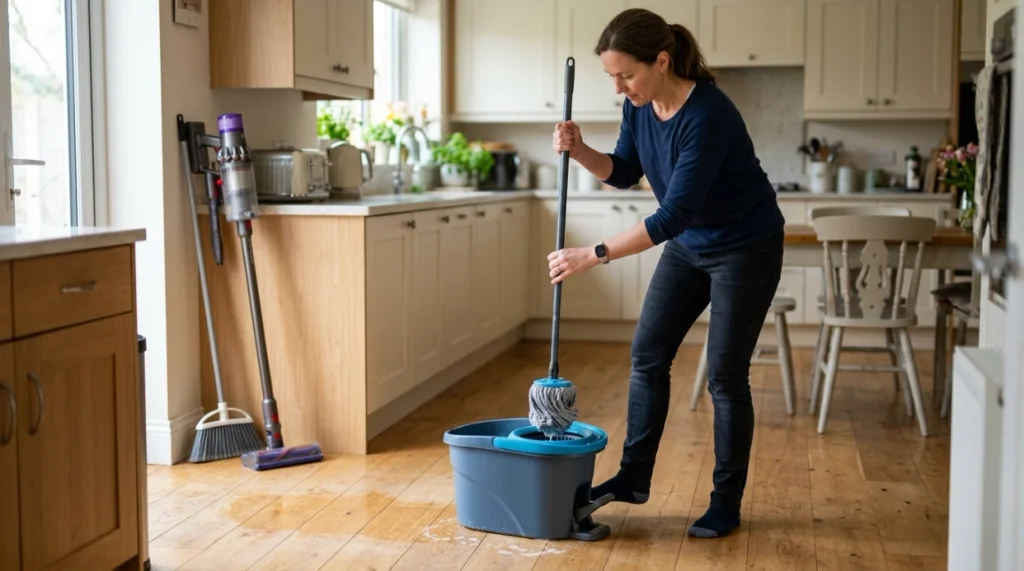
Start by removing loose debris, then use a well-wrung mop head in manageable sections. The goal is to clean the surface without flooding it.
- Sweep or vacuum first. Remove grit, crumbs, pet hair, and loose dirt before adding moisture.
- Fill the bucket. Use clean water and only the amount of floor cleaner recommended on its label.
- Wet the mop head. Saturate the fibers enough to pick up the cleaning solution.
- Use the spinner. Wring until the mop is appropriate for your floor type.
- Mop a small section. Work backward so you don’t walk across the freshly cleaned area.
- Rinse when dirty. Return the head to the bucket instead of spreading dirty water across another room.
- Spin again. Remove excess water before continuing.
- Let the floor dry. Keep foot traffic off the surface until it is dry and no longer slippery.
How wet should the mop be?
For most routine floor cleaning, it should feel damp rather than dripping. Water should not run from the mop when you lift it from the bucket.
On sealed wood or laminate, I would err on the dry side. Those surfaces don’t benefit from extra water.
For chemical cleaners or disinfectants, follow the product label instead of improvising mixtures. General cleaning and disinfection information is available from the Centers for Disease Control and Prevention.
Safety note: Never mix household cleaning chemicals unless the product directions specifically say the combination is safe.
What Floors Can You Clean With a Spin Mop?
Spin mops work best on hard floors that tolerate damp cleaning. The exact amount of moisture you should use depends on the flooring material and its finish.
| Floor Type | Spin Mop Suitability | Moisture Level | Main Caution |
|---|---|---|---|
| Ceramic or porcelain tile | Excellent | Damp | Avoid cleaner buildup in grout |
| Vinyl / LVP | Very good | Lightly damp | Don’t flood seams or edges |
| Sealed hardwood | Conditional | Barely damp | Standing water can cause problems |
| Laminate | Conditional | Barely damp | Keep water away from joints |
| Natural stone | Good with correct cleaner | Damp | Avoid unsuitable acidic cleaners |
| Sealed concrete | Very good | Damp | Match cleaner to coating or sealer |
Can you use a spin mop on hardwood?
You can use one on many properly sealed wood floors if the manufacturer allows damp mopping. The mop head should be wrung thoroughly before touching the floor.
I look for a surface that dries quickly rather than one left visibly wet. For specialized wood-floor care products and guidance, Bona’s floor-care resources are another useful starting point.
Can you use vinegar in a spin mop?
Don’t assume vinegar is safe for every floor. Acidic mixtures can be unsuitable for some stone, finishes, and manufacturer warranties.
A pH-neutral cleaner is often the simpler choice when your flooring manufacturer recommends one. The term pH-neutral means the cleaner is formulated to avoid being strongly acidic or alkaline.
Safety note: Check both the flooring instructions and cleaner label before using any homemade solution.
Spin Mop vs Other Mop Types: What’s the Difference?
A spin mop is strongest when you want reusable microfiber cleaning combined with adjustable moisture control. Other mop styles can be better for quick touch-ups, powered cleaning, or small spaces.
| Mop Type | Wringing / Moisture Control | Best For | Main Trade-Off |
|---|---|---|---|
| Spin mop | Adjustable spinning wringer | Whole-room wet cleaning | Bucket takes storage space |
| Flat microfiber mop | Controlled by pad moisture | Quick cleaning and low furniture | Pad needs frequent rinsing or swapping |
| Traditional string mop | Manual or press wringer | Heavy wet cleaning | Can leave more water behind |
| Steam mop | Uses heated steam | Compatible sealed surfaces | Not approved for every floor |
| Cordless electric mop | Machine-controlled dispensing | Powered scrubbing | Battery charging and higher complexity |
| Robot mop | Automated dispensing | Routine maintenance cleaning | Less effective for manual spot scrubbing |
A flat microfiber mop is easier to store. However, a spin bucket lets you rinse and wring the head repeatedly during a larger cleaning job.
Steam mops are different again. They use heat instead of a traditional bucket-and-cleaner system, so floor compatibility matters more than convenience.
What Are the Advantages and Disadvantages of a Spin Mop?
The main advantages are cleaner wringing, reusable mop heads, and good moisture control. The biggest downsides are bucket storage, maintenance, and the possibility of dirty rinse water.
Spin mop advantages
- Hands stay cleaner: The wringer reduces the need to touch a wet mop head.
- Adjustable dampness: Extra spinning removes more water when needed.
- Good maneuverability: Round heads usually pivot easily around furniture.
- Reusable microfiber: Washable heads can reduce reliance on disposable pads.
- Useful for larger areas: You can rinse and reuse the mop throughout the cleaning session.
- Simple operation: Most versions don’t require electricity or batteries.
Spin mop disadvantages
- Bulky bucket: It needs more storage space than a spray or flat mop.
- Dirty water: Basic one-chamber buckets may rinse the mop in the same water repeatedly.
- Moving parts: Pedals, gears, bearings, or handle mechanisms can wear over time.
- Weight when full: A bucket becomes much heavier after adding water.
- Not automatically floor-safe: Excess water can still damage moisture-sensitive flooring.
One practical detail matters more than marketing features: bucket stability. A spinner isn’t convenient if the bucket slides or tips while you’re wringing.
How Do You Clean and Maintain a Spin Mop?
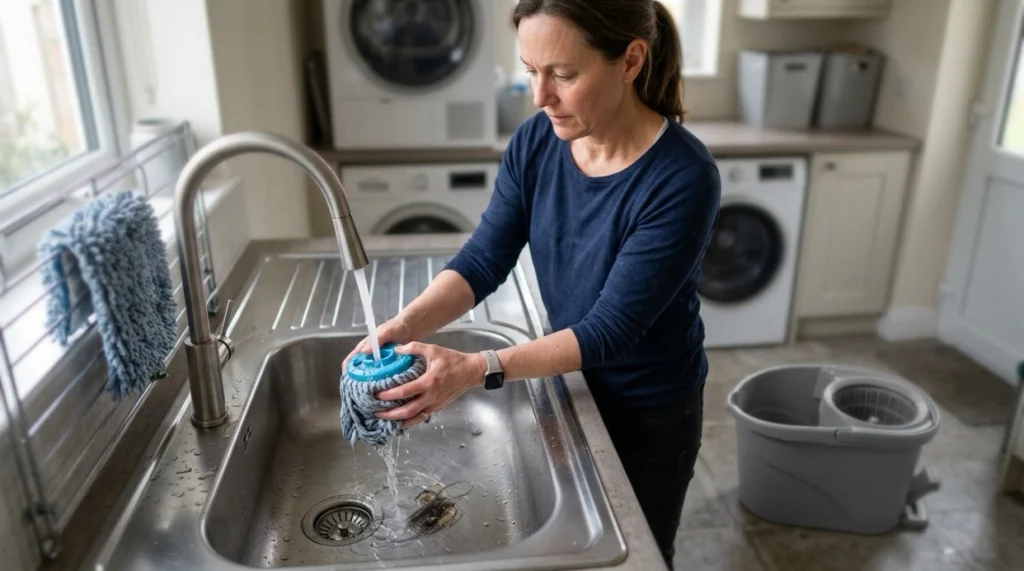
Rinse the head after every use and let it dry completely before storage. A damp mop stored inside a closed bucket can develop odors and residue.
- Empty dirty water immediately. Don’t leave used cleaning solution sitting in the bucket.
- Rinse the bucket. Remove grit that could return to the mop during your next cleaning session.
- Rinse the mop head. Flush out visible dirt and leftover cleaner.
- Wash when permitted. Follow the care label before putting a microfiber head in a washing machine.
- Air-dry fully. Keep the head in a ventilated place until no moisture remains.
- Inspect the spinner. Remove hair or debris that has collected around moving parts.
Should you use fabric softener on microfiber mop heads?
I avoid fabric softener unless the manufacturer specifically allows it. Coatings left on microfiber can reduce the way the fibers interact with water and dirt.
Wash instructions vary between brands, so the mop-head label should override generic advice.
What if the mop smells?
Persistent odor often means moisture or residue stayed trapped in the fibers. Rewash the head according to its care instructions and let it dry completely.
For choosing household products with environmental and ingredient considerations in mind, you can also review resources from the U.S. Environmental Protection Agency.
Safety note: Do not add bleach, disinfectants, or other concentrated chemicals to a mop system unless both the chemical label and mop instructions permit it.
What Should You Look for When Choosing a Spin Mop?
Focus on wringer control, bucket stability, replacement heads, and handle comfort. Extra accessories matter less if the basic spinning mechanism is frustrating to use.
- Stable bucket: A wide base is useful when you’re pushing against the spinner.
- Easy wringing: The mechanism should spin without excessive force.
- Replaceable mop heads: Check that replacements are easy to buy.
- Washable microfiber: Removable heads simplify maintenance.
- Comfortable handle: Adjustable length helps reduce bending.
- Drain feature: A drain plug can make a large bucket easier to empty.
- Separate clean-water design: Some systems limit how quickly fresh water mixes with dirty rinse water.
- Storage size: Measure the space where the bucket will actually live.
Do you need the most expensive model?
No. A simple model can work well if the spinner is reliable and the replacement heads remain available.
I would choose smooth operation over a long feature list. A mop you’ll comfortably use every week is more useful than a complicated system left in storage.
Frequently Asked Questions About Spin Mops
What is the purpose of a spin mop?
A spin mop cleans hard floors while using a rotating wringer to remove excess water from the mop head. Its main purpose is to make wet mopping easier while giving you more control over how damp the mop remains.
Is a spin mop better than a normal mop?
It can be more convenient because you don’t need to wring the mop head by hand. It also offers adjustable moisture control, although a traditional mop may still suit heavy-duty cleaning or users who prefer a simpler bucket.
Does a spin mop separate clean and dirty water?
Not always. Basic models may use one bucket chamber for both rinsing and wringing. Some newer systems use separate reservoirs or chambers, so check the specific design before assuming the water stays separated.
Can you put floor cleaner in a spin mop bucket?
Usually, but only when both the flooring and mop manufacturer allow it. Use the cleaner’s recommended dilution instead of adding extra product, because too much cleaner can leave residue, streaks, or a slippery surface.
Can a spin mop scratch floors?
The microfiber itself is generally designed for gentle cleaning, but trapped grit can scratch sensitive surfaces. Sweep or vacuum first, and rinse the mop whenever you notice sand, grit, or hard debris in the fibers.
How often should you replace a spin mop head?
There isn’t one replacement schedule for every household. Replace the head when fibers stay flattened, torn, permanently stained, difficult to clean, or noticeably less effective at picking up dirt despite proper washing.
Is a spin mop good for pet owners?
It can work well for paw prints, tracked-in dirt, and routine hard-floor cleaning. Vacuum or sweep pet hair first, because loose hair can collect in the mop fibers and around the bucket’s spinning mechanism.
Final Takeaway: Is a Spin Mop Worth Using?
A spin mop is a manual floor-cleaning system that combines a reusable mop head with a rotating wringer. Its biggest advantage is simple moisture control without squeezing the mop by hand.
For tile, vinyl, sealed concrete, and many other hard surfaces, it’s a practical choice for regular cleaning. On hardwood, laminate, stone, and other sensitive floors, use only the amount of moisture and cleaner approved by the flooring manufacturer.
If you’re deciding between mop types in 2026, think about your floors first. Then consider storage space, wringer design, replacement-head availability, and how much moisture control you need.
A good spin mop isn’t complicated. It should simply make rinsing, wringing, and cleaning easier without leaving your floor soaked.