
How Does a Spin Mop Wringer Work? A Simple 2026 Guide

Quick Answer
A spin mop wringer works by rotating the wet mop head at high speed inside a perforated basket. The spinning motion throws excess water away from the microfiber strands and through the basket openings, leaving the mop damp instead of dripping. Foot-pedal systems use a pedal-driven mechanism, while some designs create the spin through the handle. You can see a typical foot-pedal process in these spin mop use and care instructions.
How the wringer works
- Wet the mop: The microfiber head absorbs water or cleaning solution from the bucket.
- Place it in the basket: The wet mop head sits inside the round wringer.
- Start the spin: Press the pedal or operate the handle to rotate the mop and wringer mechanism.
- Expel water: Excess water moves outward and passes through the holes in the wringer basket.
- Control dampness: More spinning generally removes more free water from the fibers.
Quick tip
- Let it spin freely: Keep the mop centered and avoid gripping a freely rotating handle so tightly that you restrict the mechanism.
A spin mop looks simple, but the wringer is doing more than squeezing water from the mop head. It converts your foot or hand movement into rapid rotation, giving you much better control over floor-cleaning moisture.
I think of the wringer as the moisture-control center of the whole spin mop system. Understanding it also makes common problems, such as poor spinning or an overly wet mop, much easier to diagnose.
In This Guide
- What Is a Spin Mop Wringer?
- How Does a Spin Mop Wringer Work Step by Step?
- What Actually Removes the Water From the Mop?
- Foot-Pedal vs Push-Handle Spin Wringers
- How Dry Should You Spin the Mop?
- Why Is My Spin Mop Wringer Not Spinning?
- How Do You Use a Spin Mop Safely on Different Floors?
- How Do You Clean and Maintain a Spin Mop Wringer?
- Frequently Asked Questions
What Is a Spin Mop Wringer?
A spin mop wringer is a rotating basket that removes excess water from a wet mop head. It normally sits above or beside the water compartment in a spin mop bucket.
The basket contains holes or slots that let expelled water escape. The mop head stays inside while the basket, mop head, or both rotate rapidly.
The main parts of a typical wringer
- Wringer basket: Holds the mop head while allowing water to escape.
- Spindle or shaft: Provides the central rotating connection.
- Drive mechanism: Transfers movement from a pedal or mop handle to the spinning assembly.
- Pedal or handle: Provides the force supplied by the user.
- Bucket chamber: Catches the water removed during spinning.
- Mop head: Usually contains absorbent microfiber strands that release excess water during rotation.
Unlike a traditional squeeze wringer, the spin system does not need to crush the fibers between two surfaces. That helps keep your hands away from dirty mop water.
The wringer also lets you adjust moisture more easily. A short spin leaves more water behind, while additional spinning normally produces a lighter, damp mop.
How Does a Spin Mop Wringer Work Step by Step?
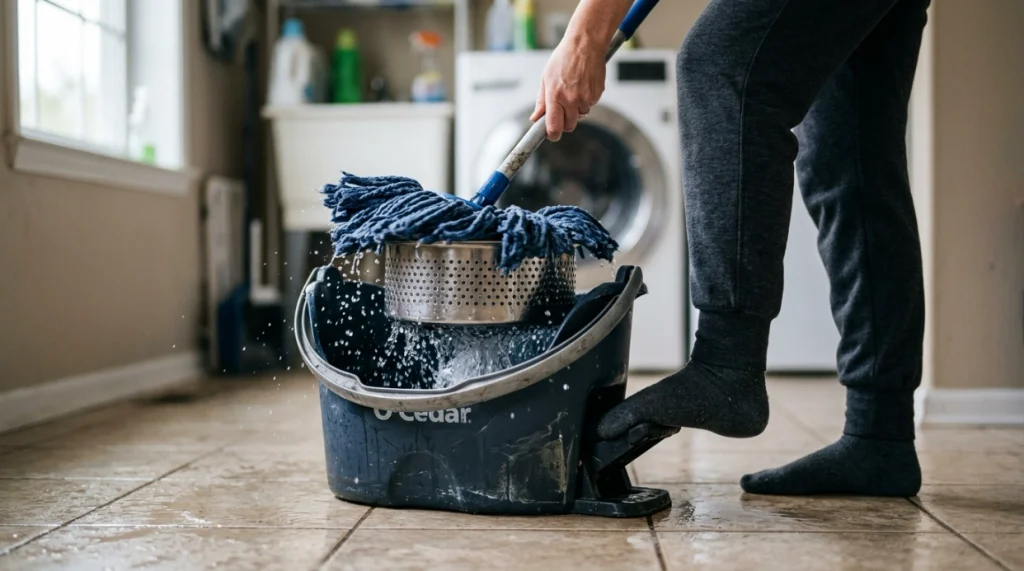
The process starts after the mop head has absorbed water or cleaning solution. You transfer the head from the washing area into the circular wringer.
1. The wet mop enters the wringer basket
Place the mop head as close to the center of the basket as possible. An off-center mop can wobble, rub the side, or spin poorly.
2. You activate the drive system
On a foot-pedal model, pushing the pedal operates gears, a ratchet, or another mechanical linkage. That movement turns the wringer assembly.
Other spin mops use movement in the handle itself. Pressing or twisting the handle activates the spinning mop head.
3. The mop starts rotating
The wet microfiber strands spread outward as rotational speed increases. Water that is loosely held in those fibers begins moving away from the center.
4. Water passes through the basket
The perforations give the released water somewhere to go. It passes through the wringer and falls back into the bucket or dirty-water chamber.
5. The mop becomes damp rather than saturated
Stopping after a short spin leaves more moisture in the mop. Continuing a little longer removes more free water.
The head will usually remain damp because water is still held between and within the fibers. A spin wringer is designed for moisture control, not complete drying.
- For heavier cleaning: Leave the mop somewhat wetter when the flooring safely tolerates it.
- For moisture-sensitive floors: Wring longer until the head feels only lightly damp.
- For a final pass: A well-wrung head can help pick up remaining water and cleaner residue.
What Actually Removes the Water From the Mop?
The simple answer is rapid rotation, commonly described as centrifugal action. The physics is similar to the spin cycle in a washing machine.
As the mop rotates, its fibers are continually forced into a circular path. Loosely held water does not remain attached as effectively, so it moves outward relative to the spinning mop.
Why the holes in the basket matter
A solid container would trap much of that released water around the mop. The wringer’s openings allow the liquid to leave the rotating area immediately.
The process becomes more effective when the mop is centered and able to rotate without obstruction. A badly tangled mop head or rubbing basket wastes some of the energy you supply.
Why doesn’t all the water come out?
Microfiber contains countless small spaces that hold moisture through absorption and capillary action. Spinning removes loose water more easily than moisture held tightly within those spaces.
That remaining moisture is useful. Floor mopping normally requires a damp cleaning surface rather than a completely dry one.
More spin speed and time can remove additional free water, but there is a practical limit. Once the head reaches a lightly damp state, extra pumping often produces only a small difference.
Foot-Pedal vs Push-Handle Spin Wringers
Not every spin mop transfers your effort in the same way. The two common manual designs use either a bucket pedal or a spinning handle mechanism.
| Wringer Type | How It Spins | Moisture Control | Main Advantage | Common Limitation |
|---|---|---|---|---|
| Foot-pedal spin wringer | Pedal drives the rotating basket or spindle | High | Hands-free wringing | Pedal and gears add moving parts |
| Push-handle spin mop | Downward handle movement drives rotation | High | No bucket pedal required | Handle mechanism can wear or jam |
| Twist wringer | Fibers are twisted or compressed | Moderate | Simple design | Usually requires more hand effort |
| Lever or squeeze wringer | Mechanical pressure squeezes the mop | Moderate | Works with many traditional mop heads | Bulkier and requires physical force |
Foot-pedal designs are especially intuitive because your foot powers the wringer while your hands guide the mop. Push-handle systems place more of the mechanism inside the pole or mop assembly.
Neither design is automatically better for every cleaner. What matters most is smooth operation and enough control to reach the moisture level your floor requires.
How Dry Should You Spin the Mop?
There is no universal number of pedal presses or handle pumps for every spin mop. Basket size, gearing, mop-head weight, water load, and floor type all change the result.
A better test is the mop itself. It should feel evenly damp without releasing streams of water when lifted from the wringer.
Use these moisture clues
- Still dripping: Spin again before mopping moisture-sensitive flooring.
- Heavy and saturated: More loose water remains in the microfiber.
- Damp and flexible: This is suitable for many routine hard-floor jobs when the flooring manufacturer permits damp mopping.
- Almost dry: Useful when you need minimal moisture or a final pickup pass.
I prefer judging the trail behind the mop rather than counting spins. A faint, even dampness is easier to control than visible puddles.
If you consistently need excessive spinning, inspect the mop head. A tangled, overloaded, or badly seated head may not rotate efficiently.
Why Is My Spin Mop Wringer Not Spinning?
A spin mop that stops wringing usually has a mechanical obstruction, alignment problem, or worn drive component. Check the simple causes before assuming the whole bucket has failed.
Check these common problems
- Mop head is off-center: Reposition it flat in the middle of the basket.
- Handle is locked: Some systems need the handle loosened or unlocked before the head can rotate freely.
- Hair is wrapped around the spindle: Remove visible hair, thread, and microfiber strands after emptying the bucket.
- Basket is rubbing: Look for a warped basket or debris lodged between moving parts.
- Bucket is overfilled: Excessive water can cause splashing and interfere with clean operation on some designs.
- Pedal slips: A worn ratchet, gear, spring, or pedal connection may fail to transfer your foot movement.
- Handle mechanism slips: Push-to-spin models can stop engaging when internal drive components wear.
What if the wringer spins slowly?
First remove the mop and test whether the empty basket moves freely according to the manufacturer’s directions. Never force a jammed mechanism.
A noticeable grinding sound, cracked plastic, repeated pedal slipping, or severe wobbling points to a mechanical problem. Replacement parts or a replacement bucket may be safer than improvised repairs.
What if the basket spins but the mop stays soaked?
Make sure the mop head is rotating with the system rather than sitting stationary inside it. A loose connection or incorrect placement can prevent effective water extraction.
Also inspect the microfiber head for heavy buildup. Cleaner residue and tangled fibers can change how easily the strands separate and release water.
How Do You Use a Spin Mop Safely on Different Floors?
The wringer’s biggest practical benefit is moisture control. That matters because different floor materials tolerate different amounts of water.
- Hardwood: Use minimal moisture and follow the finish or flooring manufacturer’s care instructions.
- Engineered wood: Keep the mop well wrung and check the manufacturer’s guidance for the specific product.
- Laminate: Avoid puddles, especially around seams and edges.
- Vinyl and LVP: Damp cleaning is common, but standing water should still be avoided.
- Ceramic or porcelain tile: These surfaces usually tolerate damp mopping well, although grout and nearby materials also matter.
- Natural stone: Moisture may be tolerated, but cleaner chemistry is critical because some acids can damage stone.
The National Wood Flooring Association’s maintenance guidance advises against wet mopping wood floors and recommends controlling moisture carefully. A spin wringer can help, but it cannot make an unsuitable cleaning method safe.
Safety note: Always check your flooring manufacturer’s care guide and the cleaning product label before applying water, chemicals, vinegar, disinfectant, or steam.
Don’t confuse cleaning with disinfecting
Routine floor cleaning usually focuses on soil, dust, spills, and residue. The CDC’s home-cleaning guidance notes that regular cleaning is generally sufficient in many household situations, while disinfection has more specific uses.
If you need a floor cleaner, choose one approved for your floor surface and use the label dilution. The EPA Safer Choice product search is another resource for researching cleaning products that meet its program criteria.
Finally, don’t leave a floor needlessly wet. Wet walking surfaces create a slip hazard, a point also addressed in OSHA guidance on wet floors.
How Do You Clean and Maintain a Spin Mop Wringer?
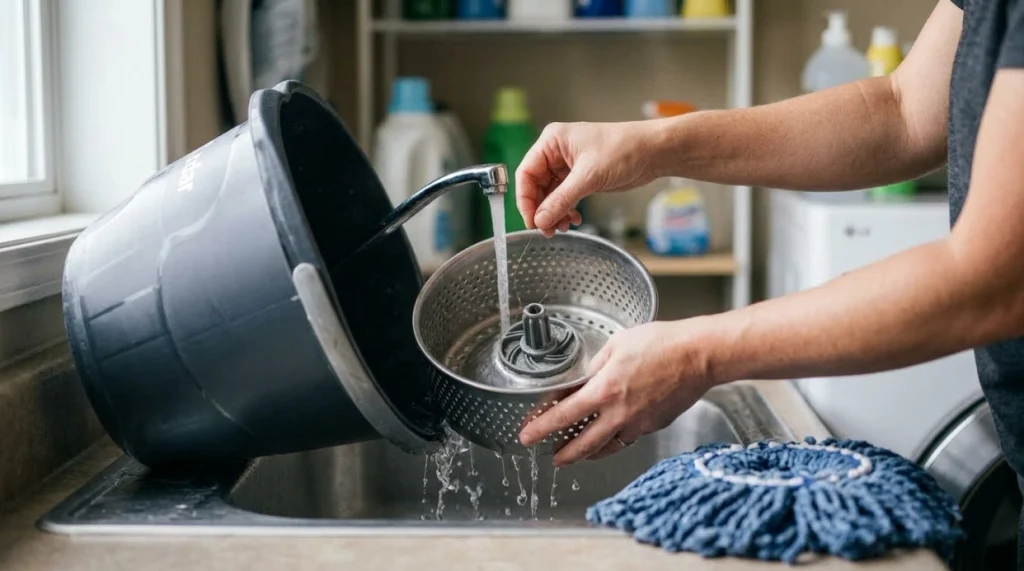
Rinse the wringer after each cleaning session. Dirty water, hair, sand, and cleaning residue can collect around the basket and spindle.
After each use
- Empty the bucket: Don’t store dirty mop water inside it.
- Rinse the basket: Flush loose grit from the holes and underside.
- Remove wrapped debris: Pull visible hair or thread away from accessible moving parts.
- Rinse the mop head: Follow its washing instructions before storing it.
- Air-dry everything: Leave the bucket and components open until dry.
Avoid pouring lubricant or household oil into the wringer unless the manufacturer specifically recommends it. Some plastics, seals, and drive mechanisms require particular maintenance methods.
Do not store the mop head wet inside a closed bucket. Better airflow helps prevent stale odors and keeps the system ready for the next floor-cleaning session.
Occasionally inspect the pedal, basket, handle connection, and mop-head attachment. Small cracks or excessive looseness are easier to deal with before the system fails during use.
Frequently Asked Questions About Spin Mop Wringers
Does a spin mop wringer clean the mop head?
No. The main job of the wringer is to remove excess water, not wash dirt from the fibers. Rinse or wash the mop head before wringing when it has collected visible soil.
Why is my mop still damp after spinning?
That is normal. Spinning removes free water efficiently, but microfiber continues holding some moisture between its fine fibers, leaving the mop damp enough to clean.
Can a spin mop wringer dry the mop completely?
Not usually. A manual wringer can remove a large amount of excess moisture, but the mop head still needs air drying after use.
Why does my spin mop pedal click?
A regular clicking sound may come from the pedal’s ratchet or drive mechanism engaging during normal operation. Grinding, slipping, cracking, or a pedal that no longer turns the basket deserves inspection.
Should I hold the mop handle tightly while spinning?
Follow your model’s instructions, because mechanisms differ. On systems where the handle or mop head needs to rotate freely, an overly tight grip can interfere with smooth spinning.
Does spinning longer always make the mop much drier?
No. The biggest reduction happens while the mop contains plenty of loose water, and later spins produce diminishing results once mostly fiber-held moisture remains.
Can a spin mop damage hardwood or laminate?
The wringer itself does not touch the floor, but an overly wet mop can expose moisture-sensitive flooring to unnecessary water. Wring thoroughly and always follow the flooring manufacturer’s cleaning instructions.
The key takeaway is simple: a spin mop wringer turns pedal or handle movement into rapid rotation, sending excess water out of the mop and through a perforated basket. That gives you control over how wet the mop reaches your floor.
Keep the mop centered, spin only as much as needed, and clean the wringer after use. Those small habits help the system work smoothly and make everyday floor cleaning easier.