
What Is a Foot Pedal Spin Mop? A Complete Guide

Quick Answer
A foot pedal spin mop is a floor-cleaning system with a mop, bucket, and foot-operated spinning wringer. Pressing the pedal rapidly rotates the wringer basket, using centrifugal force to remove water from the mop head without hand-wringing. It combines the cleaning reach of a traditional wet mop with easier moisture control, and modern mop testing shows why wringing, maneuverability, and cleaning effort matter when comparing mop styles.
What makes it different?
- Foot-powered wringing: You press a pedal instead of twisting or squeezing the mop by hand.
- Spinning basket: The wringer rotates quickly to throw excess water away from the mop fibers.
- Moisture control: Extra pedal presses leave the mop head progressively drier for moisture-sensitive floors.
- Reusable head: Most systems use washable microfiber or absorbent fiber mop heads.
- No electricity: The spinning action is mechanical, so batteries and charging aren’t required.
Quick tip
- Spin the mop until it’s damp rather than dripping, especially on laminate, engineered wood, and finished hardwood.
If you’ve seen a bucket with a pedal near its base, you’ve probably seen a foot pedal spin mop. I’ve found this style especially useful when floor cleaning requires more water than a spray mop provides but less mess than a traditional string mop creates.
This guide explains exactly how the pedal system works, where it performs well, which floors need extra care, and how it compares with other common mop types.
In This Guide
- What is a foot pedal spin mop?
- How does a foot pedal spin mop work?
- How do you use a foot pedal spin mop?
- What are the advantages and disadvantages?
- Which floors can you clean with one?
- How does a foot pedal spin mop compare with other mops?
- What should you look for when buying one?
- How do you clean and maintain a spin mop?
- Frequently asked questions
What Is a Foot Pedal Spin Mop?
A foot pedal spin mop is a manual wet-mopping system that uses a pedal-powered rotating basket to wring water from the mop head. Your foot provides the power, while the bucket’s internal mechanism creates the spinning motion.
Definition: A foot pedal spin mop is a mop-and-bucket system in which pressing a foot pedal rotates a wringer basket, removing excess liquid from the mop head through centrifugal force.
The mop itself usually has an absorbent microfiber or fiber head. Microfiber is made from extremely fine synthetic fibers that can collect dust, hair, and soil while absorbing cleaning liquid.
The bucket is what makes this system different from a normal string mop. Instead of squeezing the wet mop by hand, you place it into a spinning wringer and operate the pedal.
Main parts of a foot pedal spin mop
- Mop handle: Usually a multi-piece or telescoping pole that lets you mop while standing upright.
- Mop head: A round reusable cleaning head, commonly made from microfiber or similar absorbent material.
- Water bucket: Holds clean water or an appropriate floor-cleaning solution.
- Spin basket: Supports the mop head while it rotates and sheds excess liquid.
- Foot pedal: Drives the mechanical spinning system when repeatedly pressed.
- Gear mechanism: Transfers pedal movement into rapid basket rotation.
There’s no electric motor involved. That simplicity is one reason these mops remain popular for kitchens, bathrooms, hallways, and larger areas of hard flooring.
How Does a Foot Pedal Spin Mop Work?
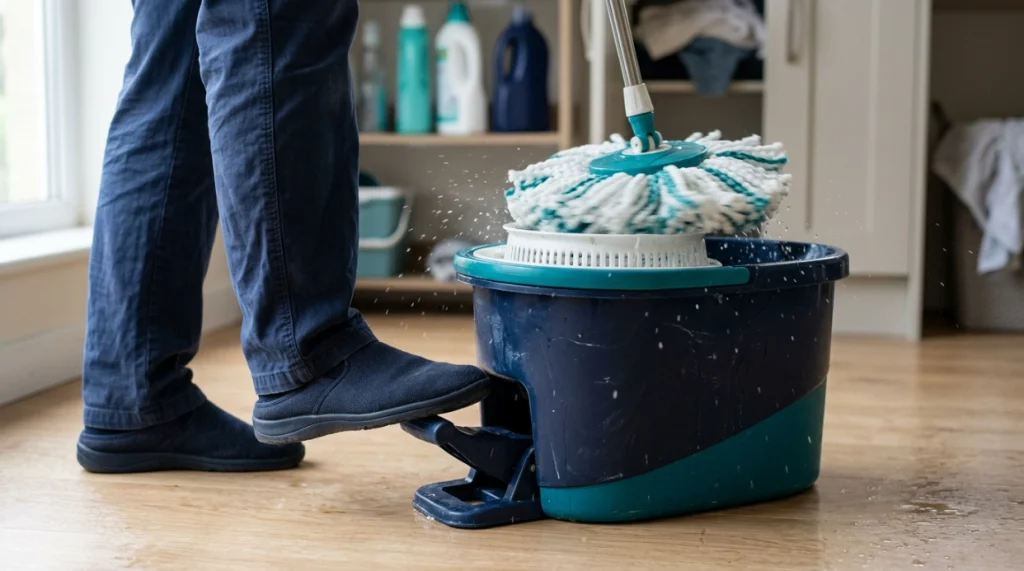
The system works by converting downward foot pressure into rotational movement. Each press of the pedal turns the bucket’s wringer mechanism and spins the mop head.
As the head rotates, water moves outward from the fibers and drains back into the bucket. This is the same basic centrifugal effect you see during a washing machine’s spin cycle.
The wringing process
- Wet the mop: Immerse the cleaning head in the water section of the bucket.
- Lift the mop: Move the wet head into the spinning wringer basket.
- Center the head: Let the mop sit evenly inside the basket before pressing the pedal.
- Press the pedal: Several controlled presses spin the basket and remove water.
- Check moisture: Spin again if you need a drier mop head.
That last step matters. One or two spins may leave the mop fairly wet, while several more pedal presses usually produce a much drier cleaning head.
In regular cleaning, I find that this control matters more than raw spinning speed. A damp mop often cleans finished floors more safely and leaves less water behind than a dripping traditional mop.
Why doesn’t the mop twist in your hands?
Most designs let the mop head rotate independently from part of the handle. The basket therefore spins the cleaning head while you keep the pole relatively steady.
You still need to follow the individual mop’s instructions. Some models require unlocking the handle or holding it in a particular position before spinning.
How Do You Use a Foot Pedal Spin Mop?
Using one is straightforward, but good technique prevents streaks and excessive water. Loose grit should come off the floor before wet mopping begins.
Step-by-step method
- Vacuum or sweep first. Remove hair, crumbs, sand, and other loose debris.
- Fill the bucket correctly. Stay below the maximum fill line so spinning doesn’t splash water.
- Add cleaner only if appropriate. Follow the cleaner label and your flooring manufacturer’s care guidance.
- Wet the mop head. Saturate enough of the fibers to loosen normal floor soil.
- Move it to the spinner. Center the mop head before operating the pedal.
- Spin to the right dampness. Use more pedal presses on floors that shouldn’t stay wet.
- Mop in manageable sections. Work from the far side of the room toward the exit.
- Rinse when dirty. Don’t keep spreading heavily soiled water across the floor.
- Let the floor dry. Keep foot traffic away until the surface is dry enough to walk on safely.
For ordinary dirt, slightly overlapping passes work well. Sticky spots may need a short second pass instead of flooding the area with more water.
Safety note: Check your flooring manufacturer’s care guide and cleaning-product label before using any chemical cleaner or applying significant moisture.
What Are the Advantages and Disadvantages?
The biggest advantage is convenient wringing without touching dirty water. The biggest drawback is that you still need to carry and maintain a bucket.
Advantages
- Hands-free wringing: Your foot operates the basket, so you don’t need to squeeze a dirty mop head manually.
- Adjustable dampness: More spinning can remove additional water before the mop reaches the floor.
- Good floor coverage: Round flexible heads can move along edges and around furniture legs.
- Reusable cleaning head: Washable microfiber reduces dependence on disposable pads.
- No charging: Mechanical operation means there are no batteries or power cords.
- Useful for larger areas: A bucket holds more cleaning liquid than a small spray-mop reservoir.
Disadvantages
- Bucket storage: The complete system takes more closet space than a flat or spray mop.
- Water weight: A filled bucket can be awkward to move between rooms or floors.
- Mechanical wear: Pedals, gears, bearings, or basket components can wear after repeated use.
- Dirty-water mixing: Basic single-chamber buckets may return the mop to increasingly dirty water.
- Extra cleanup: The bucket and mop head should be rinsed and dried after use.
- Moisture risk: Poor wringing technique can leave too much water on sensitive flooring.
If you clean only a small apartment or occasional spot, a spray mop can feel faster. For several rooms or dirtier floors, the larger bucket and reusable spinning head can be more practical.
Which Floors Can You Clean With a Foot Pedal Spin Mop?
A spin mop can handle many sealed hard floors, but the correct moisture level changes by surface. Tile generally tolerates damp cleaning better than wood-based flooring.
Tile and sealed stone
Foot pedal spin mops work well on many ceramic and porcelain tile floors. Their flexible heads also move across grout lines more easily than some rigid flat pads.
Natural stone needs more care because cleaners that are acceptable on ceramic tile may harm certain stone finishes. Use a cleaner approved for your particular stone.
Vinyl and LVP
Vinyl and luxury vinyl plank are usually well suited to controlled damp mopping. Avoid leaving puddles around seams, edges, or damaged areas.
Laminate
Use the spinner aggressively enough to leave the mop damp rather than wet. Standing liquid can reach plank joints, especially when flooring edges are damaged or poorly sealed.
Finished hardwood and engineered wood
Wood requires the greatest moisture control. The National Wood Flooring Association’s current guidance emphasizes minimizing moisture and following the flooring or finish manufacturer’s maintenance recommendations.
A spin mop can therefore be useful only when the head is wrung thoroughly and the floor’s care instructions allow damp mopping. Never assume that a product labeled “multi-surface” is automatically right for every wood finish.
Safety note: For hardwood, engineered wood, laminate, or natural stone, confirm both the mop method and cleaning solution with your floor manufacturer’s care instructions.
How Does a Foot Pedal Spin Mop Compare With Other Mops?
A foot pedal system sits between an old-fashioned bucket mop and a low-moisture spray mop. It offers more washing capacity than a spray mop without requiring hand wringing.
| Mop Type | How Moisture Is Controlled | Bucket Needed? | Best Use | Main Limitation |
|---|---|---|---|---|
| Foot pedal spin mop | Pedal-powered spinning basket | Yes | Whole-room damp mopping | Bulky bucket and moving parts |
| Hand-press spin mop | Handle is pushed to activate spinner | Yes | Similar whole-room cleaning | Requires repeated handle movement |
| Traditional string mop | Hand wringer or bucket press | Usually | Large spills and heavier wet cleaning | Can retain excessive water |
| Spray microfiber mop | Trigger applies a small amount of liquid | No | Fast touch-ups and low-moisture cleaning | Small reservoir and less rinsing ability |
| Flat microfiber mop | Pre-dampened or manually rinsed pad | Optional | Dusting and controlled damp mopping | Pads need changing as they become dirty |
Steam mops form another category because they heat water rather than simply applying cleaning solution. They shouldn’t be treated as interchangeable with spin mops on moisture-sensitive surfaces.
As of 2026, the safest approach is still to match the cleaning method to the floor rather than assume one mop works everywhere. Even a good mop can damage a surface when used with excess moisture or an incompatible cleaner.
What Should You Look for When Buying a Foot Pedal Spin Mop?
The pedal mechanism deserves as much attention as the mop head. A comfortable handle and good microfiber won’t help much if the spinner feels unstable or difficult to operate.
Features worth checking
- Stable bucket: A broad base and secure footing reduce movement while you press the pedal.
- Smooth pedal action: The mechanism should operate without excessive force or awkward foot angles.
- Replaceable mop heads: Confirm that replacement heads are readily available before buying.
- Telescoping handle: Adjustable length can reduce bending and improve reach.
- Splash control: A well-designed wringer helps keep spinning water inside the bucket.
- Drain opening: A drain plug can make emptying a large bucket easier.
- Carry handle: A strong handle matters once several liters of water are inside.
- Separate water chambers: Some systems keep cleaner water apart from heavily soiled rinse water.
What about cleaning solution?
A spin mop doesn’t require a special chemical simply because it spins. Choose the solution according to your flooring material and manufacturer recommendations.
A pH-neutral cleaner is a cleaner formulated near the middle of the pH scale and is often used where harsh acidic or alkaline products are undesirable. Don’t assume vinegar, bleach, dish soap, or another DIY mixture is safe for every floor.
If you’re choosing a general household cleaner, the EPA Safer Choice program is one useful resource for identifying products that meet its ingredient and performance criteria.
Safety note: Never mix cleaners or disinfectants unless the product labels specifically direct you to do so, and always confirm floor compatibility first.
How Do You Clean and Maintain a Spin Mop?
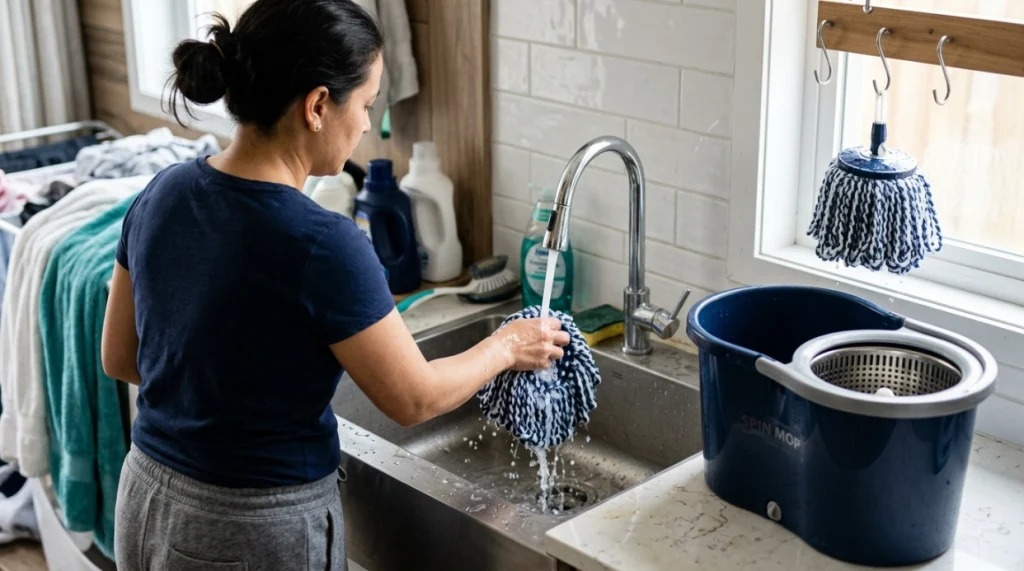
Rinsing the system immediately after cleaning helps prevent odors, residue, and grime buildup. I avoid storing any spin mop while the head or bucket is still wet.
After each use
- Empty the bucket: Don’t leave dirty mop water sitting overnight.
- Rinse the bucket: Remove sediment and cleaning-product residue from the bottom and sides.
- Rinse the mop head: Keep rinsing until heavily soiled water stops coming out.
- Spin out moisture: Use the wringer to remove as much remaining water as practical.
- Air-dry completely: Let the mop head dry in a ventilated area before storage.
- Check the spinner: Remove hair or threads caught around moving components.
Wash reusable microfiber correctly
Follow the mop manufacturer’s washing instructions because attachment methods and fiber blends differ. Avoid automatically using fabric softener, which can coat microfiber and reduce its ability to pick up moisture and soil.
Cleaning versus disinfecting
Routine floor cleaning and disinfection aren’t the same task. The CDC’s household cleaning guidance explains that regular cleaning is sufficient in many normal household situations, while disinfection becomes more relevant in circumstances such as illness.
When a disinfectant is needed, follow its label for surface suitability, dilution, ventilation, and required contact time. A spin mop shouldn’t be used to improvise a disinfecting procedure that conflicts with either the chemical label or flooring instructions.
Safety note: Use disinfectants only as directed on the product label, and never mix household cleaning chemicals.
Frequently Asked Questions
Does a foot pedal spin mop need electricity?
No. A foot pedal spin mop normally uses a mechanical gear system powered by your foot. Pressing the pedal rotates the wringer basket, so there is no battery, charger, wall outlet, or electric motor to operate.
Is a foot pedal spin mop better than a regular mop?
It can make wringing easier and provide better control over how wet the mop head remains. A traditional mop may still suit heavy spill absorption, while a spray or flat microfiber mop can be more convenient for small, quick cleaning jobs.
Can you use a foot pedal spin mop on hardwood floors?
Only when your hardwood manufacturer allows damp mopping. Spin the head thoroughly so it is only lightly damp, clean small sections, and avoid standing water. Wood finishes vary, so the flooring manufacturer’s care instructions should take priority.
Can you use a spin mop on laminate flooring?
Many laminate floors can be cleaned with a well-wrung microfiber mop, but excess water around seams can be risky. Use minimal liquid and check your laminate manufacturer’s instructions because water resistance varies between products.
Why is the foot pedal useful?
The pedal lets you wring the mop without bending over or squeezing the cleaning head by hand. Repeated presses also let you control moisture, making the head wetter for suitable tile cleaning or drier for more moisture-sensitive surfaces.
How often should you wash a spin mop head?
Rinse it after every mopping session and wash it according to the manufacturer’s care instructions whenever it becomes heavily soiled. A clean mop head reduces the chance of spreading old dirt, residue, and odors during your next cleaning session.
How long does a foot pedal spin mop last?
There isn’t one reliable lifespan for the entire category. Durability depends on pedal construction, gears, bucket quality, handle joints, replacement-head availability, cleaning frequency, and how much force you apply to the mechanism.
Bottom line: A foot pedal spin mop is a bucket-based floor-cleaning system that uses a foot-powered spinning wringer to remove excess water from a reusable mop head.
It’s especially useful when you want hands-free wringing and more moisture control than a basic wet mop provides. Choose a stable bucket, use the right cleaner for your floor, keep the mop only as wet as necessary, and clean the system after every use.