
Single Bucket vs Dual Bucket Spin Mop: Which Is Better?

Quick Answer
A single bucket spin mop is simpler, lighter, and easier to store, making it a practical choice for routine floor cleaning. A dual bucket spin mop keeps cleaner water separate from dirty rinse water, so I prefer that design for larger homes, muddy floors, pet messes, and heavier cleaning. Whichever system you choose, use a cleaner suitable for your flooring and follow CDC home cleaning guidance when extra sanitation is needed.
Main differences
- Water separation: Dual bucket systems keep clean and dirty water apart more effectively.
- Ease of use: Single bucket systems usually require less setup and fewer parts.
- Floor hygiene: Dual systems reduce how often the mop head returns to the floor with visibly dirty rinse water.
- Storage: A single bucket normally takes up less closet or utility-room space.
- Best use: Single buckets suit maintenance cleaning, while dual buckets make more sense for dirtier or larger areas.
Choosing between a single bucket vs dual bucket spin mop sounds simple until you start cleaning a whole floor. The bucket design changes how often you replace water, how much equipment you carry, and how clean your mop head stays.
I also pay close attention to moisture control. A good spin mop should remove enough water from the microfiber head that you’re cleaning the floor, not flooding it.
In This Guide
- What Is the Difference Between a Single and Dual Bucket Spin Mop?
- Single Bucket vs Dual Bucket Spin Mop Comparison
- When Is a Single Bucket Spin Mop Better?
- When Is a Dual Bucket Spin Mop Better?
- Which Bucket System Works Best for Different Floors?
- How Do You Get the Best Results From a Spin Mop?
- What Should You Look for Before Buying?
- Which Spin Mop System Should You Choose?
- Frequently Asked Questions
What Is the Difference Between a Single and Dual Bucket Spin Mop?
A spin mop is a floor-cleaning system that uses a rotating wringer to remove water from a washable mop head. You control how damp the mop becomes by spinning it before it touches the floor.
How a single bucket spin mop works
A single bucket system uses one main bucket for the cleaning process. The mop head is rinsed and wrung within the same overall system.
Designs vary. Some have a separate spinner basket above the water, while others place the washing and spinning mechanisms side by side.
- Fewer components: There is less equipment to assemble, carry, rinse, and store.
- Fast setup: You normally fill one bucket and start cleaning.
- Compact storage: Smaller designs fit more easily under sinks or inside utility closets.
- Potential drawback: Soil removed from the mop can end up in the same water used during later rinses.
How a dual bucket spin mop works
A dual bucket system separates the clean-water stage from the dirty-water stage. Depending on the design, it may use two chambers or physically separate reservoirs.
The main advantage is simple. You aren’t repeatedly relying on one increasingly dirty pool of water.
- Cleaner rinse cycle: Fresh cleaning water remains separated from much of the removed dirt.
- Better for heavy soil: Mud, pet debris, and kitchen grime are easier to manage.
- More parts: The system is usually larger and takes longer to wash afterward.
- Heavier setup: Extra chambers and water can make moving the bucket less convenient.
Single Bucket vs Dual Bucket Spin Mop Comparison
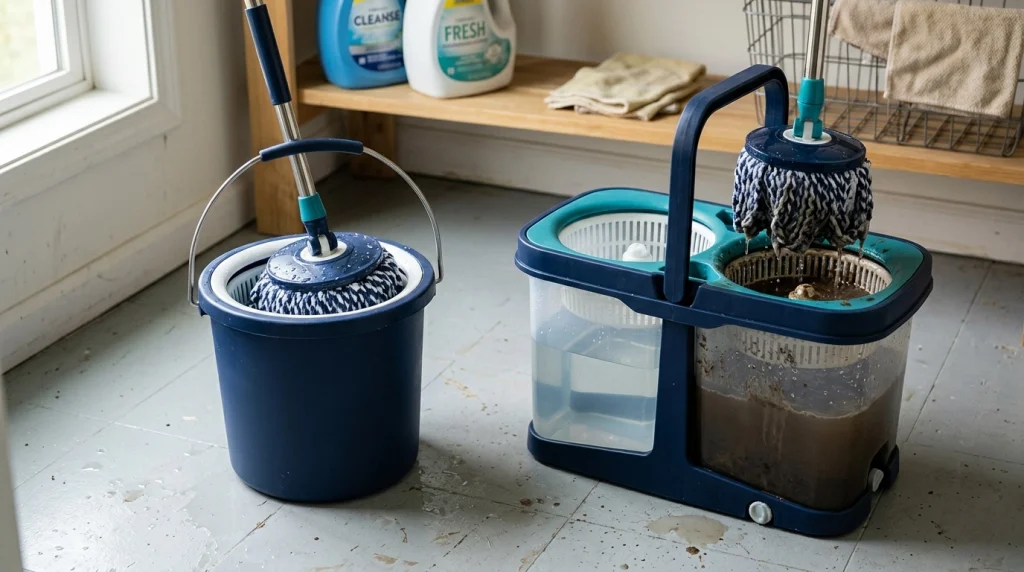
The biggest difference isn’t spinning speed. It’s water management.
For light maintenance, the simpler system often wins. Once the floor gets genuinely dirty, separating rinse water becomes much more useful.
| Feature | Single Bucket Spin Mop | Dual Bucket Spin Mop |
|---|---|---|
| Water chambers | One main system | Separate clean and dirty zones |
| Setup | Usually quicker | Usually more involved |
| Dirty-water control | Limited | Better separation |
| Storage space | Generally smaller | Generally larger |
| Carrying | Usually easier | Can become heavier |
| Light weekly cleaning | Excellent fit | More equipment than necessary for some homes |
| Muddy or heavily soiled floors | Requires more water changes | Better suited |
| Small apartments | Usually more practical | May take unnecessary space |
One detail is easy to miss. A dual bucket isn’t automatically better if its clean and dirty sections are tiny or awkward to empty.
Bucket layout matters as much as bucket count. I would choose a well-designed single bucket over a frustrating dual system every time.
When Is a Single Bucket Spin Mop Better?
A single bucket spin mop makes the most sense when simplicity matters more than water separation. It’s especially practical for smaller areas that aren’t heavily soiled.
Small apartments and limited storage
Storage is where single bucket designs have a clear advantage. A compact bucket is easier to fit beside a vacuum or cleaning caddy.
This matters more than it sounds. Oversized cleaning equipment often gets used less because getting it out becomes a chore.
Quick maintenance cleaning
If I’m removing footprints, light dust, or small food marks, I don’t need an elaborate wash system. I want to fill the bucket, clean the floor, and empty it.
- Apartment kitchens
- Small bathrooms
- Entryways with light traffic
- Routine tile maintenance
- Quick vinyl or LVP cleaning
Homes with stairs
A lighter bucket is easier to move between floors. That’s important when you’re carrying cleaning equipment on stairs.
Don’t overfill the bucket. A partially filled bucket is usually easier and safer to control.
When Is a Dual Bucket Spin Mop Better?
A dual bucket spin mop becomes more useful when the mop head is collecting substantial dirt. Separating the dirty rinse water helps keep the cleaning process more controlled.
Homes with pets or children
Paw prints, crumbs, dried spills, and tracked soil can turn mop water cloudy fast. This is where I notice the biggest practical difference between the two systems.
With separate water zones, I don’t feel the same pressure to replace the entire bucket after every dirty section.
Large tile areas
Tile kitchens, hallways, and open living areas can require many rinse cycles. A dual system handles those longer sessions better.
- Clean zone: Supplies fresher water to the mop head.
- Dirty zone: Receives much of the loosened soil.
- Wringer: Removes excess moisture before the next pass.
Heavy dirt and seasonal messes
Rainy-day footprints and muddy entrances quickly contaminate mop water. A dual bucket won’t eliminate the need for water changes, but it can delay them.
I still replace the water when it becomes obviously dirty. Separation helps, but it doesn’t make cleaning water permanent.
Section Takeaway: Dual bucket spin mops are most useful when you’re cleaning larger areas or removing enough soil that one bucket of rinse water quickly becomes dirty.
Which Bucket System Works Best for Different Floors?
The bucket configuration matters less than how much moisture reaches the floor. Floor compatibility should always come first.
Hardwood and engineered wood
Use as little moisture as your floor manufacturer recommends. The National Wood Flooring Association advises that a mop used on wood should be well wrung so moisture left on the surface stays minimal.
That makes an efficient spinner more important than having one or two buckets. The mop head should feel damp rather than saturated.
See the National Wood Flooring Association for professional wood-floor information.
Safety note: Always check your flooring manufacturer’s care instructions before wet-cleaning hardwood or engineered wood.
Laminate
Laminate also benefits from tight moisture control. Water that remains around seams or damaged edges can create problems.
Spin the mop thoroughly and work in manageable sections. Don’t leave puddles behind.
Vinyl and LVP
Vinyl and luxury vinyl plank generally make spin-mop cleaning convenient when the flooring maker permits damp mopping. I still avoid soaking seams or repeatedly flooding the surface.
A single bucket handles ordinary maintenance well. Dual buckets become helpful when you’re cleaning a large, dirty vinyl area.
Ceramic and porcelain tile
Tile is where I get the most value from a dual system. It can handle wetter cleaning and heavier soil more comfortably than moisture-sensitive flooring.
Remember that a soft microfiber mop may glide over recessed grout. Spot-scrub dirty grout before finishing the surrounding floor.
Natural stone
Use a cleaner specifically approved for your stone and sealer. Marble, limestone, travertine, and similar materials can react badly to unsuitable acidic cleaners.
Safety note: Don’t assume vinegar or another DIY cleaner is safe for natural stone. Check the stone manufacturer’s or installer’s care guidance first.
How Do You Get the Best Results From a Spin Mop?
Good technique matters more than upgrading from one bucket to two. The cleanest results start before the wet mop touches the floor.
- Remove loose debris. Vacuum, sweep, or dry-mop grit and hair first.
- Fill with suitable water and cleaner. Follow your floor-cleaner label rather than guessing the concentration.
- Wet the mop head. Allow microfiber strands to absorb the solution evenly.
- Spin thoroughly. Remove enough liquid for the floor you’re cleaning.
- Work in sections. Clean a manageable area before rinsing again.
- Rinse when visibly dirty. Don’t continue spreading heavily contaminated water.
- Change water when needed. Even a dual bucket eventually needs fresh water.
- Wash the mop head. Follow its care label and dry it fully before storage.
Don’t confuse cleaning with disinfecting
Routine floor cleaning removes dirt and many germs through detergent, water, and physical action. CDC guidance says disinfecting every household surface is generally unnecessary unless circumstances call for it, such as illness in the home.
EPA also separates the terms cleaning, sanitizing, and disinfecting. If you use an EPA-registered disinfectant, follow its label and required contact time.
Never assume adding extra chemical makes a mop solution work better. More cleaner can leave residue and may create unnecessary floor-care problems.
Safety note: Never mix cleaning chemicals unless the product labels explicitly allow it. Check both the floor-care instructions and cleaning-product label before use.
What Should You Look for Before Buying?
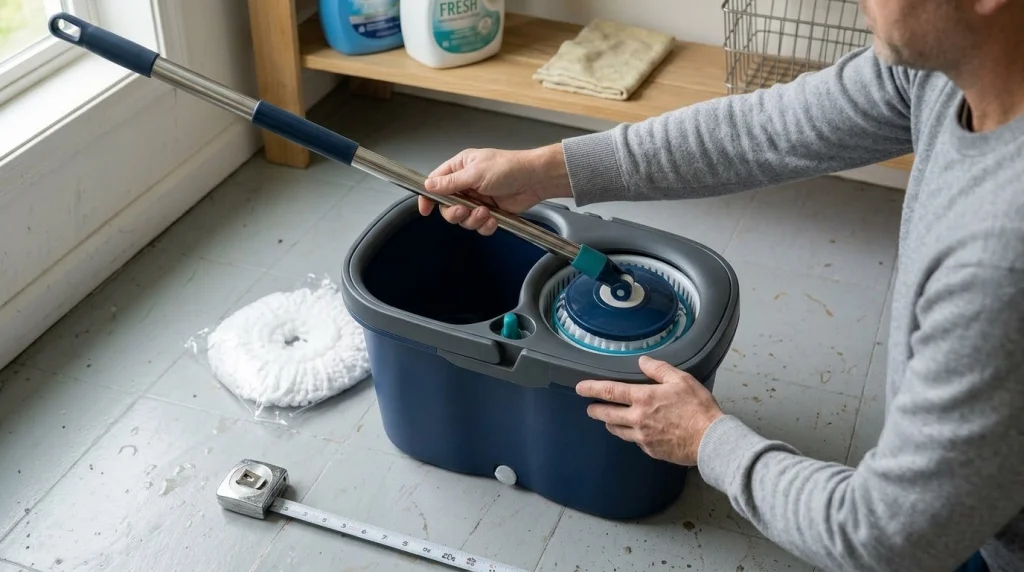
Don’t choose a spin mop based only on the words “single” or “dual.” Several smaller design details affect everyday use more.
- Wringer performance: Look for a spinner that lets you control how damp the mop head remains.
- Bucket stability: A wide, balanced base is less frustrating during vigorous spinning.
- Drain plug: This can make a large bucket easier to empty without lifting the full weight.
- Handle length: A comfortable handle reduces bending during larger cleaning jobs.
- Mop-head shape: Round heads cover open flooring well, while flexible designs help around furniture.
- Replacement heads: Make sure compatible microfiber heads are easy to obtain.
- Bucket footprint: Measure your storage area before buying an oversized dual-chamber model.
- Splash control: An enclosed spinner can reduce water spraying around the bucket.
- Separate water chambers: On dual models, check whether the chambers truly prevent dirty rinse water from mixing with the clean supply.
Think about cleanup after mopping
I always consider how annoying the bucket will be to clean afterward. Narrow chambers and complicated internal parts can trap hair and debris.
A simple bucket that rinses clean in a minute can be more useful than an advanced design that takes ten minutes to wash out.
Consider your cleaning solution
For routine cleaning, use a product approved for the flooring. EPA’s Safer Choice program is also a useful resource when you’re comparing household cleaning-product ingredients.
Disinfection is a different task. CDC advises cleaning surfaces first and using disinfectants when they’re appropriate rather than treating every cleaning session as disinfection.
Section Takeaway: Buy around your floor type, storage space, mess level, and wringer quality. Bucket count should support those needs rather than drive the decision by itself.
Which Spin Mop System Should You Choose?
Choose a single bucket spin mop if you want fast setup, compact storage, and straightforward routine cleaning. It’s usually enough for apartments, smaller houses, and floors that receive regular maintenance.
Choose a dual bucket spin mop when clean-water separation matters more. It makes more sense for large tiled areas, pets, children, muddy entryways, and heavier cleaning days.
Choose a single bucket if you:
- Have limited storage space
- Clean relatively small areas
- Mop frequently before floors become heavily dirty
- Carry the bucket upstairs
- Prefer fewer parts to clean afterward
Choose a dual bucket if you:
- Clean large hard-floor areas
- Deal with pets, mud, or substantial visible soil
- Want better separation between fresh and dirty water
- Don’t mind a larger bucket
- Often complete longer wet-mopping sessions
As of 2026, I don’t consider the dual bucket design an automatic upgrade for every home. For light cleaning, its extra size can solve a problem you don’t have.
For genuinely dirty floors, though, water separation is useful. That’s the situation where I’d be most likely to choose the dual system.
Frequently Asked Questions
Is a dual bucket spin mop more hygienic?
A dual bucket system can keep cleaning water visibly cleaner by separating much of the dirty rinse water. However, hygiene still depends on changing dirty water, washing the mop head, using suitable cleaner, and allowing reusable pads or heads to dry fully.
Does a single bucket spin mop spread dirty water?
It can if you continue rinsing a dirty mop head in increasingly contaminated water. For lightly soiled floors, this may be manageable. On muddy or heavily dirty floors, replace the water more often or use a system that separates clean and dirty water.
Are dual bucket spin mops worth it?
They can be worthwhile for large homes, pets, children, muddy floors, and frequent deep cleaning. For a small apartment with lightly soiled floors, the larger bucket and extra cleaning steps may offer little practical benefit.
Can I use a spin mop on hardwood floors?
Only if your flooring manufacturer permits damp mopping. Use a well-wrung mop with minimal moisture, clean small sections, and never leave standing water. Wood-floor guidance emphasizes reducing moisture and following the manufacturer’s recommended cleaner.
How often should I change spin mop water?
Change it whenever the water becomes visibly dirty, develops debris, or stops allowing you to rinse the mop effectively. There isn’t one useful fixed number of rooms because soil levels, bucket size, pets, and floor conditions vary widely.
Can I put disinfectant in a spin mop bucket?
Only when the disinfectant label allows that application and the product is compatible with your floor. Follow dilution and contact-time instructions exactly. For normal household cleaning, CDC says routine cleaning is usually enough unless additional disinfection is needed.
Which spin mop is better for pet owners?
A dual bucket system is often more convenient when pets regularly track mud, hair, and outdoor dirt across hard floors. Separating dirty rinse water helps during longer cleaning sessions, although loose pet hair should still be vacuumed or swept before wet mopping.
Final Takeaway
The single bucket vs dual bucket spin mop decision comes down to how dirty your floors get and how much equipment you want to manage. One bucket favors simplicity, while two-water-zone designs favor cleaner rinsing during heavier jobs.
For routine apartment or small-home cleaning, I’d keep things simple. For pets, muddy traffic, big tile areas, or long cleaning sessions, I’d choose the better water separation of a dual bucket system.