
How Does a Handle Spin Wringer Work?

Quick Answer
A handle spin wringer works by converting a pumping or twisting movement into rotation that squeezes water out of a mop head. In a spin mop bucket, the handle or a connected mechanism drives the mop head inside a perforated basket, allowing centrifugal force to throw water through the openings. You can adjust how much water remains by changing how long and how quickly you spin the mop.
How the mechanism works
- Handle movement: Pumping or twisting the handle starts the wringing mechanism.
- Drive connection: Gears, a shaft, or a rotating joint transfers movement to the mop head.
- Basket rotation: The mop head spins inside a perforated basket in compatible bucket designs.
- Water removal: Rotation pushes water outward through the basket openings.
- Moisture control: A shorter spin generally leaves more water in the mop, while a longer spin removes more.
Quick operating tip
- Lock the mop head into its wringing position, keep it centered in the basket, and follow the bucket manufacturer’s instructions before spinning.
A spin mop makes floor cleaning easier by removing much of the water without requiring you to squeeze a wet mop by hand. The handle spin wringer is the part that makes this possible, although different models use different mechanisms.
In this guide, I’ll explain how the mechanism transfers movement, what happens inside the bucket, how to control moisture, and how to troubleshoot common problems. I’ll also cover floor-care considerations so you can wring the mop effectively without leaving your floors too wet.
In This Guide
- What Is a Handle Spin Wringer?
- How Does the Handle Mechanism Work?
- What Happens Inside a Spin Mop Bucket?
- How Do You Use a Handle Spin Wringer Correctly?
- How Do Different Wringer Mechanisms Compare?
- Why Is a Spin Wringer Not Working?
- How Much Water Should a Spin Mop Remove?
- How Do You Maintain a Spin Wringer?
- Frequently Asked Questions
What Is a Handle Spin Wringer?
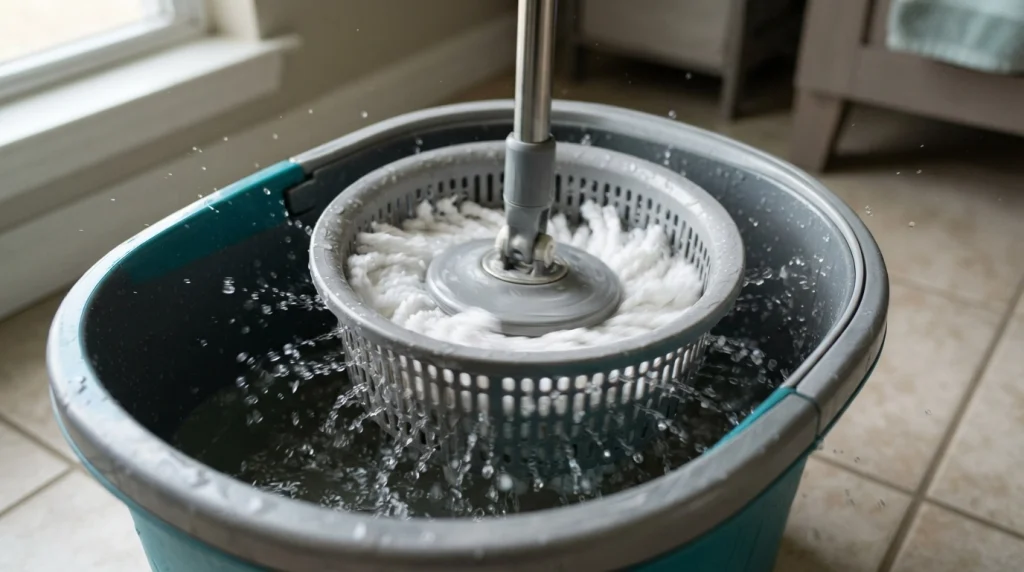
A handle spin wringer is a mop-wringing mechanism that uses handle movement to rotate a mop head or operate a spinning basket. Its purpose is to remove excess cleaning water while keeping your hands away from the dirty mop fibers.
How is it different from a regular mop wringer?
A traditional squeeze wringer presses a mop head between rigid surfaces to force water out. A spin wringer instead uses rotation, although some spin mop designs use a foot pedal or another control to initiate that rotation.
The term handle spin wringer can describe more than one design. Some models have a handle that pumps vertically, while others use a twisting handle or a shaft that connects to a rotating mop head.
- Spin mop system: The handle engages a mechanism that rotates the mop head inside a bucket basket.
- Manual twist wringer: Twisting the handle compresses or rotates the mop fibers to release water.
- Lever-operated wringer: A handle moves a pressing mechanism that squeezes water from the mop.
What parts make up a handle spin wringer?
Most bucket-based spin mop systems combine several working parts. The exact arrangement depends on the manufacturer and model.
- Handle and grip: The part you hold to provide the movement needed for wringing.
- Drive shaft: A connecting rod that transfers movement to the rotating assembly in compatible designs.
- Drive joint or gear assembly: Converts or transfers the handle’s movement into rotation.
- Mop head connector: Holds the mop head in place and allows it to rotate.
- Perforated basket: Supports the spinning mop head while allowing expelled water to pass through.
- Bucket: Collects the water removed during wringing.
Not every mop includes every component as a separate part. Some use a simpler direct-drive arrangement, while others rely on gears, a locking joint, or a pedal-assisted assembly.
How Does the Handle Mechanism Work?
The handle works by transferring your physical effort into rotational movement. The mechanism then spins the mop head, allowing water to escape from the fibers.
Step 1: The handle creates movement
Depending on the design, you pump the handle up and down, twist it, or apply pressure through a connected control. This movement supplies the mechanical energy needed to turn the mop head.
Some handles contain a telescoping section or locking joint that must be correctly positioned before the wringer engages. If the handle feels unusually loose, check the assembly instructions before applying more force.
Step 2: The drive mechanism transfers the force
A shaft, gear arrangement, or rotating connector carries movement from the handle to the mop head. In a pump-style design, repeated handle strokes can engage a drive mechanism that increases the rotational speed of the head.
Many systems use a one-way clutch or a similar directional mechanism to control how the drive engages. However, not every spin mop uses the same internal design, so you shouldn’t assume that all models contain identical gears or springs.
Step 3: The mop head begins spinning
Once the drive engages, the mop head rotates within the wringer basket. The basket helps contain the rotating mop fibers and provides openings for water to escape.
Keep the mop head properly seated during this process. An off-center head can wobble, rub against the basket, or prevent the mechanism from rotating smoothly.
Step 4: The movement removes excess water
As the mop spins, water within its fibers moves outward because of centrifugal effects. The water passes through the basket openings and drains into the bucket.
In everyday use, people often call this process centrifugal wringing. The main point is simple: rotation helps separate water from the mop fibers without squeezing the entire head between two solid surfaces.
The amount of water removed depends on rotational speed, spinning time, mop-head material, and how much water the head absorbed. A brief spin may be enough for a slightly damp mop, while a saturated head may need a longer cycle.
Section Takeaway: The handle supplies movement, the drive transfers it, and the rotating mop head releases water through the basket. The internal mechanism varies by model.
What Happens Inside a Spin Mop Bucket?
The bucket provides a stable place for the mop head to spin while collecting the water it releases. In most bucket-based spin mop systems, the wringer basket is the key component that makes this process practical.
Why does the basket have holes?
The basket’s openings let water leave the rotating mop head rather than allowing it to pool around the fibers. The surrounding bucket catches the expelled water and keeps it contained.
The basket also helps guide and support the mop head during spinning. It is not designed to be completely sealed because the wringing process depends on water being able to escape.
Does the mop need to touch the basket?
The mop head must sit correctly within the basket, but it should not jam against the sides. Follow the manufacturer’s instructions for positioning and engaging the mop head before spinning.
If the head catches, tilts, or strikes the basket repeatedly, stop and reposition it. Forcing a misaligned mop can strain the connector or damage plastic components.
Where does the removed water go?
Water travels through the basket openings into the main bucket reservoir. When the water level becomes too high, empty the bucket before continuing to avoid splashing or spilling.
Dirty water can also collect loose hair, dust, and other debris. Emptying and rinsing the bucket after cleaning helps prevent residue from building up around the wringer.
Why does the mop sometimes remain wet?
Microfiber mop heads hold water within their many fine fibers. A spin wringer removes excess moisture, but it does not necessarily make the head completely dry.
A very wet head may need additional spinning, provided the manufacturer permits it. If spinning makes little difference, inspect the drive connection, basket alignment, and mop-head condition rather than pushing harder on the handle.
How Do You Use a Handle Spin Wringer Correctly?
Correct operation helps remove excess water without placing unnecessary strain on the handle or drive mechanism. The best approach is to use short, controlled cycles and check the mop’s moisture before cleaning the floor.
Follow these steps
- Prepare the bucket: Add water and a compatible floor cleaner according to the product label, if needed.
- Wet the mop head: Immerse the mop fibers and allow them to absorb enough solution for cleaning.
- Position the mop: Place the head inside the designated wringer basket.
- Engage the mechanism: Lock or position the handle as directed by the model’s instructions.
- Start gently: Pump or twist the handle using the intended movement, without forcing it.
- Check moisture: Stop after a short cycle and assess whether the mop is still dripping.
- Repeat if necessary: Continue briefly until the mop reaches the moisture level appropriate for your floor.
How long should you spin the mop?
There is no universal wringing time for every spin mop. The right duration depends on the mechanism, the mop-head material, and how wet the fibers are at the start.
Rather than relying on a fixed number of seconds, begin with a short spin and inspect the result. Increase the duration gradually if the mop still releases too much water during use.
What mistakes should you avoid?
- Overloading the basket: Don’t force a bulky or incorrectly fitted mop head into the wringer.
- Forcing a stuck handle: Stop if the handle jams or the drive fails to engage.
- Spinning an unsecured head: Confirm that the head is attached and positioned as instructed.
- Ignoring splashes: Keep your face and hands clear of the rotating assembly.
- Using excessive force: The mechanism should operate with its intended motion, not brute strength.
For general cleaning safety, follow the directions on your floor cleaner and the equipment manufacturer’s instructions. The CDC’s hygiene guidance is also a useful starting point for understanding why cleaning tools should be kept clean between uses.
How Do Different Wringer Mechanisms Compare?
Not all mop wringers convert movement into water removal in the same way. The main difference is whether the system relies on rotation, direct compression, or powered movement.
| Wringer type | How it works | Main consideration |
|---|---|---|
| Handle spin wringer | Handle movement drives a rotating mop head or wringing assembly. | Requires correct positioning and a functioning drive connection. |
| Foot-pedal spin wringer | Pressing a pedal engages a mechanism that spins the mop basket or head. | Pedal linkage and spring components may need inspection. |
| Squeeze wringer | A lever or press compresses the mop fibers to force out water. | Works differently from centrifugal spinning and may require more direct effort. |
| Manual twist wringer | Twisting the handle or mop assembly compresses or twists the fibers. | Performance depends on the design and how the fibers respond to twisting. |
| Electric mop system | A motor powers cleaning or, in compatible systems, a separate wringing function. | Powered cleaning does not automatically mean the mop has a spin wringer. |
Is a handle spin wringer better than a foot-pedal wringer?
Neither design is automatically better for every user. A handle-operated system may suit someone who prefers controlling the mop directly, while a pedal-operated model can leave both hands available to guide the mop handle.
Consider comfort, replacement-part availability, bucket stability, and how easily the mop reaches your preferred moisture level. The most useful mechanism is the one you can operate smoothly without straining your hands, wrists, or back.
How does a spin mop compare with other mop types?
- Flat microfiber mop: Uses a flat pad and often a separate wringing system, making it convenient for edges and narrow spaces.
- Traditional string mop: Absorbs substantial water, but the amount removed depends on its wringer and fiber construction.
- Steam mop: Uses heated steam for cleaning and does not generally rely on a bucket-based spin wringer.
- Cordless electric mop: Uses powered rollers or pads for cleaning; water recovery and wringing depend on the specific design.
For a conventional spin mop, the main advantage is straightforward moisture control without hand-squeezing the mop head. Its limitations include moving parts that can wear, a bucket that needs storage space, and the need to keep the basket and drive mechanism clean.
Section Takeaway: Handle, pedal, squeeze, and powered systems use different mechanisms. Compare how each operates rather than assuming all wringers work alike.
Why Is a Spin Wringer Not Working?
A spin wringer that stops rotating, slips, or removes little water may have a positioning problem, a worn connection, or debris interfering with movement. Check simple causes first and avoid forcing the mechanism.
Why does the handle spin without turning the mop?
The handle may not be engaging the drive mechanism, or a connector may have loosened. Check that the handle is assembled correctly and that any locking collar or attachment is secured.
If the handle turns freely despite correct assembly, an internal gear, clutch, or connecting component may be worn. Consult the model’s repair guidance before replacing parts.
Why does the mop head wobble?
A loose mop-head connector, an unevenly fitted head, or a damaged basket can cause wobbling. Stop the wringer, remove the head, and check that the attachment and basket are correctly seated.
Replace damaged components rather than continuing to spin an unstable assembly. Persistent wobbling can place additional stress on the drive parts and may cause water to splash outside the bucket.
Why won’t the mop spin at all?
- Check the handle lock: Confirm that the mechanism is in the correct operating position.
- Inspect the basket: Look for hair, string, or debris blocking its movement.
- Check the connection: Make sure the mop head is attached as instructed.
- Look for damage: Inspect accessible joints and plastic parts for cracks or looseness.
- Review the instructions: Some models require a particular pumping motion or handle position.
Keep fingers away from moving parts while inspecting the wringer. Never dismantle a spring-loaded or geared mechanism unless the manufacturer provides safe service instructions.
What if the wringer spins but leaves the mop too wet?
First, try another short wringing cycle and check whether the mop fibers release more water. If the result doesn’t improve, make sure the head isn’t overloaded, tangled, or positioned incorrectly.
A worn drive mechanism may also fail to reach its intended speed. If correct operation doesn’t restore performance, check whether replacement parts or a new wringer assembly are available for your model.
Section Takeaway: Correct assembly, a clear basket, and a secure drive connection solve many basic wringer problems. Stop using any mechanism that cracks, jams, or wobbles severely.
How Much Water Should a Spin Mop Remove?
The ideal moisture level depends on the floor material and its manufacturer’s care instructions. The goal is to remove enough water for effective cleaning while avoiding standing water and excessive moisture.
Hardwood and engineered wood
Wood flooring can be damaged by excessive moisture, especially when water reaches seams, exposed edges, or damaged finishes. Use a mop that is only lightly damp and follow the floor manufacturer’s cleaning guidance.
Engineered wood has a layered construction, but that doesn’t make every product waterproof. Avoid leaving puddles or allowing water to remain in joints.
Laminate and vinyl flooring
Laminate flooring can be vulnerable to water entering joints and edges, depending on its construction and installation. A well-wrung microfiber mop is often a sensible choice when the flooring manufacturer permits damp mopping.
Vinyl and luxury vinyl plank (LVP) generally tolerate routine damp cleaning better than many wood-based surfaces, but excessive water and unsuitable cleaning products can still cause problems. Follow the product’s care instructions.
Tile, stone, and concrete
Glazed ceramic and porcelain tile usually tolerate damp mopping well, although grout and surrounding materials may need special care. Natural stone can be sensitive to acidic cleaners, so check whether a stone-safe, pH-neutral product is recommended.
Sealed concrete also varies in its cleaning needs according to the coating and finish. Don’t assume an unsealed, polished, or coated surface can tolerate the same cleaner or amount of water.
Safety note: Check your flooring manufacturer’s care guide and the cleaner’s label before using water, vinegar-based solutions, disinfectants, or other chemicals. Never assume a cleaner is suitable for every floor.
Floor-care comparison
| Floor type | Practical mop moisture | Important precaution |
|---|---|---|
| Finished hardwood | Lightly damp | Prevent standing water and wet seams. |
| Engineered wood | Lightly damp, if permitted | Follow the flooring’s specific moisture limits. |
| Laminate | Well-wrung and minimally wet | Keep water away from joints and edges. |
| Vinyl or LVP | Damp, according to product guidance | Avoid unsuitable chemicals and excess water. |
| Ceramic or porcelain tile | Damp to moderately wet, as needed | Check grout and finish compatibility. |
| Natural stone | Damp, using an approved cleaner | Avoid acids unless specifically approved. |
For wood-specific recommendations, consult the National Wood Flooring Association and your flooring manufacturer’s instructions. These resources can help you avoid using too much water or the wrong cleaner on finished wood.
As of 2026, the safest general rule remains the same: match mop moisture and cleaning products to the actual floor material, finish, and care instructions.
How Do You Maintain a Spin Wringer?
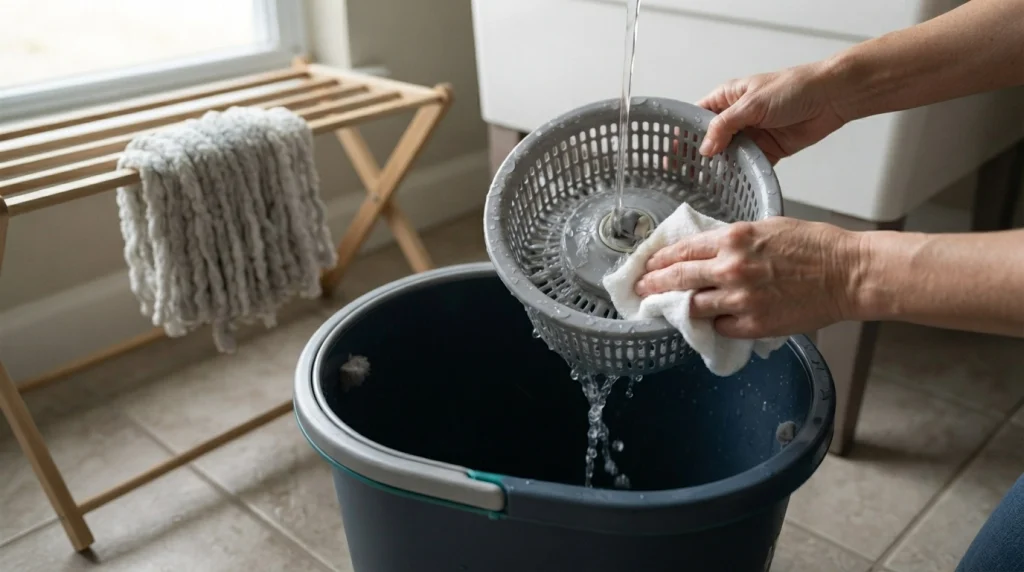
Regular cleaning helps the wringer operate smoothly and prevents residue from building up around the basket and drive assembly. Basic maintenance also makes it easier to spot wear before the mechanism stops working.
Clean the bucket and basket after use
- Empty dirty water: Pour it away safely after each cleaning session.
- Rinse the basket: Remove loose hair, lint, and cleaning residue.
- Clean the bucket: Wash away dirt that could collect around the bottom or sides.
- Dry accessible surfaces: Allow the bucket and basket to air-dry as directed by the manufacturer.
Inspect moving parts regularly
Check accessible connectors, handle joints, locking parts, and the basket for cracks or unusual looseness. If the mechanism starts clicking, slipping, or wobbling, investigate the cause before the problem worsens.
Don’t add oil or other lubricant unless the manufacturer recommends it. Some components are designed to operate without lubrication, and an unsuitable product may damage plastic or interfere with the mechanism.
Keep the mop head in good condition
A dirty or worn mop head can reduce cleaning performance even when the wringer works perfectly. Wash reusable microfiber heads according to their care labels and avoid fabric softeners when the manufacturer advises against them.
Replace a head that has damaged fibers, persistent odor, or poor absorption despite proper washing. Let it dry fully between uses when practical, and avoid storing a wet mop in a closed bucket.
Section Takeaway: Clean the bucket, rinse the basket, inspect moving parts, and care for the mop head according to its label. Don’t lubricate or dismantle the drive without manufacturer guidance.
Frequently Asked Questions
1. Does a handle spin wringer use centrifugal force?
Yes, most bucket-based spin mop wringers rely on centrifugal effects during rotation. As the mop head spins, water moves outward through the fibers and escapes through the perforated basket into the bucket.
2. Do all spin mops use the handle to spin the mop head?
No. Some models use a pumping or twisting handle, while others use a foot pedal or another drive arrangement. Check the manufacturer’s instructions to identify the mechanism and the correct operating motion for your mop.
3. Why does my spin mop handle turn without spinning the mop?
The drive may not be engaging, or a connector, gear, or locking component may be worn or incorrectly assembled. Check the handle and mop-head connections first, then consult the model’s repair guidance if the mechanism still fails.
4. Can a spin wringer make a mop completely dry?
Usually, a spin wringer removes excess water rather than drying the mop completely. Microfiber and other absorbent materials retain some moisture, so the head may remain damp after spinning.
5. How many times should I spin a mop?
There is no universal number of spins. Start with a short cycle, check how wet the mop remains, and repeat if needed. The appropriate amount depends on the mop head, mechanism, and flooring requirements.
6. Can I use a spin mop on hardwood and laminate floors?
You can use a spin mop on many finished hardwood and laminate floors when the flooring manufacturer permits damp mopping. Wring the head thoroughly, avoid standing water, and use only a compatible cleaner.
7. What should I do if the wringer makes a grinding noise?
Stop operating the wringer and inspect accessible parts for debris, misalignment, or visible damage. Don’t force the handle or dismantle an unfamiliar gear assembly. If the noise persists, follow the manufacturer’s service instructions or replace the faulty component.
Final Takeaway: Understanding Your Handle Spin Wringer
A handle spin wringer converts your movement into rotation that helps remove excess water from a mop head. The handle drives the mechanism, the basket supports the spinning head, and water drains into the bucket.
For the best results, use the correct handle motion, keep the mop head properly positioned, and wring out enough water for your particular floor. A few simple maintenance habits can also help the mechanism work smoothly for longer.
When the wringer jams, wobbles, or stops spinning, check its assembly and accessible parts before applying more force. Treat the manufacturer’s instructions as the final guide for operating, cleaning, and repairing your specific model.