
How Spin Mop Spinning Works: The Mechanism Explained

Quick Answer
A spin mop works by rotating its wet mop head inside a basket-shaped wringer, forcing excess water out of the microfiber strands through centrifugal effects. In a common manual system, pressing a foot pedal powers the spinning basket, while the number of pedal presses helps control how damp the mop becomes. For the best results, follow the instructions for your specific spin mop and bucket system.
How the spinning mechanism works
- Soak the mop: Dip the microfiber head into the bucket to collect water and cleaning solution.
- Position the head: Place the wet mop inside the built-in wringer basket.
- Activate the spinner: Press the foot pedal or operate the model’s designated spinning mechanism.
- Remove excess water: Rotation pushes moisture out of the mop strands and into the bucket.
- Adjust dampness: Stop when the mop reaches the moisture level suitable for your floor.
One important tip
- Use a relatively dry mop on moisture-sensitive flooring, and never assume spinning makes a mop completely dry.
A spin mop makes floor cleaning easier by handling one of the messiest parts of mopping: squeezing water out of a soaked mop head. Its spinning bucket uses rotation instead of requiring you to wring the mop by hand.
In this guide, I’ll explain the mechanism, what happens when you press the pedal, why some mops spin better than others, and how to control moisture on different floors.
In This Guide
- What is spin mop spinning?
- How does a spin mop mechanism work?
- How does centrifugal force remove water?
- How does the foot pedal control mop dampness?
- What parts make a spin mop work?
- How does a spin mop compare with other mops?
- How much water should a spin mop leave behind?
- Why is my spin mop not spinning properly?
- How do you maintain a spin mop?
- Frequently asked questions
What Is Spin Mop Spinning?
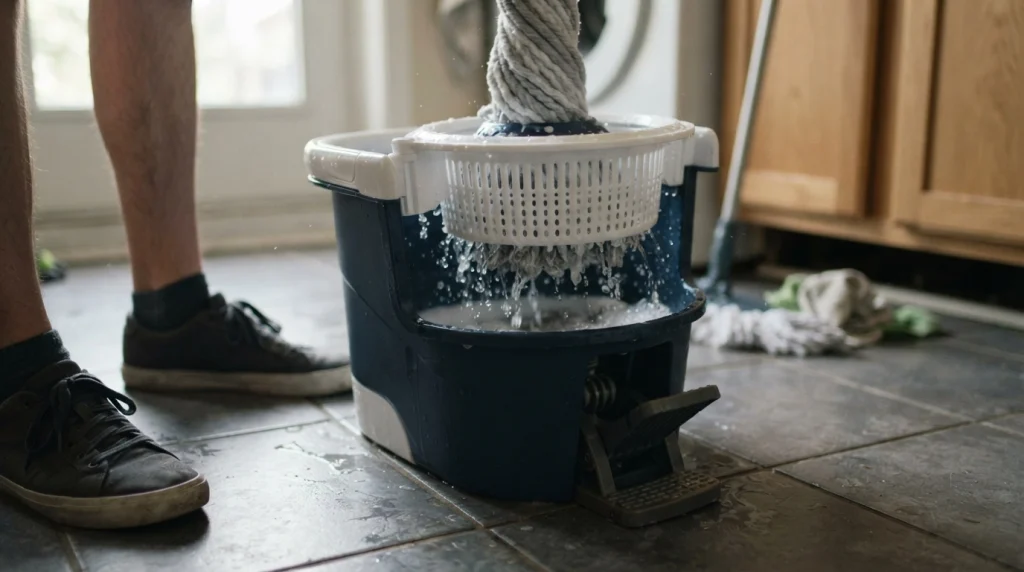
Spin mop spinning is a wringing method that uses rotation to remove excess water from a mop head. The mop rotates inside a perforated or open-sided basket, allowing water to escape while the cleaning fibers remain inside.
What makes a spin mop different?
A traditional string mop usually requires hand wringing or a separate press-style wringer. A spin mop uses a rotating basket to do much of that work with less direct contact with dirty water.
Most household spin mops combine three main functions:
- Cleaning: Microfiber strands collect dust, loose dirt, and moisture from hard surfaces.
- Rinsing: A bucket supplies water and, when appropriate, a compatible floor cleaner.
- Wringing: The spinner removes excess moisture before the next cleaning pass.
What does spinning actually achieve?
The goal isn’t to make the mop bone-dry. It’s to remove enough water that the mop cleans effectively without flooding the floor.
That distinction matters. A mop that retains too much water may leave puddles, streaks, or a long drying time, while an excessively dry head may not distribute cleaning solution evenly.
Microfiber also helps with the cleaning itself. Its fine synthetic fibers provide a large contact area for picking up particles and absorbing moisture, although performance depends on the mop design and how you use it.
How Does a Spin Mop Mechanism Work?
A typical foot-pedal spin mop converts downward pressure into rotation inside the wringer basket. The exact linkage varies by model, but the basic process is straightforward.
Step 1: The mop absorbs water
First, dip the mop head into the bucket’s water compartment. The microfiber strands absorb water and cleaning solution, becoming heavier and wetter.
Lift the mop and allow excess water to drip briefly before placing the head into the wringer. This helps limit splashing around the bucket.
Step 2: The pedal activates the spinning system
On many manual models, pressing the foot pedal drives a mechanical assembly connected to the wringer basket. Depending on the design, gears, a shaft, or a similar transmission mechanism help turn the basket.
Each press supplies mechanical energy. The mechanism converts that input into rotational movement, making the basket and mop head spin.
Step 3: The rotating basket releases water
As the mop rotates, water moves outward from the fibers and escapes through openings in the basket. The bucket catches the expelled moisture, reducing the need to squeeze the mop by hand.
The basket supports the mop head while it spins. Keeping the head properly positioned helps the system rotate smoothly and limits wobbling.
Step 4: You stop at the desired moisture level
Once the mop reaches the dampness you need, stop activating the mechanism and lift the head from the basket. The fibers should feel damp rather than dripping for most routine hard-floor cleaning.
On many foot-pedal systems, additional presses remove more water. However, the exact amount depends on the mop head, basket design, and how wet the fibers were initially.
For an example of a manufacturer’s recommended procedure, see the O-Cedar EasyWring use and care guide.
How Does Centrifugal Force Remove Water From a Spin Mop?
Spinning helps water escape because the rotating mop creates an outward effect relative to the basket. This is commonly explained as centrifugal force, although the underlying motion is described using inertia and circular movement.
Why does water move outward?
When the mop rotates rapidly, the water in its fibers must continually change direction to follow the circular motion. The fibers exert forces on the water, but some moisture moves outward and escapes through the openings.
Think of a wet mop head spinning inside a basket. Instead of staying trapped in the fibers, some water separates from them and travels toward the basket’s outer wall.
The basket then directs that water back into the bucket. The fibers remain inside, ready for floor cleaning.
Does faster spinning always remove more water?
Higher rotational speed can help remove moisture, but speed alone doesn’t determine the result. The mop’s fiber structure, water retention, basket shape, and spinning duration all influence how damp the head becomes.
There is also a practical limit. A mop head that’s already relatively dry may show little additional improvement from repeated spinning.
- Very wet head: Usually needs more spinning to reduce dripping.
- Moderately damp head: Often works well for routine cleaning on compatible sealed floors.
- Nearly dry head: May need another rinse if it no longer picks up dirt effectively.
Don’t test the mechanism by spinning a loose mop head outside its intended basket. Always use the assembled system according to its instructions.
How Does the Foot Pedal Control Mop Dampness?
The foot pedal gives you a convenient way to activate the wringer without manually squeezing the mop. On many models, the number of pedal presses provides a simple way to adjust the remaining moisture.
Why do some people press the pedal more times?
Each activation adds more rotation to the wringer. If the mop starts heavily saturated, several presses may be needed before it stops dripping.
Some manufacturers suggest starting with a small number of presses and checking the result. For example, O-Cedar’s EasyWring guidance describes using five to seven pedal presses as a starting point for controlling moisture.
That is a model-specific guideline, not a universal setting for every spin mop. Start with your own manufacturer’s instructions and adjust according to the floor and mop head.
How do you get the right moisture level?
- Soak the mop head until the fibers are evenly wet.
- Place the head securely inside the wringer basket.
- Hold the handle upright and loosely enough to allow free rotation.
- Press the pedal as instructed by the manufacturer.
- Check the mop before cleaning, then spin again if it drips excessively.
For a tile floor, you may prefer a slightly wetter mop when tackling ordinary dirt. For moisture-sensitive flooring, aim for a much drier head and use the flooring manufacturer’s recommended cleaning method.
Remember that the pedal controls wringing, not the cleaning strength of the solution. Adding extra detergent won’t improve the spinning mechanism and may leave residue behind.
What Parts Make a Spin Mop Work?
A spin mop relies on several parts working together. Knowing what each component does makes everyday use easier and helps you identify problems before they become frustrating.
| Part | Main function | What to check |
|---|---|---|
| Foot pedal | Activates the wringer on pedal-operated models. | Look for obstruction or unusual resistance. |
| Drive mechanism | Transfers pedal movement into rotation. | Check for damage or slipping. |
| Wringer basket | Holds the mop head as it spins and lets water escape. | Check that it sits securely and turns freely. |
| Mop handle | Guides the head and transfers your movement. | Ensure the handle sections are firmly connected. |
| Microfiber head | Absorbs water and collects dirt during mopping. | Check for tangled, worn, or clogged fibers. |
| Bucket | Holds rinse water and catches expelled moisture. | Check for cracks, leaks, and unstable placement. |
Do all spin mops use the same mechanism?
No. Many manual spin mops use a foot pedal, while other designs use different wringing arrangements. Electric floor cleaners with rotating pads are another category and shouldn’t be confused with a manual spin mop bucket.
Two-bucket spin systems can also separate clean water from collected dirty water. That feature changes how rinsing works, but the wringer still removes excess moisture through rotation.
Replacement parts aren’t always interchangeable. Check the model number and manufacturer’s compatibility information before buying a basket, pedal assembly, handle, or mop refill.
How Does a Spin Mop Compare With Other Mops?
A spin mop stands out because it combines rinsing and wringing in one bucket system. Other mop types use different methods to manage water, remove dirt, or cover large areas.
| Mop type | How it works | Main advantage | Main limitation |
|---|---|---|---|
| Spin mop | A rotating basket removes excess water. | Adjustable wringing with less hand contact. | Needs bucket space and pedal maintenance. |
| String mop | Absorbent strands collect water and dirt. | Useful for larger, wetter cleaning jobs. | May require a separate wringer or hand squeezing. |
| Flat microfiber mop | A flat pad wipes the floor and collects debris. | Slim storage and easy access under furniture. | Pad moisture is controlled manually or by a spray system. |
| Steam mop | Heated water produces steam for surface cleaning. | Can clean compatible surfaces without a bucket of wash water. | Heat and moisture can damage unsuitable floors. |
| Cordless electric mop | A motor drives rotating or vibrating cleaning pads. | Powered scrubbing with less manual effort. | Requires charging and model-specific maintenance. |
Which mop is best for everyday floor cleaning?
A spin mop is a practical option if you want a reusable mop head and a simple way to control moisture. A flat microfiber mop may suit small apartments better, especially when storage space is limited.
A steam mop isn’t automatically a better choice for stubborn dirt. Always check surface compatibility before using heat, and never assume that every sealed-looking floor can tolerate steam.
For 2026, the most useful comparison is still the cleaning method rather than the trendiest design. Choose a mop that fits your floor type, storage space, cleaning routine, and ability to maintain the equipment.
How Much Water Should a Spin Mop Leave Behind?
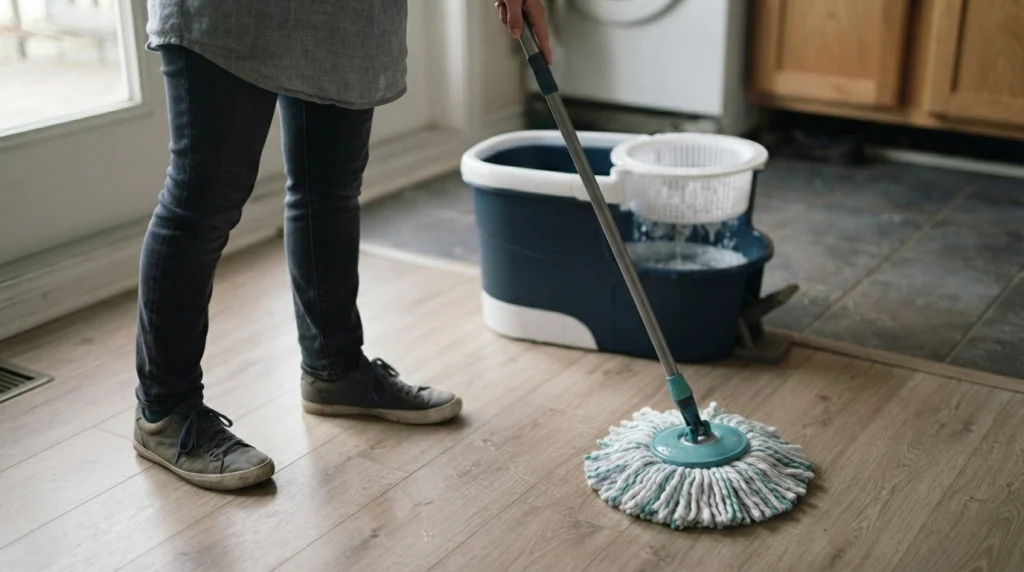
The correct moisture level depends on your flooring, the cleaner you’re using, and the amount of dirt present. A spin mop should leave no standing water during routine cleaning, especially on wood-based floors.
How should you use a spin mop on different floors?
- Sealed hardwood: Use a well-wrung mop only if the flooring manufacturer’s care instructions permit damp mopping. Wipe up moisture promptly.
- Engineered wood: Follow the specific product guidance because construction, joints, and surface finish affect moisture tolerance.
- Laminate and LVP: Use a lightly damp mop and avoid pooling water around seams, edges, and joints.
- Ceramic and porcelain tile: A moderately damp mop is often suitable, although grout and nearby materials may need special care.
- Natural stone: Choose a cleaner approved for the stone and finish, and avoid unapproved acidic solutions.
- Concrete: Check whether the surface is sealed and follow the coating manufacturer’s cleaning instructions.
These are general guidelines, not a substitute for your floor’s care instructions. Unsealed wood, damaged laminate, sensitive stone, and specialty finishes may require different methods.
Safety note: Check your flooring manufacturer’s care guide and the cleaning product label before applying water, vinegar, disinfectants, or other chemicals.
How can you tell whether the mop is too wet?
Watch the floor immediately after a cleaning pass. Large beads of water, puddles, water collecting along seams, or a trail that remains wet for an unusually long time can indicate excessive moisture.
I recommend testing the wrung-out mop in a small, inconspicuous area before cleaning the entire room. If the surface becomes visibly saturated, return the head to the wringer and remove more water.
Does more water mean better cleaning?
No. A mop needs enough moisture to lift ordinary dirt and distribute the approved cleaning solution, but extra water doesn’t automatically improve the result.
Too much solution can also leave a sticky film or streaks. Measure cleaner according to its label rather than adding extra detergent to compensate for poor cleaning performance.
For hardwood guidance, the National Wood Flooring Association’s maintenance advice recommends avoiding wet mopping and steam cleaning that can damage wood and its finish.
Section takeaway: Control moisture before you begin, and let your floor’s care requirements determine how damp the mop should be.
Why Is My Spin Mop Not Spinning Properly?
A spin mop that refuses to rotate, wobbles, or leaves the head soaking wet may have a positioning problem, a worn component, or a buildup of dirt. Start with simple checks before considering repairs or replacement.
Why does the basket spin slowly or not at all?
- Incorrect positioning: The mop head may sit unevenly or outside the intended spinning area.
- Blocked movement: Debris or tangled fibers may interfere with the basket.
- Pedal resistance: A damaged or obstructed pedal may prevent the drive mechanism from operating normally.
- Worn mechanism: A damaged gear or connection may fail to transfer pedal movement into rotation.
Stop using the mechanism if it jams, makes unusual grinding sounds, or shows visible damage. Don’t force the pedal or reach into a moving basket.
Why does the mop remain too wet?
A wet mop head doesn’t always mean the spinner is broken. The head may be overloaded with water, the pedal may not be completing its normal movement, or the basket may not be rotating as intended.
Try this basic troubleshooting sequence:
- Place the bucket on a stable, level surface.
- Check that the wringer basket is seated correctly.
- Reposition the mop head centrally inside the basket.
- Operate the pedal according to the product instructions.
- Inspect the mop head for tangled or heavily clogged fibers.
If the basket still fails to spin, consult the manufacturer’s troubleshooting guide before attempting disassembly.
Why does the spin mop wobble or splash?
Excessive wobbling can occur when the head sits unevenly, the handle is held too rigidly, or the basket has become loose. A heavily saturated head can also create more splashing during spinning.
Keep your hands and feet clear of moving parts, and never hold the rotating basket to slow it down. Wait for the mechanism to stop completely before repositioning the mop.
How Do You Maintain a Spin Mop?
Regular cleaning keeps the spinning mechanism working smoothly and helps prevent unpleasant odors. The most important habit is to empty the bucket and clean the mop head after each use.
What should you do after every cleaning session?
- Wash the mop head: Follow its care label and use a compatible washing method.
- Empty the bucket: Remove dirty water rather than leaving it sitting for the next session.
- Rinse the wringer: Remove trapped dirt, hair, and cleaning residue.
- Air-dry the parts: Allow the mop head and bucket to dry before storing them.
- Check moving components: Look for loose connections, cracks, or unusual resistance.
Can you machine-wash a spin mop head?
Many microfiber spin mop heads are machine-washable, but you should follow the instructions for your particular refill. Some designs require specific washing temperatures or handling procedures.
For compatible O-Cedar EasyWring refills, the manufacturer advises washing without bleach or fabric softener and laying the head flat to dry. Other brands may have different requirements.
Fabric softener can leave a coating on microfiber, which may reduce its ability to absorb moisture and pick up dirt. Avoid high heat unless the care instructions specifically allow it.
When should you replace the mop head?
Replace the refill when the fibers become badly worn, remain unpleasant after washing, lose their shape, or no longer clean effectively. Follow any replacement schedule supplied by the manufacturer.
Also inspect the bucket and wringer regularly. A cracked bucket, loose basket, or failing pedal can make cleaning less effective and increase the risk of spills.
Section takeaway: Clean, dry, and inspect the mop after use. Good maintenance helps preserve absorbency and keeps the wringer operating reliably.
Frequently Asked Questions About How Spin Mops Work
1. Does a spin mop use centrifugal force?
Yes, centrifugal effects explain how rotation helps remove water from the mop head. As the head spins, water moves outward and escapes through the basket openings, while the microfiber strands remain inside the wringer.
2. How many times should I press a spin mop pedal?
The correct number depends on the model and the moisture level you need. Some manufacturers suggest five to seven presses as a starting point, but you should follow your product’s instructions and check whether the mop still drips.
3. Why does my spin mop handle rotate inside my hand?
Many spin mop designs allow the handle to rotate freely during wringing. Holding it loosely helps the mop head spin as intended, while gripping it tightly can interfere with the motion on models that rely on free handle rotation.
4. Can a spin mop damage hardwood floors?
A spin mop can contribute to damage if it leaves too much water on moisture-sensitive flooring. Use only a cleaning method approved for your specific hardwood finish, keep the mop well wrung, and wipe up moisture promptly.
5. Does spinning make a mop completely dry?
No. Spinning removes excess water, but some moisture remains in the fibers. That residual dampness helps the mop collect dirt and clean the floor, so the goal is appropriate moisture control rather than complete dryness.
6. Why does my spin mop stop spinning after a few uses?
Possible causes include a blocked basket, a poorly seated component, a damaged pedal, or a worn drive mechanism. Check the manufacturer’s troubleshooting instructions, and stop using the mop if the mechanism jams or shows signs of damage.
7. Is a spin mop better than a flat microfiber mop?
Neither is best for every home. A spin mop offers convenient bucket-based rinsing and wringing, while a flat microfiber mop is often easier to store and maneuver in tight spaces. Your flooring, cleaning routine, and storage needs should guide the choice.
The Bottom Line: Why Spin Mop Spinning Works
A spin mop works by using rotation to push excess water out of its cleaning fibers and into a wringer basket. The foot pedal on many manual systems powers that rotation, allowing you to adjust how damp the mop becomes.
For better cleaning results, remember these three principles:
- Position the head correctly: An evenly seated mop head helps the basket rotate smoothly.
- Control the moisture: Use enough water to clean effectively without leaving puddles.
- Maintain the system: Wash the refill, rinse the bucket, and allow all parts to dry.
Once you understand the spinning mechanism, using a spin mop becomes much more predictable. The key is to let the wringer do its job while choosing a moisture level that suits your floor.
If you’re troubleshooting a specific model, start with its manufacturer’s use and care guide. A few simple adjustments can often improve wringing performance without needing a replacement mop.