
How Does a Spin Mop Wring Water?

Quick Answer
A spin mop wrings water through centrifugal action. When you activate the bucket’s foot pedal or handle mechanism, the mop head rotates inside a perforated wringer basket, pushing excess water outward and allowing it to drain back into the bucket. You can adjust the mop’s dampness by changing how long or how often you spin it, following the instructions for your particular model.
How the wringing process works
- Wet the fibers: Dip the microfiber mop head into the bucket to absorb water and cleaning solution.
- Position the head: Place the wet mop inside the spinning basket, keeping the strands within the wringer.
- Activate the mechanism: Press the foot pedal or operate the handle, depending on the mop design.
- Remove excess water: Rotation forces liquid outward through the basket openings and back into the bucket.
- Control dampness: Stop when the mop reaches the moisture level appropriate for your floor.
The most useful tip
- For laminate, wood, and other moisture-sensitive floors, wring the head thoroughly and follow the flooring manufacturer’s care instructions before mopping.
A spin mop makes one of the messiest parts of floor cleaning easier: squeezing water from a soaked mop head. Its spinning bucket does the work without requiring you to twist wet fibers by hand.
I’ll explain how the mechanism removes water, what the different parts do, and how to choose the right moisture level for everyday floor cleaning.
In This Guide
- How does spin mop wringing work?
- Which parts help a spin mop remove water?
- How do you wring water from a spin mop?
- How much water should you wring out?
- How does a spin mop compare with other mops?
- Why is your spin mop not wringing properly?
- How do you maintain the wringer?
- What floor-cleaning precautions matter?
- Frequently asked questions
How does spin mop wringing work?
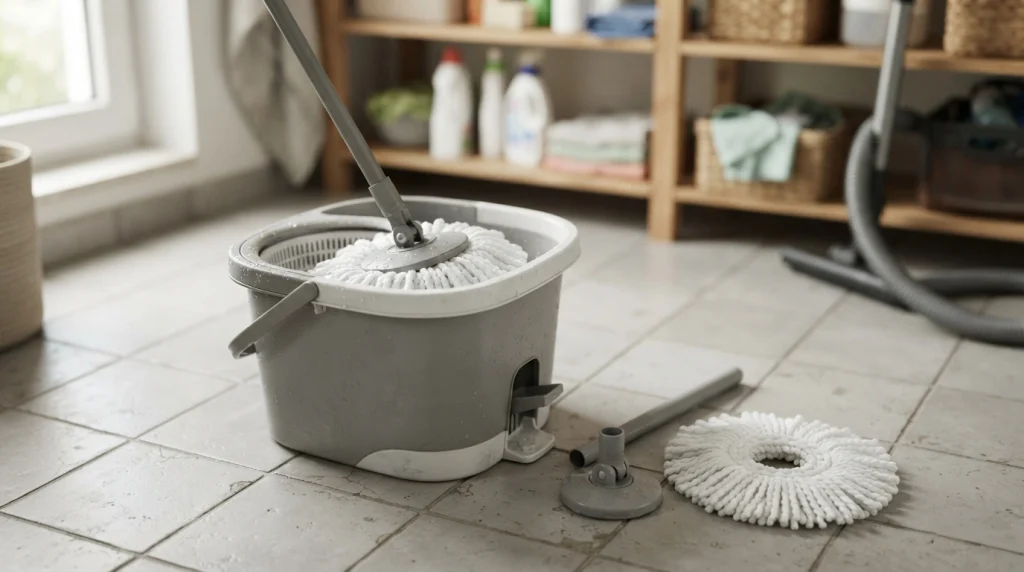
A spin mop wrings water by rotating its wet mop head inside a basket designed to let excess liquid escape. The rotation creates centrifugal effects that move water outward from the spinning fibers.
The basic principle is the same whether you operate the wringer with a foot pedal or a push-down handle. Your movement powers the mechanism, and the basket helps direct the expelled water back into the bucket.
What is centrifugal force in a spin mop?
Centrifugal force is the outward effect you experience when something rotates around a central point. In a spin mop, the rotating head moves its wet fibers rapidly around the basket’s center.
The water does not follow the fibers perfectly as they rotate. Some liquid moves outward through the gaps in the basket, leaving less water trapped inside the mop head.
Think of water droplets flying from a wet umbrella when you spin it. A spin mop uses a similar principle, although its basket contains the splashes and collects the water.
Why does spinning make a mop less wet?
A microfiber mop head holds water between its fine fibers and within the spaces between strands. Rotation helps release some of that liquid without requiring you to squeeze the fibers manually.
A short spin generally leaves the mop wetter, while additional spinning usually removes more water. The exact result depends on the mop design, fiber condition, initial saturation, and how you operate the wringer.
There is a limit to how much water the mechanism can remove. The mop still needs some moisture to pick up dirt and spread cleaning solution effectively.
Where does the extracted water go?
Most spin-mop baskets have openings that let water escape into the surrounding bucket. The bucket catches the liquid, preventing it from spraying across the room during normal operation.
Some systems separate clean water from dirty water, while simpler models use one main water compartment. The wringing principle remains similar, but the bucket design affects how the mop is rinsed between passes.
Which parts help a spin mop remove water?
A spin mop relies on several connected components to convert your movement into rotation and remove excess water. Understanding these parts helps you operate the system correctly and recognize common mechanical problems.
The main components and their functions
- Foot pedal: On pedal-operated models, pressing the pedal drives the spinning mechanism.
- Handle mechanism: Some models use a push-down or pumping handle to generate rotation instead of a foot pedal.
- Wringer basket: This rotating basket supports the mop head and allows expelled water to drain away.
- Mop head and base: The base holds the microfiber refill securely while it spins.
- Microfiber strands: These absorb and retain water during rinsing, then release some of it during wringing.
- Bucket: The bucket collects the expelled water and holds the rinsing liquid.
How does the foot pedal create rotation?
In a typical pedal-operated model, pressing the pedal activates a mechanical drive connected to the wringer. Repeated pedal movements turn the basket and attached mop head.
The exact internal mechanism varies between products. Some use different drive arrangements, so you should follow the instructions supplied with your specific bucket.
How does a handle-operated spin mop work?
A handle-operated model uses movement of the mop handle to drive the spinning action. Depending on the design, you may need to unlock the handle, pump it, or push it downward in the wringing basket.
Don’t assume every handle-operated mop works the same way. For example, some designs use a locking sleeve that must be released before wringing.
Before using a new mop, check which handle position activates the wringer and which position locks the head for floor cleaning.
How do you wring water from a spin mop?
To wring water from a spin mop, wet the microfiber head, place it securely inside the wringer basket, and activate the spinning mechanism. Continue until the head reaches a suitable dampness for your floor.
These steps apply to many common models, although the pedal movement, handle position, and recommended water level can vary.
Step-by-step wringing instructions
- Prepare the bucket. Add water to the marked fill line, using the temperature specified in the product instructions.
- Wet the mop head. Dip the microfiber strands into the water until they are evenly saturated.
- Lift the head into the wringer. Position it centrally and make sure the strands fit inside the basket.
- Hold the handle correctly. Keep it in the position specified by the manufacturer, without forcing or bending it.
- Activate the spinner. Press the pedal or operate the handle as directed.
- Check the moisture level. Stop, inspect the head, and repeat the wringing process if it remains too wet.
- Start mopping. Use smooth passes and rinse the head when it becomes dirty.
How many times should you press the pedal?
There is no universal number of pedal presses that works for every spin mop. Some manufacturers recommend a starting range, but the result depends on the mechanism and how wet the head was initially.
For example, O-Cedar’s EasyWring instructions suggest pumping the pedal five to seven times to help control moisture. Treat that as guidance for that system, not a rule for every spin mop.
Start with a few presses, check the result, and continue if needed. That approach helps you avoid both a dripping mop and a head that is too dry for the cleaning task.
How can you tell when the mop is ready?
Lift the mop from the wringer and inspect the strands before touching the floor. If liquid drips steadily from the head, it may need more spinning for the surface you’re cleaning.
For ordinary damp mopping, the fibers should feel moist rather than saturated. The ideal level still depends on the flooring material and the cleaner you use.
How much water should you wring out?
The correct amount of water depends on your floor, the type of dirt, and the mop head. Durable tile can generally tolerate more moisture than a floor that is sensitive to water.
Rather than timing every spin, check the mop’s dampness and watch how much liquid remains on the floor. Your goal is enough moisture to clean without leaving unnecessary puddles or wet seams.
Moisture levels for different floors
- Ceramic and porcelain tile: A moderately damp head is often suitable for routine cleaning, subject to the floor’s care instructions.
- Vinyl and luxury vinyl plank: Use controlled moisture and avoid flooding joints, edges, or seams.
- Laminate: Wring the mop thoroughly and remove visible water promptly.
- Sealed hardwood and engineered wood: Use only the damp-cleaning method permitted by the flooring manufacturer, with minimal moisture.
- Natural stone: Follow the stone and sealer manufacturer’s instructions for both moisture and cleaning products.
For wood-floor care, the National Wood Flooring Association offers guidance on maintaining wood flooring and avoiding inappropriate wet-cleaning methods.
What happens if the mop is too wet?
An overly wet mop can leave standing water, slow drying, and increase the risk of slipping. Excess liquid can also damage flooring that is not designed to tolerate prolonged moisture.
On laminate or wood, water entering seams or unprotected edges may contribute to swelling, lifting, or finish damage. Even on tile, excess water mixed with cleaner can leave streaks or residue.
What happens if the mop is too dry?
A head that is too dry may struggle to loosen sticky dirt or spread the cleaning solution evenly. You might find yourself pressing harder or repeatedly passing over the same area.
Give the head a quick rinse and reduce the amount of wringing when the cleaning task requires more moisture. Avoid compensating by pouring extra water directly onto a moisture-sensitive floor.
How does a spin mop compare with other mops?
A spin mop provides adjustable moisture through a rotating wringer, while other mop types manage water through different mechanisms. The best option depends on the floor, the mess, and how much control you need.
Here is how common floor-cleaning tools compare in everyday use.
| Mop type | How moisture is controlled | Best use | Main limitation |
|---|---|---|---|
| Spin mop | Rotating basket removes excess water | Routine wet mopping and larger areas | Needs a bucket and working wringer |
| Traditional string mop | Manual squeezing or bucket wringer | Heavy-duty cleaning on suitable floors | Can retain substantial water |
| Flat microfiber mop | Pad dampness or manual rinsing | Dust, footprints, and light maintenance | Some pads hold less liquid |
| Spray mop | Trigger releases measured sprays | Small spills and quick touch-ups | Limited onboard liquid capacity |
| Steam mop | Uses heated vapor rather than bucket wringing | Compatible sealed floors | Heat can damage unsuitable flooring |
| Cordless electric mop | Varies by model; some meter liquid or collect dirty water | Powered cleaning and convenient maintenance | Requires charging and equipment maintenance |
Is a spin mop better than a traditional mop?
A spin mop can be more convenient when you want to wring out water without squeezing the head by hand. Its adjustable wringer also makes it easier to adapt moisture levels during a cleaning session.
A traditional string mop may still suit demanding wet-cleaning tasks on compatible surfaces. However, it can be harder to control moisture consistently without a suitable wringer.
Is a spin mop better than a steam mop?
These tools serve different purposes. A spin mop uses a damp microfiber head, while a steam mop heats water to produce vapor for cleaning compatible surfaces.
A spin mop is often the more flexible choice for ordinary damp cleaning because it doesn’t rely on heat. Neither tool is automatically suitable for every floor, so check the flooring manufacturer’s guidance first.
Why is your spin mop not wringing properly?
If your spin mop remains soaked after spinning, the problem may involve incorrect positioning, a handle lock, a damaged drive mechanism, or a worn component. Check the simple causes before attempting repairs.
Common causes and practical fixes
- The mop head isn’t seated correctly: Reposition the head so it fits inside the basket without strands hanging over the rim.
- The handle is locked: Check whether the model requires you to release a locking sleeve or change the handle position before wringing.
- The pedal doesn’t engage: Inspect for visible debris or damage around the pedal and mechanism.
- The basket doesn’t rotate: Stop using the wringer if it jams, wobbles, or makes unusual grinding noises.
- The mop head stays saturated: Check whether the basket is spinning properly and whether the refill has become heavily soiled or damaged.
- Water splashes outside the bucket: Confirm that the bucket isn’t overfilled and the mop head is positioned correctly.
Why does the mop spin but remain wet?
Rotation doesn’t remove every drop of water from microfiber. If the head spins normally but still feels wet, it may simply need additional wringing or a different technique.
However, if the fibers remain dripping despite normal operation, inspect the head and basket for incorrect assembly or damage. A worn or unsuitable refill may also affect how the mop handles water.
What should you do if the pedal jams?
Stop pressing the pedal if it sticks or resists movement. Remove the mop from the bucket only when you can do so safely, and inspect the mechanism according to the manufacturer’s maintenance instructions.
Never force a jammed pedal or reach into a moving basket. If the drive mechanism appears broken, consult the manufacturer about replacement parts rather than improvising a repair.
How do you maintain the wringer?
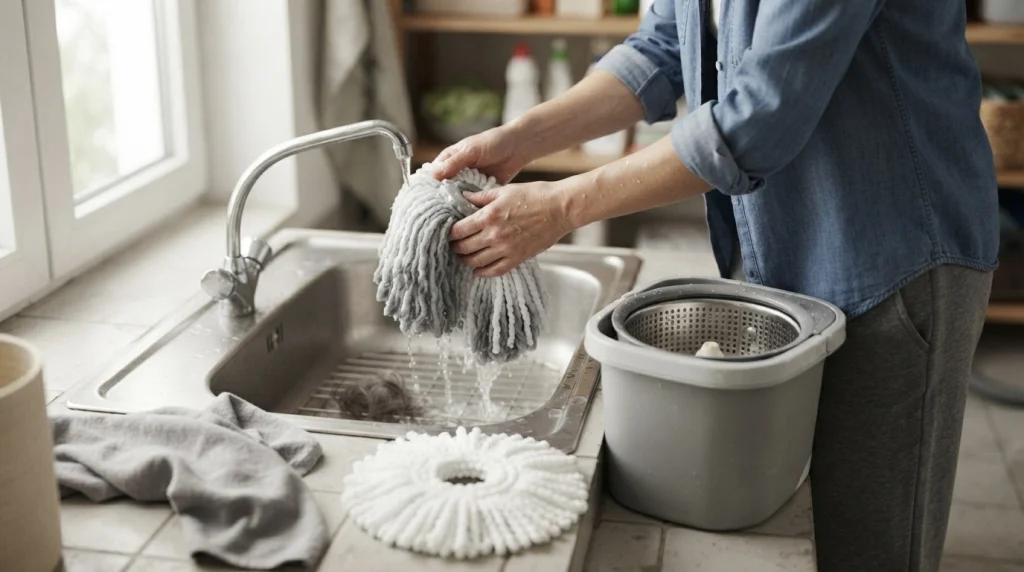
Regular cleaning helps a spin mop wring consistently and prevents dirty residue from building up inside the bucket. The mop head and the wringer both need attention after use.
After every mopping session
- Wash the mop head: Rinse away dirt and follow the refill’s washing instructions.
- Empty the bucket: Discard dirty water instead of leaving it standing between uses.
- Clean the wringer: Remove visible hair, fibers, and debris that could interfere with rotation.
- Dry the components: Allow the bucket and mop head to dry thoroughly before storage.
- Inspect moving parts: Check for cracks, loose connections, and unusual movement.
Can you put a microfiber mop head in the washing machine?
Many microfiber refills are machine washable, but the label determines the correct washing method. Use the recommended cycle and temperature for your specific mop head.
Avoid fabric softener when the manufacturer prohibits it, because residue can interfere with microfiber’s ability to absorb water. Bleach and high-heat drying may also damage some refills.
How often should you replace the mop head?
Replace the refill when its fibers become damaged, flattened, persistently dirty, or less effective at absorbing water. The timing depends on how often you mop and the type of dirt you collect.
Some manufacturers provide suggested replacement intervals, but the condition of the head matters too. A well-maintained refill should be cleaned and dried between uses.
What floor-cleaning precautions matter?
Correct wringing helps control water, but it cannot make every cleaning method safe for every floor. Floor material, surface finish, seams, and cleaner ingredients all affect the right approach.
Choose a compatible floor cleaner
Use a cleaner approved for your flooring rather than assuming every household detergent is suitable. Too much product can leave residue, create streaks, or make the surface slippery.
The EPA Safer Choice program provides information about products assessed against its ingredient and environmental criteria. Always check the product label for the intended surface and directions.
Safety note: Check the flooring manufacturer’s care guide before using vinegar, disinfectants, or other cleaning chemicals. Never mix cleaning products unless their manufacturers explicitly direct you to do so.
Does a spin mop disinfect floors?
A spin mop is a cleaning tool, not automatically a disinfectant. Removing dirt and reducing germs through cleaning are different from killing microorganisms with a suitable disinfectant.
If disinfection is necessary, select a product labeled for the intended use and compatible with your flooring. Follow its dilution, ventilation, and contact-time instructions.
The CDC’s cleaning and disinfection guidance explains when routine cleaning is appropriate and when disinfection may be needed.
How can you avoid slippery floors?
Remove excess moisture before mopping and keep people away from the wet area until the floor is dry. Use warning signs or another suitable precaution when cleaning areas where someone could slip.
For everyday household cleaning, smaller sections are easier to manage than flooding an entire room. You can also change dirty water before it spreads residue across the floor.
Frequently asked questions
1. Does a spin mop use centrifugal force to remove water?
Yes. When the mop head rotates inside the wringer basket, centrifugal effects move water outward from the spinning fibers. The liquid passes through the basket openings and collects in the bucket, leaving the microfiber head with less moisture.
2. Does spinning a mop make it completely dry?
No. A spin wringer removes excess water but generally leaves moisture inside the microfiber strands. The amount remaining depends on the mop’s design, spinning duration, and condition, along with how much water the head absorbed initially.
3. Should I spin a mop faster or longer to remove more water?
Follow the operating instructions for your model rather than trying to force faster rotation. Additional pedal presses or pumping movements often remove more moisture, but the mechanism and its recommended operating method determine the safest approach.
4. Why does my spin mop still drip after wringing?
The head may need more wringing, may be positioned incorrectly, or may have a problem with the basket or drive mechanism. Check the assembly and operating instructions, then inspect for visible damage if normal spinning doesn’t remove enough water.
5. Can I use a spin mop on laminate flooring?
Many laminate floors can be maintained with a carefully controlled damp-cleaning method, but the flooring manufacturer’s instructions take priority. Wring the mop thoroughly, avoid standing water, and dry any liquid that collects around joints or edges.
6. Does a spin mop work without a foot pedal?
Yes. Some spin mops use a handle-operated mechanism instead of a foot pedal. Depending on the design, you may pump the handle or push it down to drive the wringer, so check the instructions before using an unfamiliar model.
7. How often should I clean the spin-mop bucket?
Empty and rinse the bucket after every cleaning session. Remove visible dirt from the wringer, then let the components dry before storage. Regular cleaning helps reduce residue and unpleasant odors while keeping the mechanism clear of debris.
Final takeaway: Let the wringer control the water
A spin mop removes water by rotating its microfiber head inside a perforated basket. The mechanism pushes excess liquid outward, allowing it to drain back into the bucket while leaving the fibers damp enough for cleaning.
For the best results, position the head correctly, operate the pedal or handle as instructed, and adjust the moisture level to suit your floor. A little attention to wringing technique can help prevent puddles, reduce streaks, and make routine mopping easier.
Before your next cleaning session, check your mop’s operating instructions and your floor’s care guide. Those two details will help you choose the right wringing method and avoid unnecessary moisture damage.