
What Makes a Spin Mop Spin? The Mechanism Explained

Quick Answer
A spin mop spins because a mechanical drive inside the handle or bucket converts your movement into rotation. Depending on the design, a foot pedal, a push-down handle, or an electric motor turns the mop head or wringer basket. The rotation creates centrifugal force, which throws excess water out of the microfiber strands and helps you control how wet the mop stays during floor cleaning.
The main parts that make it spin
- Drive mechanism: Converts a push, pedal movement, or motor power into rotation.
- Rotating shaft: Transfers motion to the mop head or spinning basket.
- Wringer basket: Supports the mop head while excess water escapes through its openings.
- Centrifugal force: Moves water outward as the wet mop head rotates.
- Locking mechanism: Keeps the handle or mop head in the correct operating mode on designs that use a lock.
Quick troubleshooting tip
- If your mop won’t spin, check the handle lock, pedal, shaft connection, and basket seating before assuming the mechanism is broken.
A spin mop uses a simple mechanical trick to make everyday floor cleaning easier. Instead of twisting a wet mop head by hand, you activate a mechanism that spins it and removes excess water.
In this guide, I’ll explain what makes a spin mop rotate, how different drive systems work, and why the spinning action matters for hardwood, laminate, vinyl, and tile. I’ll also cover common faults, maintenance, and what to check when your mop stops spinning.
In This Guide
- What makes a spin mop spin?
- How does a spin mop mechanism work?
- What are the different types of spin mop mechanisms?
- Why does spinning remove water from a mop?
- Why is my spin mop not spinning?
- How does spin speed affect floor cleaning?
- How do you maintain a spin mop mechanism?
- How does a spin mop compare with other mops?
- Frequently asked questions
What Makes a Spin Mop Spin?
A spin mop spins because a drive mechanism converts physical or electrical energy into rotational movement. The mechanism connects to the mop head or the bucket’s wringer basket, depending on the design.
What is a spin mop?
A spin mop is a floor-cleaning tool with a rotating mop head or wringing basket that removes excess water through rapid rotation. Most household models pair a microfiber mop head with a bucket designed for rinsing and spinning.
Unlike a traditional string mop, a spin mop doesn’t require you to twist wet fibers manually. You activate a pedal or push the handle, and the mechanism does the wringing for you.
Which parts create the spinning movement?
The system contains several connected components, although their exact arrangement varies by brand and model.
- Handle or pedal: Provides the force needed to start the mechanism.
- Drive assembly: Changes the input movement into rotation.
- Shaft or spindle: Transfers the rotational movement to the relevant component.
- Rotating head or basket: Spins the mop fibers or supports the spinning mop head.
- Bearings or supporting joints: Help moving components rotate with less friction where fitted.
- Lock or clutch: Engages, disengages, or controls movement on models that include one.
Not every spin mop contains all these parts in the same form. A simple handle-driven design may use a spiral shaft, while a pedal-operated bucket may use a geared or ratcheting drive.
Does the mop head spin, or does the bucket spin?
Both arrangements exist. In many household systems, the mop head spins inside a stationary wringer basket; in other designs, the head and its supporting plate rotate together.
The bucket normally stays in place during wringing. Its job is to hold water, support the spinner, and collect the liquid expelled from the mop.
How Does a Spin Mop Mechanism Work?
A spin mop mechanism works by transmitting force through a mechanical drive to create rotation. When the mop head enters the wringer, the spinning action pushes water outward through the basket’s openings.
How does a push-handle spin mop work?
A push-handle model usually contains a shaft or linkage that changes an up-and-down movement into rotation. Some designs use spiral grooves or a threaded drive to turn the shaft when you press down.
- Unlock the handle: Release the spinning mechanism if the manufacturer requires it.
- Place the mop in the wringer: Center the mop head inside the basket.
- Press the handle: Your downward force activates the drive assembly.
- Rotate the head: The drive turns the shaft and attached mop head.
- Release and repeat: The mechanism resets or returns so you can repeat the action.
The precise movement depends on the design. Some handles spring back automatically, while others require a different release or reset procedure.
How does a foot-pedal spin mop work?
A pedal-operated spin mop uses pressure from your foot to drive the wringer. The pedal connects to a mechanical assembly that rotates the basket, often through gears, a ratchet, or another one-way drive arrangement.
Pressing the pedal repeatedly can keep the basket turning. The drive design determines how each pedal stroke transfers energy and whether the basket continues rotating after you lift your foot.
This arrangement lets you wring the mop without repeatedly pumping the handle. However, the pedal, its linkage, and the supporting joints need to remain clean and functional.
What makes an electric spin mop rotate?
An electric model uses a powered motor rather than relying entirely on your hand or foot. The motor transfers torque to the rotating component through a shaft, coupling, or gear system.
Some electric mops rotate their cleaning pads directly on the floor, while others use powered mechanisms for a different cleaning or wringing function. Check the product design before assuming every electric mop uses a bucket spinner.
For conventional bucket spin mops, manual mechanisms remain common because they don’t require charging or an electrical connection.
What Are the Different Types of Spin Mop Mechanisms?
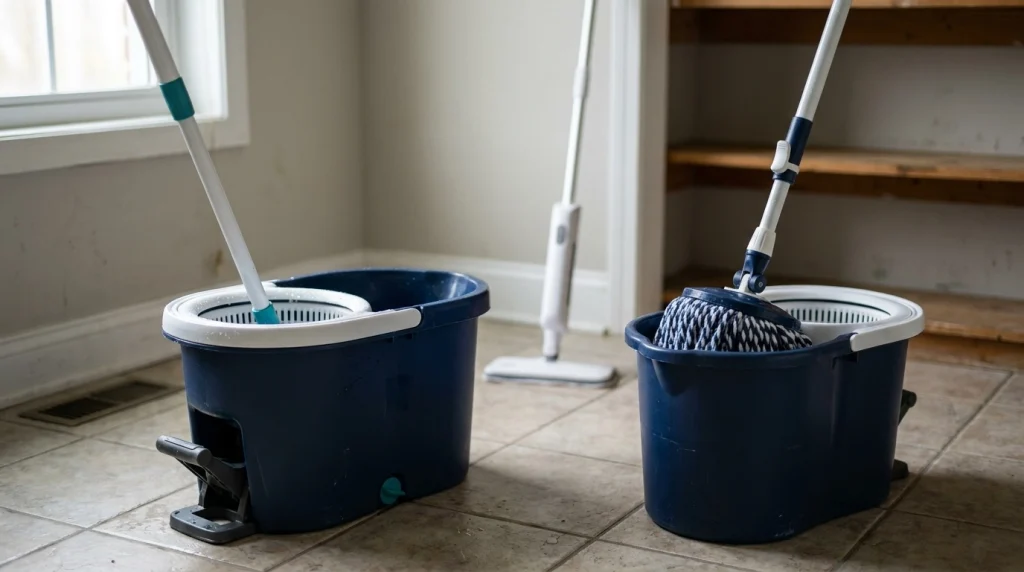
Spin mops use several drive designs, and each changes how you activate the spinner. The best arrangement depends on the effort you prefer, the bucket design, and how easily you can maintain its moving parts.
| Mechanism | How it spins | Main consideration |
|---|---|---|
| Push-handle | A downward push drives a shaft or spiral mechanism. | Check the lock and handle movement. |
| Foot pedal | A pedal activates a mechanical drive in the bucket. | Keep the pedal linkage free of debris. |
| Electric motor | A motor supplies powered rotation. | Follow charging and electrical safety instructions. |
| Manual twisting | The user twists the mop head or handle directly. | The design may require more hand effort. |
Is a push-handle mechanism better than a pedal?
Neither design is universally better. A push-handle mop can be compact and straightforward, while a pedal-operated system lets you keep both hands on the handle during wringing.
When comparing models, test how smoothly the mechanism engages, whether the bucket remains stable, and how easily you can replace worn parts. A smooth, serviceable mechanism matters more than the mechanism’s label alone.
Why do some spin mops have a locking switch?
A lock prevents unwanted rotation during normal mopping or changes the handle between operating modes. Some systems need the handle unlocked to spin and locked again before you push the mop across the floor.
If a mop won’t spin despite repeated pressure, inspect this switch first. Never force a locked handle or bypass a safety feature.
Why Does Spinning Remove Water From a Mop?
Spinning removes water because rotation produces an outward effect commonly described as centrifugal force. Water moves away from the rotating center and escapes through the spaces between the mop fibers and the openings in the wringer basket.
What is centrifugal force in a spin mop?
Centrifugal force is the apparent outward force experienced in a rotating frame of reference. In practical terms, as the wet mop head spins, water is driven outward from the rotating fibers instead of remaining trapped between them.
The water then passes through the perforated basket and collects in the bucket. The mop fibers retain some moisture, so spinning doesn’t make the head completely dry.
Does faster spinning make a mop drier?
Generally, faster rotation can remove water more effectively when other conditions remain similar. The result also depends on spin duration, mop-head construction, how much water it holds, and the design of the wringer.
There isn’t one universal ideal speed for every mop. Follow the manufacturer’s instructions rather than trying to force the handle or pedal to reach a particular speed.
Why does the mop head expand or spread out while spinning?
Flexible microfiber strands tend to spread outward as the head rotates. This movement helps expose more of the fibers to the outward action that removes water.
The basket keeps the rotating head contained. If strands repeatedly catch on the basket, stop using the mop and check for a damaged head, loose fibers, or a misaligned spinner.
Why does water sometimes splash out of the bucket?
Water can splash when the mop spins too close to the basket’s rim, the bucket is overfilled, or the head isn’t properly centered. A missing splash guard or damaged basket can also allow droplets to escape.
- Use the fill level specified in the manual.
- Center the mop head in the wringer before activating it.
- Keep the bucket on a flat, stable surface.
- Wait for the spinner to stop before removing the mop head.
These small habits help keep the surrounding floor dry and reduce the risk of slipping during cleaning.
Why Is My Spin Mop Not Spinning?
A spin mop that refuses to rotate usually has an engagement problem, a jammed component, or a worn drive mechanism. Start with simple checks before taking anything apart.
What should you check first?
Follow this troubleshooting sequence to identify common problems without damaging the mop.
- Check the lock: Make sure the handle or head is in the correct position for spinning.
- Inspect the handle: Confirm that its sections are firmly connected and the shaft moves as intended.
- Check the pedal: Look for anything obstructing its travel or preventing it from returning.
- Inspect the basket: Make sure it sits correctly and rotates freely when the mechanism is disengaged and safe to check.
- Look for tangled fibers: Remove loose strands or debris only after the mechanism has stopped completely.
- Review the manual: Check model-specific instructions for resetting or re-engaging the drive.
Why does the handle move but the mop head doesn’t spin?
If the handle moves freely without turning the head, the drive may not be engaging. A loose connection, worn spiral shaft, damaged clutch, or broken internal linkage could be responsible.
Stop forcing the handle if you hear grinding, feel unusual resistance, or notice the shaft slipping. These symptoms can indicate a mechanical fault that needs repair or replacement.
Why does the pedal go down without spinning the basket?
A pedal that moves without driving the basket may have a disconnected linkage, damaged gear, or worn ratchet. Debris can also interfere with the pedal’s normal travel.
Check the exterior for visible obstructions and consult the manufacturer’s repair guidance. Don’t reach into a moving mechanism or dismantle a spring-loaded assembly unless the manufacturer provides safe instructions.
When should you replace the spin mop?
Replacement makes sense when the drive is cracked, the basket wobbles significantly, or the mechanism repeatedly fails after basic maintenance. Compare the cost and availability of replacement parts with the price of a new set.
A replaceable mop head doesn’t necessarily mean the drive mechanism is repairable. Check part compatibility before ordering anything.
How Does Spin Speed Affect Floor Cleaning?
Spin speed affects how much moisture remains in the mop head, which influences how much water you apply to the floor. A wetter head may suit some heavily soiled, water-tolerant surfaces, while a lightly damp head is preferable for many moisture-sensitive floors.
How dry should a spin mop be for different floors?
The correct moisture level depends on the floor’s finish and the manufacturer’s care instructions. Use the following table as a practical starting point, not as a substitute for product-specific guidance.
| Floor type | Suggested mop moisture | Important precaution |
|---|---|---|
| Sealed hardwood | Lightly damp | Avoid standing water and prolonged dampness. |
| Engineered wood | Lightly damp if approved | Follow the flooring maker’s moisture limits. |
| Laminate | Very lightly damp | Prevent water entering seams and edges. |
| Vinyl or LVP | Damp, not dripping | Use a compatible, residue-free cleaner. |
| Ceramic or porcelain tile | Damp to moderately wet, as needed | Avoid excess water around damaged grout. |
| Natural stone | Lightly damp | Use a stone-compatible cleaner. |
Safety note: Check your flooring manufacturer’s care guide and the cleaner’s label before use. Don’t assume that a surface can tolerate excess moisture simply because it looks waterproof.
How can you control the mop’s moisture?
Most manual spin mops let you adjust moisture by changing how long or how often you spin the head. More spinning often removes more water, although the exact result depends on the design.
- For laminate and sealed wood, wring thoroughly and test the head on a small area.
- For routine vinyl cleaning, use enough moisture to lift soil without leaving puddles.
- For tile, adjust moisture to the amount of dirt and the condition of the grout.
In my floor-care approach, I pay more attention to the moisture left in the fibers than to how dramatic the spinning action looks. A mop that appears to spin quickly can still leave too much water behind if its head is overloaded or poorly wrung.
Can spinning prevent streaks and residue?
Proper wringing can reduce excess water, but it doesn’t automatically prevent streaks. Dirty rinse water, too much detergent, and residue left by incompatible cleaning products can all create a dull or streaky finish.
Rinse the microfiber head when it becomes visibly dirty and replace cloudy bucket water. Use a cleaner designed for the floor surface, following the stated dilution instructions.
Safety note: Never mix cleaning chemicals, and don’t use vinegar or abrasive solutions on floors unless the flooring manufacturer specifically approves them.
How Do You Maintain a Spin Mop Mechanism?
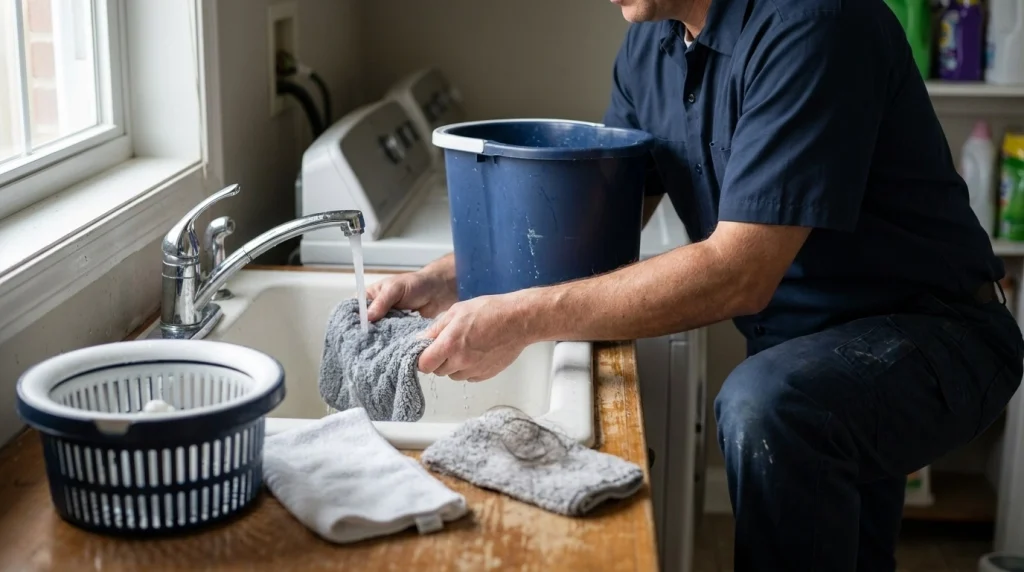
Regular maintenance keeps a spin mop turning smoothly and helps prevent avoidable wear. The most important habits are rinsing away dirt, drying the components, and checking moving parts for damage.
How often should you clean the spinner?
Rinse the mop head and remove visible debris after each cleaning session. Wipe the basket and bucket after use, especially if detergent residue or dirty water has collected around the spinner.
- After every use: Empty the bucket, rinse the mop head, and remove trapped hair or lint.
- Weekly during frequent use: Inspect the basket, handle joints, and pedal for buildup or loose connections.
- When movement becomes rough: Check for debris, misalignment, or worn components before using the mop again.
These are practical maintenance intervals rather than fixed manufacturer requirements. Adjust them according to how often you mop and the type of mess you clean.
Should you lubricate the spin mechanism?
Only lubricate the mechanism if the manufacturer recommends it and identifies a suitable product. Some spin mop assemblies are designed to operate without user-applied lubricant.
Applying oil or grease to the wrong component can attract dirt, affect plastic parts, or contaminate the bucket. Never lubricate a wet mechanism without checking the manufacturer’s maintenance instructions first.
How do you make a spin mop last longer?
Handle the mechanism gently and avoid forcing it when the mop head catches. A jammed spinner can put unnecessary strain on the shaft, pedal, or internal drive.
- Keep the mop head properly attached and centered.
- Use the recommended bucket fill level.
- Don’t stand on a pedal beyond its intended operation.
- Allow washable microfiber heads to dry fully between uses.
- Replace worn heads before loose fibers interfere with the basket.
- Store the bucket in a dry place away from unnecessary heat.
Also inspect the mop head’s attachment plate occasionally. A damaged connector can cause wobbling that feels like a drive-mechanism problem.
How Does a Spin Mop Compare With Other Mops?
A spin mop stands out because its mechanism controls excess water without requiring you to wring the mop by hand. However, flat microfiber mops, steam mops, and electric mops can be better choices for specific cleaning tasks.
| Mop type | How it works | Best suited for | Main limitation |
|---|---|---|---|
| Spin mop | Mechanical rotation wrings the head. | General hard-floor cleaning and adjustable moisture. | Requires a bucket and functioning spinner. |
| Flat microfiber mop | A flat pad collects dust and soil. | Quick touch-ups and smaller spaces. | Pads need washing or changing. |
| String mop | Absorbent strands collect liquid and dirt. | Some heavy-duty, water-tolerant cleaning tasks. | Hand wringing can be awkward without a wringer. |
| Steam mop | Heats water to produce steam. | Compatible sealed floors that permit steam cleaning. | Heat and moisture can damage unsuitable floors. |
| Cordless electric mop | A motor drives pads or cleaning rollers. | Convenient powered cleaning. | Requires charging and equipment maintenance. |
| Robot mop | An automated unit moves across the floor. | Routine maintenance between deeper cleans. | Corners and stubborn grime may need manual work. |
Is a spin mop better than a flat microfiber mop?
A spin mop is useful when you want adjustable moisture and a bucket-based rinsing routine. A flat microfiber mop is often more convenient for quick spills, narrow spaces, and routine dust removal.
For apartments with limited storage, a compact flat mop may be easier to manage. For larger tiled areas, a spin mop can offer a practical balance between rinsing, scrubbing, and wringing.
Is a spin mop better than a steam mop?
A spin mop cleans with a damp head and a suitable cleaning solution when needed. A steam mop relies on heat, so its use depends on whether the flooring manufacturer approves steam cleaning.
Don’t choose steam simply because you want a deeper clean. Some wood, laminate, and other moisture-sensitive flooring systems can suffer damage from heat or steam penetration.
For general floor-care advice, consult the National Wood Flooring Association and follow your flooring manufacturer’s maintenance instructions. For compatible cleaning products, the Bona floor-care website offers manufacturer guidance and product information.
Frequently Asked Questions
1. What makes a spin mop spin?
A spin mop uses a mechanical drive or electric motor to create rotation. A foot pedal or push-down handle supplies the movement on manual models, while the mechanism turns the mop head or wringer basket to remove excess water.
2. Does a spin mop use centrifugal force?
Yes. As the mop head rotates, water moves outward from the rotating fibers and escapes through the openings in the wringer basket. This process removes excess moisture, although some water remains in the microfiber strands.
3. Why does my spin mop spin slowly?
A slow spinner may have a worn drive, a loose connection, a jammed basket, or an improperly engaged lock. Check the manual and inspect accessible components for debris or damage before trying the mechanism again.
4. Can a spin mop damage hardwood floors?
A spin mop can be suitable for sealed hardwood when you wring the head thoroughly and follow the flooring manufacturer’s instructions. Excess water can damage wood, so use a lightly damp head and wipe up standing moisture promptly.
5. Why does my spin mop spin but not remove enough water?
The mop may need more spinning time, or its fibers may hold more water than the wringer can remove in one cycle. Check that the head sits correctly in the basket and that the drive reaches its normal operating movement.
6. Can I repair a broken spin mop mechanism?
Some problems, such as a loose handle connection or accessible debris, are easy to correct. A cracked pedal, damaged internal drive, or broken shaft may require replacement parts or a new mop, depending on the model’s repair options.
7. How often should I replace a spin mop head?
Replace the head when its fibers become badly worn, remain dirty after washing, develop persistent odors, or stop cleaning effectively. There is no universal replacement interval because usage, washing practices, and the type of dirt all affect its lifespan.
The Bottom Line: Why Spin Mops Rotate
A spin mop spins because a mechanical or powered drive turns the mop head or wringer basket. That rotation creates centrifugal effects that push water out of the fibers, making wringing easier and helping you control moisture during floor cleaning.
For the best results, keep the mechanism clean, engage the lock correctly, and avoid forcing a jammed spinner. Match the mop’s moisture level to your floor type, particularly on hardwood and laminate.
If your current mop spins smoothly but leaves the floor too wet, try adjusting the wringing time before replacing it. If it won’t rotate at all, inspect the lock, handle, pedal, and basket first.
For more practical advice, explore the U.S. Environmental Protection Agency’s cleaning and indoor-environment resources alongside your floor manufacturer’s care instructions. Choosing compatible cleaning products and using the right amount of water are just as important as the spinning mechanism itself.