
How to Get a Spin Mop Head Drier: Step-by-Step Guide

Quick Answer
To get a spin mop head drier, place it fully inside the bucket’s dry wringer, keep the handle upright, release the mop’s spinning lock if your model has one, and pump the handle repeatedly. Start with 5–8 controlled strokes, check the moisture, and repeat until the microfiber strands feel damp rather than dripping. If the head remains wet, check the wringer, basket alignment, and mop-head compatibility.
Steps for a drier spin mop head
- Position correctly: Center the mop head inside the dry-spinning basket.
- Unlock the handle: Release the spinning mechanism according to your mop’s instructions.
- Pump steadily: Push the handle down and allow it to rise between strokes.
- Check moisture: Stop occasionally to see whether excess water still drips from the strands.
- Inspect the system: Check for tangled fibers, a loose head, a jammed basket, or a damaged mechanism if spinning is ineffective.
One important tip
- For hardwood and laminate, aim for a damp, well-wrung mop rather than a soaking-wet one. Always follow your flooring manufacturer’s moisture guidance.
A spin mop head should release enough water to clean effectively without leaving puddles or a dripping trail. When the wringer works properly, you can control how damp the microfiber strands remain with a few extra strokes.
In this guide, I’ll explain how to make a spin mop head drier, why some mop heads stay too wet, and how to troubleshoot common bucket and handle problems. I’ll also cover the differences between spin wringers and other mop-wringing methods so you can protect your floors and avoid unnecessary replacement costs.
In This Guide
- How does a spin mop wringer remove water?
- How do you get a spin mop head drier?
- Why does a spin mop head stay too wet?
- Which mop-wringing method removes the most water?
- How dry should a mop head be for different floors?
- How do you clean and maintain a spin mop head?
- How do you fix a spin mop that will not wring out?
- What mistakes should you avoid when spinning a mop?
- Frequently asked questions
How Does a Spin Mop Wringer Remove Water?
A spin mop uses a rotating basket to remove excess water from its absorbent head. The basket spins the mop rapidly, helping centrifugal action move water away from the microfiber strands and through the basket openings.
What is a spin mop wringer?
A spin mop wringer is the part of a mop-and-bucket system designed to squeeze or spin excess water out of the mop head. Most manual models use a pump-action handle, while some systems have separate baskets for washing and drying.
The important distinction is between cleaning the mop and drying it. A wash basket helps loosen dirt, while a dry basket removes excess water before you return to the floor.
Why does spinning make the mop less wet?
As the mop head rotates, water moves outward from the fibers and escapes through the wringer basket. Faster, properly functioning rotation generally improves water removal, but the result also depends on the mop’s design, fiber density, and condition.
In my floor-cleaning routine, I treat wringing as a moisture-control step rather than a race to make the mop completely dry. A slightly damp head can pick up everyday dirt without flooding the surface.
What should the mop head feel like afterward?
For routine hard-floor cleaning, the strands should feel damp and flexible rather than saturated and heavy. A well-wrung head should not release a steady stream of water when you lift it from the basket.
- Too wet: Water drips continuously, and the floor develops puddles.
- Usually suitable: The strands remain damp, with no continuous dripping.
- Too dry: The fibers struggle to spread the cleaning solution or glide across the floor.
The ideal moisture level depends on your flooring and cleaning product. Some tile floors tolerate more moisture than laminate or engineered wood, so adjust the wringing accordingly.
How Do You Get a Spin Mop Head Drier?
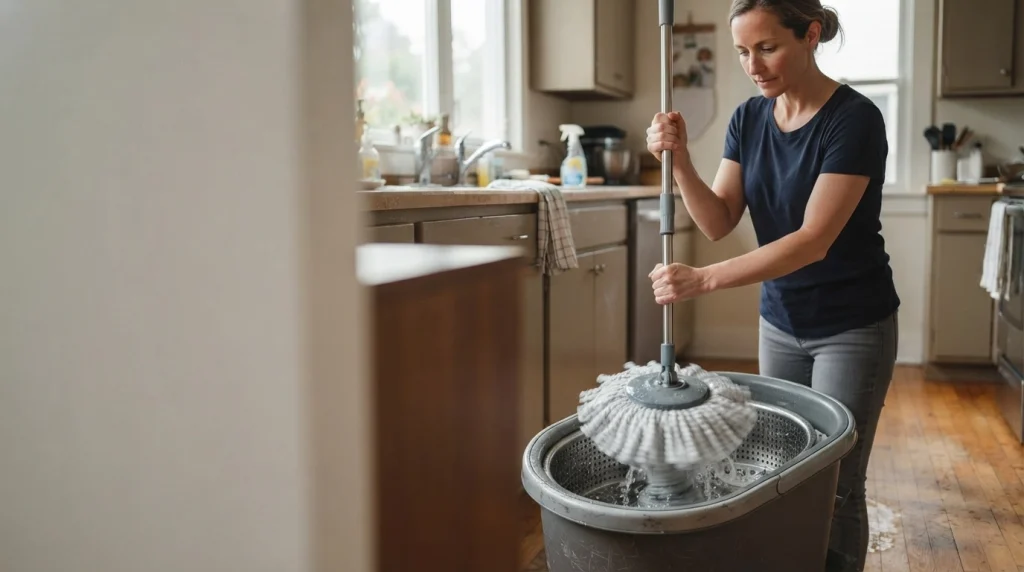
The easiest solution is to position the mop correctly and use several controlled pumping strokes. If your mop has a spinning lock, release it before wringing and follow the model’s instructions for engaging the rotation mechanism.
Step 1: Remove excess water from the wash cycle
After washing the mop head, lift it from the dirty water and allow excess liquid to drain briefly over the bucket. Avoid carrying a heavily saturated head across the room.
Step 2: Center the mop in the dry wringer
Place the entire mop head inside the spinning basket, keeping its fibers away from the rim. An off-center head can wobble, rub against the bucket, or spin unevenly.
Step 3: Check the handle lock
Some spin mops have a collar, lever, or locking switch that controls whether the handle can rotate the head. Set it to the correct wringing position as directed in your model’s manual.
Don’t force the handle if the mechanism resists movement. A locked or incorrectly assembled handle can prevent proper spinning or damage the internal parts.
Step 4: Pump the handle steadily
Keep the handle upright and use smooth, controlled strokes. Start with approximately five to eight strokes, allowing the handle to rise between pushes rather than slamming it down.
This is a practical starting point, not a universal manufacturer specification. Some buckets need more strokes, while others remove enough water with fewer movements.
Step 5: Check the moisture and repeat
Lift the head carefully and check whether water still drips from the strands. If it remains saturated, return it to the basket and add a few more controlled strokes.
Stop when the mop reaches the moisture level appropriate for your floor. Excessive pumping won’t fix a clogged, damaged, or incompatible wringer.
Practical tip
If you are cleaning laminate or hardwood, test the mop on a small area first. The floor should not be left with standing water, and you should follow the flooring manufacturer’s cleaning instructions.
Why Does a Spin Mop Head Stay Too Wet?
A spin mop head that remains wet may have a positioning problem, a worn mechanism, tangled fibers, or a basket that cannot rotate freely. Check these simple causes before replacing the entire mop system.
The mop head is not seated correctly
If part of the head sits outside the basket, it may wobble instead of spinning evenly. Reposition the head in the center and make sure its attachment is secure.
The spinning lock is in the wrong position
Some models have separate settings for mopping and wringing. If the handle stays locked or the rotation mechanism remains disengaged, the head may not spin as intended.
The basket is dirty or obstructed
Hair, lint, soap residue, and loose debris can interfere with the basket’s movement or block its drainage openings. Empty the bucket and inspect the basket before cleaning away any buildup.
The mop fibers are tangled or heavily soiled
Dense clumps of microfiber can hold water unevenly, especially when the head contains trapped dirt or detergent. Rinse the fibers thoroughly and separate tangled strands before trying again.
The mechanism is worn or damaged
A loose handle, cracked basket, slipping drive mechanism, or damaged pedal can reduce spinning performance. If the mop makes unusual noises or jams repeatedly, stop using it until you can inspect it safely.
Section takeaway: Check alignment, locks, cleanliness, and visible damage before assuming the mop head needs replacing.
Which Mop-Wringing Method Removes the Most Water?
A properly functioning spin wringer offers convenient, adjustable moisture control, while a hand-wrung mop depends more on physical pressure. Flat microfiber systems often use a different wringing mechanism and may be easier to manage in tight spaces.
| Method | Water control | Main advantage | Limitation |
|---|---|---|---|
| Spin mop with dry basket | Adjustable through repeated spinning | Convenient moisture control without hand-wringing | Depends on correct assembly and a working mechanism |
| Traditional string mop with hand wringer | Depends on pressure and wringer design | Suitable for larger, durable floor areas | May require more effort |
| Flat microfiber mop with squeeze mechanism | Controlled by the built-in wringer | Slim head for corners and narrow spaces | Wringing performance varies by design |
| Manual hand-wringing | Depends on grip strength and technique | Doesn’t require a dedicated spin basket | Can strain hands and leave moisture unevenly distributed |
There is no reliable universal percentage for how much water each method removes. Basket design, fiber material, head size, and wear all affect the outcome.
Is a spin mop better than a flat microfiber mop?
A spin mop can be a good choice for people who prefer a bucket-based system and want to adjust moisture without squeezing the head by hand. A flat microfiber mop may suit smaller rooms, quick cleanups, and storage in compact homes.
Neither system is automatically safer for every floor. Choose based on the floor manufacturer’s moisture limits, the mop’s wringing performance, and how easily you can maintain the equipment.
How Dry Should a Mop Head Be for Different Floors?
The correct moisture level depends on the floor material, its finish, and the manufacturer’s care instructions. Porous or moisture-sensitive surfaces need particular care because excess water can contribute to swelling, staining, or finish damage.
Hardwood and engineered wood
Use a well-wrung mop that leaves minimal moisture behind. Avoid puddles, wet seams, and repeated soaking, especially on unfinished wood or floors with damaged protective finishes.
Laminate and vinyl flooring
Laminate can be vulnerable to water entering its joints, so use minimal moisture and dry lingering wet spots promptly. Vinyl and luxury vinyl plank flooring usually tolerate routine damp mopping, but standing water and unsuitable cleaning chemicals can still cause problems.
Tile, stone, and concrete
Glazed ceramic and porcelain tile generally tolerate more moisture than wood-based floors, although grout and surrounding materials still matter. Natural stone may require a pH-neutral cleaner specifically approved for that stone, while sealed concrete should be cleaned according to its sealer’s care instructions.
Safety note: Check your flooring manufacturer’s care guide and your cleaner’s label before use. Avoid assuming that vinegar, bleach, or a general-purpose solution is safe for every floor finish.
How can you prevent streaks and slippery floors?
A mop that is too wet can leave water marks, diluted cleaner, or residue that makes a surface feel slippery. Use the recommended cleaning-solution dilution and wring out excess liquid before each pass.
For additional wood-floor guidance, consult the National Wood Flooring Association. Its flooring-care resources can help you understand why wood surfaces need material-appropriate cleaning methods.
How Do You Clean and Maintain a Spin Mop Head?
A clean mop head wrings more consistently because dirt, tangled fibers, and detergent residue are less likely to interfere with its movement. Regular maintenance also helps reduce unpleasant odors and prevents dirty water from being spread across the floor.
Rinse after every cleaning session
Rinse the microfiber head until the water runs relatively clear, following the manufacturer’s washing instructions. Remove hair and debris before they become tangled deep inside the strands.
Wash the mop head when needed
If the mop head is removable and machine-washable, follow the care label for the approved temperature and detergent. Avoid fabric softener if the manufacturer advises against it, since residue can reduce microfiber absorbency.
Let the mop head dry completely
Detach the head if the design allows it, then hang it in a well-ventilated area. Avoid leaving a damp mop trapped in a closed bucket, where lingering moisture can encourage unpleasant smells.
Clean the bucket and wringer basket
Empty dirty water after each use and remove visible debris from the basket. Wipe the bucket clean and allow the components to dry before storage.
The CDC’s hygiene guidance emphasizes cleaning surfaces with appropriate products and following product instructions when disinfection is needed. Routine mop maintenance should follow the same practical principle: clean equipment properly, and don’t assume extra chemicals are always necessary.
Safety note: Never mix bleach with vinegar, ammonia, or other cleaning products. Follow the mop and detergent labels, and keep cleaning chemicals away from children and pets.
How Do You Fix a Spin Mop That Will Not Wring Out?
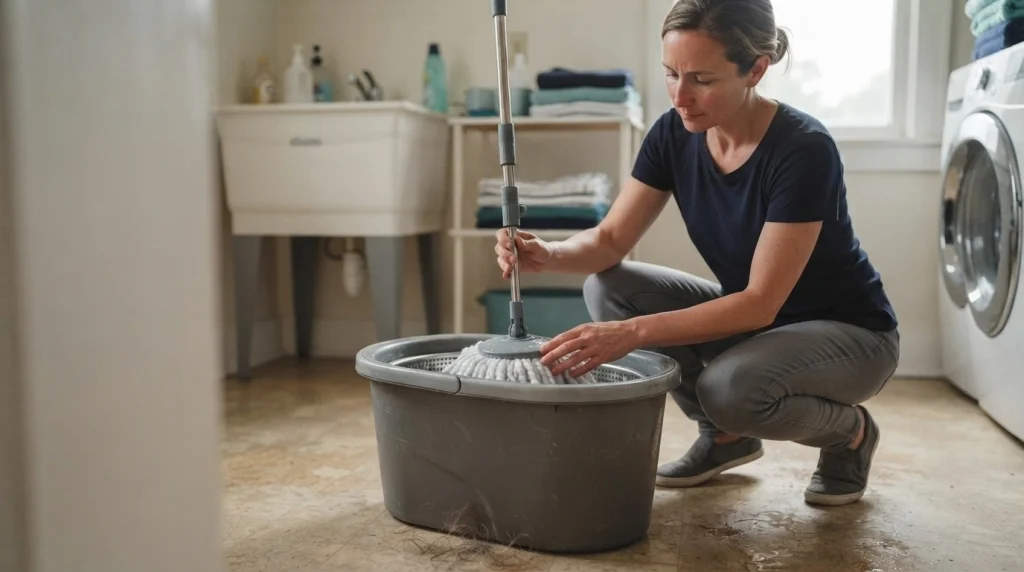
If the mop head refuses to spin or stays saturated despite repeated pumping, troubleshoot the handle and basket before replacing any parts. Stop immediately if the mechanism jams or appears damaged.
Problem: The handle moves but the head barely spins
- Check whether the handle lock is set correctly.
- Confirm that the head is attached securely and centered.
- Use smooth, complete strokes instead of short, forceful pushes.
- Inspect for loose connections or worn internal components.
Problem: The basket spins but the mop remains wet
- Check whether you are using the designated dry-spinning basket.
- Remove tangled hair and debris from the mop fibers.
- Rinse away heavy detergent buildup that may weigh down the head.
- Try several additional controlled strokes and check the result.
Problem: The mop shakes, wobbles, or makes unusual noises
Remove the mop from the basket and inspect the assembly for visible cracks, loose fasteners, or an unevenly attached head. Don’t place your fingers inside a moving basket or attempt to stop the head by hand.
If the basket remains unstable, consult the manufacturer’s troubleshooting instructions or replace the faulty component. Continuing to force a damaged wringer can make the problem worse.
Problem: The mop is still too wet after repeated attempts
Compare the head with the model’s intended design and check whether the fibers or attachment are compatible with the bucket. A replacement head with the wrong dimensions may not fit deeply enough into the basket for effective wringing.
For general cleaning and disinfecting advice, the U.S. Environmental Protection Agency provides guidance on appropriate cleaning products and safe label use. The key is to address the actual equipment problem rather than adding stronger chemicals to compensate for poor wringing.
Section takeaway: A spinning mop head that remains wet usually needs better alignment, cleaner fibers, the correct wringing setting, or mechanical attention.
What Mistakes Should You Avoid When Spinning a Mop?
Most wringing problems become easier to prevent once you use consistent technique. Avoid forcing the mechanism or expecting every mop head to reach the same dryness after a fixed number of strokes.
Using too much force
Hard, sudden pumping can stress the handle or its drive mechanism. Use smooth strokes and stop if the handle jams, slips, or produces unusual resistance.
Overloading the bucket
Excessive water or detergent can make handling messier and leave more residue on the mop head. Fill the bucket within its marked limits and use only the recommended amount of cleaning solution.
Ignoring the floor’s moisture limits
A soaking-wet mop may be acceptable for some durable surfaces but unsuitable for laminate or hardwood. Wring the head according to the floor’s needs instead of relying on one setting for every room.
Leaving the mop damp in storage
Putting away a wet mop can cause odors and make the next cleaning session less pleasant. Rinse the head, drain the bucket, and let the fibers dry completely in an airy location.
Using an incompatible replacement head
Not every round microfiber head fits every spin-mop basket. Check the attachment, diameter, and manufacturer’s compatibility information before buying a replacement.
A simple routine works best: rinse, center, spin, check, and dry. These five actions help keep the mop functional while reducing excess water on your floors.
Frequently Asked Questions
How many times should I pump a spin mop to make it drier?
Start with five to eight controlled strokes, then check the moisture level. Add a few more if water still drips from the fibers. The exact number depends on the basket design, mop-head condition, and how much water the head absorbed during rinsing.
Why is my spin mop head still dripping after spinning?
The head may be off-center, the wringer may not be engaged correctly, or the basket may be dirty or damaged. Check the handle lock, rinse the fibers thoroughly, and try again with smooth strokes. If the problem persists, inspect the mechanism.
Can I make a spin mop head almost completely dry?
Many spin mops can remove substantial excess water, but their performance varies by model. For ordinary damp mopping, completely dry fibers are usually unnecessary. Aim for a head that distributes cleaning solution properly without dripping or leaving standing water.
Should I spin a mop head before cleaning hardwood floors?
Yes, if you’re using a spin mop on a compatible hardwood floor, wring it thoroughly before mopping. Use minimal moisture, avoid puddles, and follow the floor manufacturer’s care instructions. Never assume that a mop is safe for wood simply because it has a wringer.
Can I put a wet spin mop head in the washing machine?
Only if the mop head is removable and the manufacturer permits machine washing. Follow the care label for detergent, temperature, and drying instructions. Some heads require hand washing, and unsuitable washing methods can damage their fibers or attachment.
Why does my spin mop head smell after drying?
Odors can develop when dirt, detergent residue, or moisture remains trapped in the fibers. Rinse the head thoroughly, wash it as directed, and let it dry completely in a ventilated area. Clean the bucket as well, since residue can transfer back to the mop.
Is a spin mop safe for laminate flooring?
A spin mop can be suitable for laminate when it removes enough water to leave the mop only slightly damp. Avoid standing water and wet seams, and follow the laminate manufacturer’s instructions. A microfiber flat mop with controlled moisture is another option.
Final Takeaway: Get a Drier Spin Mop Head Without Damaging Your Floors
To get a spin mop head drier, center it in the dry wringer, check the handle lock, and pump steadily until excess water stops dripping. If the head remains saturated, inspect the fibers, basket, and spinning mechanism instead of forcing the handle.
Remember that the goal isn’t always a completely dry mop. It’s a clean, evenly damp head that suits your floor type and leaves no standing water behind.
For better results, rinse the mop after every session, wash it according to its care instructions, and let it dry completely before storage. A little routine maintenance can make your spin mop easier to use and more reliable over time.