
How Does a Spin Mop Centrifuge Water? The Science Explained

Quick Answer
A spin mop centrifuges water by rotating its wet microfiber head rapidly inside a perforated wringing basket. The rotation creates centrifugal effects that move water outward from the mop fibers, allowing it to escape through the basket openings and collect in the bucket. The faster and longer the mop spins, the more water it can remove, although the result also depends on the mop design and microfiber condition. For safer floor cleaning, follow the relevant wood flooring care guidance when choosing how damp your mop should be.
What makes the water leave the mop?
- Rapid rotation: The spinning head moves water outward from the center.
- Perforated basket: Openings let expelled water drain into the bucket.
- Mechanical drive: A foot pedal, pump handle, or other mechanism turns the basket or mop head.
- Microfiber structure: Fine fibers hold water and release it as the head spins.
- Spin duration: A longer spin generally removes more water until the process becomes less effective.
A quick practical tip
- Center the mop head in the basket, secure the handle or lock as instructed, and spin in short bursts until the mop feels damp rather than dripping. Avoid excessive moisture on hardwood and laminate.
A spin mop uses a simple mechanical idea to solve an everyday cleaning problem: removing excess water without squeezing the mop head by hand. Once you understand how its spinning basket works, it’s easier to control moisture, improve floor drying, and troubleshoot a mop that stays too wet.
In this guide, I’ll explain the science behind centrifugal action, what happens inside the bucket, how different wringing systems compare, and how to get the right moisture level for common household floors.
In This Guide
- What does centrifuging water mean in a spin mop?
- How does a spin mop remove water step by step?
- Which parts make the spin mop work?
- What affects how much water a spin mop removes?
- Spin mop vs. other mop types: What’s different?
- How dry should a spin mop be for each floor type?
- Why is my spin mop still too wet?
- How do you maintain a spin mop’s wringing system?
- Frequently asked questions
What Does Centrifuging Water Mean in a Spin Mop?
Centrifuging water means separating liquid from a material by spinning it rapidly. In a spin mop, rotation helps force water out of the wet microfiber head and into the surrounding bucket.
Understanding centrifugal force
When the mop head rotates, its fibers and the water trapped between them move around a central axis. The water tends to resist the change in its direction of motion, while the spinning system guides it outward.
This effect is commonly described as centrifugal force. In a rotating reference frame, it appears to push water away from the center, while the underlying motion can also be explained through inertia and the forces acting on the water.
The practical result is straightforward: water leaves the rotating mop head, passes through the wringer basket, and drains into the bucket.
How is this different from gravity draining?
Gravity pulls water downward, so a stationary mop gradually drips as excess moisture runs off. Spinning adds outward acceleration, helping release water that remains trapped within the microfiber strands.
- Gravity draining: Water runs downward slowly from a stationary mop head.
- Hand wringing: Pressure compresses the fibers and squeezes out moisture.
- Centrifugal wringing: Rotation helps water move outward and escape through the basket.
A spin mop doesn’t need heat or evaporation to remove most of this excess water. It relies on mechanical motion instead.
Does spinning remove every drop?
No. Some moisture remains attached to or trapped between the microfiber strands after spinning stops. That remaining water helps the mop pick up dirt and spread cleaning solution across the floor.
The aim is controlled dampness, not a completely dry mop head. The ideal moisture level depends on the floor material, the cleaning task, and the mop manufacturer’s instructions.
How Does a Spin Mop Remove Water Step by Step?
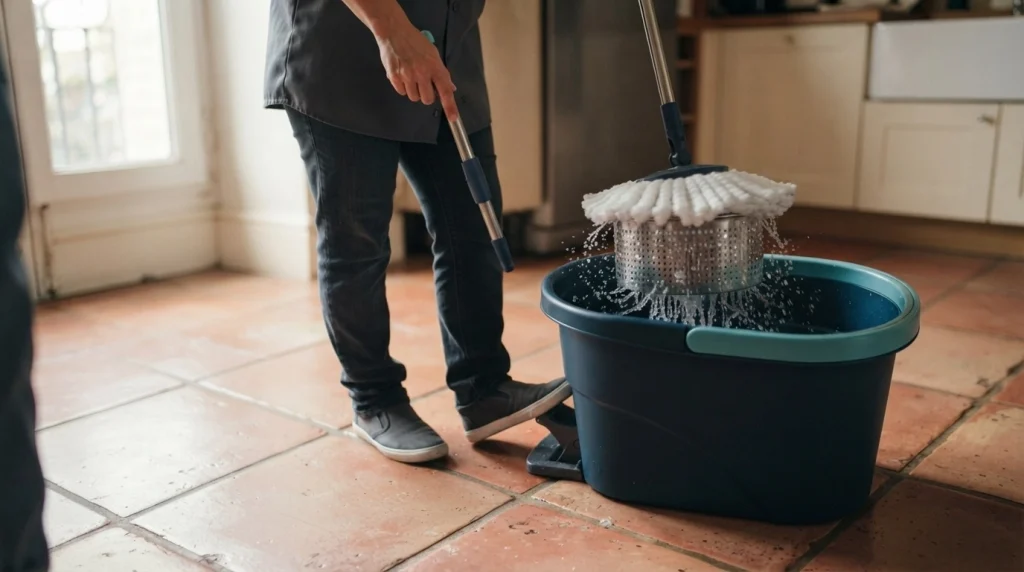
A spin mop uses a rotating head, a wringing basket, and a drive mechanism to remove excess water. The exact movement varies between pedal-operated buckets and handle-pump systems, but the basic process is similar.
Step 1: The microfiber head absorbs water
First, you dip the mop head into the cleaning water. Its fine microfiber strands collect liquid and loosen dirt when you move the mop across a suitable floor.
Step 2: You position the head in the wringer
Next, place the mop head fully inside the designated spinning basket. Keep it centered so it can rotate without striking the bucket walls or catching on the rim.
Step 3: The mechanism creates rotation
Depending on the design, you press a foot pedal or pump the handle. Gears, a drive shaft, or another mechanical linkage converts that movement into rotation.
Some models rotate the basket around a stationary central support, while others use a spinning attachment to turn the mop head. Follow your model’s instructions rather than assuming every bucket works identically.
Step 4: Water moves outward through the basket
As rotation builds, water separates from the moving microfiber head and travels outward. The basket’s openings allow expelled water to escape instead of remaining pooled around the mop.
The bucket catches the runoff, keeping most of the water contained in one place. This makes wringing more convenient than manually twisting a soaked mop.
Step 5: You stop at the desired moisture level
After a short spinning cycle, inspect the mop head and check whether it still drips heavily. Repeat the cycle if necessary, using the shortest effective duration for your floor.
- Rinse the mop head if it has collected visible dirt.
- Place it securely in the wringer basket.
- Operate the pedal or handle according to the manual.
- Check the dampness before returning to the floor.
For routine cleaning, a mop that feels damp and doesn’t release a stream of water is often a useful starting point. Delicate or moisture-sensitive flooring may require even less water.
Which Parts Make the Spin Mop Work?
The spin mop’s water-removal system depends on several parts working together. If one component is worn, obstructed, or incorrectly assembled, the head may spin poorly or remain too wet.
The wringing basket
The basket holds the mop head while it rotates and provides openings for water to drain. Its shape helps keep the head in position during the wringing cycle.
A basket clogged with hair, lint, or debris may drain less effectively. Clean its openings whenever you notice standing water or restricted runoff.
The drive mechanism
A foot-pedal model uses repeated pedal presses to drive the wringer, while a pump-handle model typically converts up-and-down handle movements into rotation. Both designs reduce the need to squeeze the mop by hand.
Some systems also include a locking collar or selector that switches between washing and spinning. If the mop refuses to rotate, check the lock position before assuming a part has broken.
The microfiber mop head
Microfiber consists of very fine synthetic fibers that create a large contact area for collecting water and dirt. Its performance depends on fiber condition, cleanliness, and how the head attaches to the mop plate.
Hair, detergent residue, and fabric softener can interfere with water absorption and release. A clean, well-maintained head generally works more consistently than one coated with buildup.
The bucket and drainage area
The bucket collects the water removed during spinning. Some models use separate compartments for clean and dirty water, while simpler designs collect rinse water in a single reservoir.
Keep the bucket below its marked maximum fill line. Excess water can splash during rotation, and accumulated debris can obstruct drainage.
What Affects How Much Water a Spin Mop Removes?
A spin mop’s drying performance depends on rotation, mop-head condition, basket design, and how you operate the wringer. Spinning longer may help, but it won’t compensate for every mechanical problem.
Rotation speed and duration
Faster rotation generally produces stronger outward acceleration. In simple terms, the acceleration associated with circular motion increases with the square of rotational speed, provided the rotation radius remains the same.
That doesn’t mean you should force a mop to spin faster than its mechanism allows. Use the pedal or handle as designed and stop if you hear grinding, feel unusual resistance, or notice excessive wobbling.
Microfiber condition and saturation
A heavily saturated head contains more water to remove. A dirty or residue-coated head may also release moisture differently from a freshly washed one.
Replace a mop head when its fibers become badly worn, damaged, or unable to clean effectively. Follow the care label when laundering reusable microfiber attachments.
Basket design and drainage
The basket must let expelled water escape freely. A damaged basket, obstructed holes, or a head that doesn’t fit properly can reduce performance even when the drive mechanism rotates normally.
Make sure the mop head sits inside the basket rather than catching on its rim. Correct alignment also reduces unnecessary strain on the rotating parts.
Cleaning solution and detergent residue
Too much detergent can leave residue on the microfiber and floor. Fabric softener can coat microfiber fibers, which may reduce their ability to absorb water and collect dirt.
Use the cleaning solution and dilution recommended for your mop and floor. Never add chemicals simply to make the spinning process work better.
Section Takeaway: A clean microfiber head, an unobstructed basket, and correct operation usually matter more than repeatedly spinning a poorly maintained mop.
Spin Mop vs. Other Mop Types: What’s Different?
A spin mop removes excess water mechanically, while other mop types use different methods to manage moisture. The best choice depends on the cleaning task, your floor surface, and how much control you need over dampness.
How common mop types compare
| Mop type | How moisture is managed | Best use | Main limitation |
|---|---|---|---|
| Spin mop | Rotating wringer removes excess water. | General hard-floor cleaning. | Requires a bucket and manual operation. |
| Flat microfiber mop | Manual wringing, spray control, or a separate wringer. | Quick cleaning and narrow spaces. | Moisture control depends on the design. |
| Traditional string mop | Manual pressure or a separate wringer. | Larger, water-tolerant areas. | Can retain considerable water. |
| Steam mop | Heats water and delivers steam through a pad. | Compatible, sealed hard floors. | Heat and moisture can damage unsuitable floors. |
| Cordless electric mop | Varies by model; some dispense and recover liquid. | Convenient routine cleaning. | Needs charging and model-specific maintenance. |
| Robot mop | Controls water delivery through a reservoir or dock. | Scheduled maintenance cleaning. | Moisture control and scrubbing vary by model. |
Why choose a spin mop over a flat microfiber mop?
A spin mop is useful when you want to rinse and wring a reusable mop head without repeatedly touching dirty water. Its basket also makes it easy to adjust dampness by changing the spinning duration.
A flat microfiber mop may be more convenient for small apartments, quick spills, and cleaning around furniture. Spray models also let you apply small amounts of solution without carrying a bucket.
Does a spin mop clean better than a steam mop?
Not automatically. A spin mop uses a damp head and suitable cleaning solution to lift dirt, while a steam mop uses heated moisture and requires a floor compatible with its temperature and cleaning method.
For most households, the correct choice comes down to the floor manufacturer’s instructions rather than the wringing technology alone.
How Dry Should a Spin Mop Be for Each Floor Type?
The right moisture level depends on how well your flooring tolerates water. Spinning the mop until it stops dripping is a useful starting point, but sensitive floors may need a more tightly controlled amount of moisture.
Hardwood and engineered wood
Use a well-wrung mop and avoid leaving visible puddles. Excess water can penetrate seams, damage finishes, and contribute to swelling or warping, particularly when the surface or joints are compromised.
Follow the wood flooring manufacturer’s cleaning instructions. The National Wood Flooring Association provides resources on wood flooring care and maintenance.
Laminate flooring
Laminate can be vulnerable to moisture entering joints and edges. Use a lightly damp microfiber head and avoid repeatedly flooding the same area.
Check whether your flooring manufacturer permits damp mopping and which cleaner it recommends. Some products marketed as general-purpose floor cleaners may not be suitable for every laminate finish.
Vinyl and luxury vinyl plank (LVP)
Many vinyl floors tolerate routine damp mopping, provided you use a compatible cleaner and avoid excessive water. A spin mop lets you remove enough moisture to reduce pooling around seams and edges.
Don’t assume every vinyl installation has the same water tolerance. Follow the flooring maker’s guidance, especially for glued-down products or floors with vulnerable seams.
Tile and natural stone
Glazed ceramic and porcelain tile generally tolerate damp mopping well, although grout can collect soil and residue. A properly wrung spin mop helps clean broad areas without leaving unnecessary water behind.
Natural stone requires more care because some stones and finishes can react to acidic cleaners. Choose a stone-compatible product and avoid vinegar unless the stone manufacturer explicitly approves it.
Concrete and other hard surfaces
Sealed concrete can often be damp-mopped with a suitable cleaner. Unsealed concrete, damaged coatings, and specialty finishes may absorb liquids or react differently, so check the relevant maintenance instructions.
Safety note: Always check your flooring manufacturer’s care guide and the cleaner’s label before use. Avoid unapproved acidic cleaners, harsh chemicals, and excess water on sensitive surfaces.
How can you tell whether the mop is too wet?
After wringing, inspect the head before touching the floor. If it streams water when you lift it or leaves puddles during a test pass, give it another short spin.
On moisture-sensitive floors, test the technique in an inconspicuous area first. Work in manageable sections and dry any accidental pooling promptly.
Why Is My Spin Mop Still Too Wet?
If your spin mop remains soaked after wringing, the problem may be an incorrect operating technique, a worn mechanism, or a mop head that doesn’t fit the basket properly. Start with simple checks before replacing the entire set.
The basket spins, but water remains in the mop
A spinning basket doesn’t guarantee that the mop head is releasing water effectively. Check whether the head fits entirely inside the basket and whether the microfiber is heavily saturated or clogged with residue.
- Reposition the head: Center it and keep it clear of the basket rim.
- Check the head attachment: Confirm that it is properly secured to its plate.
- Repeat a short cycle: Allow the head to spin again if it still drips.
- Clean the fibers: Wash away detergent residue and trapped debris according to the care label.
The pedal or handle doesn’t spin the basket properly
If the mechanism slips, stops unexpectedly, or produces grinding noises, check the user manual for lock settings and assembly instructions. A loose connection or damaged drive component may prevent proper rotation.
Don’t force a jammed pedal or continue pumping a mechanism that feels unusually resistant. Stop using it until you’ve identified the problem.
Water splashes out during spinning
Splashing often occurs when the bucket is overfilled, the mop head is off-center, or the rotation creates excessive movement near the rim. Reduce the water level and reposition the head before trying again.
Keep your hands away from moving parts while the basket rotates. Never attempt to hold the mop head in place with your fingers during operation.
The mop leaves streaks or makes the floor too wet
Streaks can result from excess cleaner, dirty rinse water, residue-coated fibers, or a mop head that’s too wet for the surface. Water removal alone won’t correct every cleaning problem.
- Rinse the microfiber head thoroughly.
- Prepare the correct cleaner dilution according to its label.
- Spin the head until it reaches a suitable dampness level.
- Make a small test pass and inspect the result as it dries.
If the floor remains sticky, review the cleaner’s instructions instead of adding more product. The CDC’s hygiene guidance also emphasizes choosing suitable cleaning products and following their directions.
How Do You Maintain a Spin Mop’s Wringing System?
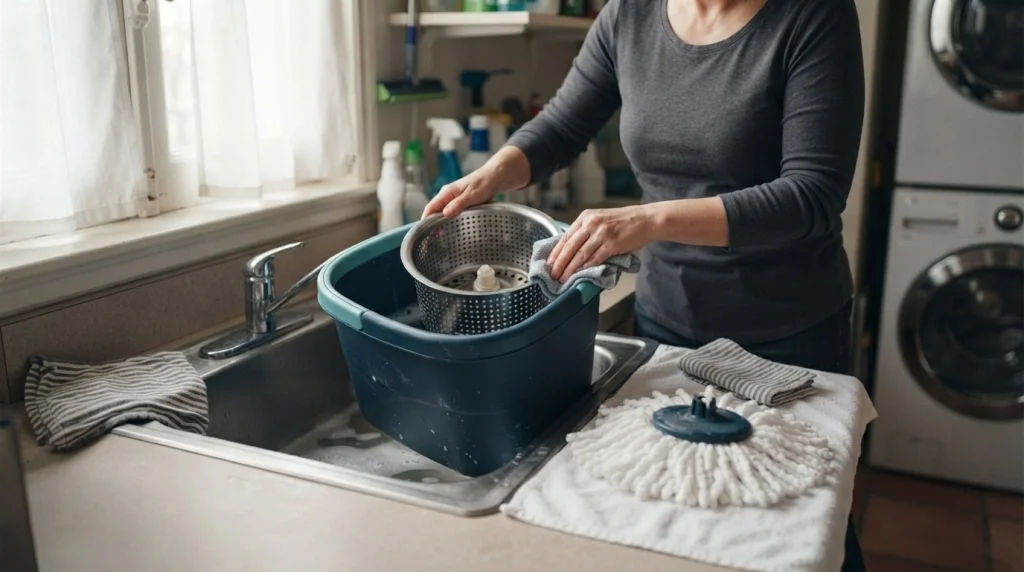
Regular maintenance helps the basket rotate freely, keeps the microfiber absorbent, and reduces unpleasant odors. A quick rinse after cleaning is easier than removing hardened residue later.
Clean the bucket and basket
- Empty dirty water after each cleaning session.
- Rinse away loosened dirt, hair, and detergent residue.
- Inspect basket openings for obstructions.
- Wipe accessible surfaces and allow the bucket to dry.
- Check the pedal, handle, and locking parts for visible wear.
Don’t immerse mechanical parts in water unless the manufacturer permits it. Some wringers contain components that require a different cleaning method.
Wash and dry the microfiber head
Remove the mop head when the design allows it, then wash it according to its care label. Avoid fabric softener because its residue can interfere with microfiber performance.
Let the head dry completely before storing it. A damp mop left in a closed bucket can develop unpleasant odors over time.
Use cleaning chemicals carefully
Choose a floor cleaner that matches the flooring material and the mop manufacturer’s recommendations. Don’t assume that bleach, vinegar, or concentrated detergent is suitable for every mop head or floor.
Safety note: Follow the product label, ventilate the area when required, and never mix cleaning chemicals. If you need to disinfect a surface, use a product approved for that purpose and follow its specified contact time.
The EPA’s explanation of cleaning and disinfecting clarifies why ordinary cleaning and disinfection are different tasks.
Section Takeaway: Clean the bucket, keep the basket clear, and let the microfiber dry fully after use. These small habits help preserve consistent wringing performance.
Frequently Asked Questions About Spin Mop Centrifuging
1. Does a spin mop use centrifugal force to remove water?
Yes. A spin mop uses rapid rotation to move water outward from its microfiber head. The water escapes through openings in the wringing basket and drains into the bucket, leaving the mop damp enough for cleaning.
2. Why does a spin mop remove water faster than simply hanging it up?
Hanging a wet mop relies mainly on gravity and gradual drainage. Spinning adds outward acceleration, helping release water trapped between the microfiber strands in a shorter period. The exact result depends on the mop’s design and condition.
3. How long should you spin a mop to remove water?
Start with a short spinning cycle, then inspect the mop head. Repeat if it still drips heavily. There is no universal number of seconds because basket designs, drive mechanisms, and microfiber heads vary. Follow your mop’s instructions and adjust for your flooring.
4. Can a spin mop remove too much water?
Yes. Extended spinning can leave the mop too dry for effective wet cleaning, depending on the head and wringer design. A slightly damp head usually works better for routine mopping than a nearly dry one, provided the floor can tolerate the remaining moisture.
5. Why does my spin mop basket rotate without drying the mop?
The basket may rotate while the mop head sits incorrectly, the microfiber holds excess water, or the basket drains poorly. Center the head, check for clogged openings, and clean the fibers. If the drive mechanism slips or makes unusual noises, inspect it according to the manual.
6. Is a spin mop safe for hardwood and laminate floors?
A spin mop can be suitable for some hardwood and laminate floors when you wring it thoroughly and use an approved cleaner. However, these surfaces can suffer moisture damage. Check the flooring manufacturer’s care instructions and avoid puddles, excessive water, and unapproved cleaning solutions.
Final Takeaway: Why Spin Mop Centrifuging Works
A spin mop centrifuges water by rotating its microfiber head so that water moves outward and escapes through the wringing basket. The mechanism turns a simple pressing or pumping action into a practical way to control mop dampness.
For the best results, focus on three things: keep the basket clean, maintain the microfiber head, and stop spinning when the mop reaches the moisture level your floor requires.
When you understand how the wringer works, you can troubleshoot a soggy mop more confidently and avoid leaving unnecessary water on your floors. Consistent technique matters just as much as the equipment itself.
For more practical floor-cleaning advice, explore the cleaning guides and mop reviews available on FloorsMop. Choose your mop and cleaning method based on your flooring, your routine, and the manufacturer’s care recommendations.