
What Is Centrifugal Wringing? How It Works in a Spin Mop

Quick Answer
Centrifugal wringing is a method of removing excess water from a wet mop head by spinning it rapidly inside a perforated basket. The rotation throws water outward through the basket’s openings, leaving the mop damp enough for cleaning. In a spin mop, this process helps control moisture without requiring you to squeeze the mop strands by hand.
How centrifugal wringing works
- Water absorption: The mop head absorbs water and cleaning solution before use.
- Spinning action: A foot pedal or push-down handle rotates the wringer basket.
- Outward movement: Rotation drives water away from the spinning mop head and through the basket openings.
- Moisture control: Longer or repeated spinning generally removes more excess water.
- Safer floor care: A properly wrung mop helps reduce standing water on moisture-sensitive flooring.
The practical tip
- Start with a few controlled spins, then check the mop head before cleaning. Use a slightly damp head on sealed wood, laminate, and vinyl, following the floor manufacturer’s care instructions.
Centrifugal wringing is the principle that makes a spin mop different from a traditional mop that you squeeze by hand. It uses rotation to remove excess moisture quickly and gives you greater control over how wet the mop head remains.
When choosing or using a spin mop, understanding this mechanism helps explain why some mop heads leave floors dripping while others produce a controlled, damp finish. I’ll break down the science, the bucket mechanism, and the practical adjustments that make a difference during everyday floor cleaning.
In This Guide
- What is centrifugal wringing?
- How does centrifugal wringing work in a spin mop?
- What does centrifugal force have to do with wringing?
- How do you use a spin mop wringer correctly?
- How does centrifugal wringing compare with other mop systems?
- Which floors benefit from centrifugal wringing?
- Why isn’t my spin mop wringing properly?
- How do you maintain a centrifugal spin mop?
- Frequently asked questions
What Is Centrifugal Wringing?
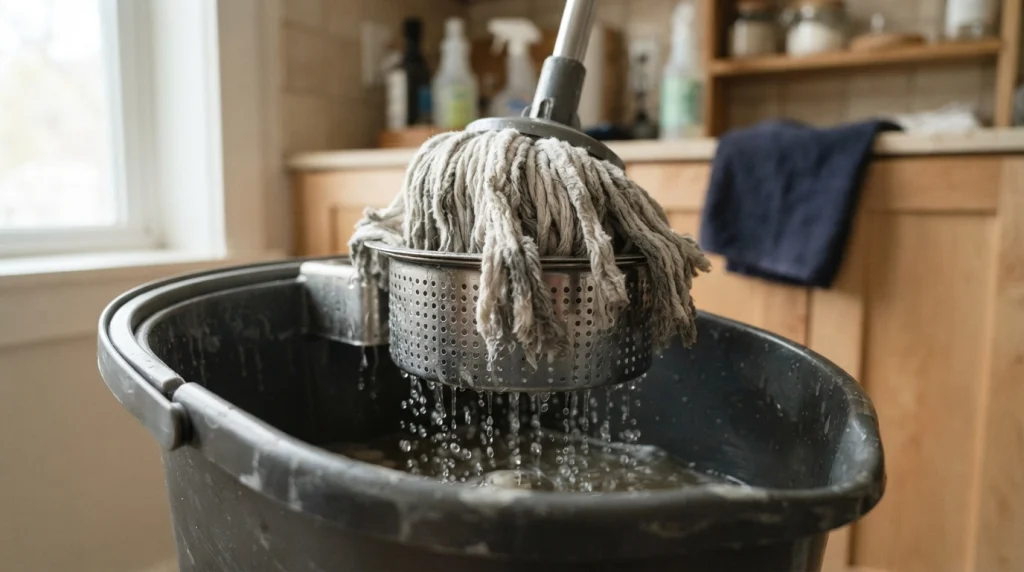
Centrifugal wringing is a mechanical process that removes water from wet material through rapid rotation. In a spin mop, the rotating mop head sheds excess water into a surrounding basket instead of relying on hand pressure to squeeze the fibers.
What does the term mean?
The word centrifugal describes the outward effect associated with rotating motion, while wringing means removing liquid from something wet. Together, the terms describe a method that spins water away from absorbent mop fibers.
Think of a salad spinner. When its basket rotates, water separates from the leaves and escapes through the openings. A spin mop uses a similar principle, although its mechanism, materials, and intended cleaning task differ.
Why is centrifugal wringing useful?
A mop head needs enough moisture to lift and collect dirt, but excessive water can create problems. Centrifugal wringing helps balance those needs by letting you remove some of the water before the mop touches the floor.
- Less direct contact: You don’t need to twist wet mop strands with your hands.
- Adjustable dampness: You can usually change the moisture level by varying the spinning time or number of strokes.
- Faster preparation: The mechanism removes excess water without a separate manual squeezing step.
- Reusable cleaning: Many spin mop heads are washable and designed for repeated use.
The mechanism doesn’t remove every drop of moisture, nor does it automatically clean or disinfect the mop head. It mainly controls how much liquid remains in the fibers before you start mopping.
How Does Centrifugal Wringing Work in a Spin Mop?
A spin mop uses a rotating basket, a drive mechanism, and an absorbent mop head to separate excess water from the fibers. The user supplies the force through a pedal or a push-down handle, depending on the model.
1. The mop head absorbs water
First, you dip the mop head into the bucket’s washing water. Its fibers absorb liquid and loosen dirt collected during earlier passes over the floor.
Many spin mops use microfiber, a fabric made from extremely fine synthetic fibers. These fibers help collect small particles and hold liquid, although performance depends on the head’s construction and condition.
2. The wringer basket begins rotating
Next, you position the wet mop head inside the perforated spinning basket. Pressing the pedal or pushing the handle activates the mechanism that turns the basket and mop head.
Some systems use foot-operated pedals, while others convert a downward push on the handle into rotational motion. Follow your model’s instructions because the operating method and locking mechanism can differ.
3. Water moves outward through the openings
As the mop spins, water moves outward from the rotating fibers and escapes through the basket’s holes. The basket catches the spray and directs much of the removed liquid back into the bucket.
The mop head gradually loses excess moisture. The remaining damp fibers can then pick up dirt while depositing less liquid onto the floor.
4. You adjust the moisture level
Repeated spinning generally removes more water, but the exact result depends on the mop head, rotation speed, and wringer design. A short spin may suit a heavily soiled tile floor, while a longer spin may help prepare the mop for a moisture-sensitive surface.
In practical cleaning, I would check the mop head rather than rely on a fixed number of pedal presses. Two mop heads can retain different amounts of water even when spun in the same bucket.
What Does Centrifugal Force Have to Do With Wringing?
Centrifugal force explains why water moves outward relative to the spinning mop head and basket. More precisely, in a rotating frame of reference, it is an apparent outward force; from an outside frame, the water’s inertia and the forces acting on it explain the motion.
Why does spinning remove water?
Water in the mop fibers tends to resist changes in its motion. When the head rotates, the fibers guide the water along a circular path until it can escape through the openings or separate from the material.
Once water leaves the spinning head, the basket allows it to drain away rather than remain trapped against the fibers. That separation reduces the amount of liquid the mop carries onto the floor.
Does faster spinning always produce a drier mop?
Increasing rotation speed can increase the outward acceleration, but speed is only one part of the result. Fiber density, the amount of water absorbed, basket shape, and the mechanism’s condition also affect wringing performance.
A damaged basket or worn drive mechanism may spin unevenly even when you apply plenty of pressure. Likewise, a mop head packed with hair or debris may not release water as effectively as a clean head.
Why doesn’t centrifugal wringing dry a mop completely?
Some moisture remains held between fibers and within the fabric. That residual dampness is useful because most wet-mopping tasks require a little liquid to loosen soil and help the mop glide across the surface.
Complete drying would require a different process, such as air-drying after cleaning. Centrifugal wringing is designed to remove excess water, not replace proper drying and storage.
How Do You Use a Spin Mop Wringer Correctly?
Correct positioning and controlled spinning help the wringer remove water evenly while reducing splashes. Always follow the instructions supplied with your particular mop, especially if it has a handle lock or a foot pedal.
Follow these steps
- Prepare the bucket: Fill it to the manufacturer’s marked level with water and the appropriate floor cleaner, if needed.
- Wet the mop head: Immerse the fibers until they’re evenly damp and ready to collect dirt.
- Position the mop: Place the head fully inside the wringer basket, keeping the handle aligned as directed.
- Activate the spinner: Press the pedal or push the handle using the intended motion.
- Check the dampness: Stop and inspect the head before adding more spins.
- Test the floor: Make a short pass and check whether the surface receives too much water.
- Repeat as needed: Rinse and wring the head when it becomes dirty, adjusting its moisture for the next pass.
How many times should you spin the mop?
There’s no universal number because bucket designs and mop fibers vary. Some manufacturer instructions suggest several pedal presses as a starting point, but the correct amount depends on the floor and the dampness you want.
For example, start with a few spins on a sealed tile floor and check the cleaning result. For laminate or sealed hardwood, remove more excess moisture and use only the cleaning method permitted by the flooring manufacturer.
A useful test is to press the mop lightly against an inconspicuous area. If it leaves a puddle or a trail of water, wring it again before continuing.
Section Takeaway: Position the mop correctly, spin in controlled intervals, and judge the result by the mop’s dampness rather than pedal count alone.
How Does Centrifugal Wringing Compare With Other Mop Systems?
Centrifugal wringing differs from systems that squeeze, press, or simply dampen a cleaning pad. The best option depends on the dirt you’re removing, the floor material, and how much water the surface can safely tolerate.
| Mop system | How it removes or controls water | Main advantage | Main limitation |
|---|---|---|---|
| Spin mop | Rotates the head inside a perforated basket. | Hands-free wringing and adjustable dampness. | Bucket takes storage space; the head may miss tight corners. |
| Traditional string mop | Uses hand twisting or a mechanical squeezing wringer. | Useful for larger wet-cleaning jobs and textured surfaces. | May retain substantial water unless wrung thoroughly. |
| Flat microfiber mop | Uses a damp pad, often with a manual or bucket-based wringer. | Reaches edges and fits under many furniture pieces. | Pad changes or rinsing may be needed during larger jobs. |
| Spray mop | Dispenses a measured spray onto the floor or pad. | Convenient for small, routine cleaning tasks. | Has limited capacity for heavy soil or large wet messes. |
| Steam mop | Heats water to produce steam through a cleaning pad. | Offers a different cleaning method without a traditional wringer bucket. | Heat and moisture can damage some floors and finishes. |
Which system gives you the most control?
A spin mop is useful when you want to rinse a reusable head and regulate how much water it retains. A flat microfiber mop may be more convenient for narrow rooms or quick maintenance because its low-profile head reaches along edges.
A traditional string mop can suit large, heavily soiled areas, while a spray mop simplifies small spills. Steam mops require particular care because not every floor or finish tolerates heat and steam.
For floor-specific advice, consult the National Wood Flooring Association and the care instructions for your installed flooring. The wringing mechanism alone doesn’t determine whether a mop is suitable for a particular surface.
Which Floors Benefit From Centrifugal Wringing?
Centrifugal wringing is especially useful when you need a damp mop instead of a saturated one. However, the safest moisture level depends on the floor’s material, finish, installation, and manufacturer’s maintenance guidance.
Tile and sealed stone
Glazed ceramic and porcelain tile generally tolerate routine damp mopping well. A spin mop can help clean broad surfaces and textured areas, although grout lines may need separate attention.
Natural stone requires more caution because some stones react poorly to acidic cleaners. Choose a compatible product, often a pH-neutral stone cleaner, rather than assuming that a household vinegar solution is safe.
Hardwood and engineered wood
Sealed hardwood and engineered wood should generally receive minimal moisture. Excess water can seep into joints, damage finishes, or contribute to swelling and other problems, depending on the construction and condition of the floor.
Use a well-wrung head and avoid leaving wet patches behind. The Bona floor-care resource is a useful starting point for learning about compatible wood-floor cleaning products, but your floor manufacturer’s specific instructions take priority.
Laminate and vinyl flooring
Laminate is sensitive to moisture entering seams, so a lightly damp mop is usually preferable to a saturated one. Dry any standing water promptly and avoid soaking the joints.
Vinyl and luxury vinyl plank (LVP) often tolerate routine damp cleaning, but product instructions still matter. Use the recommended cleaner and avoid leaving excess liquid around seams or edges.
Concrete and other hard surfaces
Sealed concrete can often handle damp mopping, depending on its coating and maintenance requirements. Unsealed or specially finished concrete may need a different cleaning approach.
Before using a new cleaner, check the coating manufacturer’s guidance. The wrong chemical can leave residue, dull a finish, or interfere with a protective treatment.
Safety note: Check your flooring manufacturer’s care guide and the cleaner’s label before use, especially on wood, laminate, natural stone, and coated concrete.
Section Takeaway: Centrifugal wringing helps control moisture, but it doesn’t make every floor waterproof. Match the mop’s dampness and cleaning solution to the surface.
Why Isn’t My Spin Mop Wringing Properly?
If your spin mop stays too wet, splashes excessively, or refuses to rotate, check the mop’s position, cleanliness, and drive mechanism first. Many wringing problems come from incorrect placement or a component that needs cleaning rather than a lack of spinning effort.
Why does the mop head stay soaking wet?
The head may not be centered correctly inside the basket, or the wringer may not be completing its full rotation. A heavily saturated or clogged head can also behave differently from a clean one.
- Reposition the head: Ensure the mop sits flat and fully inside the basket.
- Check the mechanism: Confirm that the handle lock or pedal operates as instructed.
- Inspect the fibers: Remove tangled hair and debris that could interfere with spinning.
- Try another short spin: Check the dampness again before adding more pressure.
Why does the wringer wobble or splash?
An unevenly positioned mop head, an unstable bucket, or a damaged basket can cause excessive movement. Place the bucket on a flat, stable surface and keep the mop aligned during operation.
Don’t force a jammed pedal or continue using a cracked basket. Stop and inspect the parts because a damaged rotating mechanism may create a spill or injury hazard.
Why does the floor remain streaky after wringing?
Streaks don’t always mean the wringer has failed. Dirty mop fibers, excess cleaning solution, hard-water deposits, and leftover residue can all affect the finish.
Rinse the head thoroughly, replace overly dirty water, and measure cleaner according to its label. If the floor still looks cloudy, use a compatible residue-removal method recommended by the flooring manufacturer.
What if the spin mechanism stops working?
First, check whether the handle lock, pedal, or drive rod has slipped out of position. Some designs need a specific handle angle or locking sequence before the basket can rotate properly.
If the mechanism still fails, consult the manufacturer’s troubleshooting instructions. Avoid dismantling spring-loaded or geared components unless the manufacturer explicitly permits user repair.
How Do You Maintain a Centrifugal Spin Mop?
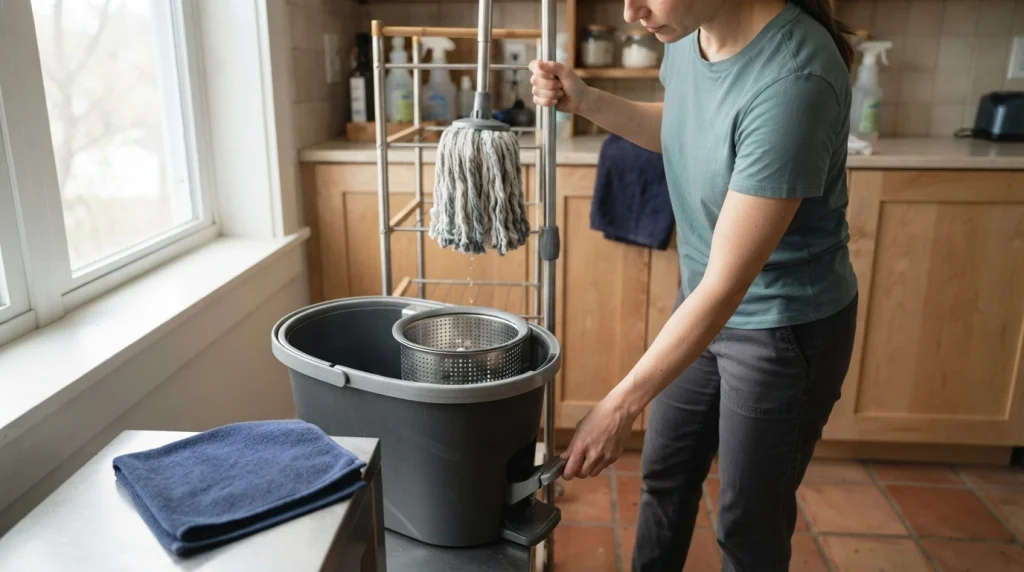
Regular maintenance keeps the wringer moving smoothly and helps the mop head collect dirt effectively. The goal is to remove trapped debris, prevent stale odors, and let the parts dry between cleaning sessions.
Clean the mop head after each use
Rinse the head until loose dirt and visible cleaner residue are gone. Detach and machine-wash it only if its care instructions allow, using a suitable detergent and the recommended washing temperature.
Avoid fabric softener when the mop manufacturer advises against it because softener residue can affect microfiber absorbency. Air-dry the head thoroughly before storing it.
Rinse and dry the bucket
Empty dirty water after cleaning and rinse away sediment from the bucket and spinning basket. Pay particular attention to the basket openings, where hair, lint, and other debris may collect.
Let the bucket dry in a ventilated location. Leaving dirty water inside can cause unpleasant odors and encourage buildup that makes the next cleaning session less hygienic.
Inspect moving parts regularly
- Pedal and gears: Look for cracks, unusual resistance, or slipping.
- Handle and lock: Check that connections remain secure and the locking action works correctly.
- Spinner basket: Inspect for damage, loose fittings, and blocked drainage openings.
- Mop head attachment: Confirm that the head locks securely onto its base.
Use cleaning products safely
Ordinary floor cleaning and disinfection are different tasks. A clean-looking mop head doesn’t prove that it is disinfected, and spinning alone isn’t a substitute for washing or following a disinfectant’s labeled instructions.
For routine cleaning, choose a product suitable for the floor and use the dilution stated on its label. If disinfection is necessary, consult the EPA’s information on registered disinfectants and follow the specific product’s directions, including contact time.
Never mix cleaning chemicals, and don’t assume that bleach or another strong chemical is safe for every mop head or floor. Check the product label and flooring manufacturer’s care instructions before applying it.
Safety note: Keep hands away from a moving wringer, stop the mechanism before clearing obstructions, and follow the mop’s operating instructions. Use appropriate precautions when handling cleaners and disinfectants.
Section Takeaway: Rinse the head, empty and dry the bucket, and inspect the rotating parts after use. Good maintenance supports reliable wringing and helps prevent odors and mechanical problems.
Frequently Asked Questions
1. Is centrifugal wringing the same as spinning a mop dry?
They’re closely related, but spinning a mop dry usually means removing excess water rather than eliminating all moisture. Centrifugal wringing uses rotation to push water away from the mop fibers, leaving a damp head ready for cleaning or air-drying afterward.
2. Does a spin mop remove all the water?
No. Some moisture remains between and within the mop fibers after spinning. That residual moisture helps the head glide over the floor and collect dirt, while the wringer removes enough excess water to make moisture easier to control.
3. Is centrifugal wringing better than squeezing a mop by hand?
For many household cleaning tasks, centrifugal wringing is more convenient because it reduces direct contact with dirty water and allows adjustable moisture control. Manual squeezing may still work, but the result depends on the mop design and how effectively the user removes excess liquid.
4. Can centrifugal wringing make a mop safe for hardwood floors?
It can help produce a less-wet mop head, but it cannot guarantee that a cleaning method is safe for hardwood. Use minimal moisture, avoid standing water, and follow the flooring manufacturer’s instructions for the specific finish and installation.
5. Why does my spin mop still leave water on the floor?
The mop may retain too much moisture, the head may be positioned incorrectly, or the wringer may not spin properly. Try another controlled spin, check the mechanism, and test the head on a small area before cleaning the entire floor.
6. Does centrifugal wringing kill bacteria?
No. Centrifugal wringing is a water-removal process, not a disinfection method. Washing the mop head and bucket helps remove soil, while effective disinfection requires an appropriate product or process used according to its instructions.
7. Can I use centrifugal wringing with any type of mop?
No. The mop head must fit the spinning basket, and the handle or drive mechanism must be designed to activate it. Traditional string mops, flat microfiber mops, and other systems may use different wringing methods unless specifically built for centrifugal operation.
The Bottom Line: Why Centrifugal Wringing Matters
Centrifugal wringing uses rotation to remove excess water from a spin mop head, making it easier to control moisture during floor cleaning. It also reduces the need to squeeze wet fibers by hand.
For the best results, keep the head clean, center it correctly in the basket, and spin until it reaches the dampness your floor requires. Remember that a good wringer supports safe cleaning, but the right mop technique and compatible cleaning solution matter just as much.
If you’re comparing mop systems, start with your floor type, the size of the area, and how often you clean. A well-maintained spin mop is a practical option for many homes, provided you use it according to the mop and flooring manufacturers’ instructions.