
How to Clean Luxury Vinyl Plank (LVP) Floors

Disclosure: FloorsMop is reader-supported. As an Amazon Associate, we earn from qualifying purchases. If you buy through a link on this page, we may earn a small commission at no extra cost to you. Learn more.
Quick answer: To clean luxury vinyl plank floors, sweep or vacuum first, then mop with a damp (not wet) microfiber pad and a pH-neutral cleaner made for vinyl or LVP. Rinse the pad often and let the floor dry. Avoid wax, oil soaps, “mop and shine” products, abrasive scrubbers, and heavy steam.
LVP is one of the easiest floors to keep clean. It is waterproof on top, it hides dirt well, and it does not need polishing. The catch is that the wrong product can leave a film that makes it look dull. This guide covers the routine that keeps it looking new. For general technique, see how to mop a floor properly.
What Makes LVP Different
Luxury vinyl plank has a printed design layer under a clear wear layer, usually 6 to 22 mil thick. That wear layer protects the floor, and it is what you clean. Unlike laminate, the planks themselves are waterproof, but water can still seep through the seams to the subfloor if you flood the floor. So you get a little more freedom with moisture than laminate, but not unlimited.
What You’ll Need
- Soft broom, dust mop, or vacuum with the brush roll turned off.
- Microfiber flat mop or spray mop. A refillable option like the O-Cedar ProMist MAX lets you control the liquid.
- An LVP-safe cleaner. Bona Hard-Surface Floor Cleaner is labeled for vinyl and LVP, or use the cleaner your plank brand recommends.
- Soft nylon brush for textured or embossed planks.
- Warm water and two clean pads.
How to Clean LVP Floors: 4 Steps
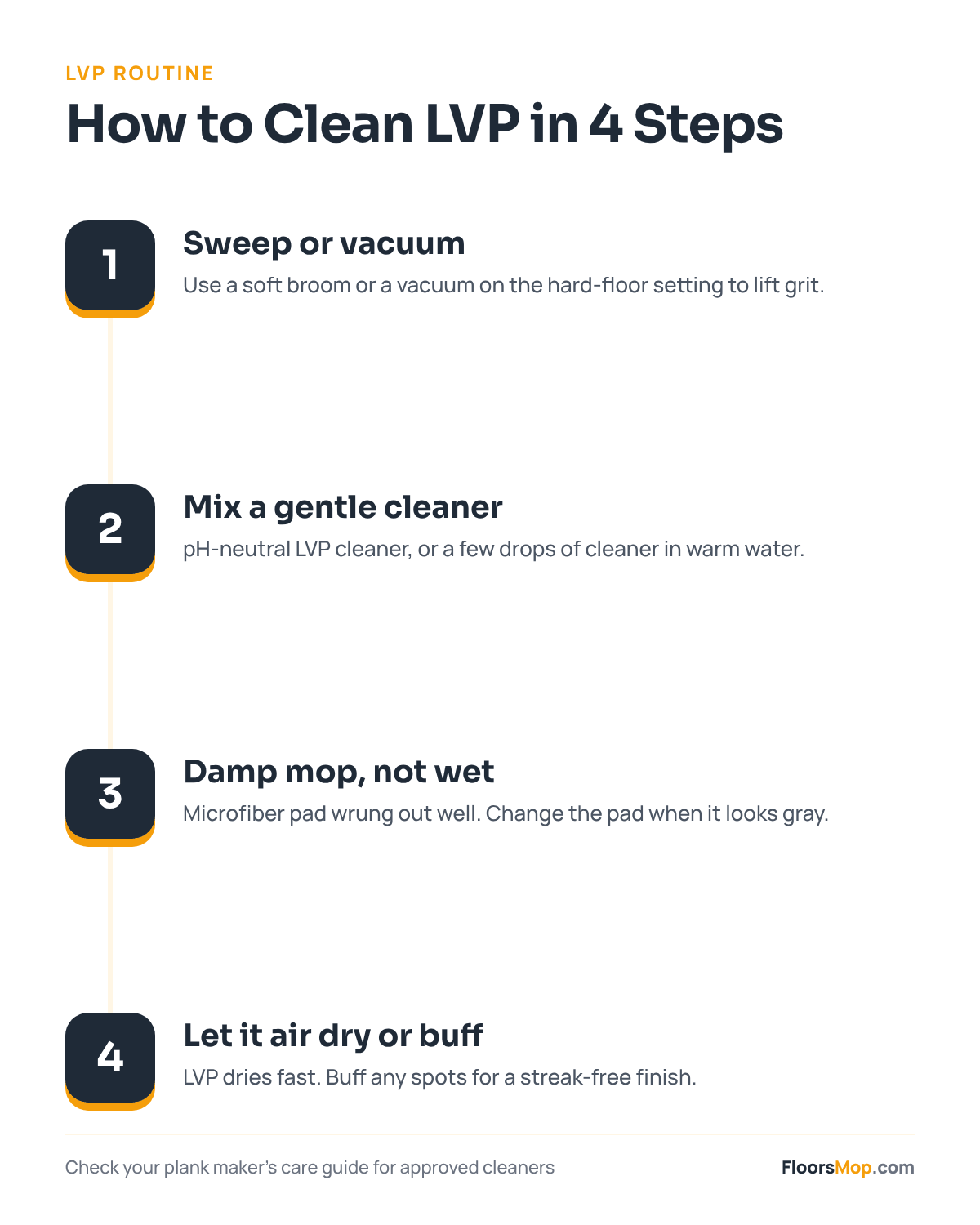
Step 1: Remove loose dirt
Sweep with a soft broom or vacuum on the hard-floor setting. A spinning beater bar can leave light scuffs on some wear layers, so switch it off. Get into corners and along the baseboards, since grit there gets tracked into the middle of the room.
Step 2: Mix a gentle cleaning solution
Use a ready-to-use LVP cleaner or mix a concentrate at the label rate. If you have no cleaner handy, a gallon of warm water with a teaspoon of pH-neutral dish soap is fine for one cleaning, but rinse afterward because soap can leave a film. Many owners also use a cup of white vinegar per gallon of water to cut haze. Check your plank maker’s care guide first, since a few brands advise against it.
Step 3: Damp mop in sections
Wring the mop until it is just damp, or mist the floor lightly with a spray mop. Work across the room in sections about 4 feet wide. For embossed “wood grain” planks, a few strokes along the texture lift dirt from the grooves. If a pad looks gray halfway through, swap it.
Step 4: Let it dry or buff
LVP usually dries in a couple of minutes. If you see streaks, buff with a dry microfiber pad. For stubborn haze, mop once with plain warm water to rinse off residue.
What’s Safe on LVP (and What to Avoid)
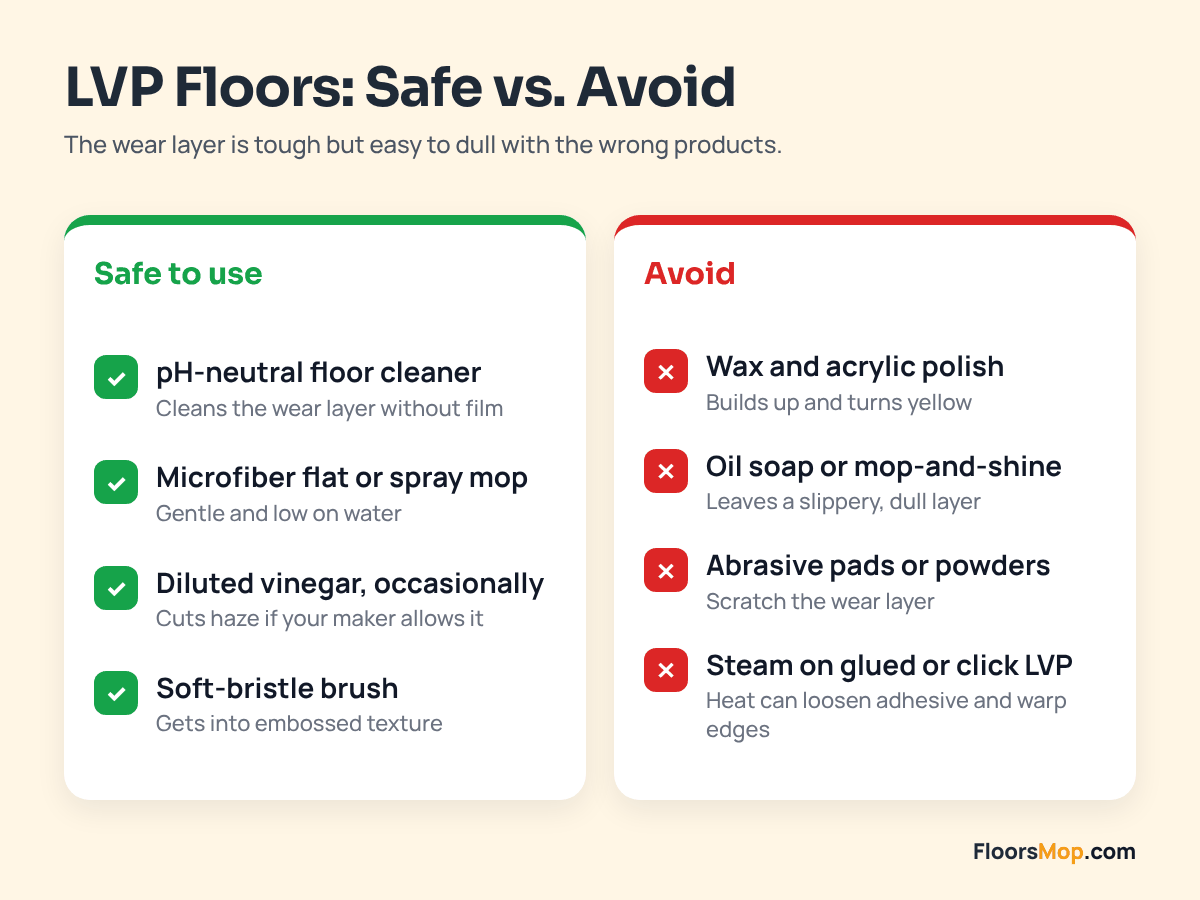
| Product | Safe on LVP? | Notes |
|---|---|---|
| pH-neutral LVP or vinyl cleaner | ✅ Yes | Best everyday choice |
| Warm water only | ✅ Yes | Good for light cleaning |
| Diluted white vinegar (1 cup per gallon) | ⚠️ Usually | Check your brand’s warranty first |
| Dish soap | ⚠️ Sparingly | Rinse to avoid film |
| Steam mop | ⚠️ Risky | Many LVP makers say no; read can you use a steam mop on LVP |
| Wax, acrylic polish, “shine” products | ❌ No | LVP does not need them; they build up |
| Oil soap | ❌ No | Leaves a slippery layer |
| Bleach, ammonia, abrasive powders | ❌ No | Can dull or discolor the wear layer |
The steam question comes up a lot. Some sheet vinyl and LVP can handle low steam, but heat can soften the adhesive on glue-down planks and loosen click joints. Our guide are steam mops good for vinyl floors goes into the details.
How to Remove Common Marks from LVP
| Mark | What to try |
|---|---|
| Scuffs from shoes | Rub with a tennis ball or a dry microfiber cloth |
| Sticky spills | Warm water and a drop of dish soap on a cloth |
| Hazy film | Plain water rinse, then buff dry |
| Ink or marker | A little rubbing alcohol on a cloth, then rinse |
| Rubber mat stains | Often permanent; prevent with non-rubber-backed rugs |
Mistakes to Avoid
- Using a dirty mop head. It redeposits grime. See how do you clean a mop head for a quick washing method.
- Adding “shine” products. LVP has a factory finish. Extra polish creates a sticky layer that traps dirt.
- Flooding the floor. The planks are waterproof, the seams and subfloor are not.
- Dragging furniture. Use felt pads and lift heavy items.
- Rubber-backed rugs. They can react with vinyl and leave yellow stains.
How to Deep Clean LVP Floors
Every few months, or when the floor looks dull even after mopping, do a deeper clean. Old residue is usually the culprit, not dirt.
- Vacuum thoroughly, including the edges with a crevice tool.
- Mix one gallon of warm water with a cup of white vinegar (if your brand allows it) or use a vinyl deep-clean product at the label rate.
- Mop a small section, then go over the embossed texture with a soft nylon brush to lift dirt from the grain.
- Rinse with a second mop and clean water. This is the step people skip, and it is what removes the old film.
- Buff dry with a clean microfiber pad.
If the floor still looks cloudy, the haze may be an old polish someone applied. Vinyl floor stripper made for no-wax floors removes it, but test in a closet first.
How Often to Clean LVP
Sweep or vacuum 2 to 3 times a week, more in kitchens and entryways. Damp mop once a week in busy areas and every two weeks elsewhere. Wipe spills when they happen. Because LVP hides dirt well, it is easy to let it go too long, so set a routine.
Best Products for Cleaning LVP
- Spray mop: O-Cedar ProMist MAX. Fine mist, washable pads, refillable bottle.
- Cleaner: Bona Hard-Surface Floor Cleaner. pH-neutral and residue-free.
- Robot help: a basic robot vacuum for hard floors keeps grit down between mopping days.
Comparing mops for this floor? See what is the best mop for LVP flooring.
FAQs
What is the best thing to clean luxury vinyl plank with?
A pH-neutral cleaner labeled for vinyl or LVP and a microfiber mop. Warm water works for quick weekly cleaning.
Can I use Swiffer WetJet on LVP?
Yes, Swiffer WetJet solutions are generally safe for sealed vinyl. Use light sprays and swap pads when they get dirty.
Why does my LVP look cloudy after mopping?
Residue from too much cleaner, soap, or a shine product. Mop with plain warm water and a clean pad, then buff dry.
Can you use Pine-Sol on vinyl plank floors?
Diluted Pine-Sol is used by many owners, but it can leave a film if mixed too strong. Follow the label and rinse. Our Pine-Sol mopping guide has the ratios.
Is it OK to use a wet mop on LVP?
A damp mop is fine. Avoid soaking the floor, because water can get through seams and damage the subfloor.
Related Guides
- What Is the Best Mop for LVP Flooring?
- Can You Use a Steam Mop on LVP?
- Best Steam Mops for LVP Floors
- Why Are My Floors Cloudy After Mopping?