
Are Spray Mops Effective? A Complete 2026 Guide

Quick Answer
Yes, spray mops are effective for routine cleaning on compatible sealed hard floors. They work best on dust, footprints, light spills, and everyday grime because they apply a controlled amount of cleaning solution while a microfiber pad lifts dirt. For safe cleaning, the CDC recommends using cleaning products appropriate for the surface.
Where spray mops work best
- Daily dirt: Microfiber pads pick up fine soil, footprints, and light grime efficiently.
- Small spills: The pad absorbs light liquid messes without requiring a full mop bucket.
- Low moisture: Spray control helps avoid soaking moisture-sensitive sealed floors.
- Fast cleanups: There is no bucket to fill, carry, drain, or rinse afterward.
- Spot cleaning: You can target dirty areas instead of wetting an entire room.
Know their limits
- Sweep or vacuum loose grit first, and use a heavier cleaning method for deep grout, heavy grease, or large spills.
I’ve found spray mops most useful when a floor needs cleaning now, but doesn’t justify pulling out a bucket. They make everyday floor cleaning faster while giving you more control over moisture.
They aren’t automatically the best mop for every mess. Floor type, pad condition, cleaner choice, and technique determine whether you get a clean finish or streaky residue.
In This Guide
- How effective are spray mops for everyday cleaning?
- What do spray mops clean well?
- Which floor types can you clean with a spray mop?
- Spray mop vs other mop types: which works better?
- How do you get better results with a spray mop?
- What are the disadvantages of spray mops?
- Can spray mops disinfect floors?
- Frequently asked questions
How Effective Are Spray Mops for Everyday Cleaning?
Spray mops are highly practical for routine hard-floor maintenance. Their biggest advantage is controlled moisture combined with the dirt-grabbing action of microfiber.
A spray mop is a flat mop with a built-in bottle or reservoir. A trigger releases a small amount of solution ahead of the mop head, which the pad then spreads and absorbs.
Why microfiber makes a difference
Microfiber contains extremely fine synthetic fibers that catch dust and soil instead of simply moving them around. A clean microfiber pad also provides gentle mechanical scrubbing.
That makes a spray mop especially useful for the thin film of dirt that develops between deeper cleaning sessions.
- Footprints: Light shoe marks usually disappear with a few passes.
- Kitchen spots: Small food drips and dried beverage marks respond well to targeted spraying.
- Pet tracks: Light paw prints are usually easy to remove once loose grit is vacuumed first.
- Dust film: A clean pad lifts fine dirt that can leave hard floors looking dull.
- Entryway soil: Spray mopping works well after sand and grit have been removed dry.
Why controlled moisture matters
A traditional string mop can put more water on the floor than necessary. A spray mop lets you wet only the area you’re cleaning.
This doesn’t make every spray mop safe for every floor. It simply gives you better moisture control when the flooring manufacturer allows damp cleaning.
In my own routine, this is where spray mops save the most effort. I can clean a few dirty areas around a kitchen island without wetting the entire kitchen.
Section Takeaway: Spray mops are most effective as maintenance tools. They combine targeted solution application with reusable microfiber scrubbing without the setup of a bucket system.
What Do Spray Mops Clean Well?
Spray mops perform best on light to moderate surface soil. They become less effective as messes get thicker, larger, or more deeply embedded.
Best jobs for a spray mop
- Routine weekly cleaning: Ideal after sweeping or vacuuming.
- Fresh spills: Useful for small water, juice, or food splashes when the pad is absorbent.
- Sticky spots: A little compatible cleaner can soften dried residue before wiping.
- Foot traffic: Useful around doors, hallways, kitchens, and dining areas.
- Quick touch-ups: Convenient when only one section of a room looks dirty.
Where effectiveness drops
A spray mop has no suction. It cannot remove cereal, sand piles, pet-food pieces, or other larger debris effectively.
It also has limited scrubbing pressure compared with a scrub brush, electric spin mop, or hands-on spot treatment.
- Vacuum heavy loose debris before mopping.
- Blot large liquid spills before using the mop.
- Use a grout brush for deeply stained grout lines.
- Degrease heavy kitchen buildup with a floor-compatible product.
- Change the pad when it becomes visibly loaded with dirt.
One common mistake is expecting one pad to clean several dirty rooms. Once microfiber fills with soil, continuing to mop can redistribute that dirt.
Which Floor Types Can You Clean With a Spray Mop?
Spray mops can work on many sealed hard floors, but the cleaner and moisture level must match the surface. Always check the flooring manufacturer’s care instructions first.
Safety note: Never assume that a floor is waterproof because it looks sealed. Seams, damaged finishes, and installation methods can change how much moisture a floor tolerates.
Hardwood and engineered wood
Wood requires the most caution. The National Wood Flooring Association’s maintenance guidance recommends removing dust and dirt regularly and avoiding wet mops or steam mops.
A lightly damp spray-mop approach may be appropriate only when your flooring or finish manufacturer permits it. Use minimal liquid and never leave puddles at seams.
Laminate flooring
Laminate usually responds well to low-moisture microfiber cleaning when its care guide permits damp mopping. Avoid overspraying joints and edges.
Water sitting between planks can be more concerning than the small amount needed to wipe the wear surface.
Vinyl and luxury vinyl plank
Vinyl and LVP are strong candidates for spray mopping. A microfiber head can remove routine soil while using far less liquid than a saturated string mop.
Still, use a cleaner approved for the floor. Too much product can leave a cloudy or sticky film.
Ceramic and porcelain tile
Sealed ceramic and porcelain tile tolerate routine spray mopping well. Smooth tile is especially easy because the flat pad maintains good contact with the surface.
Deep grout lines are different. A flat spray-mop pad often passes over recessed grout rather than scrubbing inside it.
Natural stone
Marble, limestone, travertine, and other natural stone need a compatible cleaner. Acidic DIY cleaners can harm acid-sensitive stone.
Choose a stone-approved or pH-neutral product whenever the manufacturer recommends one.
Sealed concrete
A spray mop can maintain smooth sealed concrete, especially indoors. Rough or heavily textured concrete tends to overwhelm a small microfiber pad faster.
Safety note: Check the flooring, sealer, and cleaner instructions before using vinegar, bleach, disinfectant, ammonia, or another strong chemical.
Section Takeaway: The mop itself is only half of the equation. Floor compatibility depends just as much on moisture level and cleaning solution.
Spray Mop vs Other Mop Types: Which Works Better?
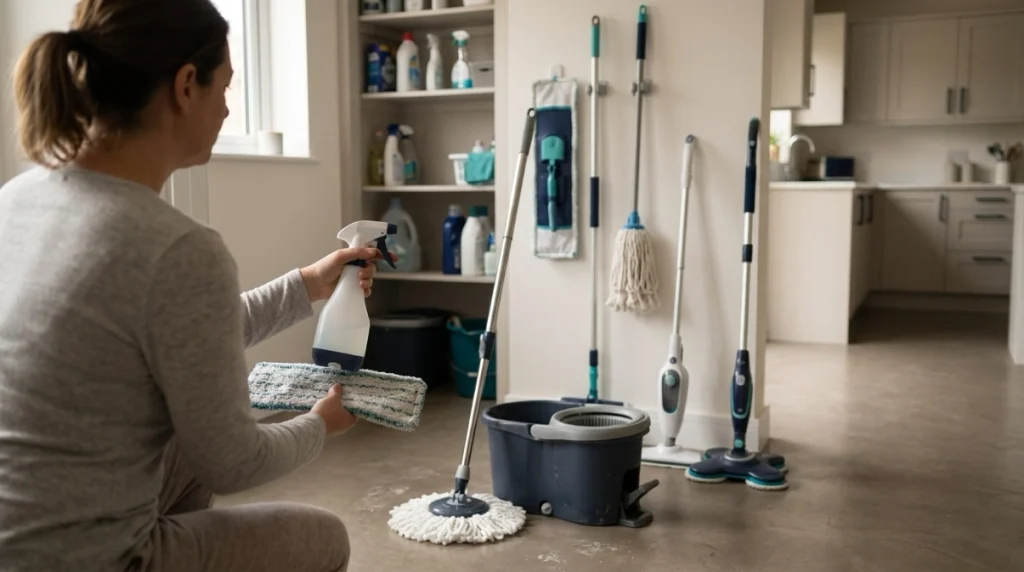
No mop wins every cleaning job. A spray mop prioritizes speed and moisture control, while other designs offer more scrubbing, capacity, or specialized cleaning.
| Mop type | Best use | Moisture control | Scrubbing power | Main limitation |
|---|---|---|---|---|
| Spray mop | Daily cleaning and spot messes | High | Light–moderate | Small pad and solution capacity |
| Flat microfiber mop | Dusting and gentle damp cleaning | High when properly wrung | Light–moderate | Cleaner must be applied separately |
| Spin mop | Larger rooms and dirtier floors | Moderate–high | Moderate | Requires bucket setup |
| String mop | Large spills and durable surfaces | Low–moderate | Moderate | Can leave excess water |
| Steam mop | Steam-approved sealed surfaces | Machine controlled | Moderate | Heat and moisture restrict floor compatibility |
| Electric/spin mop | Sticky soil and reduced manual effort | Model dependent | Moderate–high | Higher cost, weight, and maintenance |
Spray mops are the stronger choice when convenience matters more than deep scrubbing. A spin mop or electric mop becomes more useful when the whole floor is heavily soiled.
Cleaner quality matters too. Consumer Reports tests multi-surface floor cleaners on several floor materials, showing why the solution deserves attention alongside the mop.
How Do You Get Better Results With a Spray Mop?
The best spray-mop technique starts before you pull the trigger. Remove dry debris first so grit doesn’t become trapped beneath the pad.
- Sweep or vacuum first. Remove hair, crumbs, sand, and grit.
- Check your cleaner. Make sure both the cleaner and mop system allow the formula.
- Start with a clean pad. A dirty microfiber pad can’t keep absorbing soil.
- Use the minimum spray needed. The floor should look lightly damp, not wet.
- Work in small sections. This keeps solution from drying before you mop it.
- Give stubborn spots a moment. Follow the cleaner label rather than flooding the area.
- Change pads when dirty. Don’t drag a gray, saturated pad into the next room.
- Let the floor dry. Keep people and pets away until the surface is no longer damp.
Why spray mops sometimes leave streaks
Streaks usually point to too much cleaner, a dirty pad, or residue already sitting on the floor. Using more solution rarely fixes the problem.
Try a freshly washed pad and less product first. If haze keeps returning, check whether the cleaner matches your floor finish.
Wash reusable pads properly
Wash microfiber pads according to their care labels. Avoid products the pad manufacturer says can coat the fibers and reduce absorbency.
I keep several clean pads available rather than trying to stretch one through an entire dirty house. That single habit produces more consistent results than spraying extra cleaner.
Section Takeaway: Use a spray mop as a controlled-moisture system, not a miniature mop bucket. Less solution and a cleaner pad usually produce the better finish.
What Are the Disadvantages of Spray Mops?
The biggest disadvantage is limited deep-cleaning ability. Spray mops are designed around convenience, and that requires compromises in capacity and scrubbing power.
- Small reservoir: Large homes may require a refill before you’re finished.
- Limited absorption: A thin pad isn’t ideal for major liquid spills.
- No debris pickup: Most models can’t replace sweeping or vacuuming.
- Limited grout reach: Flat heads don’t scrub deeply recessed grout well.
- Pad maintenance: Reusable pads need frequent washing and replacement when worn.
- Possible refill restrictions: Some closed systems work only with compatible bottles or formulas.
- Residue risk: Excess cleaner can create dullness, streaks, or a tacky feel.
When should you choose another mop?
Use a spin mop when you’re cleaning a large amount of washable hard flooring and need more rinsing capacity. Choose a scrub brush or powered mop when sticky soil needs more mechanical action.
A wet-dry floor cleaner may make more sense if your problem includes frequent crumbs and liquids. A steam mop should only be considered on surfaces specifically approved for steam.
For a small apartment, kitchen, or quick weekday cleanup, the spray mop’s simplicity often outweighs these limitations.
Can Spray Mops Disinfect Floors?
A spray mop does not automatically disinfect simply because the floor looks clean. Cleaning removes dirt and many germs, while disinfection requires a suitable registered product used according to its label.
The EPA Safer Choice program can help shoppers identify cleaning products formulated with ingredients that meet the program’s safety criteria. Disinfectants are a separate product category with their own directions.
Cleaning is usually the main job
For normal household floors, routine cleaning is often the priority. CDC guidance notes that household disinfection is generally more important when someone is sick or at increased risk.
If disinfection is needed, the surface may have to stay visibly wet for a labeled contact time. That requirement may conflict with the care instructions for moisture-sensitive flooring.
- Read the disinfectant label before use.
- Confirm that your flooring can tolerate the product.
- Never mix cleaning chemicals together.
- Use ventilation and protective equipment when the label calls for them.
- Keep children and pets away until the product directions say the area is safe.
Safety note: Don’t pour bleach, disinfectant, essential oils, vinegar, or another chemical into a spray mop unless both the mop instructions and product label permit that use.
Frequently Asked Questions About Spray Mop Effectiveness
Are spray mops better than regular mops?
Spray mops are better for fast maintenance cleaning, spot cleaning, and situations where you want tight moisture control. Regular bucket mops can be more useful for large, heavily soiled areas or major spills that require more rinsing and absorption.
Do spray mops actually clean floors or just spread dirt?
A clean microfiber spray mop can lift soil effectively. However, a saturated or dirty pad may start redistributing grime, so vacuum first and switch pads whenever the microfiber becomes visibly dirty.
Are spray mops good for hardwood floors?
They can be suitable for some finished wood floors when the flooring manufacturer approves damp cleaning. Use very little liquid, choose a compatible wood-floor cleaner, and avoid leaving moisture at seams or damaged areas.
Are spray mops good for laminate floors?
Spray mops can work well on laminate because they allow controlled application instead of soaking the floor. Check the manufacturer’s care guide, spray sparingly, and don’t allow water or cleaner to collect between planks.
Are spray mops worth buying?
They’re worth considering if you frequently clean sealed hard floors and value convenience. A reusable microfiber model is especially practical for kitchens, apartments, pet paw prints, and quick cleanups between deeper mopping sessions.
How often should I use a spray mop?
Use it when the floor is visibly dirty or according to your flooring care schedule. High-traffic kitchens and entryways may need frequent touch-ups, while quieter rooms can often go longer between damp-cleaning sessions.
Can you put any floor cleaner in a spray mop?
No. Some refillable models accept compatible diluted cleaners, while closed systems may require specific formulas. Always check the mop instructions and cleaner label because the wrong liquid can damage flooring, clog the sprayer, or leave residue.
Bottom line: Spray mops are effective when you use them for the job they were designed to do: quick, controlled-moisture cleaning on compatible hard floors. They won’t replace every cleaning tool, but for routine dirt, footprints, small spills, and spot cleaning, they’re one of the most convenient options available in 2026.
For better results, remove grit first, use the right cleaner, spray sparingly, and keep a fresh microfiber pad on the floor. Those four habits matter more than simply choosing the mop with the biggest bottle or strongest spray.
