
Are Spray Mops Worth It? Pros, Cons and Who Should Buy One

Quick answer: Yes, spray mops are worth it for most homes that want fast, everyday floor cleaning with little water. They are ready in seconds, need no bucket, and let you control moisture, which suits hardwood, laminate and vinyl. They are not great at heavy scrubbing, very dirty floors or large spaces, so many homes keep a spin mop or other deep-cleaning tool as well.
A spray mop’s real value is convenience. When the mop takes seconds to start, small messes get cleaned right away instead of piling up for a weekly bucket job. This guide covers what spray mops do well, where they fall short, the ongoing costs, and who should buy one.
What Is a Spray Mop?
A spray mop is a flat mop with a refillable bottle or cartridge on the handle. You squeeze a trigger to mist cleaner on the floor just ahead of the pad, then wipe with a microfiber or disposable pad. Most are manual and need no power. Read what is a spray mop and how spray mops work for the details.
Reusable vs disposable systems
- Reusable: washable microfiber pads and a refillable bottle you fill with a cleaner of your choice. Less waste and lower running costs.
- Disposable: throwaway pads and sealed cleaner cartridges. Convenient, but you keep buying refills.
Brands such as Swiffer, Bona, O-Cedar and Rubbermaid all sell versions of this design. Electric spinning mops are a different category with powered pads.
What Spray Mops Do Well
They save setup time
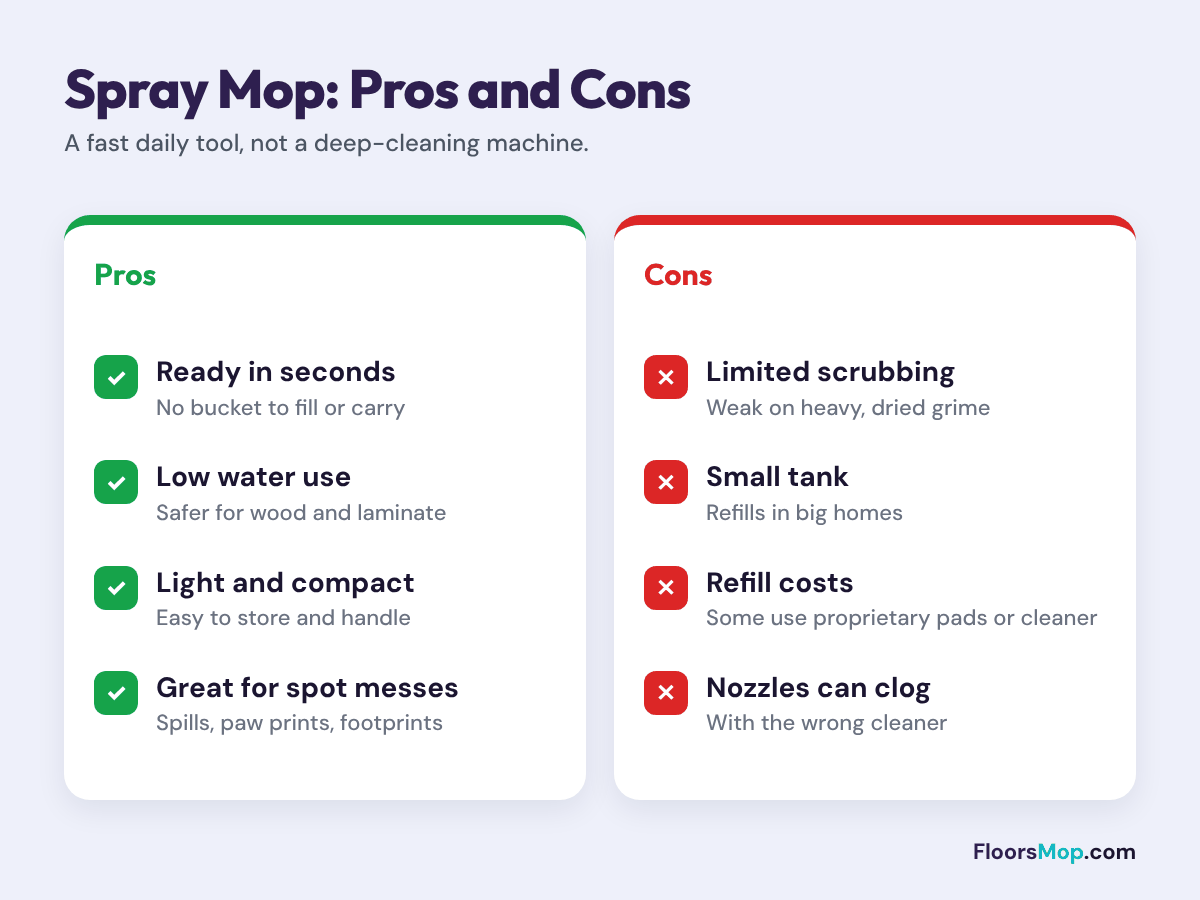
A bucket mop means filling, mixing, wringing and emptying. A spray mop is ready as soon as you pick it up. That makes it ideal for kitchen spills, muddy footprints and paw prints during the week.
They control moisture
Each trigger pull releases a small amount of liquid, so the floor stays damp instead of wet. That is a big plus for hardwood, engineered wood and laminate, where water in seams causes damage.
They are light and easy to store
One slim tool fits in a narrow closet. Older users and people in apartments often find a spray mop easier than carrying a full bucket.
Where Spray Mops Fall Short
- Limited scrubbing: manual pressure on a flat pad does not remove heavy, dried-on grime quickly.
- Small tanks: large homes may need a refill mid-clean.
- Dirty pads: one pad cannot clean a whole large house; it starts spreading dirt.
- Refill costs: proprietary pads and cartridges can cost more over time than the mop itself.
- Clogging: the wrong cleaner can block the nozzle. See why do spray mops stop spraying.
- No disinfection by default: a quick spray-and-wipe is cleaning, not disinfecting. The EPA explains the difference.
Which Floors Are Spray Mops Good For?
| Floor type | Spray mop suitability | Best approach |
|---|---|---|
| Sealed hardwood | Often a good choice | Light mist, wood cleaner |
| Engineered wood | Depends on the maker | Mist lightly; keep seams dry |
| Laminate | Good, with care | Pad only lightly damp |
| Vinyl and LVP | Very practical | Residue-free neutral cleaner |
| Ceramic and porcelain tile | Good for upkeep | Scrub grout separately |
| Natural stone | Depends on the cleaner | Stone-safe, pH-neutral product |
| Sealed concrete | Often suitable | Cleaner compatible with the sealer |
Always check your floor maker’s care guide. For more, see best spray mops for hardwood floors and best spray mop for laminate floors.
Spray Mop vs Other Mops
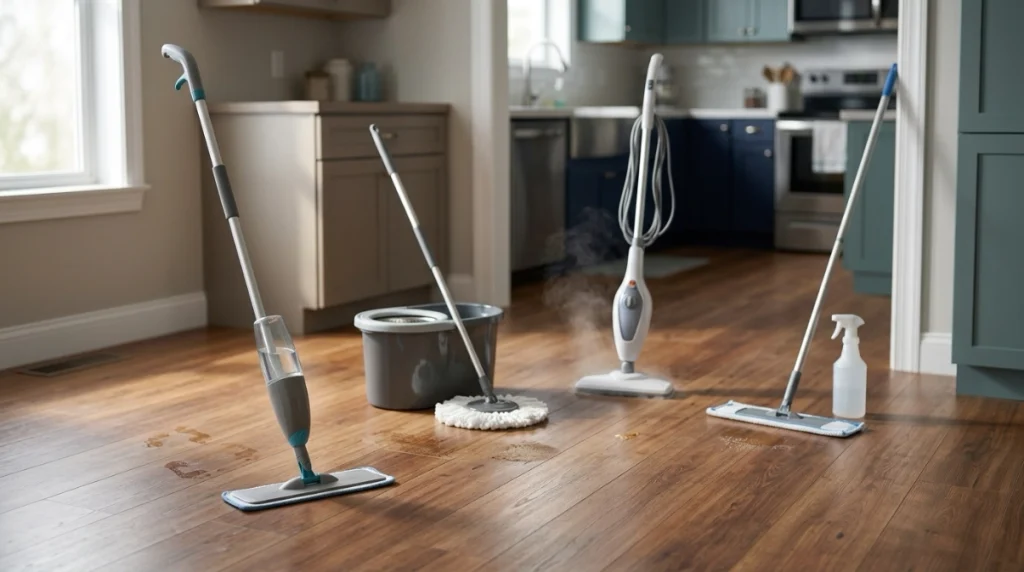
| Mop type | Setup | Water control | Best for | Main limit |
|---|---|---|---|---|
| Spray mop | Seconds | High | Daily cleaning, spot messes | Limited scrubbing |
| Spin mop | A few minutes | Medium to high | Large rooms, dirtier floors | Needs a bucket |
| Steam mop | 1 to 5 minutes | Machine-controlled | Sticky grime on approved floors | Not for many floors |
| Microfiber flat mop | 1 to 3 minutes | High | Flexible low-water cleaning | Apply cleaner separately |
For quick weekday cleanups, a spray mop is hard to beat. For a muddy kitchen after a busy weekend, a spin mop with fresh rinse water usually does better. Compare in detail: spray mop vs regular mop and spray mop vs steam mop.
What Does a Spray Mop Cost to Own?
The mop is only the start. Running costs come from pads and cleaner:
- Washable microfiber pads: a one-time buy that lasts many washes. Three or four pads cover most homes.
- Disposable pads: a new pad for each clean adds up over a year.
- Cleaner: refillable bottles let you buy cleaner concentrate or make your own; sealed cartridges cost more per use.
- Spare parts: a replaceable bottle or spray head can save you buying a whole new mop.
For the best value, choose a sturdy model with a refillable bottle and washable pads. Our recipe guide shows how to make your own spray mop cleaner.
How to Use a Spray Mop Without Streaks
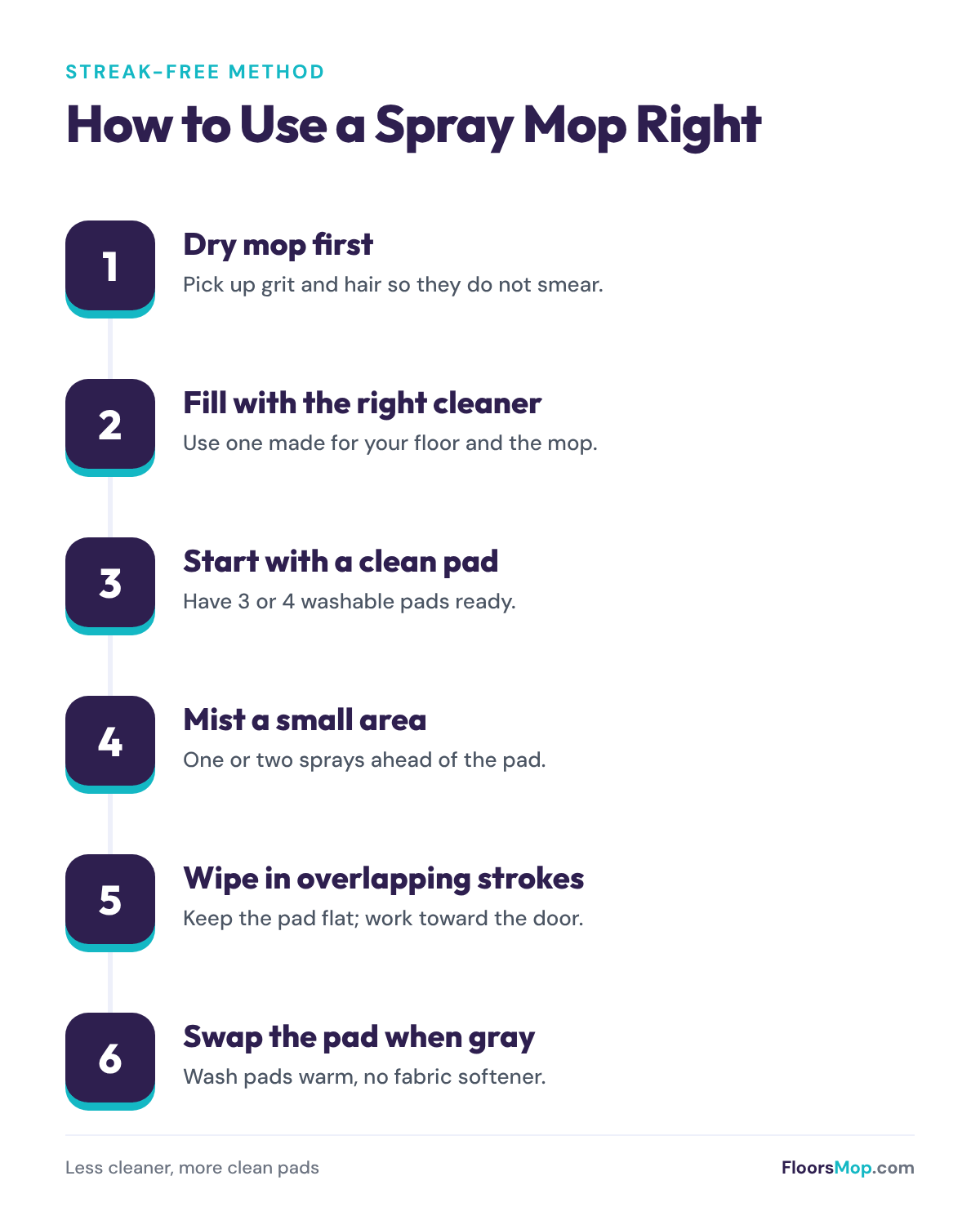
- Dry mop or vacuum first. Grit and hair smear when wet.
- Use the right cleaner. Pick one made for your floor and allowed by the mop maker.
- Start with a clean pad.
- Mist a small section. One or two sprays go further than you think.
- Wipe with overlapping strokes. Keep the pad flat and work toward the door.
- Change pads when dirty. Do not clean the whole home with one pad.
- Let the floor dry before walking on it.
More cleaner does not mean a cleaner floor; extra product leaves streaks and dull patches. Follow the label, never mix cleaners, and keep the room aired. See how to use a spray mop and how to maintain a spray mop.
What to Look For in a Spray Mop
- Refillable bottle: lets you choose your own cleaner and avoids pricey cartridges.
- Washable microfiber pads: at least three, with a secure hook-and-loop or clip fit.
- A wide spray pattern: a fan spray covers the floor more evenly than a single jet.
- Swivel head: reaches under cabinets and around furniture legs.
- Sturdy handle: wobbly handles flex when you press on sticky spots.
- Replaceable parts: a spare bottle or nozzle can save the whole mop.
If you cannot decide between models, our guide to which microfiber spray mop is best explains the differences.
Who Should Buy a Spray Mop?
A spray mop makes sense for:
- People in apartments and small homes
- Busy households with frequent kitchen and entryway messes
- Pet owners dealing with paw prints (vacuum hair first)
- Parents cleaning food and drink spills
- Homes with hardwood or laminate floors
- Anyone who finds a full bucket heavy
Consider something else if:
- Your floors often get heavy mud or grease
- You need to scrub textured tile and grout
- You prefer rinsing the mop in clean water
- You want one machine that vacuums and washes at the same time
Frequently Asked Questions
Are spray mops better than regular mops?
For quick, everyday cleaning, yes: no bucket and precise water control. For heavily soiled floors, a spin or string mop that you can rinse is usually better.
Are spray mops good for hardwood floors?
Yes, for sealed hardwood when you mist lightly and use a cleaner made for wood. Avoid leaving liquid along board edges.
Do spray mops actually clean floors?
Yes. A clean microfiber pad and a suitable cleaner remove everyday dirt, footprints, light grease and small spills. They are weaker on thick buildup and deep grout.
Can you put any cleaner in a spray mop?
No. Use a cleaner allowed by both the mop maker and your floor maker. The wrong one can clog the nozzle, leave residue or harm the finish. See what liquid to put in a spray mop.
Are reusable spray mops cheaper?
Usually, over time. Washable pads and refillable bottles avoid buying disposable pads and cartridges for every clean.
Can a spray mop disinfect floors?
Only if you use a disinfectant labeled for your floor and leave it wet for the label’s contact time. A quick spray and wipe is cleaning, not disinfecting.
The Bottom Line
Spray mops are worth it for most homes as a fast, low-water, everyday cleaning tool. They shine in kitchens, small homes, pet homes and on wood or laminate floors. Choose a refillable model with washable pads to keep costs down, and keep a spin mop or other deep-cleaning tool for the messy days.