
Are Steam Mops Good for Tile Floors? What You Need to Know

Quick Answer
Yes, steam mops are usually good for sealed ceramic and porcelain tile floors. They loosen greasy residue and dried-on grime without leaving much water behind. Before using one, check the tile, grout, sealer, and flooring manufacturer’s instructions; this ceramic and porcelain tile care guidance is a useful reference for safe routine cleaning.
When a steam mop works well
- Sealed tile: Glazed ceramic and porcelain usually handle controlled steam well.
- Sound grout: Intact grout is safer than cracked, loose, or deteriorating grout.
- Sticky grime: Heat can loosen kitchen grease, footprints, and dried spills.
- Low residue: Plain steam avoids detergent film when the mop is designed for water-only use.
- Fast drying: A properly used steam mop leaves less standing water than a soaking-wet string mop.
Use extra caution when
- The floor is natural stone, unglazed tile, damaged, recently installed, waxed, or covered by a sealer with unclear heat resistance.
I’ve used steam mops on bathroom and kitchen tile when a regular microfiber mop wasn’t cutting through sticky residue. On the right tile, steam can make floor cleaning faster and leave fewer streaks.
The catch is that “tile” describes several different materials. This guide explains where steam works, where I avoid it, and how to use a steam mop without taking unnecessary chances.
In This Guide
- Are steam mops good for tile floors?
- Which tile floors can you steam mop?
- How does a steam mop clean tile?
- Steam mop vs other tile mops: which is better?
- How do you steam mop tile floors safely?
- Is steam safe for tile grout?
- When should you avoid a steam mop on tile?
- How often should you steam mop tile?
- FAQ about steam mops and tile floors
Are Steam Mops Good for Tile Floors?
Yes, steam mops can be an excellent match for sealed ceramic and porcelain tile. They work especially well where ordinary damp mopping leaves sticky grime or cloudy cleaner residue.
The steam supplies heat and moisture while the microfiber pad lifts loosened soil. You still need the pad to physically collect that dirt.
Where I find steam most useful
- Kitchen tile: Useful for footprints, small food spills, and light greasy residue.
- Bathroom tile: Helpful for soil around sinks, toilets, and frequently walked areas.
- Entryways: Good after loose grit has been vacuumed or swept away.
- Textured tile: Steam can loosen dirt from shallow surface texture, although a brush may still be needed.
- Streak-prone floors: Water-only steam can reduce detergent residue when your machine is designed for plain water.
Steam isn’t automatically better than every other mop. A microfiber flat mop is often faster for everyday dust, while a spin mop handles larger areas efficiently.
A steam mop earns its place when heat helps loosen stubborn soil. That’s the main advantage.
Safety note: Check your tile manufacturer’s care guide and your steam mop instructions before using heat on an unfamiliar floor.
Section Takeaway: Steam works best as a deeper-cleaning tool for sealed ceramic and porcelain tile, not as a universal solution for every material sold as tile.
Which Tile Floors Can You Steam Mop?
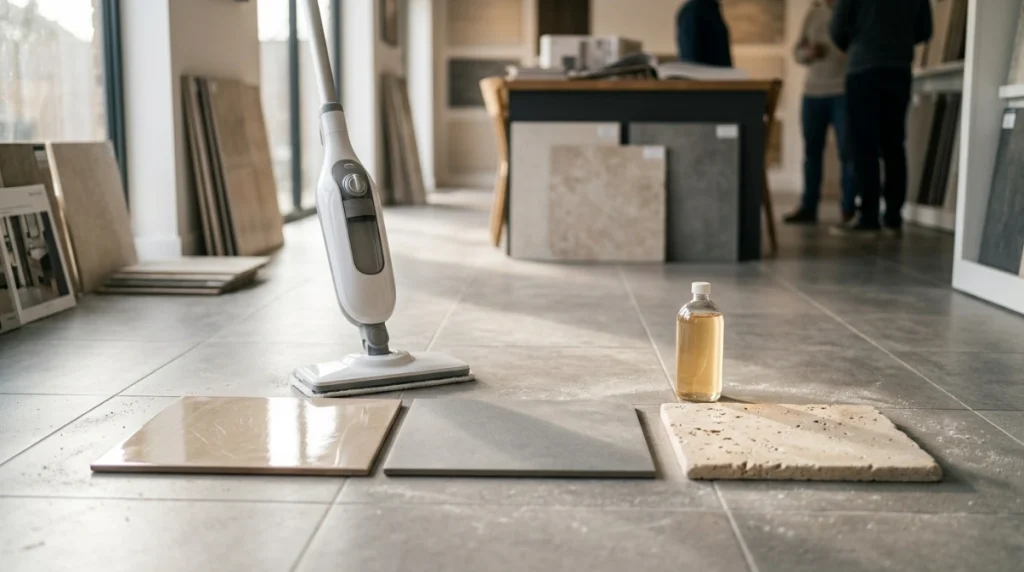
Steam is generally best suited to hard, sealed, heat-tolerant tile installations. Ceramic and porcelain are the easiest starting points, while natural stone deserves more caution.
Ceramic tile
Glazed ceramic floor tile is commonly compatible with steam when the installation is intact. Shark, for example, lists tile among the sealed hard floors supported by its steam mop range.
Unglazed ceramic can behave differently. Follow the flooring manufacturer’s directions rather than assuming the surface is sealed.
Porcelain tile
Porcelain is dense and highly water resistant, making it one of my preferred surfaces for steam cleaning. The bigger concern is often the grout and installation rather than the porcelain itself.
I still inspect the floor first. Missing grout and loose tiles are reasons to switch to a gentler method.
Natural stone tile
Marble, limestone, travertine, slate, and other natural stones aren’t interchangeable with porcelain. Their porosity, finish, sealers, and maintenance requirements vary.
Daltile’s natural stone maintenance guidance recommends stone-appropriate cleaning methods and limiting how long liquids remain on the surface.
For natural stone, I normally choose a microfiber mop and a pH-neutral stone cleaner unless the stone or sealer manufacturer specifically approves steam.
Safety note: Never assume a floor is steam-safe simply because it looks like ceramic tile. Confirm the actual material and sealer first.
How Does a Steam Mop Clean Tile?
A steam mop is an electric floor-cleaning appliance that heats water and delivers hot vapor through a washable or disposable floor pad. The heat and moisture loosen soil while the pad wipes it away.
That makes steam cleaning different from flooding a floor with hot water. The machine should release controlled moisture while you keep the head moving.
What steam does well
- Softens dried spills: Heat and moisture make many stuck-on residues easier to lift.
- Breaks through light grease: Kitchen grime often releases faster than with cool water alone.
- Reaches surface texture: Vapor can loosen soil around shallow grooves and grout edges.
- Reduces cleaner buildup: Water-only operation avoids adding another layer of detergent.
Steam still doesn’t replace basic preparation. Hair, crumbs, sand, and pet litter should come off the floor before steaming.
That’s why I vacuum first. Otherwise, the damp pad turns loose debris into muddy streaks.
Cleaning is not automatically the same as disinfecting
The CDC distinguishes cleaning, sanitizing, and disinfecting. Routine cleaning physically removes dirt and many germs, while sanitizing and disinfecting have different performance requirements.
Don’t assume any steam mop disinfects a floor unless its manufacturer provides validated directions for that exact use. Follow the required operating method when making a sanitation claim.
Steam Mop vs Other Tile Mops: Which Is Better?
No single mop wins every tile-cleaning job. Steam is strongest for heat-assisted cleaning, while microfiber and spin mops are often easier for routine maintenance.
| Mop type | Best use on tile | Moisture level | Main limitation |
|---|---|---|---|
| Steam mop | Sticky grime and deeper cleaning | Low to moderate controlled moisture | Heat isn’t suitable for every tile, sealer, or installation |
| Microfiber flat mop | Frequent maintenance and light soil | Low | Less effective on heavily stuck-on residue |
| Spin mop | Large tiled rooms and general washing | Adjustable | Dirty water must be managed carefully |
| String mop | Heavy-duty washing on suitable commercial-style tile | Moderate to high | Easy to leave excess water around grout |
| Cordless electric mop | Powered scrubbing without steam | Low to moderate | Requires charging and compatible cleaning solution |
| Robot mop | Frequent light maintenance | Low | Not ideal for stubborn grout or dried spills |
In my own routine, I use microfiber more often than steam. I bring out the steam mop when the tile feels slightly tacky after ordinary cleaning.
For homes with mostly sealed porcelain, that combination works well. Routine cleaning stays quick, while steam handles periodic buildup.
How Do You Steam Mop Tile Floors Safely?
The safest approach is simple: identify the floor, remove loose debris, use a clean pad, and keep the steam mop moving. Avoid repeatedly soaking one small area.
1. Confirm the tile is compatible
Check whether you have ceramic, porcelain, natural stone, or another material. Then review both the floor-care instructions and steam mop manual.
Pay special attention to sealers. A tile may tolerate heat while its topical finish does not.
2. Inspect grout and tiles
Look for cracked grout, loose tiles, lifting edges, or gaps. These defects can give moisture an easier route beneath the finished surface.
If I see damaged grout, I postpone steaming. A microfiber mop gives me more control over moisture.
3. Vacuum or sweep thoroughly
Remove grit before the pad becomes damp. Hard particles can drag beneath any mop and create unnecessary abrasion.
- Vacuum corners and edges.
- Pick up pet hair.
- Remove crumbs and sand.
- Scrape removable dried debris gently before mopping.
4. Start with a clean mop pad
A dirty microfiber pad redistributes soil. I keep spare pads nearby when cleaning a kitchen and bathroom in the same session.
Change the pad when it turns visibly gray or begins leaving streaks. This small step makes a noticeable difference.
5. Use only what the machine allows
Many steam mops are designed for water rather than ordinary floor detergent. Don’t pour vinegar, disinfectant, essential oils, or household cleaner into the tank unless the manufacturer specifically allows it.
If you need a separate floor cleaner, choose one compatible with the tile and grout. The EPA’s Safer Choice product search includes floor-care categories for consumers looking for qualifying cleaning products.
Safety note: Follow the steam mop manual and cleaner label. Mixing products or adding unapproved liquids can damage equipment or create unwanted fumes.
6. Keep the head moving
Use smooth overlapping passes instead of parking the hot mop over one spot. Give stubborn soil another moving pass rather than holding the machine still.
I normally work backward toward the room exit. That keeps me off the freshly cleaned surface.
7. Let the floor dry before normal traffic
Properly steam-mopped tile often feels dry within several minutes, although humidity, grout, airflow, and steam output affect drying time. Keep children and pets away until the floor is dry.
This also reduces slip risk. Tile can become slick while damp.
Section Takeaway: Safe steam mopping depends less on maximum heat and more on floor compatibility, clean pads, controlled moisture, and continuous movement.
Is Steam Safe for Tile Grout?
Steam can work well on sound ceramic or porcelain tile installations with intact grout. It can loosen surface grime that makes grout lines look darker.
Bissell’s porcelain tile cleaning guidance, for example, discusses targeted steam for grout cleaning. That doesn’t mean every grout formulation should automatically receive the same treatment.
Inspect grout before steaming
- Good condition: Firm grout without visible gaps is the best candidate.
- Cracked grout: Avoid forcing repeated moisture into damaged lines.
- Loose grout: Repair the installation before aggressive cleaning.
- Recently installed grout: Respect the grout manufacturer’s curing instructions.
- Unknown sealer: Test a hidden area before cleaning the whole floor.
Steam isn’t always enough for deeply stained grout. Surface dirt may lift while old discoloration remains.
A soft grout brush and compatible cleaner may be more useful in that situation. Avoid aggressive wire brushes that can damage the surface.
Safety note: Grout, stone, and sealer products have different chemical and heat tolerances. Check their care instructions before combining steam with another cleaning treatment.
When Should You Avoid a Steam Mop on Tile?
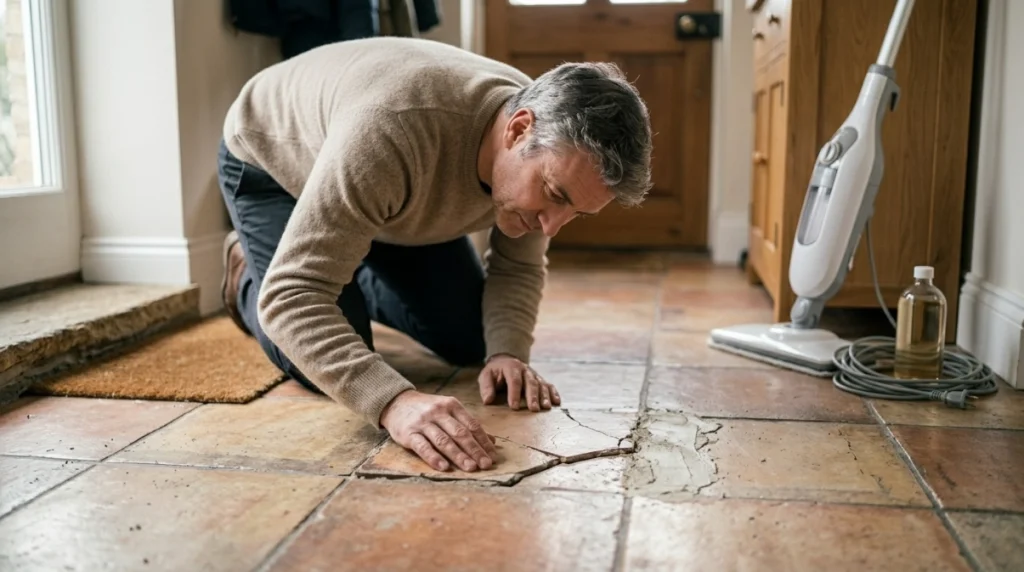
Skip the steam mop whenever you can’t confirm the floor can tolerate heat and moisture. A damp microfiber mop is the safer fallback.
I would avoid steam on these floors
- Loose tiles: Movement suggests an installation problem that cleaning won’t fix.
- Cracked or missing grout: Gaps make moisture control harder.
- Unsealed porous tile: The surface may absorb more moisture than expected.
- Unknown natural stone: Identify the stone and finish first.
- Heat-sensitive coatings: Some waxes and finishes can react to heat.
- Fresh installations: Wait until adhesives, grout, and sealers have cured according to their instructions.
Shark itself advises users to check floor-care instructions and test an isolated area when using steam on hard flooring. That’s a sensible rule regardless of steam mop brand.
Be careful with “tile look” flooring
One common mistake is assuming anything shaped like tile is ceramic. Luxury vinyl tile, laminate tile, engineered products, and natural stone can all need different cleaning methods.
Identify the material first. Appearance alone isn’t enough.
Safety note: If the floor warranty excludes steam cleaning, follow the warranty even when the steam mop manufacturer describes its appliance as suitable for multiple hard floors.
How Often Should You Steam Mop Tile?
Most homes don’t need steam cleaning every day. I treat it as a periodic deeper-cleaning step and use dry cleaning or a microfiber mop between sessions.
Your schedule should follow traffic and soil rather than a rigid calendar. Kitchens and entryways usually need attention sooner than a lightly used guest bathroom.
A practical tile-cleaning schedule
| Situation | Practical routine |
|---|---|
| Loose dust and crumbs | Vacuum or sweep as needed |
| Light everyday soil | Damp microfiber mop when visibly dirty |
| Busy kitchen or entry tile | Consider steam about weekly if the flooring allows it |
| Lower-traffic tile | Steam every few weeks or when buildup appears |
| Food or muddy spill | Clean promptly rather than waiting for scheduled mopping |
If the tile stays clean with a microfiber flat mop, there’s no benefit in adding unnecessary steam sessions. Use the simplest method that gets the floor clean.
As of 2026, that remains my preferred approach: frequent low-moisture maintenance, with steam reserved for compatible floors that need extra cleaning power.
FAQ About Steam Mops and Tile Floors
Can you use a steam mop on ceramic tile?
Yes, you can usually use a steam mop on sealed, glazed ceramic floor tile when the grout and installation are intact. Check both the flooring manufacturer’s care instructions and the steam mop manual first, especially if the tile has a wax, sealer, or specialty finish.
Can you use a steam mop on porcelain tile?
Sealed porcelain tile is generally one of the better surfaces for a steam mop because porcelain is dense and highly water resistant. Inspect grout for cracks and keep the steam mop moving rather than concentrating heat in one location.
Will a steam mop damage grout?
Routine steam cleaning shouldn’t automatically damage sound grout, but deteriorated, cracked, loose, or improperly cured grout needs more caution. Avoid repeatedly directing intense steam into damaged joints, and follow the grout or sealer manufacturer’s maintenance instructions.
Can I put vinegar in my steam mop for tile floors?
Don’t put vinegar in the steam mop tank unless your machine’s manufacturer explicitly permits it. Acidic cleaners can also be unsuitable for natural stone and some grout or sealers, so check the floor-care instructions before using vinegar anywhere on the installation.
Does steam cleaning sanitize tile floors?
Some steam appliances carry specific sanitation claims when used exactly as directed, but ordinary steam mopping shouldn’t automatically be described as disinfecting. Cleaning, sanitizing, and disinfecting are different processes, so follow your machine’s validated instructions when sanitation matters.
Is a steam mop better than a regular mop for tile?
A steam mop is better for some sticky or greasy soil because heat helps loosen residue. A microfiber flat mop is usually quicker for routine cleaning, while a spin mop can be convenient for larger tiled rooms.
Why does my tile look streaky after steam mopping?
Streaks often come from a dirty mop pad, leftover detergent residue, or mopping before loose dirt is removed. Vacuum first, start with a clean microfiber pad, and change pads during large cleaning jobs instead of spreading captured soil across the floor.
Bottom line: Steam mops are good for tile floors when you’re dealing with sealed ceramic or porcelain and an intact installation. They aren’t automatically safe for every surface that looks like tile.
Check the flooring care guide first, test an inconspicuous area when you’re uncertain, and keep the mop moving. Pairing a steam mop with a microfiber flat mop gives most tile-floor homes an effective routine for both everyday cleaning and tougher buildup.
