
Are Steam Mops Loud? What Noise to Expect and When to Worry

Quick Answer
Most basic steam mops are not especially loud. You will usually hear a light hiss, occasional water-pump buzz, clicks during heating, and some gurgling as water becomes steam. Models with spinning pads, brush rolls, or suction can sound noticeably louder; for example, BISSELL’s published specifications show how motorized scrubbing adds another moving component to a steam mop.
What you should normally hear
- Soft hissing: Steam is leaving the mop head or nozzle.
- Short buzzing: The internal pump is moving water toward the heater.
- Light clicking: Heating controls may switch on and off while regulating temperature.
- Gentle gurgling: Water and vapor are moving through the internal system.
- Motor noise: Scrubbing or vacuum-steam models have extra motors that increase sound.
Quick warning
- Stop using the mop if it suddenly develops grinding, screeching, violent rattling, electrical buzzing, or another sound that is clearly different from normal operation.
I have used steam mops on bathroom tile, textured kitchen floors, and other hard surfaces where ordinary damp mopping struggled with sticky residue. One thing new owners often notice first is the sound.
The good news is that a standard steam mop is normally much less disruptive than a vacuum cleaner. This guide explains what those noises mean, why some steam mops are louder, and when a strange sound deserves attention.
In This Guide
- Are Steam Mops Loud During Normal Cleaning?
- Why Do Steam Mops Make Noise?
- How Loud Are Different Types of Steam Mops?
- Which Steam Mop Sounds Are Normal and Which Are Not?
- Can a Steam Mop Disturb Babies, Pets, or Neighbors?
- How Can You Make a Steam Mop Quieter?
- Does Floor Type Change How Loud a Steam Mop Sounds?
- Steam Mop Noise FAQs
- Final Takeaway
Are Steam Mops Loud During Normal Cleaning?
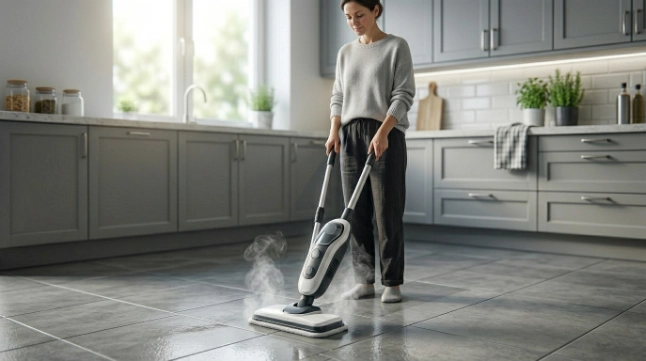
No. A conventional stick-style steam mop is usually a relatively quiet floor-cleaning appliance because it does not need the powerful suction motor found inside a vacuum.
Most of its sound comes from heating water, pumping that water through the appliance, and releasing vapor through the mop head.
Definition: A steam mop is an electric floor-cleaning tool that heats water and sends vapor through a cleaning head, usually covered by a reusable microfiber pad.
What does a normal steam mop sound like?
A basic model often makes several small noises instead of one constant roar. The sound may also change as you move between steam settings.
- Hiss: Vapor leaving the steam outlets.
- Hum: Electrical components or a small pump operating.
- Buzz: Short pump cycles moving water toward the heating chamber.
- Click: Heating controls cycling or a mechanical valve operating.
- Gurgle: Water passing through tubing or entering the heater.
These sounds are usually easy to talk over in the same room. They should not resemble the continuous high-volume sound produced by a full-size vacuum.
Why there is no useful universal decibel number
Steam mop manufacturers do not all publish noise measurements in decibels. Testing conditions also differ between products.
A measurement can change with distance, flooring, room size, steam mode, and whether the machine has a spinning brush or suction motor. I would not trust a precise universal noise figure for “steam mops” as a category.
As of 2026, model design remains more useful than a generic number. A simple steam-only mop will usually be quieter than a machine combining steam with powered scrubbing or vacuuming.
Why Do Steam Mops Make Noise?
Steam mops make noise because water, heat, pressure, pumps, and sometimes motors are working together. Knowing the source makes it easier to tell a healthy appliance from a faulty one.
The water pump
Many steam mops use a small pump to move water from the reservoir toward the heating chamber. You may hear a short buzz or rhythmic pulse when the pump runs.
The pump may become more noticeable when you first start the appliance. It can also sound different when the water tank is nearly empty.
The heating system
The heating element itself does not need to be loud. However, expanding materials, thermostatic controls, and valves can produce occasional clicks while the mop heats.
A little gurgling is also possible while water reaches operating temperature. This often settles once steam production becomes steady.
Steam leaving the head
Escaping steam produces the familiar hiss. Higher output can make that hiss easier to hear.
You may also notice brief changes when the mop passes over grout lines or an uneven surface. The pad can temporarily change how freely vapor escapes.
Scrubbing and suction systems
A powered scrubber adds a separate motor. A vacuum-steam hybrid adds suction, airflow, and sometimes a rotating brush roll as well.
Those components can transform a quiet steam hiss into a much more noticeable appliance sound. That does not automatically mean anything is wrong.
How Loud Are Different Types of Steam Mops?
The type of machine matters more than the word “steam” on the box. A basic steam mop and a steam-vacuum hybrid can sound quite different.
| Steam cleaner type | Main sound sources | Relative noise | What to expect |
|---|---|---|---|
| Basic stick steam mop | Pump, steam hiss, heating clicks | Low | Usually easy to talk over |
| Powered scrubbing steam mop | Steam plus rotating-pad motor | Low to moderate | Steady mechanical sound while pads rotate |
| Vacuum-steam hybrid | Suction, airflow, brush motor, steam | Moderate to high | Often closer to a floor washer or vacuum |
| Canister steam cleaner | Pressure system and nozzle hiss | Moderate | Steam release may sound stronger than a floor mop |
A useful real-world example is BISSELL’s SpinWave SmartSteam. Its powered pads can rotate at up to 230 RPM, yet BISSELL says the model is 80% quieter than its stated Shark Steam & Scrub comparison.
That is a manufacturer-specific comparison, not a universal steam-mop measurement. It shows why two machines with moving scrubbers can still have different sound profiles.
Which Steam Mop Sounds Are Normal and Which Are Not?
Hissing, mild buzzing, clicks, and occasional gurgling can be normal. Grinding, screeching, harsh rattling, or sudden electrical buzzing deserves more attention.
Normal steam mop sounds
- Steady hiss: Steam is flowing through the cleaning head.
- Intermittent buzz: The water pump is cycling.
- Light clicks: Controls or heating components are operating.
- Brief gurgling: Water is moving through the system.
- Motor hum: Powered pads or brushes are moving.
Sounds that may indicate a problem
- Grinding: A powered brush, pad mechanism, or moving component may be obstructed.
- Violent rattling: A tank, attachment, pad plate, or internal component may be loose.
- High-pitched screeching: A moving motorized part may not be operating normally.
- Repeated loud popping: Stop if the sound is stronger than normal heating clicks or gurgling.
- Strong electrical buzzing: Unplug the appliance if the sound appears abnormal, especially with odor or heat.
If a strange noise begins suddenly, switch the mop off and unplug it. Let all hot components cool before inspecting removable parts.
Check the tank seating, mop pad, visible attachments, and user manual before using it again. Do not open electrical housings or bypass safety controls.
Safety note: Stop using any steam mop that produces smoke, a burning smell, leaking hot water, electrical arcing, or another obvious electrical fault.
Can a Steam Mop Disturb Babies, Pets, or Neighbors?
A basic steam mop is unlikely to create the same household disturbance as a vacuum. A powered spinning or suction model can be more noticeable in a quiet apartment.
Using a steam mop around a sleeping baby
The hiss from a basic model may be tolerable in another room. Starting the mop, moving furniture, or knocking the head against baseboards may create more disruptive sounds than the steam itself.
If nap time matters, clean the farthest room first and shut the door. Avoid powered vacuum-steam modes near the sleeping area.
What about dogs and cats?
Pets respond differently to appliances. Some ignore steam mops because they lack the strong suction sound that makes vacuums startling.
Others dislike the hissing, movement, or unfamiliar vapor. Keep pets away from the cleaning area until the floor is cool and dry.
Are steam mops apartment-friendly?
Basic models are generally well suited to apartment cleaning from a noise perspective. Avoid cleaning at unusually late hours if your model has rotating pads, suction, or a loud motor.
- Vacuum or sweep earlier if your building has quiet hours.
- Use steam-only mode when your hybrid machine allows it.
- Do not repeatedly knock the mop head into walls or baseboards.
- Close doors when cleaning near bedrooms.
- Choose lower powered modes when they clean effectively.
How Can You Make a Steam Mop Quieter?
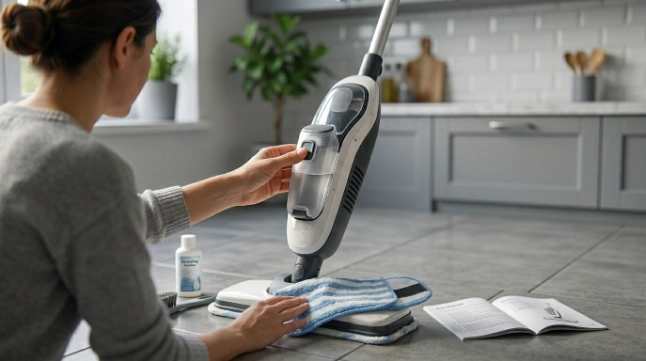
You cannot eliminate the normal hiss of steam, but you can prevent unnecessary rattling, pump strain, and vibration. Start with simple maintenance rather than modifying the machine.
1. Seat the water tank correctly
A tank that is not fully seated can vibrate or rattle. Remove it after the appliance cools, then reinstall it according to the manual.
2. Attach the mop pad securely
A loose pad can drag, flap, or make the head move unevenly. Replace worn pads that no longer attach properly.
3. Remove loose debris first
Sand, crumbs, and hard debris trapped under a microfiber pad create scraping noises. They can also scratch sensitive flooring.
Sweep or vacuum before steaming. Most conventional steam mops do not collect loose debris themselves.
4. Maintain the water system
Mineral buildup can affect water flow in some appliances. Follow the manufacturer-approved descaling or maintenance procedure rather than pouring vinegar or another cleaner into the tank.
Safety note: Never add vinegar, bleach, fragrance, essential oil, or cleaning solution to a steam mop reservoir unless the manufacturer specifically allows it.
5. Use only the steam output you need
A higher steam setting may produce a stronger hiss and more moisture. Use the lowest setting that cleans effectively and is approved for the surface.
6. Do not block vents to reduce noise
Never cover an air opening, steam outlet, or ventilation area to make the appliance quieter. That can interfere with normal heat and pressure management.
Routine household cleaning also does not always require disinfection. The CDC’s home cleaning guidance says regular cleaning is sufficient in many household situations unless extra disinfection is needed.
Does Floor Type Change How Loud a Steam Mop Sounds?
Yes. The appliance may produce the same mechanical sound, but the room and flooring can change how loud it seems.
Tile and concrete
Hard tile, concrete, bare walls, and other reflective surfaces can make appliance noise seem sharper. Bathrooms are a good example because several hard surfaces reflect sound at once.
Textured tile may also create extra rubbing noise as the microfiber pad passes over raised areas and grout lines.
Vinyl and LVP
These floors often sound less sharp under a mop than bare ceramic tile. However, acoustic comfort does not determine whether steam is safe for the floor.
Heat can affect seams, adhesives, and some vinyl products. Always follow the flooring manufacturer’s care instructions.
Laminate
Laminate can create hollow tapping or rolling sounds, especially over a floating installation. That does not make steam cleaning appropriate.
Moisture can enter joints and damage moisture-sensitive core material. A lightly damp microfiber mop is generally the safer approach unless your flooring maker specifically states otherwise.
Hardwood and engineered wood
Wood flooring requires particular caution because excess heat and moisture can damage finishes or the wood itself. The National Wood Flooring Association’s maintenance guidance advises avoiding steam mops on wood floors.
Safety note: Check your flooring warranty and care guide before using steam on hardwood, engineered wood, laminate, vinyl, natural stone, or any surface with uncertain moisture tolerance.
Steam Mop Noise FAQs
Does a steam mop sound like a vacuum cleaner?
Usually not. A basic steam mop has no large suction motor, so you mainly hear steam hissing, pump pulses, and heating noises. Vacuum-steam hybrids are different because their suction motors, airflow, and brush systems can make them sound much closer to a vacuum or powered floor washer.
Why is my steam mop making a hissing sound?
A gentle hiss is normally the sound of steam leaving the mop head and is expected during operation. If steam suddenly escapes from the tank, handle, hose connection, or another unintended area, switch the appliance off and follow the manufacturer’s troubleshooting instructions.
Why does my steam mop make a buzzing noise?
A short or rhythmic buzz may come from the water pump moving water toward the heating chamber. A new, continuous, unusually strong electrical buzz is different. Unplug the machine and inspect it according to the user manual before continuing.
Why is my steam mop suddenly louder than before?
Check whether the tank or attachment is loose, the mop pad is worn, debris is trapped beneath the head, or a powered brush is obstructed. A sudden mechanical change is more important than the absolute volume, especially when grinding, vibration, heat, or odor appears too.
Can I use a steam mop late at night in an apartment?
A basic steam-only mop may be quiet enough for reasonable evening use, depending on your building’s rules. Motorized spinning mops and vacuum-steam hybrids can be louder. During quiet hours, sweeping and using a simple steam-only mode will usually create less disturbance.
Does a higher steam setting make a steam mop louder?
It can make the steam hiss more noticeable because more vapor is leaving the mop head. The change is normally modest on a basic steam mop. Powered scrubbing or suction motors often contribute more overall noise than the steam setting itself.
Should a steam mop gurgle while heating?
Brief gurgling can happen as water moves into the heating system and begins producing vapor. It should not be accompanied by uncontrolled leaking or violent pressure noises. If the sound becomes dramatically different from normal, switch off the appliance and check its manual.
Final Takeaway: Are Steam Mops Too Loud for Everyday Use?
For most homes, no. A basic steam mop is usually quiet enough for normal daytime cleaning because its main sounds are hissing, light pump noise, and occasional heating clicks.
The biggest noise difference comes from extra hardware. Rotating pads, powered brushes, and vacuum suction make hybrid steam cleaners noticeably more audible.
- Choose steam-only designs if low noise is a priority.
- Expect gentle hissing during normal steam production.
- Investigate sudden changes such as grinding, screeching, or strong rattling.
- Keep the mop maintained to reduce avoidable vibration and pump strain.
- Check floor compatibility before worrying about sound, because heat and moisture safety matter more.
If your steam mop has always produced a quiet hiss and occasional buzz, that is usually normal. A new harsh mechanical or electrical sound is the point where I would stop cleaning and troubleshoot before using it again.
