
Are Steam Mops Toxic? Safety Guide for Homes, Pets, and Floors

Quick Answer
Steam mops are not inherently toxic because standard models clean by heating water into steam rather than relying on chemical cleaner. The main concerns are burns, using unapproved additives, and damaging heat-sensitive floors. For routine home hygiene, the CDC explains the difference between cleaning, sanitizing, and disinfecting.
What You Should Know
- Steam isn’t poison: A water-only steam mop does not normally leave chemical cleaner residue behind.
- Heat can burn: Hot steam, the mop head, and freshly heated surfaces can injure skin.
- Avoid additives: Don’t put vinegar, essential oils, fragrance, bleach, or cleaner in the tank unless your manual specifically allows it.
- Floors matter: Steam can damage hardwood, laminate, vinyl, and other moisture-sensitive flooring.
- Follow the manual: Water type, acceptable surfaces, and operating instructions vary between machines.
Simple Safety Rule
- Use only the liquid approved by the steam mop manufacturer, keep people and pets away from active steam, and confirm your flooring allows steam cleaning.
If you’re asking, “are steam mops toxic,” you’re probably deciding whether steam cleaning is safe around your family, pets, or indoor air. I’ve had the same concern when comparing a steam mop with ordinary microfiber floor cleaning.
The reassuring part is simple. A normal water-only steam mop doesn’t need harsh floor-cleaning chemicals, but that doesn’t make every way of using one risk-free.
In This Guide
- What Does “Toxic” Mean With a Steam Mop?
- Can Steam From a Steam Mop Make You Sick?
- Do Steam Mops Use Toxic Chemicals?
- Are Steam Mops Safe Around Pets and Children?
- Which Floors Are Safe for Steam Mopping?
- Does a Steam Mop Disinfect Without Chemicals?
- How Can You Use a Steam Mop Safely?
- Steam Mop vs Other Mops for Low-Chemical Cleaning
- Frequently Asked Questions
What Does “Toxic” Mean With a Steam Mop?
A steam mop is an electric floor-cleaning tool that heats water and sends hot steam through a reusable or disposable mop pad. The heat helps loosen dirt while the pad collects the loosened grime.
When people describe a steam mop as “toxic,” they often mix together several different concerns. Those concerns aren’t identical.
- Chemical toxicity: Exposure to an irritating or harmful cleaning chemical.
- Fumes or fragrances: Vapors released after adding cleaners, oils, or scented products.
- Burn risk: Contact with hot steam, heated water, or a hot mop head.
- Floor damage: Heat or moisture entering seams, finishes, adhesives, or wood fibers.
- Hygiene concerns: Assuming steam automatically disinfects every surface under all conditions.
A basic water-only steam mop avoids much of the chemical exposure associated with conventional floor cleaners. Its major risks come from heat, moisture, and incorrect use instead.
This distinction matters. Something can be chemical-free and still require careful handling.
Section Takeaway: A water-only steam mop isn’t inherently toxic, but improper additives, hot steam, and incompatible floors can create separate safety problems.
Can Steam From a Steam Mop Make You Sick?
Plain steam from clean water is not the same as chemical cleaner fumes. Under normal use, the bigger immediate hazard is high heat rather than poisoning.
Hot steam can cause burns
Never place your hand near the steam outlet to test whether the machine is working. The pad and mop head can also remain hot after you stop cleaning.
- Keep bare feet away from the active mop head.
- Don’t point a handheld steam attachment toward your body.
- Unplug the unit before troubleshooting it.
- Allow attachments and pads to cool before removing them.
- Keep the power cord away from hot or wet areas.
Indoor humidity may temporarily increase
A steam mop releases moisture into the room. In a small bathroom or poorly ventilated space, you may notice extra humidity during a longer cleaning session.
I prefer opening a door or running normal ventilation when working in a tight area. That also helps the floor dry sooner.
The dirt being cleaned still matters
A steam mop doesn’t make contaminated dirt harmless before you touch it. Pet waste, bodily fluids, moldy debris, and other messy material still require proper cleanup practices.
Remove solid debris first and wash your hands afterward. Don’t treat steam as a substitute for basic hygiene.
Safety note: Follow the appliance manual and any cleaning-product label whenever you’re dealing with contaminated surfaces or special sanitation needs.
Do Steam Mops Use Toxic Chemicals?
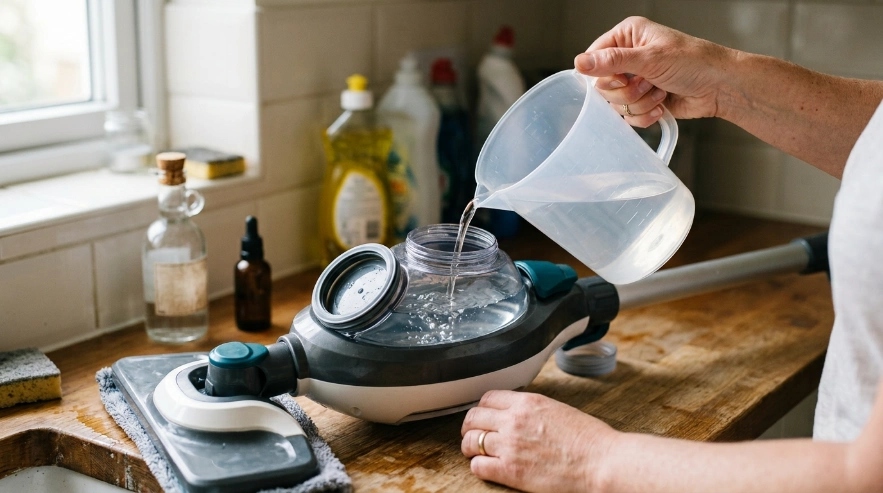
Many traditional steam mops are designed to work with water alone. That is one reason people choose them when they want to reduce routine chemical floor cleaning.
Don’t assume you can add floor cleaner
For example, BISSELL’s instructions for some PowerFresh steam mops say to use water and not place chemicals in the water tank. Other manufacturers give similar model-specific directions.
Check your own manual first. What works in a regular mop bucket may not belong inside a steam appliance.
- Bleach
- Ammonia-based cleaner
- Vinegar
- Essential oils
- Perfume or fragrance oils
- Dish soap
- Ordinary concentrated floor cleaner
Adding an unapproved liquid may damage seals, pumps, tubing, or heating components. Heating scented or chemical products can also create vapors you didn’t intend to breathe.
If you want a conventional floor cleaner, use one separately and according to its label. The EPA’s Safer Choice program can also help consumers identify cleaning products that meet its ingredient criteria.
Safety note: Never mix cleaning chemicals. Always follow the steam-mop manual and the cleaner’s label instead of creating your own tank mixture.
Section Takeaway: Steam mops can reduce routine chemical use, but only when you resist adding unapproved cleaners, fragrances, oils, or DIY solutions to the tank.
Are Steam Mops Safe Around Pets and Children?
A properly used water-only steam mop can be a practical choice in homes with pets or children because it doesn’t have to leave conventional cleaner residue behind. The hot appliance itself still needs careful handling.
Keep children away while the mop is operating
A child may see the mop as an ordinary cleaning tool and reach for the pad. That’s dangerous while the pad and steam system are hot.
- Keep the machine out of children’s reach.
- Don’t leave an energized steam mop unattended.
- Let the pad cool before changing it.
- Store the appliance only after it has cooled.
Keep pets off the cleaning path
Dogs and cats can cross the floor unexpectedly. I find it easier to clean one room while pets stay behind a closed door or gate.
Let the floor cool and dry before allowing normal traffic again. This also reduces paw prints on your freshly cleaned surface.
Skip unnecessary fragrances
Essential oils and perfumes aren’t automatically appropriate because they smell natural or pleasant. Your steam mop may not be designed to heat or disperse them.
Water-only operation is the simplest approach when your manual specifies water. It also removes an unnecessary variable around children and animals.
Safety note: If a household member or pet has a specific respiratory or medical sensitivity, follow professional health or veterinary advice rather than relying on a general cleaning rule.
Which Floors Are Safe for Steam Mopping?
The biggest practical problem I’ve seen with steam cleaning isn’t toxicity. It’s using steam on a floor that doesn’t tolerate concentrated heat and moisture.
Floor construction matters as much as the mop itself. A surface can look waterproof while seams, adhesives, or the material underneath remain vulnerable.
| Floor Type | Steam Mop Guidance | Main Concern |
|---|---|---|
| Sealed ceramic or porcelain tile | Often suitable if the flooring and mop manufacturers allow it | Grout, damaged seals, or specialty finishes |
| Hardwood | Generally avoid unless the flooring manufacturer explicitly approves steam | Finish damage, moisture penetration, swelling |
| Engineered wood | Check manufacturer guidance first | Layer separation, seams, moisture |
| Laminate | Avoid unless explicitly approved | Swelling at joints and core damage |
| Vinyl/LVP | Check the flooring warranty and care guide | Heat, seams, adhesives, dimensional change |
| Natural stone | Depends on stone and sealant | Sealant condition and moisture sensitivity |
| Sealed concrete | Often possible when the finish allows it | Coating or sealer compatibility |
The National Wood Flooring Association’s maintenance guidance advises against wet mops and steam mops on wood flooring. Heat and repeated moisture exposure can harm both the finish and wood over time.
A microfiber flat mop is usually the safer default when your floor-care guide prohibits steam. Use only as much moisture as the flooring manufacturer recommends.
Safety note: Floor warranties and finishes vary. Always follow the care instructions from the company that made your specific flooring.
Section Takeaway: A steam mop can be chemically simple but physically aggressive. Floor compatibility should be checked before every assumption about steam cleaning.
Does a Steam Mop Disinfect Without Chemicals?
Steam can provide high-temperature cleaning, but you shouldn’t assume every quick pass automatically disinfects a floor. Cleaning and disinfecting aren’t interchangeable terms.
Cleaning removes dirt and many germs
Routine floor cleaning physically removes dirt, grime, and many microorganisms. For normal household conditions, that may be all you need most of the time.
Disinfection has specific requirements
Disinfection means killing germs using an appropriate process or disinfectant. A steam mop’s ability to make a sanitation or disinfection claim depends on the machine, surface, operating method, and required exposure time.
- Read your steam mop’s sanitation instructions.
- Use the required setting if one is specified.
- Follow any stated dwell or contact procedure.
- Don’t rush the mop across a surface and assume disinfection occurred.
- Use an appropriate registered disinfectant when circumstances require one.
This is especially important after illness or contamination. Routine steam cleaning and targeted disinfection solve different problems.
Safety note: When disinfection is necessary, follow public-health guidance and the label of any disinfectant you use.
How Can You Use a Steam Mop Safely?
Safe steam mopping starts before you plug the machine in. I use a short check every time because most preventable problems come from the wrong floor, liquid, or handling technique.
- Read the floor-care guide. Confirm that steam is approved for your exact flooring.
- Check the steam-mop manual. Identify the approved water type and surfaces.
- Vacuum or sweep first. Remove grit, hair, crumbs, and loose dirt before applying moisture.
- Fill the tank correctly. Use the amount and water type specified by the manufacturer.
- Skip unapproved additives. Don’t improvise with oils, vinegar, bleach, or household cleaner.
- Attach a clean pad. A heavily soiled pad can spread dirt instead of picking it up.
- Keep the mop moving. Don’t park concentrated heat on one area unless your manual specifically instructs you to.
- Keep people and pets clear. Prevent contact with steam and hot surfaces.
- Unplug when finished. Let the appliance cool before removing the pad or storing it.
Some manufacturers also recommend distilled or demineralized water to reduce mineral buildup. BISSELL, for example, gives this advice for certain PowerFresh models and says not to add chemicals to the tank.
You can review the manufacturer’s steam-mop water-tank instructions as an example, but always follow the manual for your own model.
Section Takeaway: Correct water, compatible flooring, controlled heat, and careful handling matter more than adding extra cleaning products.
Steam Mop vs Other Mops for Low-Chemical Cleaning
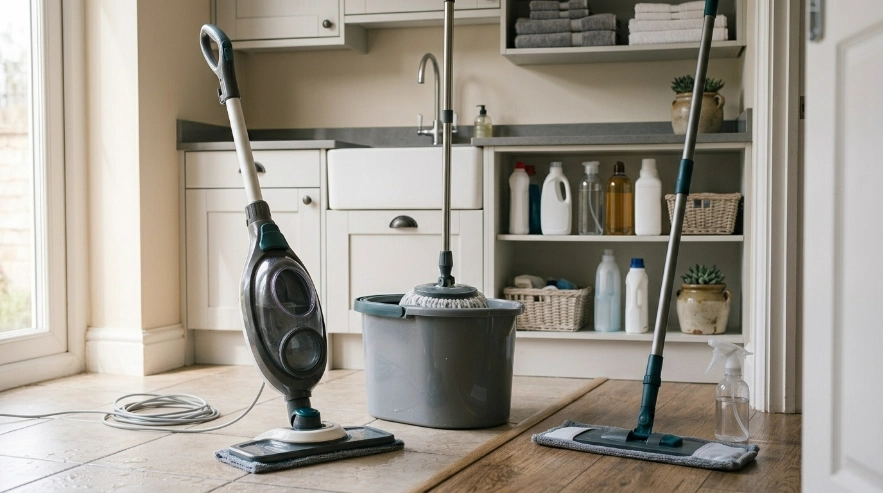
A steam mop isn’t the only way to reduce cleaning chemicals. Sometimes a damp microfiber mop gives you the simpler and safer option.
| Mop Type | Cleaning Method | Chemical Cleaner Required? | Main Trade-Off |
|---|---|---|---|
| Steam mop | Hot steam plus mop pad | Usually no for water-only models | Heat and floor-compatibility concerns |
| Microfiber flat mop | Mechanical wiping with controlled moisture | Not always | May need more passes on stuck-on grime |
| Spin mop | Wet mopping with wrung mop head | Optional depending on the task | Easy to use excessive water |
Choose steam when heat is useful and approved
Steam works well when you have a compatible sealed hard surface and want to loosen stuck-on grime without adding ordinary floor cleaner. Tile is a common example, provided the tile, grout, and finish tolerate the process.
Choose microfiber for sensitive flooring
A microfiber flat mop gives you tighter control over moisture. I prefer it on floors where seams, coatings, or wood construction make steam questionable.
Choose a spin mop for larger washable areas
A well-wrung spin mop can cover a large area quickly. The key is controlling water instead of leaving the floor saturated.
There isn’t one safest mop for every material. The floor’s care guide should make the final decision.
Frequently Asked Questions About Steam Mop Toxicity
Are steam mops toxic to breathe?
Steam produced from clean water isn’t the same as breathing fumes from a chemical floor cleaner. However, hot steam can burn you, and you shouldn’t add fragrances, oils, cleaners, or other substances unless the steam-mop manufacturer specifically approves them.
Do steam mops release chemicals into the air?
A water-only steam mop doesn’t require chemical cleaning solution to generate steam. If you add an unapproved cleaner, oil, or fragrance, heating it may introduce additional vapors and can also damage the appliance.
Are steam mops safer than chemical mops?
They can reduce the amount of floor-cleaning chemicals you use, but “safer” depends on the situation. Steam introduces burn and heat-damage risks that a cool microfiber mop doesn’t have.
Can I put vinegar in a steam mop?
Don’t put vinegar in the water tank unless your manufacturer’s instructions explicitly allow it. Many steam-mop manufacturers specify water only, and acidic additives may damage internal components.
Can I add essential oils to make my steam mop smell better?
Not unless your model specifically permits them. Essential oils and fragrance products can leave deposits inside machines, affect components, or create unwanted scented vapors when heated.
Are steam mops safe for hardwood floors?
Steam is generally a poor choice for hardwood unless your flooring manufacturer explicitly approves it. The National Wood Flooring Association advises against steam mopping because repeated moisture can damage the finish and wood.
Do steam mops kill germs?
Heat can reduce microorganisms, but don’t assume any quick steam-mop pass meets a disinfecting standard. Follow the appliance’s sanitation instructions and use an appropriate disinfectant when true surface disinfection is required.
Final Takeaway: Are Steam Mops Toxic?
No, a normal water-only steam mop is not inherently toxic. It cleans by heating water, so you can often mop without adding conventional chemical floor cleaner.
The important risks are different. Hot steam can burn skin, unapproved additives may create unnecessary exposure or damage the appliance, and steam can harm moisture-sensitive flooring.
- Use only manufacturer-approved water or solution.
- Never experiment with chemical mixtures in the tank.
- Keep children and pets away during cleaning.
- Confirm that your flooring is steam-safe.
- Use microfiber cleaning when steam isn’t recommended.
- Follow specific sanitation directions instead of assuming steam automatically disinfects.
As of 2026, that’s the approach I consider most practical: use steam where it genuinely fits the floor and cleaning job, not simply because it sounds more powerful. A simple damp microfiber mop is often the better choice when you’re unsure.
