
What Are the Benefits of Using a Spray Mop?

Quick Answer
The main benefits of using a spray mop are faster setup, controlled moisture, easier spot cleaning, less water to manage, and convenient everyday floor care. A good microfiber spray mop is especially useful on moisture-sensitive surfaces because you control how much cleaner reaches the floor, which matches the cautious approach recommended by the National Wood Flooring Association.
Key spray mop benefits
- Controlled moisture: The trigger releases a small amount of cleaner instead of flooding the floor.
- Fast setup: You can start cleaning without filling, carrying, or emptying a bucket.
- Quick spot cleaning: Small spills and footprints can be cleaned as soon as you notice them.
- Easy handling: Most spray mops stay light because they do not carry a large volume of water.
- Less wasted solution: You spray cleaner only where it is needed.
- Reusable options: Many models use washable microfiber pads and refillable bottles.
Best results
- Vacuum or sweep loose grit first, use a floor-safe cleaner, and change the microfiber pad when it becomes visibly dirty.
I reach for a spray mop when a floor needs cleaning but does not justify pulling out a bucket. For everyday floor cleaning, that convenience often means the mess gets handled sooner.
As of 2026, spray mops remain one of the most practical options for hardwood, laminate, vinyl/LVP, and tile when the flooring manufacturer permits damp cleaning. The important part is using the right pad, cleaner, and amount of moisture.
In This Guide
- What Is a Spray Mop and How Does It Work?
- What Are the Main Benefits of Using a Spray Mop?
- Why Is Moisture Control Such an Important Benefit?
- How Does a Spray Mop Compare With Other Mops?
- Which Floors Benefit Most From a Spray Mop?
- What Are the Disadvantages of a Spray Mop?
- How Do You Get the Best Results With a Spray Mop?
- Frequently Asked Questions
- Final Takeaway
What Is a Spray Mop and How Does It Work?
A spray mop is a floor-cleaning tool with a cleaner reservoir, spray trigger, flat mop head, and absorbent cleaning pad. Pressing the trigger releases a small mist ahead of the mop.
The pad then loosens and collects the dirt. Most current models use microfiber because the material handles both fine particles and moisture well.
Definition: A spray mop is a low-moisture mop that stores cleaning solution on the tool and dispenses it directly onto the floor as needed.
Why is the built-in sprayer useful?
The sprayer removes the repeated bucket routine. You do not have to walk back to a bucket every time the pad needs more cleaning solution.
That also gives you more control. One dirty spot may need two or three sprays, while a lightly dusty section may need almost none.
- Reservoir: Holds water or an approved cleaning solution.
- Trigger: Controls when solution reaches the floor.
- Spray nozzle: Spreads a light mist in front of the mop head.
- Microfiber pad: Wipes away loosened soil and absorbs remaining moisture.
- Flat head: Reaches under beds, cabinets, tables, and other furniture.
What Are the Main Benefits of Using a Spray Mop?
The biggest advantage is convenience without giving up much control. You can clean one small area or several rooms using the same basic tool.
1. You can start cleaning quickly
A bucket mop creates several jobs before cleaning even starts. You fill the bucket, measure cleaner, move the water, and eventually empty everything again.
A filled spray mop is different. Attach a clean pad, squeeze the trigger, and start.
2. It makes small messes easier to handle
Spray mops work especially well for footprints, drink splashes, kitchen drips, and entryway dirt. You can clean the affected section without wetting the entire room.
I find this matters more than people expect. A cleaning tool that is easy to grab usually gets used before a small mess becomes dried-on grime.
3. You use cleaning solution only where needed
Traditional bucket mopping places the entire mop head into diluted cleaning water. A spray mop lets you decide exactly where fresh solution goes.
This can reduce unnecessary product use. It also helps prevent the heavy application that often contributes to sticky or streaky floors.
4. Most models are easy to carry
A spray mop carries a small reservoir instead of a bucket containing several liters of water. That makes moving between rooms and floors much easier.
This difference is helpful in apartments, smaller homes, and houses with stairs. There is also less chance of spilling a bucket while moving it.
5. Flat heads reach awkward spaces
Most spray mops use a slim, swiveling head. That shape can slide under tables, sofas, beds, bathroom vanities, and cabinet edges.
You still need to move some furniture for deep cleaning. For weekly maintenance, however, the flat design saves considerable effort.
6. Reusable pads can reduce disposable waste
Many spray mops accept washable microfiber pads. You can wash several pads together and reuse them instead of throwing one away after every cleaning session.
Refillable reservoirs can also reduce dependence on single-use cleaner cartridges. Check the mop instructions before adding a third-party solution.
Section Takeaway: Spray mops combine low-effort setup, targeted cleaning, manageable moisture, and easy storage. Those advantages make them particularly useful for frequent maintenance rather than heavy restoration work.
Why Is Moisture Control Such an Important Benefit?
Too much water can create problems on several common flooring types. A spray mop gives you direct control over how much liquid reaches each section.
Wood floors need special care
Current NWFA technical guidance recommends keeping moisture minimal during wood-floor cleaning. It also specifically notes the value of quality spray mops that control solution application.
That does not mean every wood floor accepts every spray mop or cleaner. Finish type, floor condition, and manufacturer instructions still matter.
Safety note: Always check your flooring or finish manufacturer’s care instructions before damp-mopping hardwood or engineered wood.
Laminate also benefits from light moisture
Laminate has seams where excessive moisture can cause problems. A fine spray is easier to control than a dripping string mop.
You should still avoid repeated spraying in one area. The pad should pick up the mist instead of leaving visible liquid behind.
Less liquid can mean faster drying
A lightly misted surface normally has less water to evaporate than a heavily soaked floor. That can shorten the period when the floor feels damp or slippery.
Good ventilation still helps. Open a window or increase airflow when humidity slows drying.
How Does a Spray Mop Compare With Other Mops?
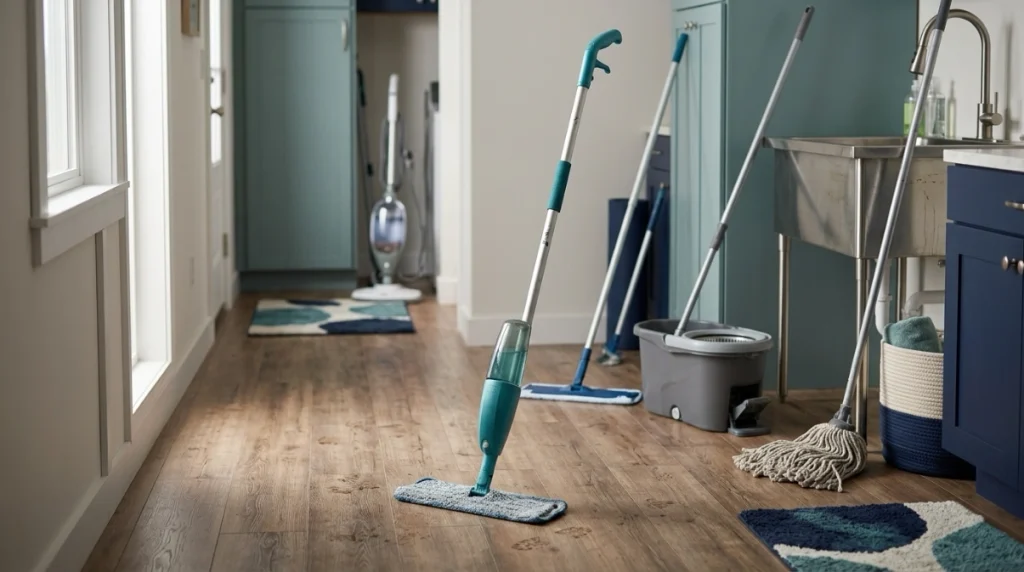
A spray mop is not automatically better than every alternative. Its main strengths are speed, moisture control, and everyday convenience.
| Mop Type | Moisture Control | Bucket Needed? | Best Use | Main Limitation |
|---|---|---|---|---|
| Spray mop | High | No | Daily cleaning and quick spills | Small reservoir and limited heavy scrubbing |
| Flat microfiber mop | High | Optional | Low-moisture routine cleaning | Cleaner must be applied separately |
| Spin mop | Medium to high | Yes | Larger rooms and heavier soil | More setup and storage |
| String mop | Low to medium | Usually | Large, water-tolerant surfaces | Can leave excessive water |
| Steam mop | Model dependent | No | Steam-approved sealed surfaces | Heat and moisture are unsuitable for many floors |
Consumer Reports evaluates mops on practical factors such as cleaning ability and ease of use. Its broader mop testing also illustrates why different designs suit different types of messes.
If you regularly clean mud, heavy grime, or a large tiled area, a spin mop may be more efficient. For light everyday soil, the spray mop is often simpler.
Which Floors Benefit Most From a Spray Mop?
Spray mops work best on hard floors that tolerate light damp cleaning. The cleaner matters just as much as the mop itself.
Hardwood and engineered wood
A spray mop can be useful because you can keep liquid application low. Use only a cleaner approved for your specific finish.
Avoid repeatedly spraying board seams. Replace a saturated pad before it begins leaving moisture behind.
Laminate
Laminate usually benefits from a low-moisture microfiber approach. Spray lightly and keep the mop moving.
Do not assume that a waterproof label means unlimited water exposure. Seams and edges still deserve care.
Vinyl and LVP
Vinyl and luxury vinyl plank are good candidates for spray mopping when the cleaner matches the flooring manufacturer’s instructions. The method is convenient for footprints, kitchen spills, and routine grime.
Avoid excessive cleaner because residue can make vinyl look cloudy. A small amount usually works better.
Ceramic and porcelain tile
Tile tolerates routine damp cleaning well in many homes. A spray mop handles dust, footprints, and light kitchen soil without preparing a full bucket.
Deep grout cleaning is different. A small flat pad cannot always reach heavily soiled recessed grout lines.
Natural stone
Stone requires more caution because marble, limestone, travertine, granite, and other surfaces have different chemical sensitivities. Use a cleaner specifically approved for your stone and sealer.
Safety note: Avoid guessing with vinegar, acidic cleaners, bleach, or strong alkaline products on natural stone. Check the floor manufacturer’s or stone-care guidance first.
What Are the Disadvantages of a Spray Mop?
A spray mop is convenient, but it is not a complete replacement for every floor-cleaning tool. Understanding its limits helps you use it where it performs best.
- Small reservoir: Large homes may require a refill before cleaning is complete.
- Limited scrubbing power: Thick grease or dried grime may need pretreatment or a stronger manual scrub.
- Dirty pads lose effectiveness: A saturated microfiber pad can spread residue instead of collecting it.
- Cleaner compatibility matters: Some mops require specific solutions or cartridge systems.
- Not a vacuum: Sand, crumbs, pet litter, and other loose debris should usually be removed first.
- Not automatically a disinfecting tool: Spraying ordinary floor cleaner does not turn the mop into a sanitizer or disinfectant.
The last point matters. The CDC distinguishes cleaning from sanitizing and disinfecting, and notes that cleaning alone is enough in many everyday situations.
If disinfection is needed, use a product approved for the surface and follow its label directions, including contact time. Do not mix cleaners or disinfectants.
Safety note: Never add bleach, disinfectant, vinegar, or another chemical to a spray mop unless both the cleaning-product label and mop instructions allow it.
How Do You Get the Best Results With a Spray Mop?
Good technique matters more than spraying extra cleaner. My preferred routine starts dry and adds moisture only after loose debris is gone.
- Sweep or vacuum first. Remove grit, pet hair, crumbs, and sand before wet cleaning.
- Check the floor instructions. Confirm that damp mopping and your chosen cleaner are allowed.
- Start with a clean pad. Old residue on microfiber can create streaks immediately.
- Spray lightly. Use only enough mist to loosen the soil in front of the mop.
- Work in small sections. Clean the sprayed area before adding more solution.
- Change dirty pads. Replace or rinse the pad when it stops picking up soil effectively.
- Let the floor dry. Keep traffic away until visible moisture is gone.
Choose the right cleaner
A pH-neutral or manufacturer-approved cleaner is often the safest starting point for routine hard-floor maintenance. Do not assume that a homemade formula is compatible with every material.
If you want to compare lower-hazard household cleaners, the EPA provides a searchable list of Safer Choice-certified products. Floor compatibility still needs to be checked separately.
Avoid the “more cleaner means cleaner floors” mistake
Extra solution can leave residue behind. That residue may make a clean floor look dull, streaky, or sticky.
Independent floor-cleaner testing from Consumer Reports also shows that cleaners differ in performance across surfaces. Matching the product to the floor matters.
Frequently Asked Questions
Are spray mops better than regular mops?
Spray mops are better for quick cleaning, controlled moisture, and small everyday messes. A bucket or spin mop may work better for heavily soiled floors, large areas, or jobs requiring frequent rinsing.
Do spray mops use less water?
They usually apply less liquid to the floor because the trigger releases solution only where you spray it. Actual consumption depends on your technique, reservoir design, floor size, and how heavily you spray.
Can you use a spray mop every day?
You can use one for frequent spot cleaning when the floor manufacturer allows damp cleaning. Full wet cleaning may not be necessary daily, especially on wood or other moisture-sensitive surfaces.
Do you need to sweep before using a spray mop?
Yes, in most cases. Removing sand, crumbs, pet hair, and grit first helps the microfiber pad contact the floor and reduces the chance of dragging abrasive debris across the surface.
Can spray mops be used on hardwood floors?
Many finished wood floors can be cleaned with a high-quality spray mop using minimal moisture, but the finish manufacturer’s instructions take priority. Use a suitable wood-floor cleaner and avoid leaving standing liquid.
Can a spray mop disinfect floors?
The mop itself does not disinfect. Disinfection requires an appropriate registered product, correct surface compatibility, and the contact time stated on the product label.
Are reusable spray mop pads worth it?
Reusable microfiber pads are useful for frequent cleaning because you can wash and rotate several pads. Keep them free of fabric softener or residue that could reduce their ability to absorb moisture and collect dirt.
Final Takeaway
The biggest benefits of using a spray mop are speed, control, and convenience. You can clean a small mess in minutes without carrying a bucket or soaking the surrounding floor.
Its controlled spray also makes it a practical choice for many hardwood, laminate, vinyl/LVP, and tile cleaning routines. Always match the cleaner and moisture level to the specific floor.
For everyday maintenance, pair a spray mop with a clean microfiber pad, light trigger pressure, and regular sweeping or vacuuming. That simple routine can keep floors cleaner while reducing unnecessary water and cleaner use.