
10 Best Steam Mops for Concrete Floors: Top Cleaning Options

Concrete floors are durable, but dust, dirt, and spills can still make them look dull. Steam mops use heated water to loosen grime, often without the need for chemical cleaners. They can work well on sealed concrete, including floors in kitchens, basements, garages, and entryways.
For concrete floors, we recommend choosing a steam mop with adjustable steam control, a washable pad, a long power cord, and a water tank that is easy to fill. Most importantly, check that your concrete floor has a sealed surface, since steam can damage unsealed or porous concrete. We compared the features and performance of leading models to find the best steam mops for cleaning sealed concrete floors.
Best Steam Mops for Concrete Floors
We selected the best steam mops for cleaning and sanitizing sealed concrete floors. Our picks balance steam control, floor safety, ease of use, and useful features for regular cleaning.
Shark SteamSpot Steam Mop

We recommend this lightweight steam mop for sealed concrete floors because it heats quickly, offers targeted steam, and handles stuck-on dirt without cleaning chemicals.
Pros
- Strong steam helps loosen dried spills and grime
- Three steam settings suit quick or deep cleaning
- Removable tank and washable pads simplify upkeep
Cons
- The 500 ml tank may need refilling during larger jobs
- Steam mopping requires sealed, heat-safe concrete
- Some users report reliability problems after limited use
We found the SteamSpot easy to move across smooth concrete. Its light frame helped us clean around furniture and reach tight spaces without much effort. The mop heated in about half a minute, so we spent little time waiting.
The Steam Blaster button added focused power to sticky spots and tracked-in dirt. We used the lighter setting for routine cleaning and the deeper setting when the floor needed more attention. The textured pads picked up visible grime while leaving the surface with little moisture.
The removable tank made refilling simple, and the washable pads helped reduce ongoing costs. However, the tank size may feel limiting in a large home or open garage area.
Use this mop only on sealed concrete and follow the flooring maker’s care instructions. Some customer reports mention water leaks, reduced steam, or early failure, so buyers should consider the warranty before purchasing.
BISSELL PowerFresh Steam Mop
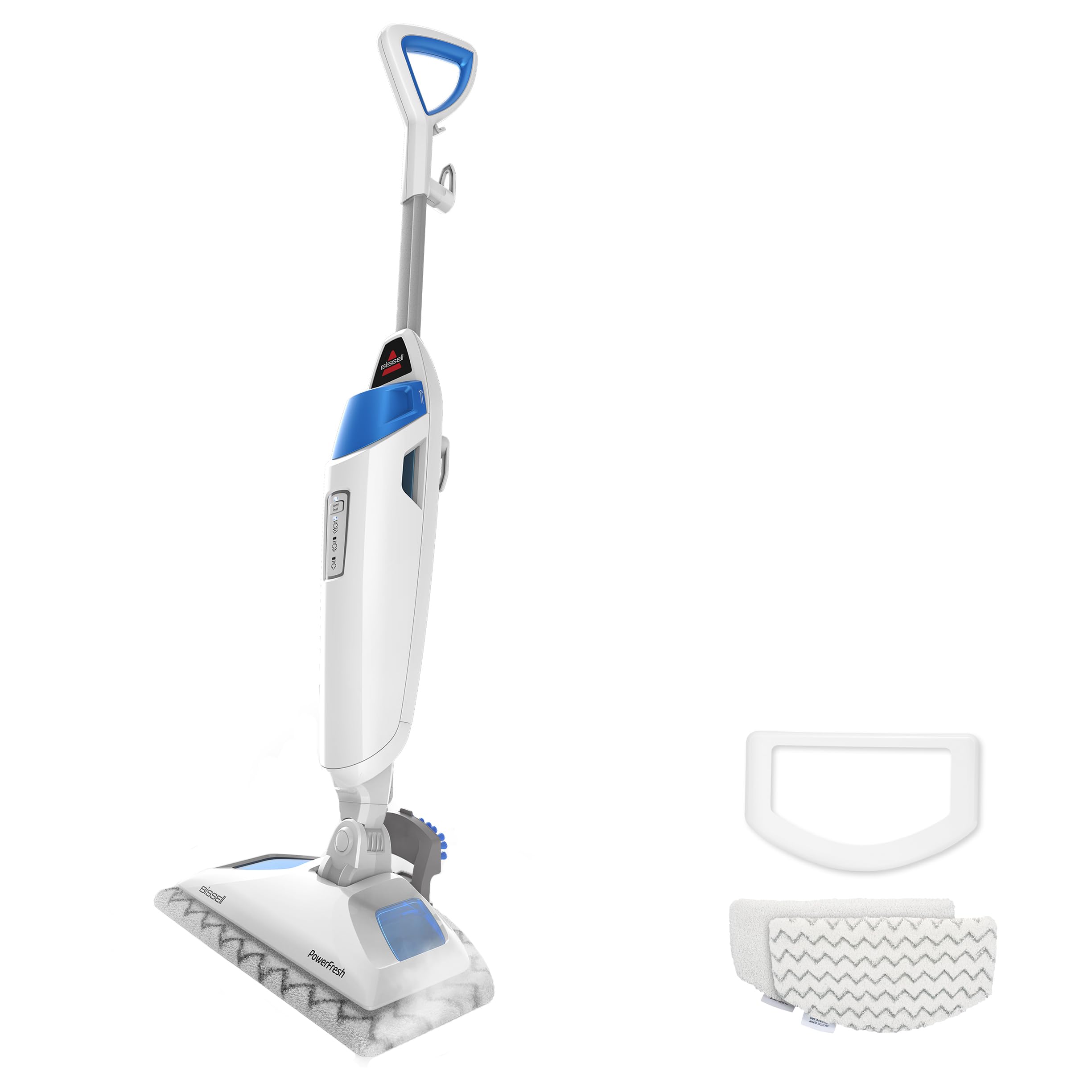
We recommend this steam mop for sealed concrete floors because it heats quickly, handles stuck-on dirt, and offers useful steam control.
Pros
- Heats up in about 30 seconds
- Scrubber helps with dried spills and grout
- Long cord reduces outlet changes
Cons
- Works only on sealed concrete
- Pads can become dirty during larger jobs
- Some users report durability or power issues
We found the PowerFresh easy to assemble and light enough for regular floor cleaning. Its three steam settings let us use less moisture for light dust and more steam for sticky marks.
The flip-down scrubber made a clear difference on dried pet messes and buildup near floor edges. It also helped lift dirt from textured areas without requiring much extra pressure.
The 23-foot cord gave us good reach across a room, while the removable tank made refilling simple. The washable microfiber pads helped control ongoing costs, though we needed extra pads when cleaning a larger area.
For concrete, use this mop only after confirming that the surface has a sealed finish. Unsealed concrete can absorb moisture, which may cause staining or other damage. We also recommend testing a small hidden area first.
PurSteam 10-in-1 Steam Mop

We recommend this versatile steam mop for sealed concrete floors because it heats quickly, moves easily, and also works as a handheld cleaner.
Pros
- Heats up in about 30 seconds
- Swivel head and light frame improve control
- Detachable handheld unit adds useful cleaning options
Cons
- Small water tank may need frequent refills
- Steam output can weaken over time
- Replacement attachments may be difficult to find
We found the PurSteam easy to guide across smooth, sealed concrete. The swivel head reached around furniture, while the washable pads picked up light dirt after we vacuumed first. Steam works best on sealed concrete; avoid using it on unsealed or damaged surfaces.
The mop’s quick heat-up time helped us start cleaning without much waiting. Its 380 ml tank handled small areas well, but larger rooms may require a refill. The unit felt light during use, though the upright handle may not withstand rough handling.
We also liked the detachable steamer for grout lines, corners, fabric, and other small jobs. The many attachments add flexibility, but storing them and replacing lost brushes could be inconvenient.
Shark Steam Pickup 3-in-1

We recommend it for sealed concrete floors when we want to collect light debris and steam-clean in one pass.
Pros
- Picks up small wet and dry messes while cleaning
- Motorized brushroll helps loosen stuck-on spots
- Uses only water on sealed hard floors
Cons
- May need several passes over heavy dirt
- Does not always collect dry debris completely
- Requires cleaning and drying after each use
We found the Shark convenient for daily cleanup because it combines sweeping, scrubbing, and steaming. Its brushroll helped remove small marks from sealed concrete, while the steam left the surface looking clean without chemical residue.
The pickup feature worked best with crumbs and recent spills. For dust, grit, or larger debris, we still preferred a quick sweep or vacuum first. Moving slowly also improved the cleaning results.
The 220 ml water tank handled a small cleaning session, but larger areas may require a refill. We also cleaned and air-dried the brushroll after use to prevent odors and buildup.
Performance reports are mixed, with some users praising its low-moisture cleaning and others noting streaks, weak debris pickup, or steam failures. We would choose it for sealed concrete and routine messes, but not as a replacement for a strong vacuum or deep scrubber.
LABIGO 10-in-1 Steam Mop

We recommend this mop for sealed concrete floors because it heats quickly, offers strong steam, and doubles as a handheld cleaner.
Pros
- Heats in about 10 seconds
- Offers two steam levels
- Includes useful cleaning attachments
Cons
- The 350 ml tank needs refills during longer jobs
- The cord may limit movement in large rooms
- Steam cleaning requires caution on unsealed concrete
We found the LABIGO easy to start and comfortable to move across a sealed concrete floor. The low setting handled regular dust and marks, while the high setting helped loosen dried spills and grime. We avoided holding the mop in one spot for too long, since excess moisture can affect some concrete finishes.
The mop head glided well with the microfiber pad attached. Its long power cord reduced the need to change outlets, although we still needed to manage the cord around furniture. The tank lasted through a short cleaning session, but larger areas may require a refill.
Its detachable handheld unit adds useful flexibility. We used the smaller tools for grout, corners, windows, and other hard surfaces. The attachment set takes some storage space, but the included storage bag helps keep the parts together.
The automatic shutoff provides added safety when the tank runs dry. We recommend this model for sealed concrete, tile, and other heat-resistant surfaces, but we would check the floor manufacturer’s care instructions before using steam.
Wotaste 260°F Steam Mop
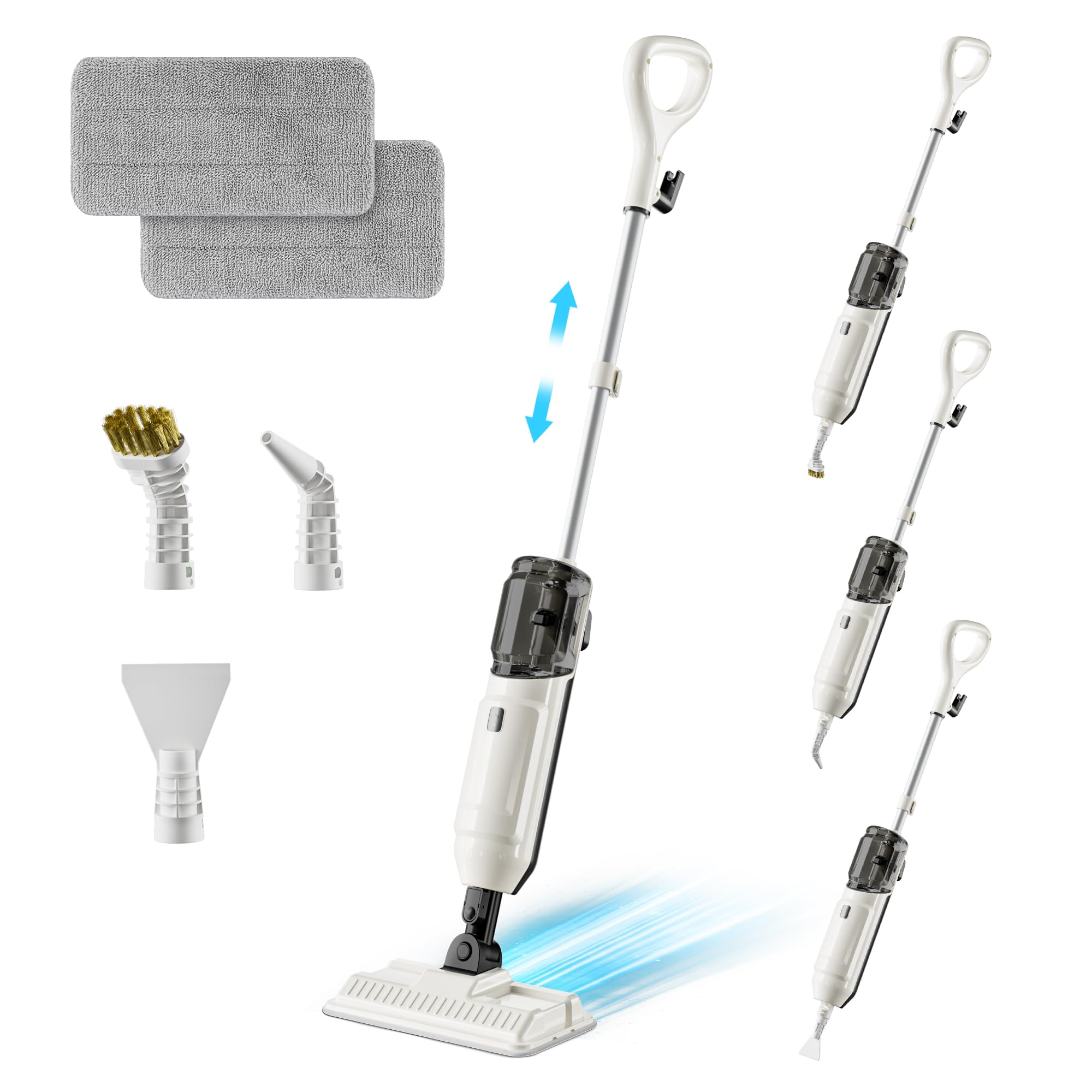
We recommend this steam mop for sealed concrete floors because it heats quickly, glides easily, and offers useful reach for larger cleaning jobs.
Pros
- Heats up quickly for short cleaning sessions
- Large tank reduces refill breaks
- Rotating head and long cord improve reach
Cons
- Corded design limits movement
- Steam may not remove deeply set concrete stains
- We should confirm that concrete floors have a sealed finish before use
We found the Wotaste easy to handle during routine floor cleaning. The mop head rotates smoothly, and its low-angle design helps us reach under furniture and along wall edges. The adjustable handle also makes it easier to find a comfortable height.
Steam begins in about 15 seconds, which helps when we need to clean a small area quickly. On sealed concrete, the heat and washable pad lift everyday dirt, food marks, and pet footprints without adding chemical cleaner.
The 16.9-ounce tank supports longer sessions than many compact steam mops. We also liked the 20-foot cord, which reduced the need to switch outlets across larger rooms.
The included detail tools add flexibility for sinks, tile, counters, and narrow areas. However, the mop is still corded, and steam cannot replace scrubbing for old, rough, or deeply embedded concrete stains.
We should use this model only on sealed concrete and follow the flooring maker’s care instructions. Unsealed concrete may absorb moisture, so testing a hidden spot first remains important.
SENMO 14-in-1 Steam Mop
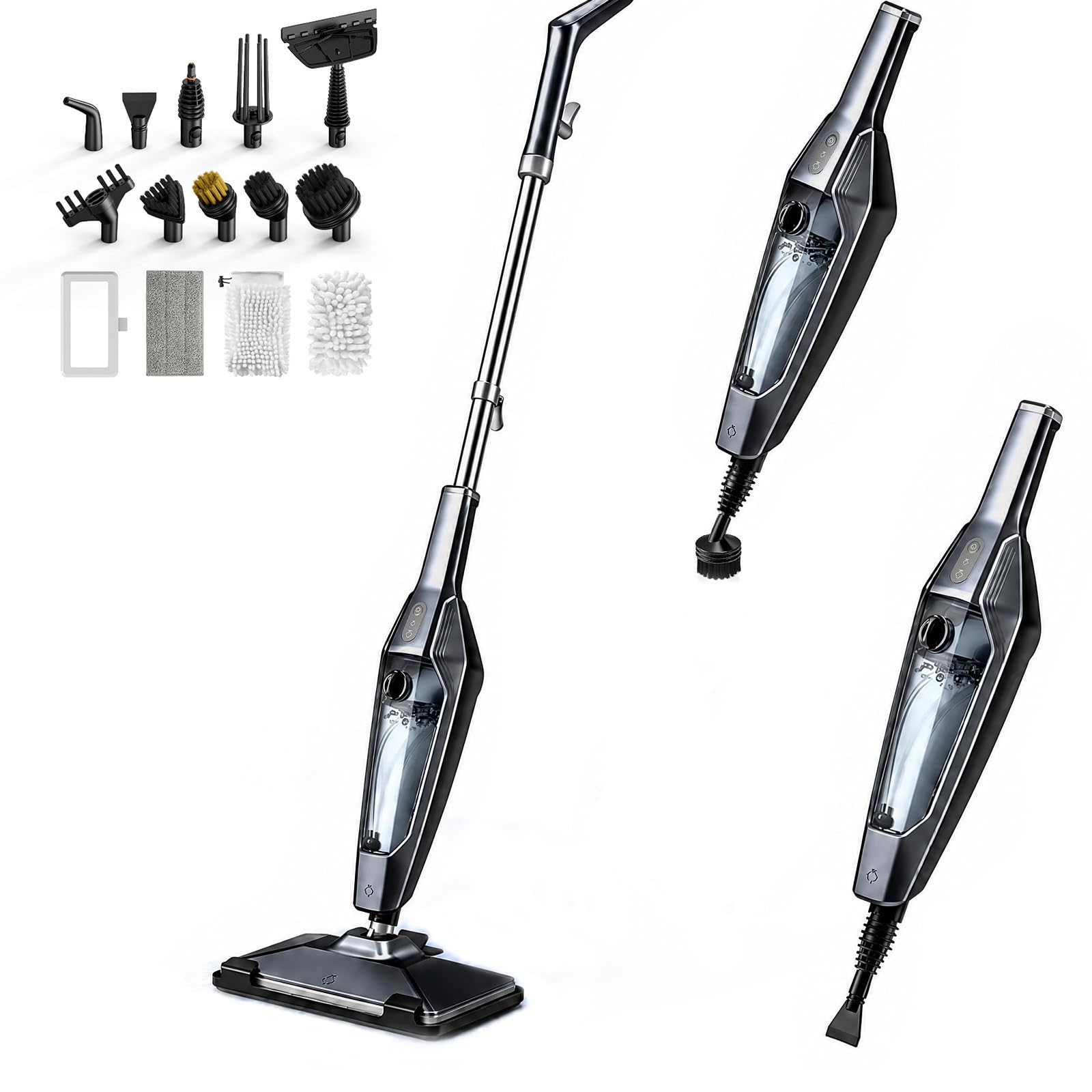
We recommend this steam mop for sealed concrete floors because it heats quickly, offers two steam levels, and works for more than floor cleaning.
Pros
- Heats up in about 20–30 seconds
- Useful attachments for grout, glass, and upholstery
- Long cord and detachable handheld design
Cons
- Corded use limits movement
- Small tank may need refilling for larger spaces
- Steam may not suit unsealed or damaged concrete
We found the SENMO easy to move across sealed concrete. The upgraded pads stayed in contact with the surface and picked up loosened dirt without leaving much moisture behind. The low setting worked well for routine cleaning, while the high setting helped with stuck-on marks.
Steam began quickly, so we did not spend much time waiting before cleaning. The 16-foot cord gave us enough reach for most rooms, although we still needed an outlet change in larger areas.
The detachable handheld unit adds useful flexibility. We used the brushes and nozzle attachments around grout, sinks, appliances, and other tight spaces. The 400 mL tank handled short cleaning sessions well, but larger floors may require a refill.
Use this mop only on properly sealed concrete. Steam and moisture can enter cracks or porous areas, which may cause problems over time.
Mxnsewr 11-in-1 Steam Mop

We recommend this steam mop for sealed concrete floors because it heats quickly, offers adjustable steam, and includes tools for more than floor cleaning.
Pros
- Heats up quickly and produces steady steam
- Flexible head reaches under furniture
- Includes several useful cleaning attachments
Cons
- Requires sealed concrete and careful moisture control
- The handheld mode may feel less convenient for large areas
- The many attachments need storage space
We found the mop light and easy to move across smooth flooring. The adjustable steam helped us use less moisture on concrete, which matters because standing water can seep into small cracks or unfinished areas.
The mop head turns easily and reaches into corners and under low furniture. Its long power cord also reduces the need to change outlets while cleaning a room.
The detachable handheld unit adds value for grout, sinks, glass, and other surfaces. We liked having one cleaner for several tasks, though switching between the attachments takes extra time.
The 450 ml tank supports longer cleaning sessions, but we would still check the floor’s seal before use. Avoid using steam on unsealed or damaged concrete, and test a small hidden area first.
BISSELL SpinWave SmartSteam

We recommend this mop for sealed concrete floors because its rotating pads add scrubbing power while adjustable steam handles everyday dirt and stuck-on spots.
Pros
- Rotating pads scrub while the steam loosens grime
- Two steam levels plus a no-steam setting
- Washable pads, swivel steering, and a quiet motor
Cons
- The cord limits where we can clean
- Some users report early failures
- The water tank can be difficult to remove
On sealed concrete, we found the SpinWave SmartSteam easy to guide around furniture and along edges. The dual pads helped lift dull, dirty areas better than a basic steam mop, while the swivel head kept the handle responsive.
Steam became ready in about 20 seconds, so we spent little time waiting between rooms. We also liked choosing lower steam or no steam when a section needed gentler cleaning. The LED display made the settings easy to check while we worked.
The larger tank reduced refill stops during longer cleaning sessions. Afterward, we placed the microfiber pads in the washing machine instead of replacing disposable pads.
We would use this mop only on properly sealed concrete. Steam can harm unsealed or damaged surfaces, so we recommend checking the floor maker’s care instructions first. Some customer reports also mention reliability problems, which makes the warranty worth reviewing before purchase.
McCulloch MC1385 Canister Steam Cleaner

We recommend the MC1385 for sealed concrete floors when we want strong steam, long cleaning sessions, and tools for more than just floors.
Pros
- Strong, adjustable steam helps loosen stuck-on dirt
- Large tank reduces refill stops
- Many attachments handle grout, windows, and other surfaces
Cons
- Takes space and feels heavier than a steam mop
- Requires time to heat before use
- Some users report leaks or early failures
We found the canister design useful for cleaning large sealed concrete areas. The floor attachment moved smoothly, while the adjustable steam control helped us use less moisture for routine cleaning and more power on stubborn marks.
The large tank supported longer sessions without frequent refills. The long cord and hose also gave us good reach, although pulling the canister around felt less convenient than pushing a slim upright mop.
The included brushes and nozzles made this a flexible choice for grout lines, corners, vehicles, and fixtures. We would avoid using steam on unsealed or damaged concrete, since moisture can enter porous areas and cause problems.
This cleaner suits shoppers who want one machine for floors and detailed cleaning tasks. It may not fit those who prefer a lightweight, quick-start mop for small spaces.
Buying Guide
We should choose a steam mop that suits the concrete floor’s finish and cleaning needs. Sealed concrete usually handles moisture better than unsealed concrete, while unsealed surfaces may absorb water and develop stains or damage.
Look for these features:
- Adjustable steam control: Lets us use less moisture on sensitive surfaces.
- Washable microfiber pads: Capture dirt without scratching and reduce ongoing costs.
- Quick heat-up: Shortens the wait before cleaning.
- Long power cord: Helps us cover larger rooms without changing outlets.
- Easy water tank access: Makes refilling and emptying simpler.
- Strong maneuverability: A flexible head helps us clean around furniture and tight edges.
- Low weight: Reduces strain during longer cleaning sessions.
- Automatic shutoff: Adds protection if the tank runs dry or the mop remains still.
| Feature | What we should check |
|---|---|
| Floor compatibility | Instructions that allow use on sealed concrete |
| Steam settings | Multiple levels or a low-moisture option |
| Pad design | Secure fit, soft material, and machine washing |
| Tank size | Enough capacity for the area we clean |
| Warranty | Clear coverage and accessible support |
We should read the floor manufacturer’s care instructions before using steam. Testing the mop on a small, hidden area helps us check for discoloration, excess moisture, or changes to the finish.
Editor’s Choice
We choose the Bissell PowerFresh Slim Steam Mop for most sealed concrete floors. Its adjustable steam control lets us use lighter steam for routine cleaning and stronger steam for stubborn marks.
The slim design helps us clean open floor areas, edges, and narrow spaces without carrying a bulky machine. Its lift-off handheld unit also works on compatible sealed surfaces, such as grout lines and some tile.
| Feature | Why it matters |
|---|---|
| Adjustable steam | Helps limit excess moisture on concrete |
| Swivel mop head | Improves control around furniture |
| Washable mop pads | Reduces ongoing supply costs |
| Handheld mode | Adds cleaning flexibility |
We should confirm that the concrete has a sealed, steam-safe finish before use. Unsealed or damaged concrete can absorb moisture, while some coatings may soften, haze, or lose their finish under high heat.
We recommend vacuuming or sweeping first, then using short steam passes with a clean pad. We should avoid leaving the mop in one place and dry the floor promptly if moisture remains.
Conclusion
We should choose a steam mop based on our concrete floor’s finish, size, and cleaning needs. A model with adjustable steam control, washable pads, and a reliable water tank gives us better control and reduces repeated passes.
For sealed concrete, steam cleaning can help remove everyday dirt without adding chemical residue. We should check the floor manufacturer’s care instructions first and avoid steam on unsealed, cracked, or damaged surfaces.
The best choice depends on our priorities:
- For regular cleaning: Choose a lightweight mop with washable pads.
- For larger areas: Choose a model with a longer power cord and larger tank.
- For sensitive finishes: Choose adjustable steam settings.
- For easier storage: Choose a compact mop with a removable handle or slim design.
We should also let the floor cool and dry before walking on it. With the right settings and proper care, a suitable steam mop can support a simple cleaning routine for sealed concrete floors.
FAQS
Can we use a steam mop on concrete floors?
Yes, we can use a steam mop on sealed concrete floors. The sealant helps protect the surface from moisture and heat. We should avoid steam on unsealed, cracked, or damaged concrete because water may enter the pores.
Can steam damage sealed concrete?
Steam can damage some sealants, especially if the finish is old, weak, or not designed to handle heat. We should check the floor maker’s care instructions and test the mop on a small hidden area first.
What steam setting should we use?
We should start with the lowest effective steam setting. Use slow, steady passes, and avoid leaving the mop in one place. A microfiber pad helps collect dirt and limits excess moisture.
Do we need cleaning products with a steam mop?
Usually, no. Steam mops work with water, and adding chemicals to the tank may damage the machine or leave residue. We should follow the manufacturer’s instructions for the correct water type.
How often can we steam-clean concrete floors?
We can steam-clean sealed concrete when needed, but daily use may wear down some finishes. Regular sweeping or vacuuming removes grit and reduces the need for deep cleaning.
What should we do after steaming?
We should let the floor dry fully before walking on it or placing rugs back down. If moisture remains, wipe the area with a clean, dry microfiber cloth.