
10 Best Steam Mops for Tile Floors: Top Picks for Deep Cleaning

Tile floors are durable and easy to maintain, but dirt can collect in grout lines and textured surfaces. Steam mops use heated water to loosen grime without requiring a bucket or chemical cleaner, making them a useful option for routine cleaning.
The best steam mops for tile floors heat up quickly, glide easily, reach grout lines, and offer useful control over steam output. We also look for washable pads, simple controls, a water tank that lasts through a cleaning session, and a design that is easy to store. Check your tile and grout manufacturer’s care instructions before using steam, since heat and moisture can damage some surfaces.
We tested and compared steam mops to find the models that clean tile floors effectively while making everyday maintenance simpler.
Best Steam Mops for Tile Floors
We selected the best steam mops for tile floors based on cleaning performance, ease of use, heat-up time, and useful features. Our list includes options for routine cleaning, stubborn stains, and different home sizes.
Shark Steam & Scrub

We recommend this steam mop for sealed tile floors because its rotating pads help lift stuck-on dirt with less effort.
Pros
- Rotating pads make scrubbing easier
- Three steam settings suit different messes
- LED headlights help reveal hidden debris
Cons
- The small water tank may need refilling
- Some users report steam or scrubbing failures
- It may leave marks when cleaning very dirty floors
We found the Shark Steam & Scrub easy to guide across tile. The powered pads moved the mop forward while loosening residue that a standard steam mop might leave behind. Its Light, Normal, and Deep settings also made it easier to match the steam level to each mess.
The LED headlights helped us spot crumbs and dust near cabinets and baseboards. The mop felt light enough for regular cleaning, and the flexible head reached close to edges.
We would wash or replace the pads often, especially after cleaning greasy floors. The water tank is not large, so larger areas may require a refill. We also noted customer reports of units losing steam or stopping the scrub function after a few months. Use it only on sealed floors and follow the sanitizing instructions in the owner’s guide.
BISSELL PowerFresh Steam Mop
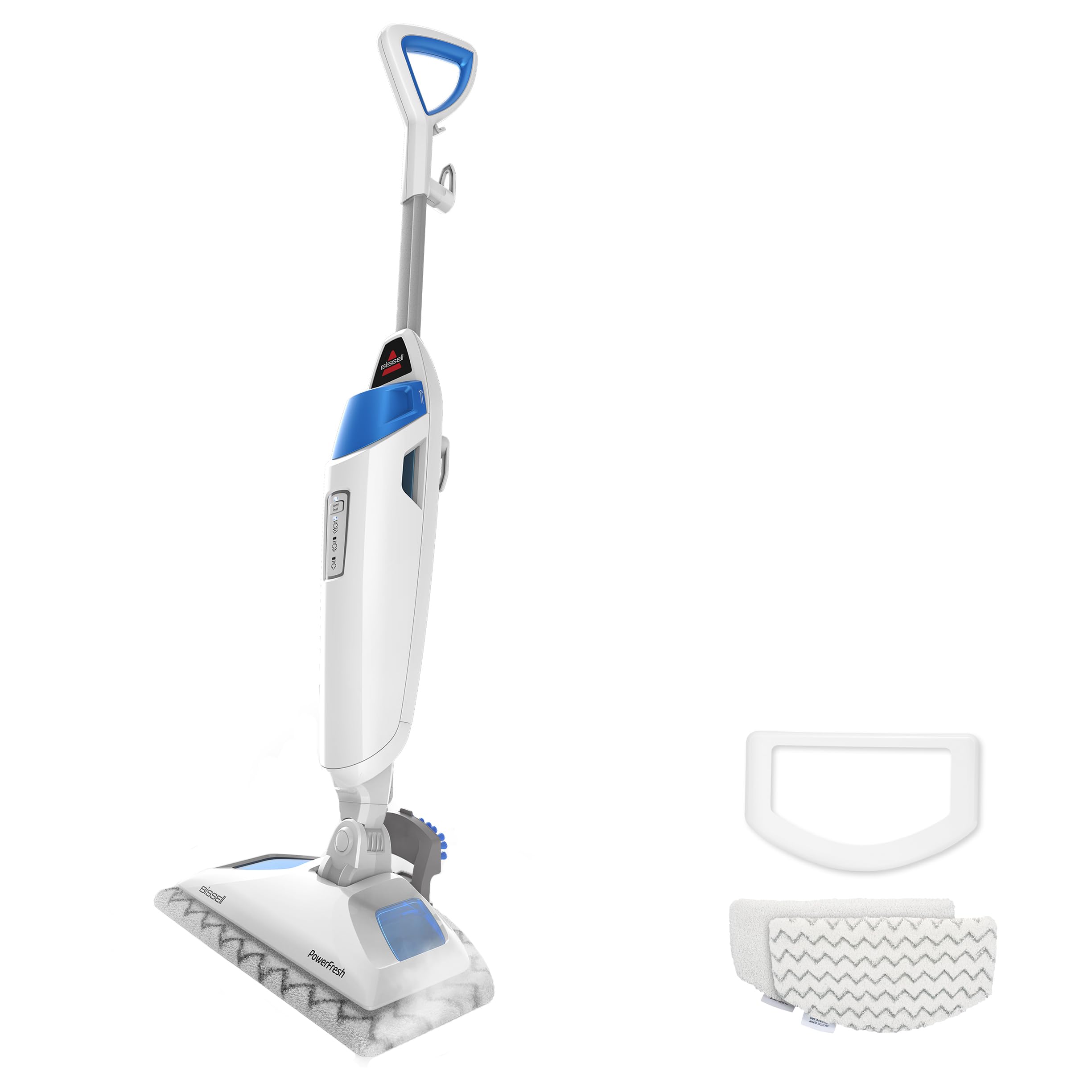
We recommend this steam mop for sealed tile floors because it heats quickly, handles dried-on grime, and offers useful steam settings.
Pros
- Flip-down scrubber helps loosen grout buildup.
- Long cord reduces outlet changes.
- Washable microfiber pads lower ongoing costs.
Cons
- Corded design limits movement.
- Pads can become dirty during larger jobs.
- It works only on sealed hard floors.
We found the PowerFresh simple to assemble and ready to use after a short warm-up. Its light frame glided across tile without much effort, while the 23-foot cord gave us enough reach for most rooms.
The scrubber made the biggest difference on dried food and sticky spots. We used the lower steam setting for light cleaning and increased the steam for tougher areas. The mop also refreshed grout lines, though heavily stained grout still needed extra work.
The removable tank was easy to fill at the sink, and the washable pads handled routine cleaning well. We kept an extra pad nearby because the first one became damp and dirty during longer sessions.
BISSELL says the mop eliminates 99.9% of germs, bacteria, and viruses when used as directed with the microfiber pads. We recommend checking the flooring manufacturer’s instructions before using steam, especially on sealed wood or older tile.
The PowerFresh uses a standard corded design and supports 120-volt operation, so international buyers should confirm compatibility. Its scent discs are optional, and we preferred using the mop without them when cleaning around pets or people sensitive to fragrance.
Shark SteamSpot Steam Mop

We recommend this lightweight steam mop for sealed tile floors because its targeted steam blast helps loosen stuck-on messes without cleaning chemicals.
Pros
- Targeted steam helps with dried spills and grout-area dirt
- Three steam settings suit quick and deeper cleaning
- Removable tank and washable pads simplify routine use
Cons
- The water tank may need frequent refills during larger jobs
- Some users report leaks or steam problems after limited use
- Steam mops should not be used on unsealed tile or damaged grout
We found the SteamSpot easy to move across tile, including around furniture and in tighter spaces. It heats in about 25 seconds, and the 4.8-pound design feels manageable during longer cleaning sessions.
The Steam Blaster button adds focused steam to stubborn spots. We liked using the deep setting for dried food and tracked-in dirt, while the light setting worked better for quick touch-ups.
The washable Dirt Grip and Scrub pads help pick up loosened grime, and floors dry fairly quickly after cleaning. The 500 ml removable tank holds enough water for routine rooms, but larger homes may require a refill.
Shark says the mop removes 99.9% of common household bacteria with water when used as directed. We recommend checking the care instructions for your tile and grout before using steam, since heat and moisture can damage some surfaces.
PurSteam 10-in-1 Steam Mop

We recommend this versatile steam mop for tile floors when we want quick heating, easy handling, and tools for more than floor cleaning.
Pros
- Heats quickly and glides easily across tile
- Detachable handheld steamer adds useful cleaning options
- Swiveling head reaches around furniture
Cons
- Small water tank may require refills during larger jobs
- Some attachments may be difficult to replace
- The handle and accessories may not hold up to heavy use
We found the PurSteam ready to use after a short warm-up, which helped when cleaning small messes on tile. The mop head moved smoothly around table legs and cabinets, while the microfiber pad picked up loosened dirt without adding cleaning chemicals.
The detachable handheld unit made it easier for us to clean grout lines, tight corners, and other small areas. The included brushes and nozzle add flexibility, although changing between attachments takes more time than using the mop on open floors.
For larger rooms, we needed to watch the water level because the tank is fairly compact. The folding handle also helped with storage, but long-term durability may vary; some owners report broken parts after extended use. We would choose this model for routine tile cleaning and light household tasks rather than demanding daily work.
Wotaste Steam Mop
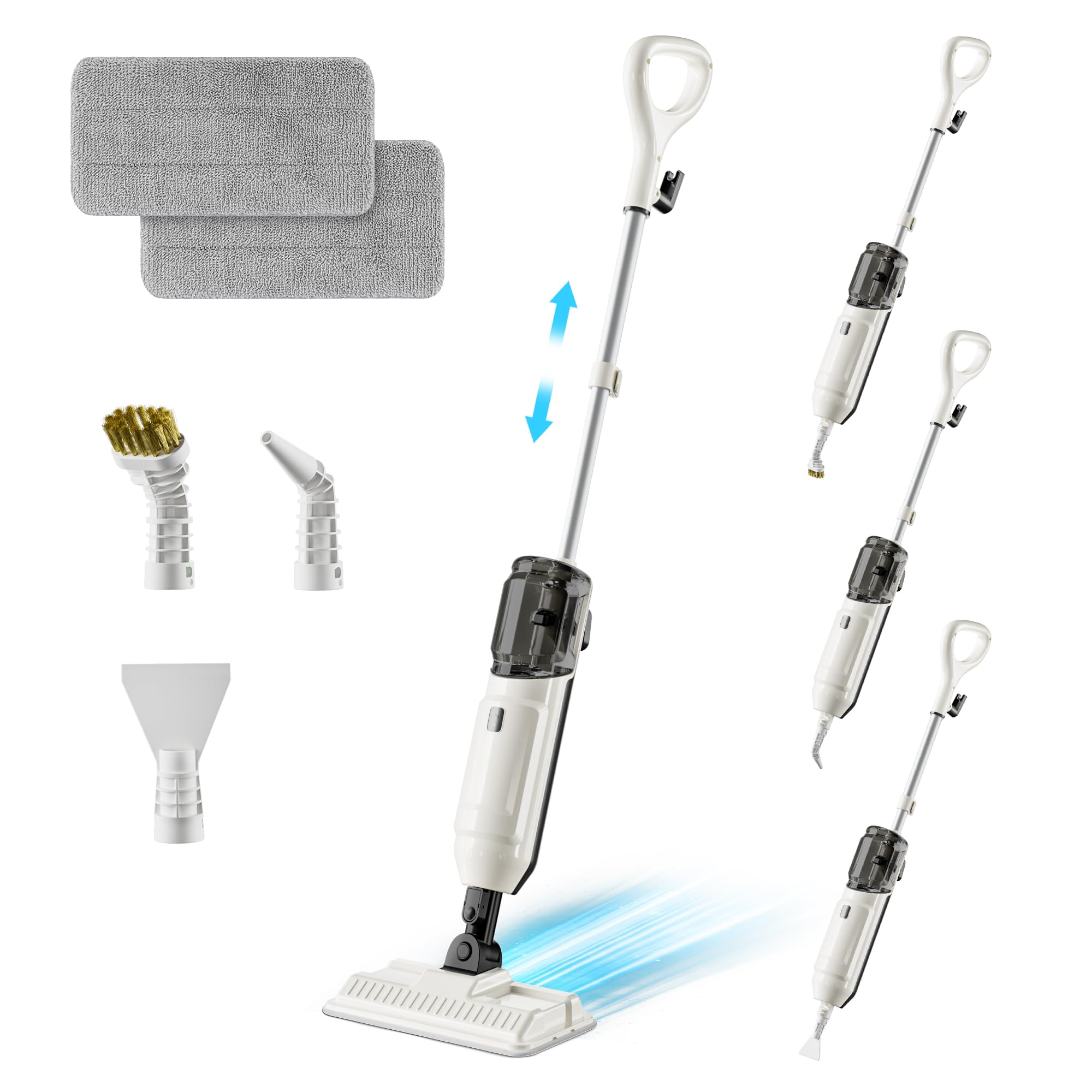
We recommend this steam mop for tile floors because it heats quickly, glides easily, and includes tools for more than floor cleaning.
Pros
- Heats up quickly for short cleaning sessions
- Large tank reduces refill breaks
- Rotating head reaches corners and low spaces
Cons
- Some users report faulty units
- The included pads may need frequent washing
- Steam cleaning may not suit every floor finish
We found the Wotaste easy to assemble and light enough to move across tile without much effort. The mop head turns smoothly, which helps us clean around furniture and along wall edges.
Steam builds quickly, so we can start cleaning soon after filling the tank. On tile, it lifted tracked-in dirt and common kitchen messes without requiring chemical cleaner. The washable pads also make routine use more practical.
The 16.9-ounce tank supports longer cleaning sessions than many compact steam mops. Its long power cord gives us useful reach, while the self-standing design makes brief pauses and storage simpler.
The included angled nozzle, detail brush, and scraping tool add value for sinks, counters, and grout-related touch-ups. However, several reviews mention defective units, overheating, or weak performance, so we should inspect the mop carefully after delivery and follow the safety instructions.
LABIGO 10-in-1 Steam Mop

We recommend this steam mop for tile floors if we want quick heating, flexible attachments, and useful handheld cleaning power in one tool.
Pros
- Heats up quickly and offers two steam levels
- Cleans tile, grout, glass, fabric, and other surfaces
- Includes washable pads and many useful attachments
Cons
- The 350 ml tank may need refilling during larger jobs
- Steam can stop when we press the mop too firmly
- Some users report occasional leaks
We found the LABIGO easy to assemble and ready to use after a short wait. On tile floors, the steam helped loosen stuck-on dirt, while the mop head made it easy to cover open areas. The two steam settings gave us better control around grout and less dirty sections.
The detachable handheld unit added value for smaller tasks. We could use the included brushes around grout, sinks, and tight corners, then switch to the window tool or fabric attachments. The range of accessories makes this more useful than a basic floor-only mop.
The water tank lasted long enough for short cleaning sessions, but larger rooms may require a refill. We also found that pushing down too hard could limit the mop’s movement or reduce steam flow. For the best results, we used light pressure and avoided adding cleaning chemicals, which can clog the steam nozzle.
SENMO 14-in-1 Steam Mop
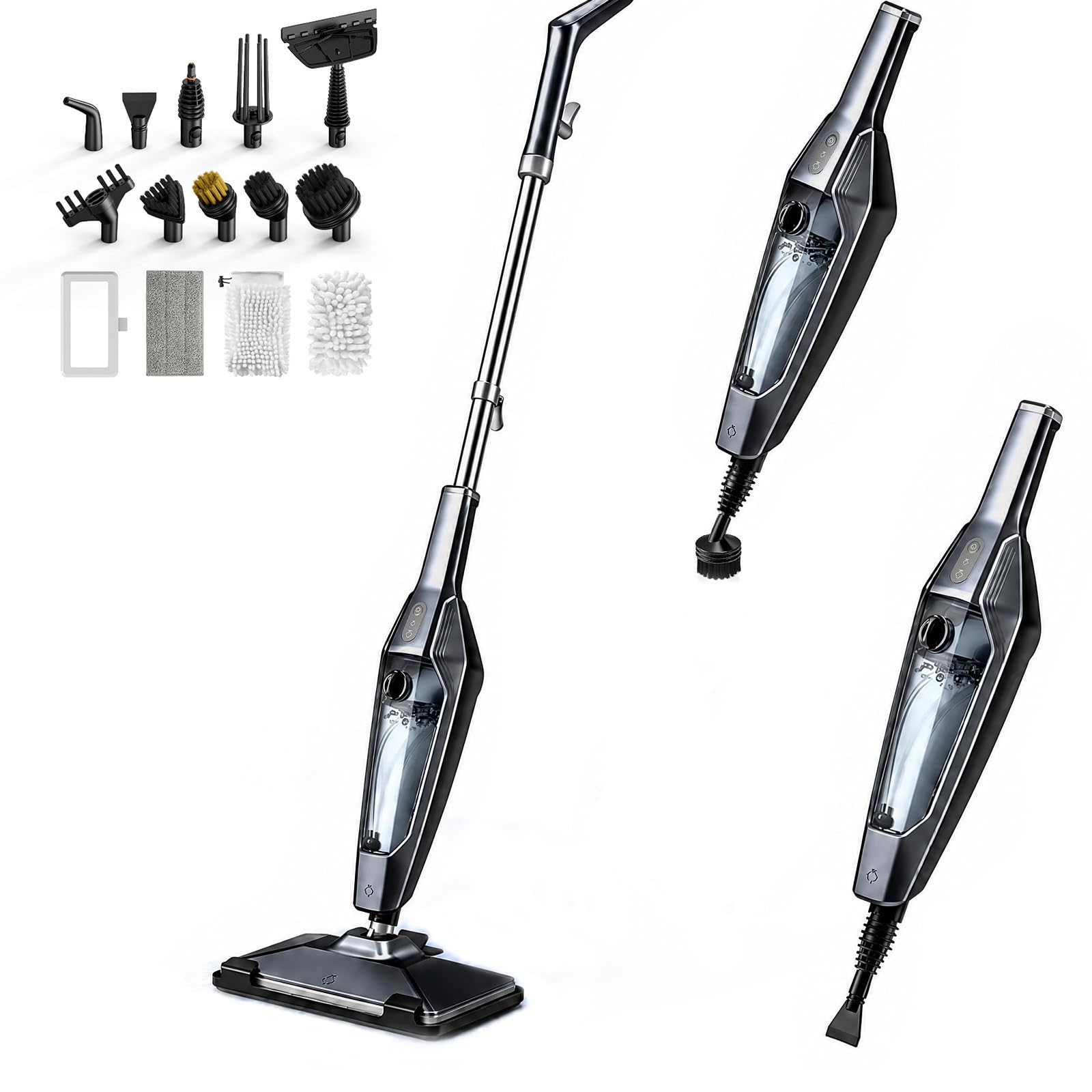
We recommend this steam mop for tile floors because it heats quickly, offers adjustable steam, and includes tools for grout and other surfaces.
Pros
- Low and high steam settings suit light and heavy cleaning.
- Upgraded pads pick up loosened dirt well.
- Converts to a handheld cleaner for grout, sinks, and windows.
Cons
- The cord may feel limiting in larger rooms.
- Many attachments require extra storage space.
- Steam cleaning still requires wiping away loosened grime.
We found the SENMO easy to prepare, with steam ready in about 20 to 30 seconds. On tile, the high setting helped soften dried spills and tracked-in dirt, while the low setting worked better for routine cleaning.
The mop pads made good contact with the floor and collected the moisture left behind. We liked having a 16-foot cord, since it reduced the need to change outlets while cleaning several areas.
For tile floors, the handheld mode adds useful flexibility. We could use the included brushes and nozzles around grout lines, sinks, and fixtures instead of reaching for a separate cleaner.
The 400 mL tank provided enough water for a normal cleaning session, though larger homes may require a refill. We also found the accessory set useful, but storing all 14 pieces may take planning.
Kenmore S300 Steam Spin Mop
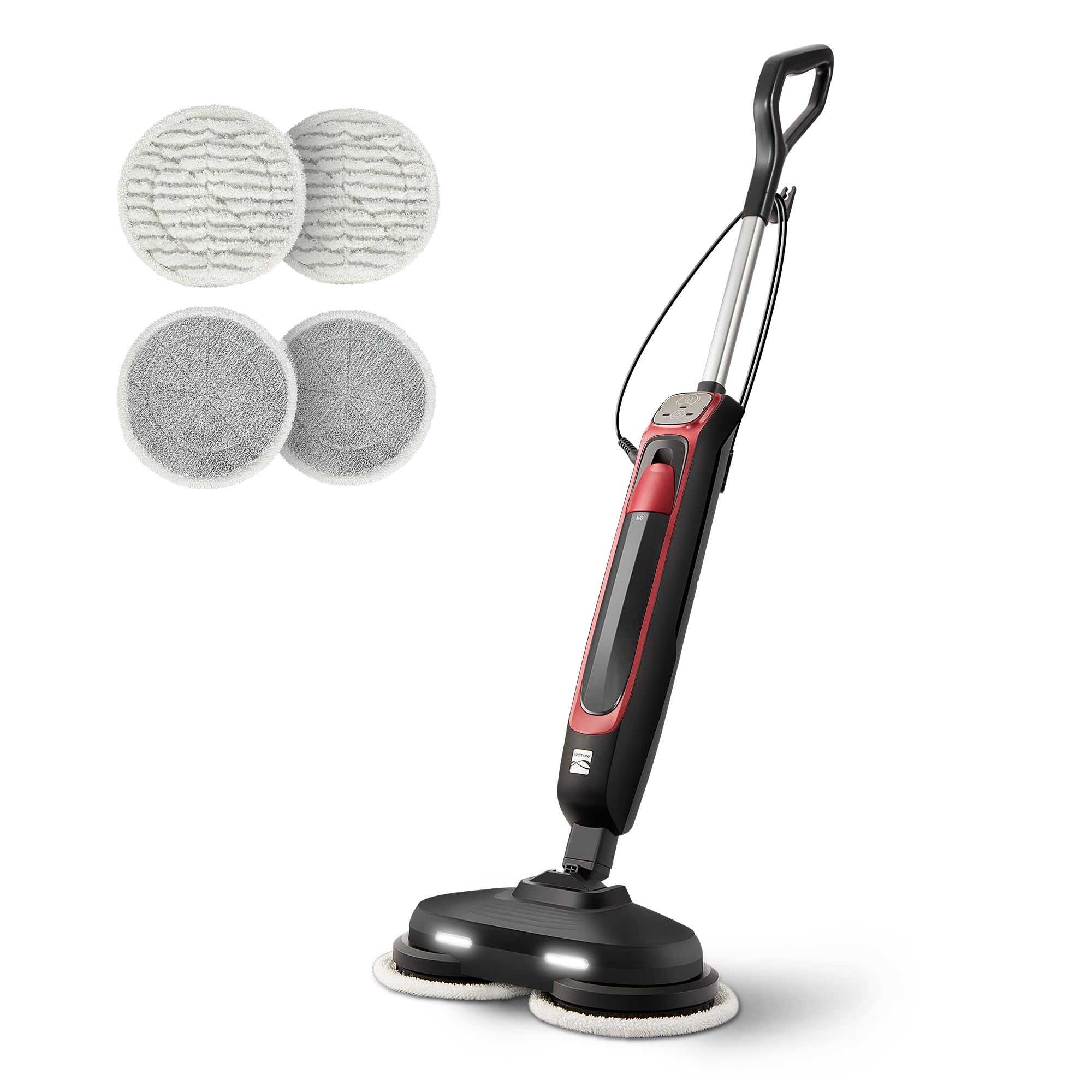
We recommend this mop for sealed tile floors because its rotating pads add scrubbing power while the steam loosens stuck-on grime.
Pros
- Rotating pads help lift stubborn marks
- Heats up in about 25 seconds
- Washable pads reduce ongoing waste
Cons
- The cord limits where we can clean
- We need to refill the tank for larger areas
- Extra pads may help during longer cleaning sessions
When we used the Kenmore S300, the spinning pads made more of a difference than a standard steam mop on dirty tile. The low steam setting handled routine cleaning, while the higher setting helped with dried spots and oily bathroom residue.
The swivel head moved around toilets, cabinets, and furniture without much effort. LED headlights also helped us see dust and hair along edges and under darker furniture.
We liked that the mop includes reusable microfiber and cotton pads. They collected dirt well and washed clean, although we would want additional pads for cleaning several rooms at once.
The mop requires cold water only, and we would avoid adding any cleaning solution to the tank. Since it uses a power cord, it works best when an outlet stays close to the area we are cleaning.
BISSELL SpinWave SmartSteam

We recommend it for sealed tile floors when we want steam cleaning plus extra scrubbing power from rotating pads.
Pros
- Rotating pads help lift stuck-on marks
- Two steam levels plus a no-steam setting
- Quiet, smooth movement with useful headlights
Cons
- Some users report early motor or power failures
- The water tank can be difficult to remove
- The cord limits movement around larger rooms
When we used the SpinWave SmartSteam, the dual pads made more contact with tile than a basic steam mop. The spinning action helped loosen dull, high-traffic spots without requiring hands-and-knees scrubbing.
Steam became ready quickly, and the controls made it simple to switch between settings. We liked using lower steam on routine cleaning and stronger steam for dried spills. The swivel head also helped us reach around furniture and along baseboards.
The mop moved quietly and felt balanced during longer cleaning sessions. Its washable microfiber pads reduced waste, while the larger tank helped us cover a sizable area before refilling.
We would check the floor manufacturer’s care instructions before using steam. We also found mixed reports about durability, including units that stopped working soon after purchase, so the warranty deserves attention before buying.
BISSELL CrossWave HydroSteam

We recommend this cleaner for households that need to vacuum, wash, and steam tile floors in one pass.
Pros
- Combines vacuuming, washing, and steaming
- Handles pet hair and sticky spills well
- Self-cleaning cycle reduces cleanup work
Cons
- Feels heavy during use
- Uses water quickly in steam mode
- Requires a cord and regular maintenance
We found the CrossWave HydroSteam useful on tile floors with dried food, muddy paw prints, and loose pet hair. Its brushroll picked up debris while the cleaning solution helped loosen sticky spots, so we did not need to sweep and mop separately.
The dual-tank design kept clean water apart from dirty water. We also liked the one-touch cleaning cycle, which rinsed the brushroll after use. We still needed to empty the dirty tank and rinse several parts by hand.
At about 12.5 pounds, the machine felt heavier than a basic steam mop. The cord limited movement, and the water supply ran down faster when we used the steam setting. For homes with pets or frequent spills, its combined cleaning action may justify those trade-offs.
Buying Guide
We should choose a steam mop based on our tile type, cleaning needs, and floor size. Sealed ceramic and porcelain tile usually tolerate steam, but we should check the flooring and grout instructions before use. Avoid steam on unsealed tile, porous stone, damaged grout, or surfaces that may react to heat and moisture.
| Feature | What we should look for |
|---|---|
| Steam control | Adjustable settings help us match steam output to different dirt levels and surfaces. |
| Heat-up time | A short wait makes routine cleaning easier. |
| Water tank | A larger tank suits bigger floors, while a smaller tank keeps the mop lighter. |
| Mop head | A swivel head and washable pads can improve coverage and reduce ongoing costs. |
| Cord length | A longer cord lets us clean more area without changing outlets. |
| Weight | A lighter design helps us carry and guide the mop with less effort. |
| Accessories | A grout brush or handheld tool may help with edges and narrow areas. |
We should check whether the mop leaves excess water behind. Tile floors need enough steam to loosen soil, but too much moisture can collect in grout lines and along edges.
Ease of use also matters. Look for a comfortable handle, simple controls, an easy-fill tank, and pads that attach and remove without much effort. We should confirm that replacement pads are available and washable if we want to limit recurring purchases.
Finally, we should review the warranty, safety instructions, and return policy. A product with clear care instructions and suitable support can make ownership easier.
Editor’s Choice
We choose the Bissell PowerFresh Steam Mop as our top pick for tile floors. Its adjustable steam control helps us match the steam level to different tile surfaces, while the swivel head makes it easier to clean around toilets, cabinets, and furniture.
The mop includes washable microfiber pads and a built-in scrubber for stuck-on dirt. We also value its long power cord, which reduces the need to change outlets during cleaning.
| Feature | Why it matters |
|---|---|
| Adjustable steam control | Helps protect grout and delicate surfaces |
| Swivel head | Improves movement around obstacles |
| Washable pads | Reduces ongoing supply costs |
| Built-in scrubber | Loosens dried spills and tracked-in dirt |
We recommend vacuuming or sweeping first so loose grit does not spread across the floor. We should also test steam on a small hidden area and avoid leaving the mop in one spot for too long, especially on older tile or worn grout.
Conclusion
We should choose a steam mop based on our tile type, floor size, and cleaning needs. A model with adjustable steam control works well for delicate surfaces, while a larger water tank can reduce refills in bigger rooms.
For most homes, we should look for:
- Washable microfiber pads for regular cleaning
- Fast heat-up times for quicker use
- Adjustable steam settings for better control
- A comfortable handle and swivel head for easier movement
- A long power cord to cover more floor space
We should check the tile and grout manufacturer’s care instructions before using steam. Sealed tile and grout generally handle steam better than unsealed surfaces, which may absorb moisture or suffer damage.
Regular sweeping or vacuuming also helps protect tile floors. Removing loose dirt first prevents grit from spreading during mopping and helps the steam mop clean more effectively.
FAQs
Can we use a steam mop on all tile floors?
We can use steam mops on most sealed ceramic and porcelain tile floors. We should avoid steam on unsealed tile, damaged grout, or surfaces with loose tiles unless the manufacturer approves it.
Does steam cleaning remove grout stains?
Steam can loosen surface dirt and some stains, but it may not remove deep discoloration. We should use a soft brush and a tile-safe cleaner when the floor maker allows it.
Can steam damage grout?
Frequent steam use may weaken old, cracked, or poorly sealed grout. We should check the grout first and keep the mop moving instead of holding it in one spot.
Should we vacuum before steaming?
Yes. We should sweep or vacuum first to remove grit and hair. This helps prevent scratches and lets the steam mop clean more effectively.
How often should we steam tile floors?
We can steam clean as needed, based on foot traffic and spills. Regular sweeping and prompt spot cleaning reduce how often we need a deep clean.
What features should we look for?
- Adjustable steam control
- A washable microfiber pad
- A long power cord
- A swivel head
- A quick heat-up time
- A water tank we can refill safely
Can we add cleaner to the water tank?
We should use only water unless the manufacturer specifically permits a cleaning solution. Added chemicals can damage the mop or leave residue on the tile.