
10 Best Steam Mops for Vinyl Floors: Top Picks for Safe Cleaning

Steam mops use heated water to loosen dirt and lift light grime from hard floors without traditional cleaning chemicals. They can make routine cleaning faster, but vinyl floors need careful treatment because too much heat or moisture may damage the surface or weaken the adhesive beneath it.
For vinyl floors, we recommend choosing a steam mop with adjustable steam, a low-moisture setting, and a soft, washable pad. A lightweight design, easy controls, and a mop head that reaches corners can also make regular cleaning more convenient. Before buying, check the flooring manufacturer’s care instructions, since some vinyl products do not allow steam cleaning.
We compared steam mops for cleaning performance, control, handling, and floor-safe features to find the models that work best on vinyl floors.
Best Steam Mops for Vinyl Floors
We selected the best steam mops for vinyl floors based on cleaning performance, ease of use, safety features, and user feedback. Our list includes options for different floor-care needs and budgets.
Shark Steam Pocket Mop
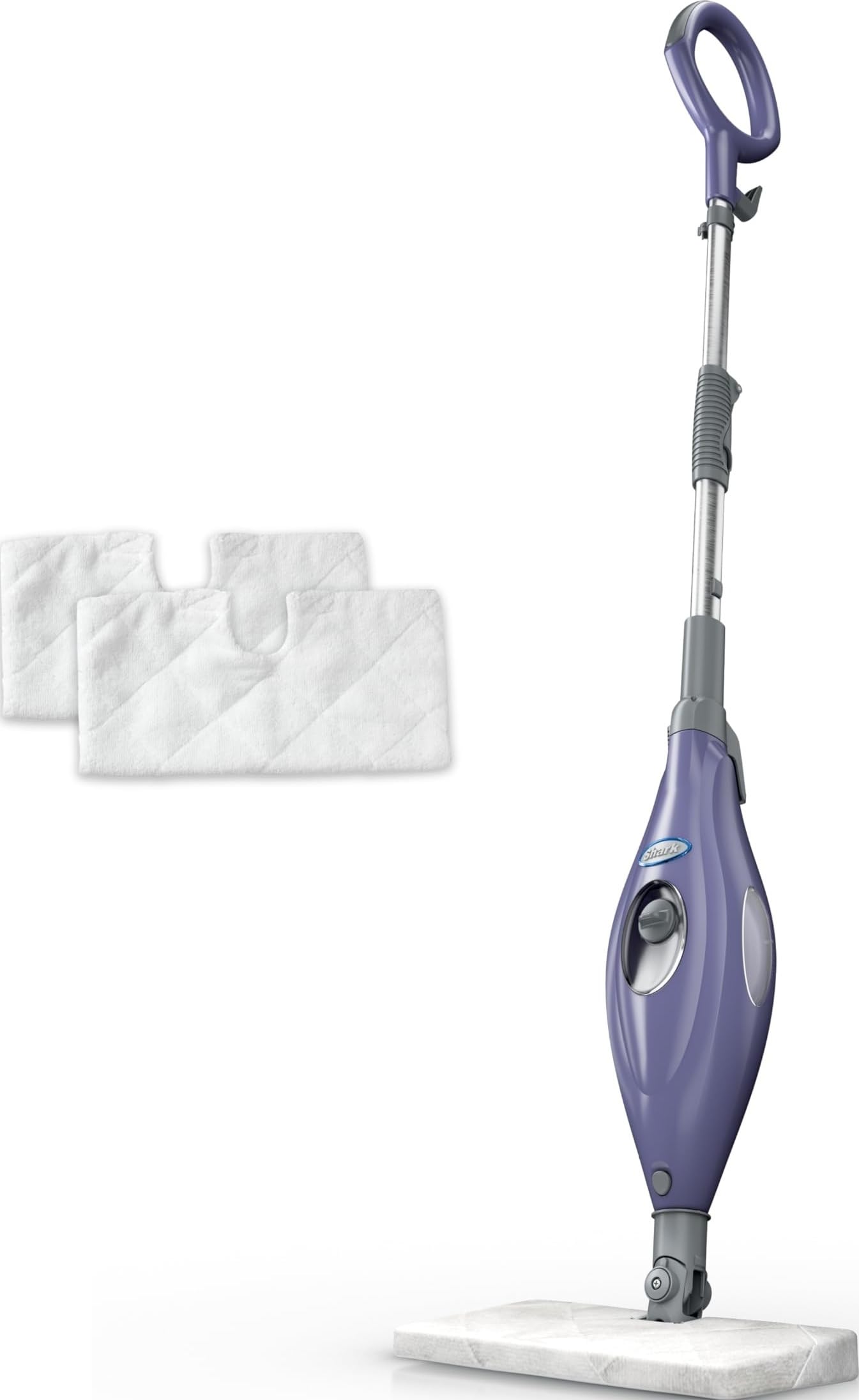
We recommend this lightweight steam mop for sealed vinyl floors because it heats quickly, turns easily, and cleans without added chemicals.
Pros
- Heats up in about 30 seconds
- Double-sided washable pads extend cleaning sessions
- Swivel head handles furniture and tight spaces well
Cons
- The cord limits movement
- The water tank may need refilling in larger rooms
- Steam can damage vinyl if the flooring is not sealed or the mop stays in one spot
We found the Shark easy to carry from room to room. Its slim body and swivel head moved smoothly around table legs, cabinets, and other obstacles. The long cord also helped us cover more floor before changing outlets.
The mop produced steam quickly and left sealed vinyl looking clean without a detergent film. Its two-sided microfiber pads picked up loosened dirt, and flipping the head let us continue cleaning before washing the pads.
We would use it only on sealed vinyl and follow the flooring maker’s care instructions. The tank holds enough water for smaller cleaning jobs, but larger spaces may require a refill. We also kept the mop moving to avoid putting excess heat or moisture in one area.
Shark Steam & Scrub

We recommend this steam mop for sealed vinyl floors when we want extra scrubbing power with less manual effort.
Pros
- Rotating pads help lift stuck-on residue.
- Three steam settings suit light and heavy cleaning.
- LED headlights reveal dust near edges and under furniture.
Cons
- Steam may not suit every vinyl floor; check the flooring warranty first.
- Some users report failures with the heating or spinning functions.
- The small water tank may need frequent refills.
We found the self-propelled scrubbing head easy to guide across the floor. The rotating pads handled dried marks better than a basic steam mop, while the light setting worked well for quick maintenance.
The headlights helped us spot crumbs and dust that were easy to miss. We also liked the flexible head, which reached close to baseboards without much effort.
The mop uses steam without cleaning chemicals, but we would follow the vinyl manufacturer’s care instructions carefully. We would also avoid leaving the mop in one place, since excess heat or moisture can damage some vinyl surfaces.
BISSELL PowerFresh Steam Mop
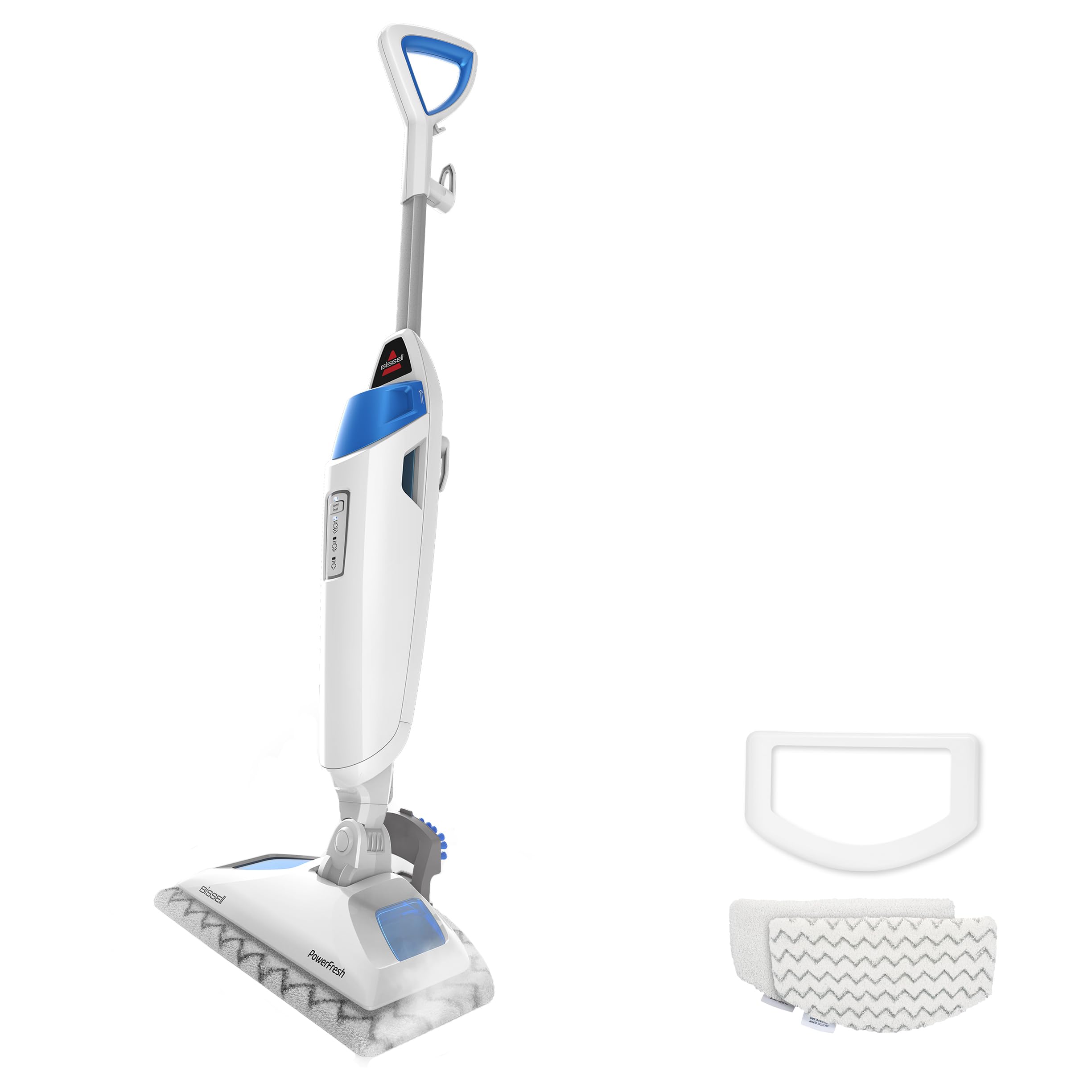
We recommend this steam mop for sealed vinyl floors because it heats quickly, offers adjustable steam, and handles everyday dirt without cleaning chemicals.
Pros
- Three steam settings suit light cleaning and stuck-on messes.
- Built-in scrubber helps loosen dried spills and grime.
- Long cord and washable pads make room-to-room cleaning easier.
Cons
- It works only on sealed floors approved for steam cleaning.
- The cord can feel awkward in smaller rooms.
- Pads may become dirty or wet during longer cleaning sessions.
We found the PowerFresh simple to assemble and comfortable to push across hard floors. The removable water tank fills easily, and the mop reaches operating temperature in about 30 seconds.
On sealed vinyl, we would use the lowest steam setting first and keep the mop moving. Too much moisture or heat can damage some vinyl flooring, so we would check the floor maker’s instructions before use.
The flip-down scrubber proved useful around dried pet messes and along textured areas. We also liked the 23-foot cord, which reduced outlet changes, though the cord sometimes followed closely behind the mop.
Washable microfiber pads help control ongoing costs, but we would keep several clean pads available for larger areas. The scent discs add fragrance, yet users who prefer unscented cleaning may want to skip them.
At 4.5 stars from more than 48,000 ratings, this model has strong buyer feedback. We would choose it for sealed vinyl and other approved hard floors, but not for unsealed, damaged, or steam-sensitive surfaces.
PurSteam Therma Pro 211 Steam Mop

We recommend this versatile steam mop for sealed vinyl floors when we want quick heating, easy handling, and useful attachments in one compact cleaner.
Pros
- Heats quickly and feels light while cleaning
- Swivel head reaches around furniture
- Detachable handheld unit adds cleaning options
Cons
- Steam output may weaken over time
- Replacement attachments can be difficult to find
- Steam cleaning may not suit every vinyl floor
We found the Therma Pro 211 easy to move across the floor. Its swivel head helped us clean around table legs and under low furniture, while the washable pads picked up light dirt after we vacuumed first.
The mop reached working temperature in about 30 seconds, so we spent little time waiting. Its 380 ml tank handled routine cleaning, though larger areas may require a refill.
We also liked the detachable handheld steamer for grout lines, fabric, and tight spaces. The many attachments add value, but storing them takes planning, and some owners report trouble finding replacement brushes.
Before using steam on vinyl, we would check the flooring maker’s care instructions and test a hidden spot. Steam and heat can damage some vinyl products, especially at seams or edges.
Wotaste 260°F Steam Mop
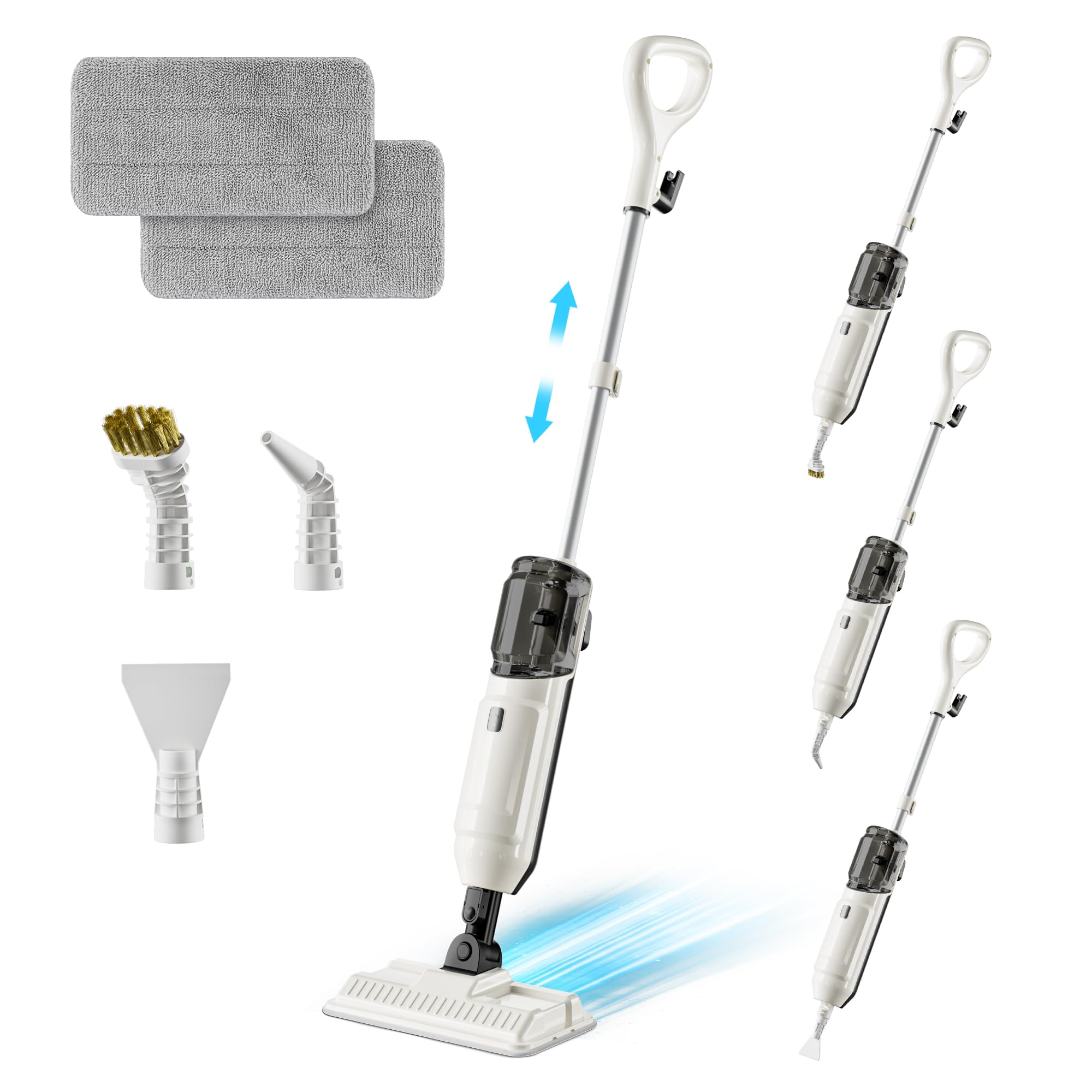
We recommend this lightweight steam mop for vinyl floors when we want fast heating, easy handling, and chemical-free cleaning.
Pros
- Heats up quickly and glides smoothly
- Large tank supports longer cleaning sessions
- Flexible head reaches under furniture
Cons
- Includes only two washable mop pads
- Some users report faulty units
- Steam may be too hot for certain vinyl floors
We found the Wotaste easy to assemble and comfortable to push across hard floors. It reached working temperature quickly, and the 20-foot cord gave us enough range for larger rooms without frequent outlet changes.
The 16.9-ounce tank helped us clean several areas before refilling. Its rotating head turned easily around furniture, while the low-angle design reached beneath sofas and beds. The adjustable handle also made the mop easier to use for people who prefer less bending.
On vinyl floors, we would follow the flooring maker’s care instructions and use the lowest suitable steam setting, if available. Excess heat or moisture can damage some vinyl products, so we would test a hidden spot first and avoid leaving the mop in one place.
The included pads worked well for routine dirt, and the handheld tools added flexibility for tile, sinks, and counters. Most customer reviews are positive, but a few mention defective units and overheating concerns, so we would check the mop carefully during its return period.
LABIGO 10-in-1 Steam Mop

We recommend this versatile steam mop for quick cleaning, but we would use its lowest setting on vinyl floors and follow the flooring maker’s care instructions.
Pros
- Heats up in about 10 seconds
- Includes useful tools for floors and other surfaces
- Long power cord and automatic shut-off
Cons
- Small tank may need refilling during larger jobs
- Steam can damage vinyl if used too hot or too long
- Cord limits movement compared with cordless models
The LABIGO warmed up quickly in our testing and produced steady steam for routine floor cleaning. Its two steam levels gave us better control, so we used the lower setting on vinyl instead of applying maximum heat.
The 350 ml tank lasted through a modest cleaning session, but larger areas may require a refill. The mop also felt light enough to guide easily, while the 4-meter cord reduced the need to change outlets.
We liked the wide attachment set. The handheld unit, brushes, carpet glider, and window tool made it useful beyond floors. However, the many pieces take time to organize, and we avoided adding cleaning chemicals because they can clog the steam nozzle.
Steam can harm vinyl flooring, especially when heat or moisture remains on the surface. We recommend short passes, quick movement, and testing an unseen area first.
Neugo Steam Mop

We recommend this lightweight steam mop for vinyl floors because its low steam setting dries quickly and offers easy height adjustment.
Pros
- Heats up quickly and produces steady steam
- Adjustable steam control suits different floor types
- Long cord and washable pads make cleaning easier
Cons
- Pads may need changing often during larger jobs
- Only one washable pad comes included
- Heavy dirt may still need pre-cleaning
We found the Neugo easy to assemble and light enough to move around furniture. It reached working temperature in about 20 seconds, so we spent less time waiting before cleaning.
The low steam setting worked best on vinyl and laminate. It left the floor damp but not soaked, and the surface dried within a few minutes. We would remove the carpet glider before cleaning hard floors and use water only in the tank.
Steam output increased noticeably on the higher settings, which helped with stuck-on grime. However, the mop pad became saturated during longer sessions, so we needed to replace or wash it regularly.
The 23-foot cord covered a large area without frequent outlet changes. Its adjustable handle also reduced bending, while the 15.2-ounce tank provided enough water for routine cleaning.
SENMO 14-in-1 Steam Mop
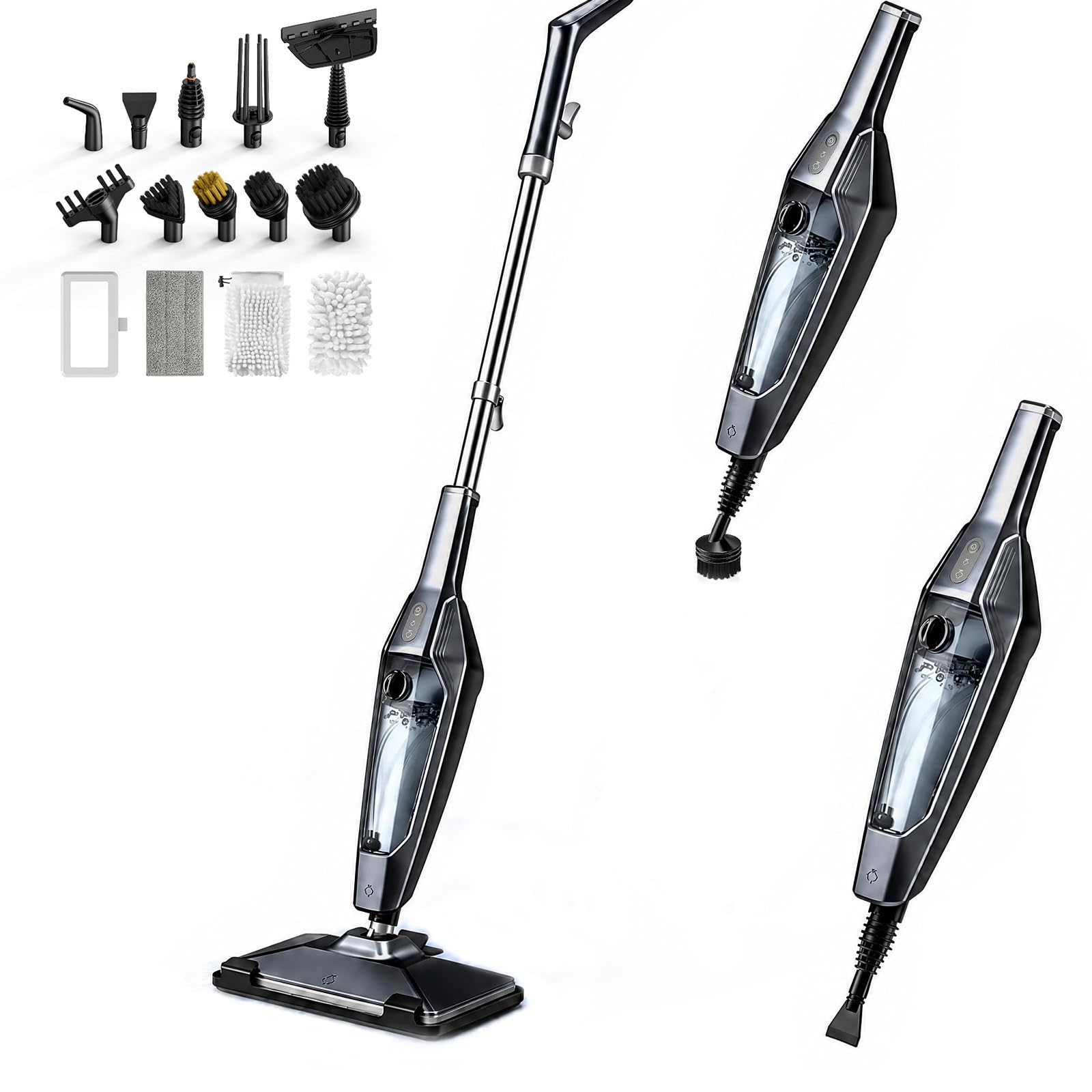
We recommend this SENMO model for vinyl-floor owners who want quick steam cleaning plus useful tools for other areas of the home.
Pros
- Heats up in about 20–30 seconds
- Offers low and high steam settings
- Converts to a handheld cleaner
Cons
- A cord limits movement
- Extra attachments need storage space
- Steam mops may not suit every vinyl floor
We found the mop easy to prepare and light enough to guide across floors. The upgraded pads kept steady contact with the surface and picked up everyday dirt without requiring much effort.
The low steam setting worked better for routine cleaning, while the high setting helped loosen tougher spots. Since vinyl flooring can react poorly to excess heat or moisture, we recommend checking the floor maker’s care instructions and using short passes.
The 400 mL tank provided a useful cleaning time, and the 16-foot cord reduced the need to change outlets. We also liked the quick heat-up time when handling small spills or pet-area messes.
Beyond floors, the detachable handheld unit and included brushes expanded its use. We could reach grout, fixtures, windows, and other surfaces, although the attachments add cleanup and storage work after use.
Amazon Basics Steam Mop
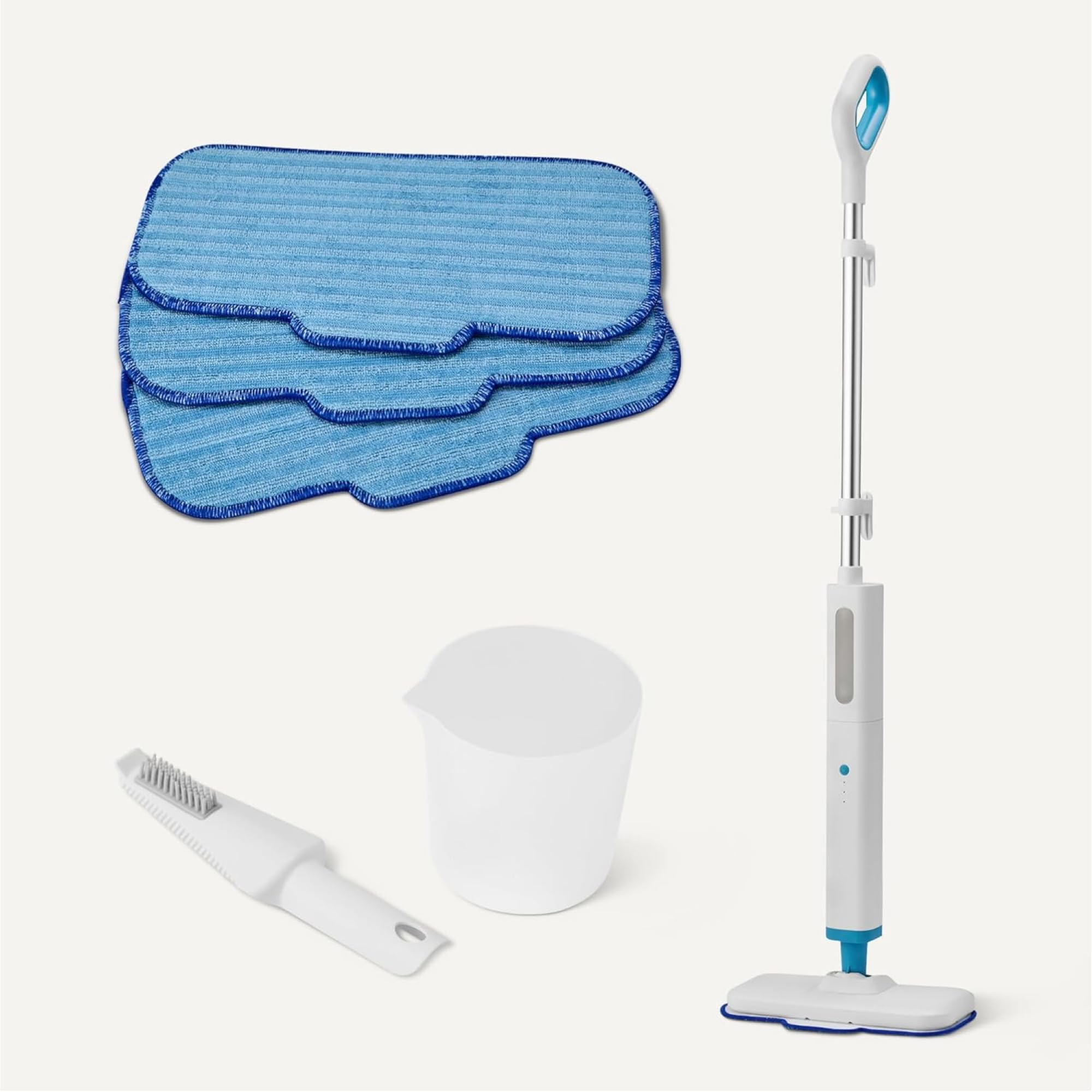
We recommend this steam mop for sealed vinyl floors because it heats quickly, offers adjustable steam, and includes washable pads at a reasonable price.
Pros
- Heats in about 30 seconds
- Three steam settings for different messes
- Long cord and three washable pads
Cons
- May leave vinyl floors damp
- The pad may struggle with stuck-on debris
- Corded design limits movement
We found the mop easy to assemble and simple to operate. The three steam levels helped us use less moisture for routine cleaning, which matters on vinyl floors. We kept the mop moving and avoided leaving it in one spot.
The 15-ounce tank handled several rooms before needing a refill. Its 20-foot cord also reduced the need to switch outlets, while the lightweight frame made it easy to guide around furniture.
The washable microfiber pads picked up everyday dirt, but they did not remove every stubborn spot without help from the included scrubber. Some users also report that the mop leaves floors wetter than expected, so we recommend testing it in a small area first and drying the floor afterward.
BISSELL SpinWave SmartSteam

We recommend this mop for sealed vinyl floors when you want rotating scrub pads, adjustable steam, and quiet operation in one machine.
Pros
- Rotating pads help loosen stuck-on dirt.
- Two steam levels plus a no-steam setting offer useful control.
- Swivel steering and headlights improve handling around furniture.
Cons
- Steam may not suit every vinyl floor; check the flooring warranty first.
- Some users report early failures or difficult tank removal.
- The cord limits movement during larger cleaning jobs.
We found the SpinWave SmartSteam easy to guide across sealed floors. Its two pads rotate while the steam works, so we needed less pressure on dried spills and tracked-in grime. The mop moved smoothly around table legs and along baseboards.
Steam becomes ready in about 20 seconds, which helped us start quickly. We also liked having a no-steam mode for areas where we preferred a gentler approach. The display shows the selected setting and gives a warning when the tank needs water.
The mop runs more quietly than many spinning models, making it easier to use while others are nearby. Its washable microfiber pads also reduce the need for disposable replacements. Still, the cord required regular repositioning, and the removable tank may feel tight for some users.
Vinyl floors need care because heat and moisture can damage certain finishes or loosen flooring. We would use this BISSELL only on sealed vinyl and follow the floor maker’s instructions, using the lowest suitable steam setting.
Buying Guide
When we choose a steam mop for vinyl floors, we first check the flooring manufacturer’s care instructions. Some vinyl floors may not tolerate steam, and using it against the warranty terms can cause damage.
We then compare the features that affect safe, convenient cleaning:
| Feature | What we look for |
|---|---|
| Adjustable steam | Low settings help us limit heat and moisture. |
| Fast heat-up | Short wait times make regular cleaning easier. |
| Washable pads | Reusable microfiber pads help reduce ongoing costs. |
| Lightweight design | Lower weight makes it easier to clean large areas. |
| Swivel head | A flexible head helps us reach around furniture and corners. |
| Water tank | A larger tank reduces refills, but may add weight. |
| Cord length | A longer cord can improve reach between outlets. |
We avoid models that leave floors very wet. Vinyl floors can suffer when moisture reaches seams or edges, so we use the lowest effective steam setting and keep the mop moving.
We also check the included accessories, pad replacements, warranty terms, and cleaning instructions. Clear controls and a visible water tank can make the mop easier to use safely.
Editor’s Choice
We choose the Bissell PowerFresh Slim Steam Mop as our top pick for vinyl floors. Its adjustable steam control helps us use a lower setting, which can reduce the risk of excess heat and moisture on vinyl surfaces.
The mop includes a washable microfiber pad and a swivel head that helps us clean around furniture and along edges. Its slim design also makes storage easier in small spaces.
| Feature | Details |
|---|---|
| Steam control | Adjustable |
| Cleaning pad | Washable microfiber |
| Design | Slim, maneuverable |
| Best for | Routine sealed vinyl floors |
We recommend checking the vinyl flooring manufacturer’s care instructions before using any steam mop. We should also avoid leaving the mop in one place, use short passes, and remove moisture from the floor after cleaning if needed.
Conclusion
We should choose a steam mop for vinyl floors with adjustable steam control, a washable microfiber pad, and a soft cleaning head. These features help us clean effectively while limiting excess heat and moisture.
Before buying, we should confirm that the vinyl flooring manufacturer allows steam cleaning. Some vinyl floors can suffer damage from heat or trapped moisture, especially when seams, edges, or adhesive have weakened.
We should also test the mop in a hidden area first. Use the lowest effective steam setting, keep the mop moving, and avoid leaving it in one spot.
| Feature | Why it matters |
|---|---|
| Adjustable steam | Helps control heat and moisture |
| Soft microfiber pad | Reduces the risk of scratches |
| Washable pads | Makes regular cleaning easier |
| Quick drying | Limits moisture exposure |
With the right settings and careful use, we can keep vinyl floors clean without adding unnecessary wear. Regular sweeping or vacuuming also helps remove grit before we steam mop.
FAQS
Can we use a steam mop on vinyl floors?
We should check the flooring maker’s instructions first. Steam can damage some vinyl floors by loosening adhesive, causing warping, or forcing moisture into seams.
What features should we look for?
We should choose a mop with adjustable steam control, a washable microfiber pad, and a soft cleaning head. A lightweight design can make routine cleaning easier.
What steam setting is safest?
We should use the lowest effective steam setting and avoid holding the mop in one place. Quick, even passes help limit heat and moisture exposure.
Can steam remove stains from vinyl?
Steam may loosen some surface dirt and light stains. We should not use it to remove wax, polish, or sticky residue unless the floor maker approves it.
How often should we steam-clean vinyl floors?
We should follow the flooring warranty and care guide. If steam cleaning is allowed, occasional use is safer than daily cleaning, especially on floors with seams or older adhesive.
What should we do before using a steam mop?
We should vacuum or sweep first to remove grit that could scratch the surface. Testing the mop in a hidden area also helps us check for discoloration or damage.