
10 Best Steam Mops for Tile and Grout: Top Cleaning Picks

Steam mops use heated water to loosen dirt and lift grime from hard floors. They can clean tile surfaces without many chemical cleaners, while washable mop pads help reduce ongoing waste. On grout, steam may help remove surface dirt, but it cannot repair stains, damaged grout, or missing sealant.
For tile and grout, we look for steam mops with adjustable steam, useful scrub brushes, a mop head that reaches into edges, and controls that are easy to use. Water-tank size, cord length, weight, heat-up time, and washable pad quality also affect daily cleaning. We tested and compared leading models to find the steam mops that make tile and grout cleaning easier and more effective.
Best Steam Mops for Tile and Grout
We selected the best steam mops for cleaning tile and grout based on steam power, ease of use, maneuverability, and included accessories. Our list includes options for removing everyday dirt, stains, and buildup from hard floors.
Shark Steam & Scrub

We recommend this steam mop for sealed tile and hard floors because its rotating pads add scrubbing power without requiring much effort.
Pros
- Rotating pads help loosen stuck-on residue
- Three steam settings suit light and deep cleaning
- LED headlights reveal dust near edges and under furniture
Cons
- The small water tank may need frequent refills
- Some users report steam or spinning-pad failures
- It may leave marks when cleaning heavily soiled floors
We found the Shark Steam & Scrub easy to guide because the powered pads help move the mop across the floor. The light setting worked well for quick cleaning, while the deeper setting helped with dried food and greasy spots.
Its rotating pads can lift old residue from tile more effectively than a basic steam mop. We still recommend sweeping first and using clean pads, especially when grout lines hold loose dirt.
The LED headlights helped us spot debris that was easy to miss. The mop also felt light enough for regular use, but the compact water tank required more attention during larger cleaning jobs.
Shark states that the mop can sanitize floors when users follow the full instructions. We would also check that the floor is sealed and suitable for steam before using it on tile or grout.
LABIGO 10-in-1 Steam Mop

We recommend this versatile steam mop for tile and grout because it heats quickly, reaches tight areas, and converts into a handheld cleaner.
Pros
- Heats up in about 10 seconds
- Includes brushes and nozzles for grout and other surfaces
- Offers two steam settings and a long power cord
Cons
- The 350 ml tank may need frequent refills
- The cord limits movement compared with cordless models
- Some users report occasional leaking
We found the LABIGO easy to start using, with steam ready after a short wait. On tile, the mop loosened everyday dirt quickly, while the small brush helped work into grout lines. We needed to avoid pressing too hard, since extra pressure can slow the brush and steam movement.
The detachable handheld unit adds useful flexibility. We could use the included tools around sinks, shower edges, windows, upholstery, and kitchen surfaces. The carpet glider also helps the mop move more smoothly across rugs.
The water tank supports roughly 12 to 15 minutes of cleaning per fill, so larger floors may require a refill. The 4-meter cord provides good reach, and the automatic shutoff helps when the tank runs dry. We should avoid adding cleaning chemicals because they may clog the steam nozzle.
BISSELL PowerFresh Steam Mop
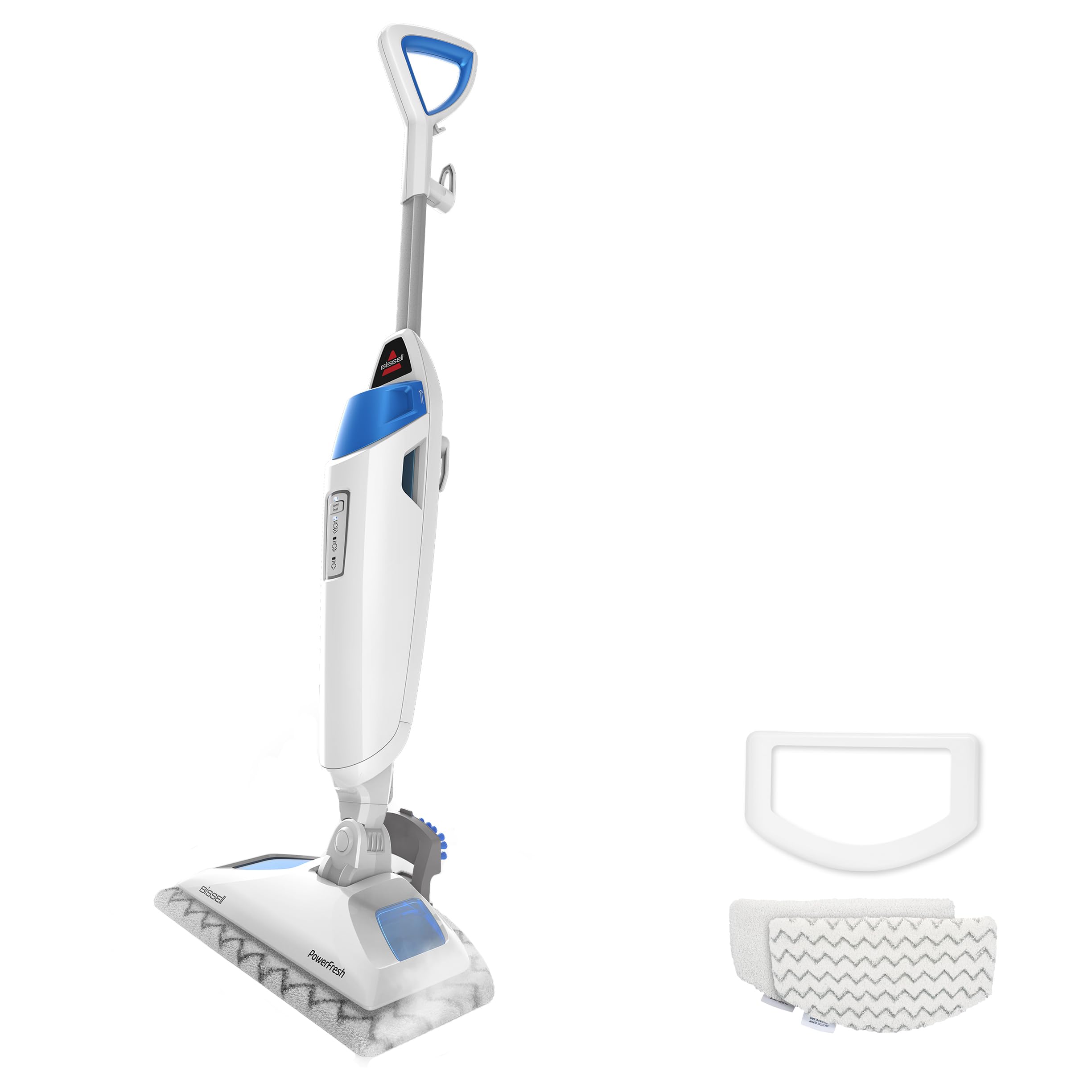
We recommend this steam mop for sealed tile floors and grout because it heats quickly, scrubs stuck-on dirt, and offers three steam levels.
Pros
- Flip-down scrubber helps loosen dried grout buildup
- Long 23-foot cord reduces outlet changes
- Washable microfiber pads keep ongoing costs lower
Cons
- Corded design limits movement
- Pads can become dirty during larger jobs
- Not suitable for unsealed floors
We found the PowerFresh easy to assemble and quick to start. After about 30 seconds, it produced steam and glided smoothly across sealed tile. The removable tank also made refilling simple.
The built-in scrubber proved useful around grout lines and dried spills. We still needed to vacuum first and make several passes over darker buildup, but the brush reduced the need for heavy pressure.
Three steam settings helped us adjust the mop for light cleaning or tougher messes. The 23-foot cord gave us good reach across a room, while the 12-inch cleaning path covered open floor areas efficiently.
The washable pads handled regular use well, though we needed extra pads for larger spaces. We also avoided using the mop on unsealed tile, wood, or damaged grout, since the product is designed for sealed hard floors.
Shark SteamSpot Steam Mop

We recommend the Shark SteamSpot for sealed tile floors because it heats quickly, handles stuck-on messes well, and gives us targeted steam for grout lines and stubborn spots.
Pros
- Targeted Steam Blaster helps loosen dried-on stains
- Lightweight design glides easily around furniture
- Three steam settings suit light and deep cleaning
Cons
- The water tank may need refilling during larger jobs
- Steam cleaning does not replace scrubbing very deep grout
- Some owners report early failures or leaking
We found the mop easy to assemble and comfortable to push across tile. It heats in about 25 seconds, so we spent less time waiting before cleaning.
The Steam Blaster button directs extra steam at small problem areas. That helped us soften dried spills near grout lines, while the textured pads picked up loosened dirt. We still needed a separate grout brush for deeply discolored joints.
Light, Normal, and Deep modes made it easier to control moisture. Floors dried fairly quickly when we used a moderate setting and kept the mop moving.
The removable 500 ml tank is convenient to fill, but its size may feel limited in a larger home. We also noticed mixed long-term feedback, including reports of lost steam and water leaks after limited use.
Wotaste 260°F Steam Mop
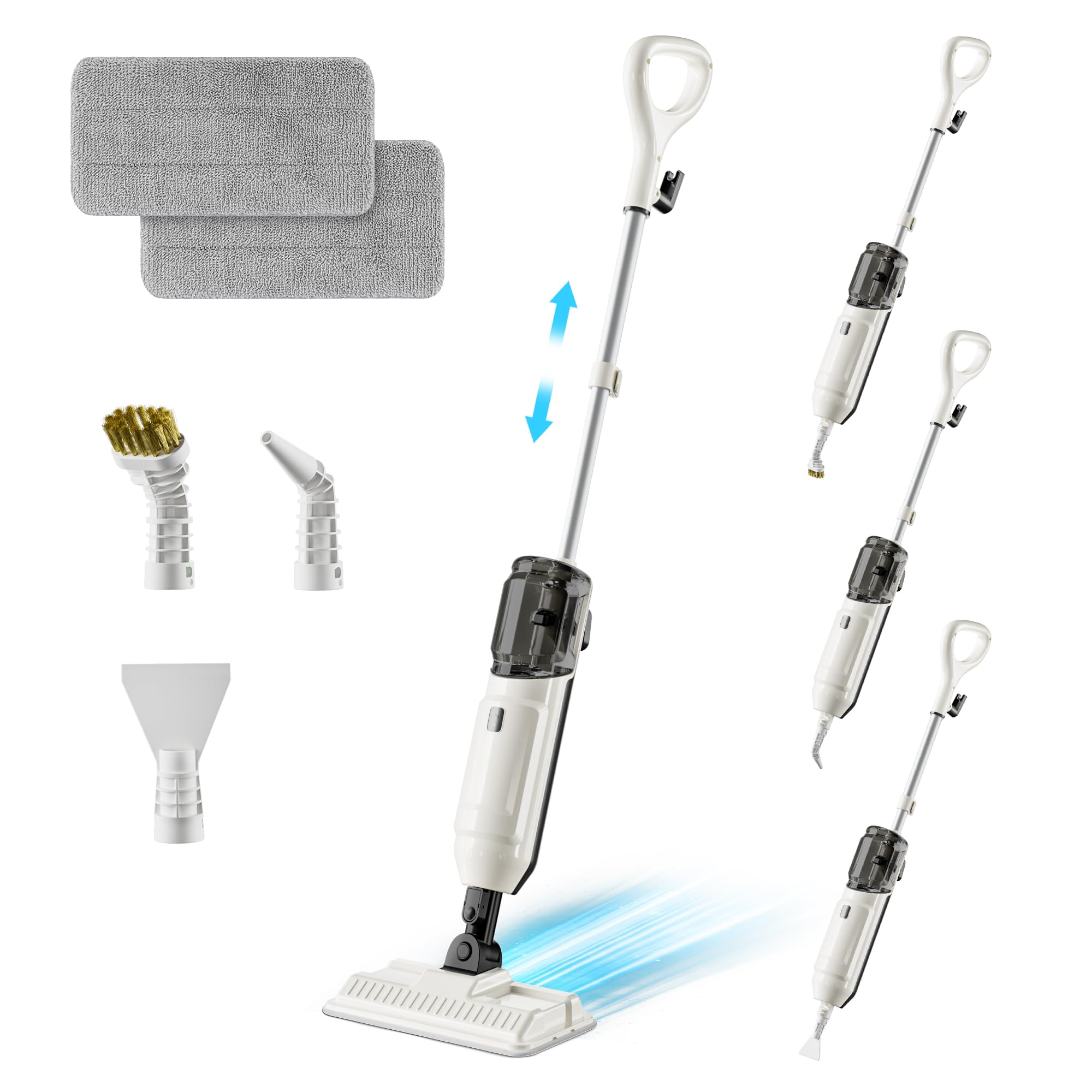
We recommend this steam mop for tile and grout because it heats quickly, glides easily, and includes tools for detailed cleaning.
Pros
- Heats up in about 15 seconds
- Large tank supports longer cleaning sessions
- Includes detail tools and washable pads
Cons
- Some users reported faulty units
- Steam may not replace a grout brush for deep buildup
- The cord can feel limiting in larger rooms
We found the Wotaste easy to assemble and light enough to move across tile floors without much effort. Its rotating head reached around corners, while the low-angle design helped us clean beneath furniture.
The mop produced steam quickly and loosened everyday dirt, paw prints, and kitchen residue without added chemicals. For grout lines, the included detail brush worked better than the mop pad, especially where dirt had settled into textured surfaces.
Its 16.9-ounce tank gave us enough water for several rooms before refilling. The 20-foot cord also reduced outlet changes, and the self-standing design made short pauses more convenient.
However, customer feedback includes a few reports of units that stopped working or became unusually hot. We recommend checking the mop carefully after setup and following the care instructions. We also suggest testing steam on a hidden area before using it on wood, laminate, or other moisture-sensitive flooring.
PurSteam 10-in-1 Steam Mop

We recommend this lightweight steam mop for tile and grout when we want a fast floor cleaner that also handles small household jobs.
Pros
- Heats in about 30 seconds
- Detachable handheld steamer with useful tools
- Swiveling head and compact storage design
Cons
- Small water tank needs regular refills
- Some users report weaker steam after extended use
- Replacement attachments may be difficult to find
We found the PurSteam easy to move across tile floors, especially around chair legs and cabinets. The swivel head helps with tight spaces, while the included grout brush gives us a practical way to work along dirty lines.
The 380 ml tank keeps the mop light but limits cleaning time. We can usually finish a small area before refilling, though larger kitchens or several rooms may require a break.
The detachable handheld unit adds useful flexibility. We can use the nozzle and brushes around fixtures, while the squeegee and fabric tools help with other surfaces. The carpet glider supports light refreshes, but we would not treat it as a deep carpet cleaner.
We also like the washable microfiber pads and folding handle. For sealed tile and grout, this model offers useful features at a reasonable size, but we should follow the flooring maker’s care instructions and avoid using steam on unsealed or heat-sensitive surfaces.
Kenmore S300 Steam Spin Mop
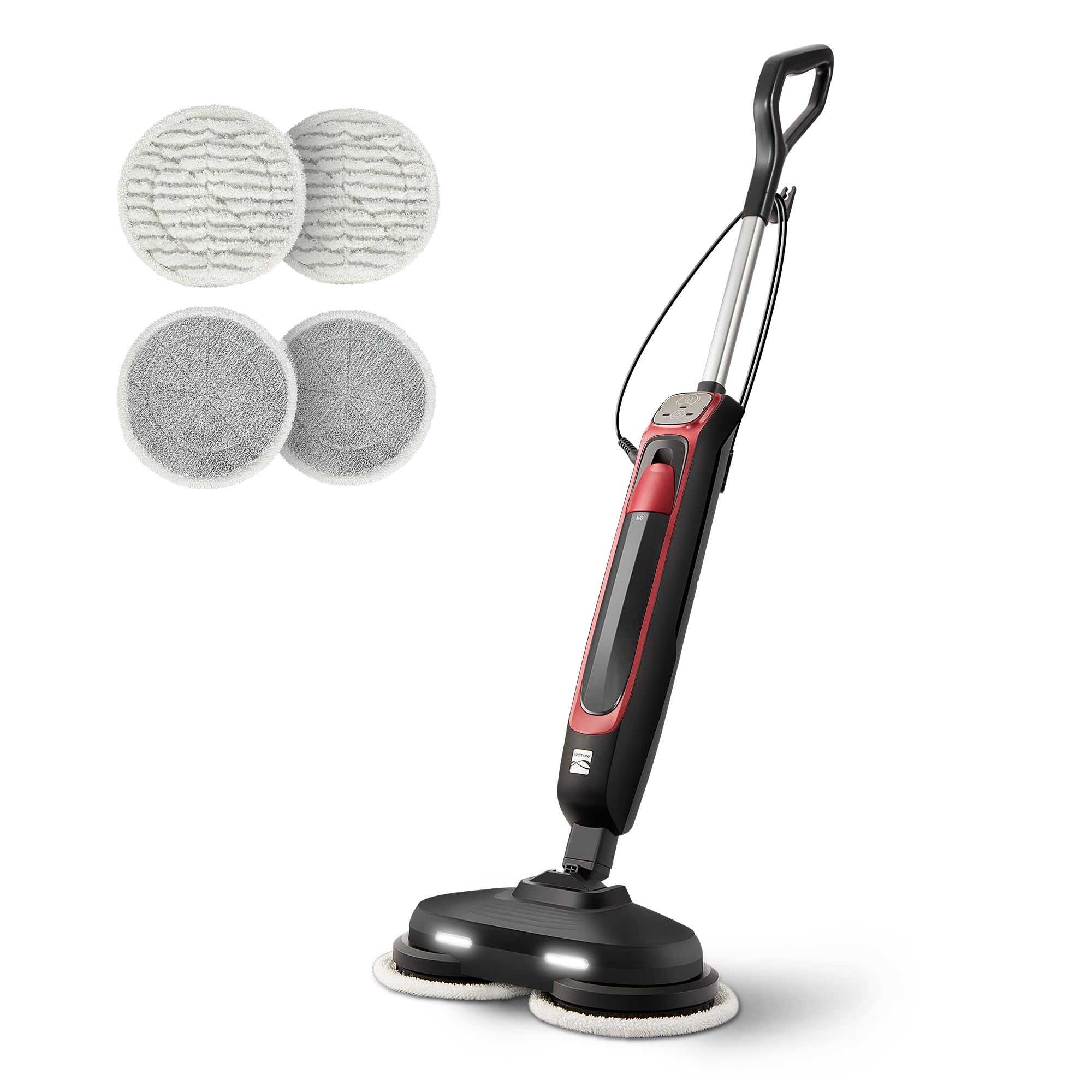
We recommend it for sealed tile and grout when we want steam cleaning with extra scrubbing power from rotating pads.
Pros
- Rotating pads help lift stuck-on marks
- Heats up quickly and offers two steam levels
- Washable pads reduce ongoing waste
Cons
- The cord limits where we can clean
- We must use cold water without cleaning solutions
- Extra pads may help during larger cleaning jobs
The S300 felt light and easy to steer across tile. Its swivel head reached around fixtures and furniture, while the LED lights helped us spot dirt in darker areas.
We liked having low and high steam settings. Low steam handled regular floor cleaning, while high steam helped with tougher spots and dark grout. The rotating pads added useful scrubbing action, but we still needed to pause over stubborn buildup.
Steam started in about 25 seconds, so we did not spend much time waiting. The washable microfiber and cotton pads were practical, although a second cleaning set would be useful for homes with many rooms.
We should use this mop only on sealed surfaces approved for steam cleaning. Its cord and requirement to use water only may not suit everyone, but the Kenmore S300 offers a convenient chemical-free option for regular tile and grout care.
Mxnsewr 11-in-1 Steam Mop

We recommend this steam mop for tile and grout because it heats quickly, offers useful attachments, and handles routine floor cleaning without chemical cleaners.
Pros
- Heats in about 20 seconds
- Detachable design supports floor and handheld cleaning
- Long cord and adjustable handle improve reach
Cons
- Grout may need repeated passes
- The many attachments require storage space
- Steam cleaning still requires care around delicate surfaces
We found the Mxnsewr easy to move across tile floors. The mop head reaches under furniture, while the flexible joint helps us clean around corners and along grout lines. The 450 ml tank supports longer cleaning sessions, and the 23-foot cord reduces outlet changes.
Steam output is adjustable, which helps us use less moisture for lighter cleaning and more steam on stuck-on kitchen dirt. The mop dries quickly and leaves less standing water than a traditional wet mop.
The detachable body and included accessories make this more than a floor mop. We could use the handheld unit for sinks, glass, furniture, and other areas, though switching attachments takes extra time. For tile and grout, we still needed to move slowly over heavily soiled lines instead of expecting one pass to remove everything.
We recommend checking your flooring manufacturer’s care instructions before using steam. The product uses a 110-volt US plug, so buyers outside the United States may need compatible equipment.
SENMO 14-in-1 Steam Mop
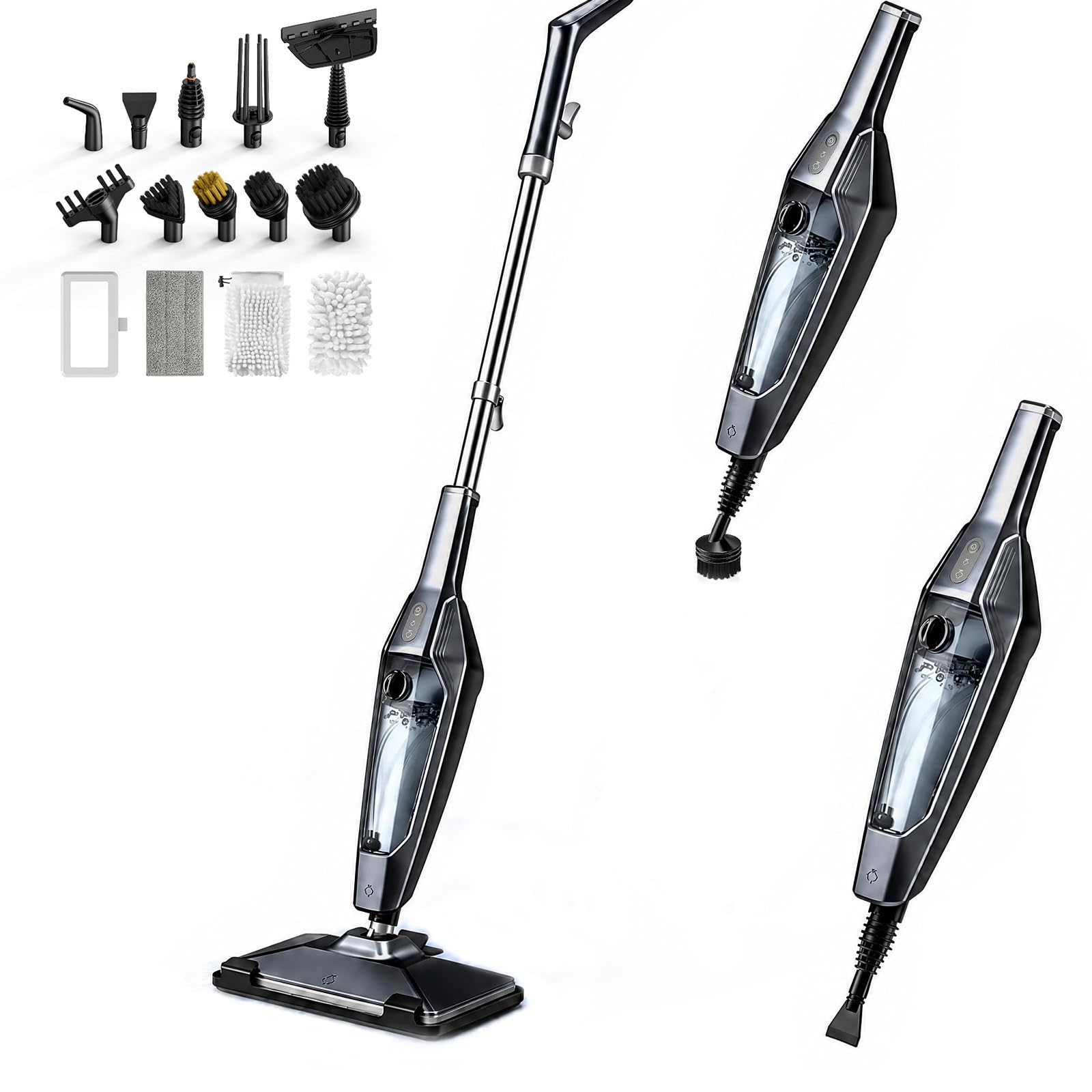
We recommend this SENMO model for homes that need quick floor cleaning plus extra tools for grout, fixtures, and other surfaces.
Pros
- Heats up in about 20–30 seconds
- Includes tools for grout and above-floor cleaning
- Long cord and 400 mL tank reduce interruptions
Cons
- The cord limits use away from an outlet
- Hand-washing the pads adds maintenance
- Steam cleaning may require extra passes on heavy grout stains
We found the mop easy to move across tile and other sealed floors. The upgraded pads made steady contact with the surface and picked up loosened dirt without needing chemical cleaner.
The two steam settings helped us adjust the cleaning level. Low steam worked for routine messes, while high steam gave stuck-on spots and grout more moisture to loosen. We still needed the included brush for deeper grout buildup.
The short heat-up time made quick cleaning practical. The 16-foot cord also gave us useful reach in larger rooms, although we still had to change outlets between some areas.
We liked the detachable handheld design for sinks, fixtures, windows, and kitchen surfaces. With 14 accessories, this works as more than a floor mop, but storing all the attachments may take extra space.
BISSELL SpinWave SmartSteam

We recommend this steam mop for sealed tile floors when you want steam cleaning plus powered scrubbing in one machine.
Pros
- Rotating pads help lift stuck-on dirt.
- Two steam levels and a no-steam setting add control.
- The swivel head and headlights improve handling.
Cons
- The cord limits reach.
- Some users report early breakdowns.
- The water tank may be difficult to remove.
We found the dual pads useful on tile with dull, high-traffic areas. They rotate at up to 230 RPM, so the mop does more of the scrubbing than a basic steam mop. It worked best after we removed loose dirt first.
Steam heats in about 20 seconds, which kept routine cleaning moving. We liked being able to lower the steam or turn it off for different sealed floor surfaces. Always check that your tile and grout can handle steam before use.
The mop moved smoothly around furniture, and the LED headlights helped us spot grime along edges. Its quieter operation also made cleaning less disruptive than expected. However, the power cord still requires planning in larger rooms.
The washable microfiber pads reduce ongoing waste, while the larger tank helps limit refill breaks. Some customer reports mention units that stopped working soon after purchase, so we recommend checking the return and warranty terms before buying.
Buying Guide
When we choose a steam mop for tile and grout, we should match its features to our floor type and cleaning routine. Look for adjustable steam control, a washable microfiber pad, and a design that can reach corners and tight spaces.
| Feature | What to look for |
|---|---|
| Steam control | Adjustable settings help us clean tile safely without using excess moisture. |
| Grout tool | A small brush or focused nozzle can help loosen dirt from grout lines. |
| Water tank | A larger tank supports longer cleaning sessions, while a removable tank makes refilling easier. |
| Mop head | A slim, swivel head improves access around fixtures and furniture. |
| Cord length | A longer cord reduces the need to change outlets often. |
| Pad care | Machine-washable pads help reduce ongoing replacement costs. |
We should check the manufacturer’s instructions before using steam on tile, grout, or nearby surfaces. Steam can damage some sealed materials, loose tiles, cracked grout, and moisture-sensitive flooring.
Weight and storage also matter. A lighter mop feels easier to move across large floors, while upright storage and a compact design help in smaller homes. Look for clear controls, a stable parking position, and easy access to replacement pads and brushes.
Editor’s Choice
We choose the Bissell PowerFresh Slim Steam Mop as our top pick for tile and grout. Its adjustable steam settings let us clean sealed tile without using harsh chemicals, while the handheld design helps us reach grout lines, corners, and other tight areas.
The mop includes a grout tool and several attachments for sinks, counters, and fixtures. Its slim body also stores easily, making it a practical choice for homes with limited space.
| Feature | Why it matters |
|---|---|
| Adjustable steam control | Helps match steam to different surfaces |
| Grout tool | Targets dirt in narrow grout lines |
| Handheld mode | Reaches counters, sinks, and fixtures |
| Long power cord | Reduces the need to change outlets |
We should test steam on a small hidden area first and follow the flooring maker’s care instructions. Steam mops work best on sealed tile and sealed grout; unsealed surfaces may absorb moisture and suffer damage.
Conclusion
We should choose a steam mop based on our tile type, grout condition, and cleaning routine. A model with adjustable steam settings suits delicate surfaces, while strong steam output and useful attachments help with stuck-on dirt in grout lines.
For regular floor cleaning, we can prioritize a lightweight mop with a washable pad, quick heat-up time, and a comfortable handle. If we need to clean grout, corners, or other small areas, a lift-off design with a hose and detail tools offers more flexibility.
We should check the manufacturer’s instructions before using steam on tile or grout. Sealed grout usually handles steam better than damaged or unsealed grout, and we should avoid holding the mop in one place for too long.
Key features to compare:
- Adjustable steam control
- Reusable microfiber pads
- A removable handheld unit
- Grout and detail attachments
- A long power cord
- A water tank that fits our cleaning area
The best choice gives us enough steam power for our floors without adding unnecessary weight, maintenance, or cost.
FAQS
Are steam mops safe for tile floors?
We can use steam mops on sealed ceramic, porcelain, and stone tile. We should check the flooring and grout manufacturer’s instructions first, since heat and moisture may damage unsealed surfaces.
Can a steam mop clean grout?
Steam can loosen surface dirt and grease from grout. We should use a small brush attachment for grout lines and avoid holding steam in one spot for too long.
Do steam mops remove mold from grout?
Steam may reduce surface mold and mildew, but it may not remove stains or stop growth caused by leaks or high moisture. We should dry the area and fix the moisture source.
Should we use cleaning solution in a steam mop?
We should use plain water unless the manufacturer allows a specific solution. Adding detergents or chemicals can damage the mop, leave residue, or create unsafe fumes.
How often should we steam-mop tile and grout?
We can steam-mop sealed tile when dirt builds up, often once a week in busy areas. Regular sweeping or vacuuming helps prevent grit from scratching the floor.
Can steam loosen grout or caulk?
Long exposure to high heat may weaken old grout, sealant, or caulk. We should keep the mop moving and avoid damaged joints until we repair them.