
Can I Use Laundry Detergent to Mop My Floors? What to Know First

Quick answer: You can, but on most floors you shouldn’t. Laundry detergent is made to be rinsed out of fabric by a lot of water. In a mop bucket it is far too strong, so it leaves a sticky film that attracts dirt and can make floors slippery. A very small amount (about 1 teaspoon of liquid detergent per gallon of warm water) is usually fine on glazed tile or sheet vinyl if you rinse afterward. Keep it off hardwood, natural stone and laminate.
The idea comes from social media, where people add a scoop of powdered Tide or a laundry pod to hot mop water and praise the fresh smell and the way it cuts grease. It does clean. The problem is what it leaves behind, and what it can do to certain floors over time.
Can You Use Laundry Detergent to Mop Floors?
Yes, laundry detergent will lift dirt and grease from a hard floor. It contains surfactants, which grab onto oil and dirt so water can carry them away. That is why it seems to work so well at first, especially on a greasy kitchen floor.
But detergent is designed for a washing machine, where a small dose is spread through many gallons of water and then rinsed out several times. A mop bucket holds only one or two gallons, and nobody rinses the floor three times. Most of the soap stays on the surface. That leftover film is why floors cleaned this way can feel tacky, look streaky in sunlight, and get dirty again faster.
| Question | Short answer |
|---|---|
| Does it clean? | Yes, it cuts grease and grime well |
| Does it leave residue? | Yes, unless you use very little and rinse |
| Is it safe on hardwood? | No, it can dull or damage the finish |
| Is it safe on stone? | No, alkaline soap can dull marble and limestone |
| Is it safe on tile and vinyl? | Usually, if well diluted and rinsed |
| Does it void floor warranties? | It can, if the maker requires approved cleaners |
| Is there a better option? | Yes, a pH-neutral floor cleaner |
Why Laundry Detergent Is a Poor Floor Cleaner
It leaves a sticky film
Detergent is meant to be rinsed away. On a floor, the extra soap dries into a thin layer. Dust and footprints stick to it, so the floor can look dirtier a day later than before you mopped. If your floor already feels tacky, read why floors get sticky after mopping to remove the buildup.
It can make floors slippery
A soapy film reduces grip, especially on smooth tile and vinyl, and more so when the floor is still damp. That matters in homes with kids, older adults or pets.
It is too alkaline for some surfaces
Most laundry detergents are alkaline. That helps remove body oils from clothes, but it can dull a polyurethane finish on wood, attack wax, and etch or dull calcium-based stone like marble, travertine and limestone. Floor makers usually recommend a pH-neutral cleaner for these surfaces for this reason.
Fragrance and dyes stay behind
Scented detergents are popular for mopping because of the smell. The fragrance, optical brighteners and dyes also stay on the floor. People with pets that walk and lie on the floor, or anyone with fragrance sensitivity, may want to avoid that.
Floor warranties may not cover damage
Many flooring makers list the cleaners they approve. If a wood or vinyl plank floor is damaged and the maker finds that a non-approved product was used, a warranty claim may be denied. Check your floor’s care guide before trying any home remedy.
Which Floors Can Handle It and Which Can’t
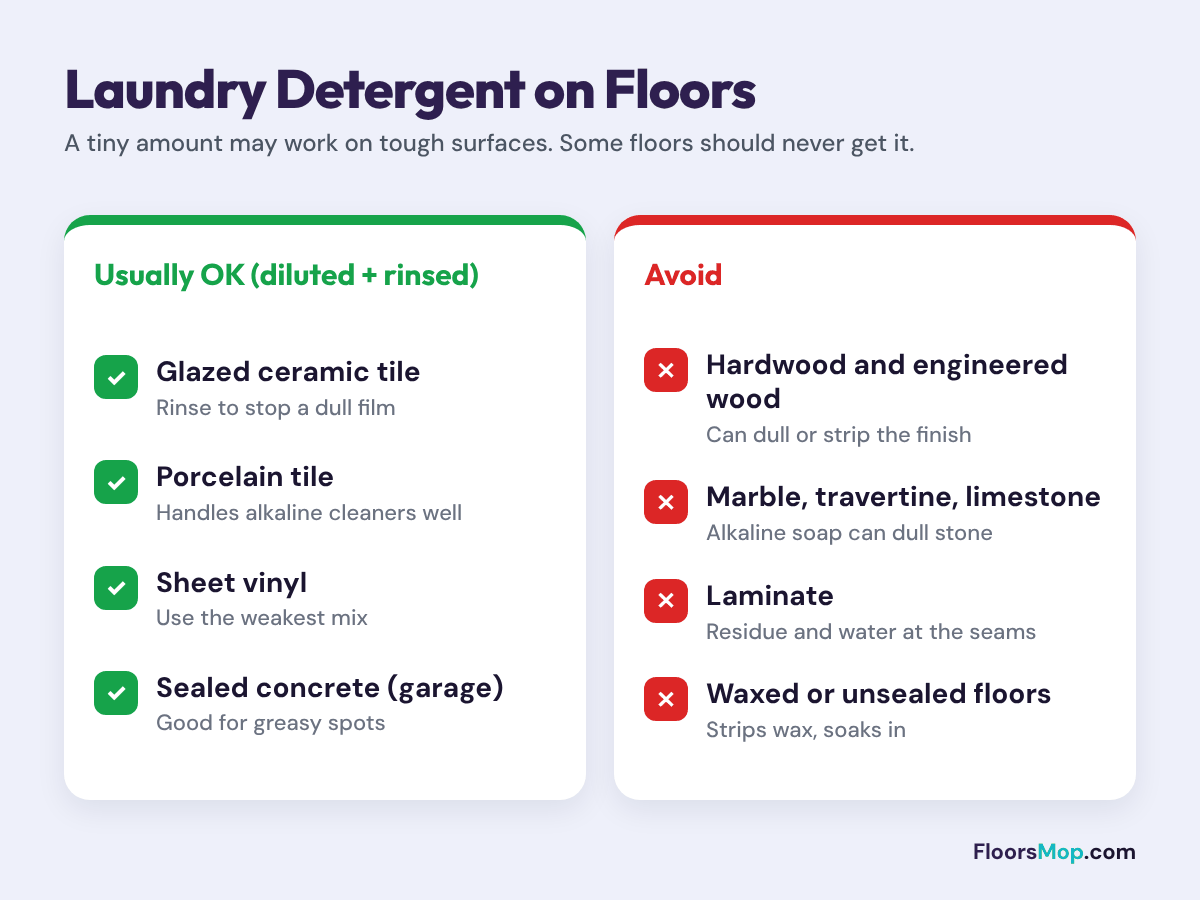
Tough, non-porous floors handle a weak detergent mix best. Glazed ceramic tile, porcelain tile, sheet vinyl and sealed concrete in a garage or utility room are the usual candidates. Even there, use the smallest amount and rinse.
Keep laundry detergent away from these floors:
- Hardwood and engineered wood: the finish can dull, and too much water can swell the boards. See how to mop engineered hardwood floors for safer methods.
- Marble, travertine and limestone: these stones react to alkaline and acidic cleaners and can lose their polish.
- Laminate: residue shows up as streaks, and excess water can get into the seams.
- Waxed or unsealed floors: detergent can strip wax and soak into bare surfaces.
How to Mop With Laundry Detergent (If You Must)
If you are out of floor cleaner and the floor is tile or sheet vinyl, this is the safest way to do it.
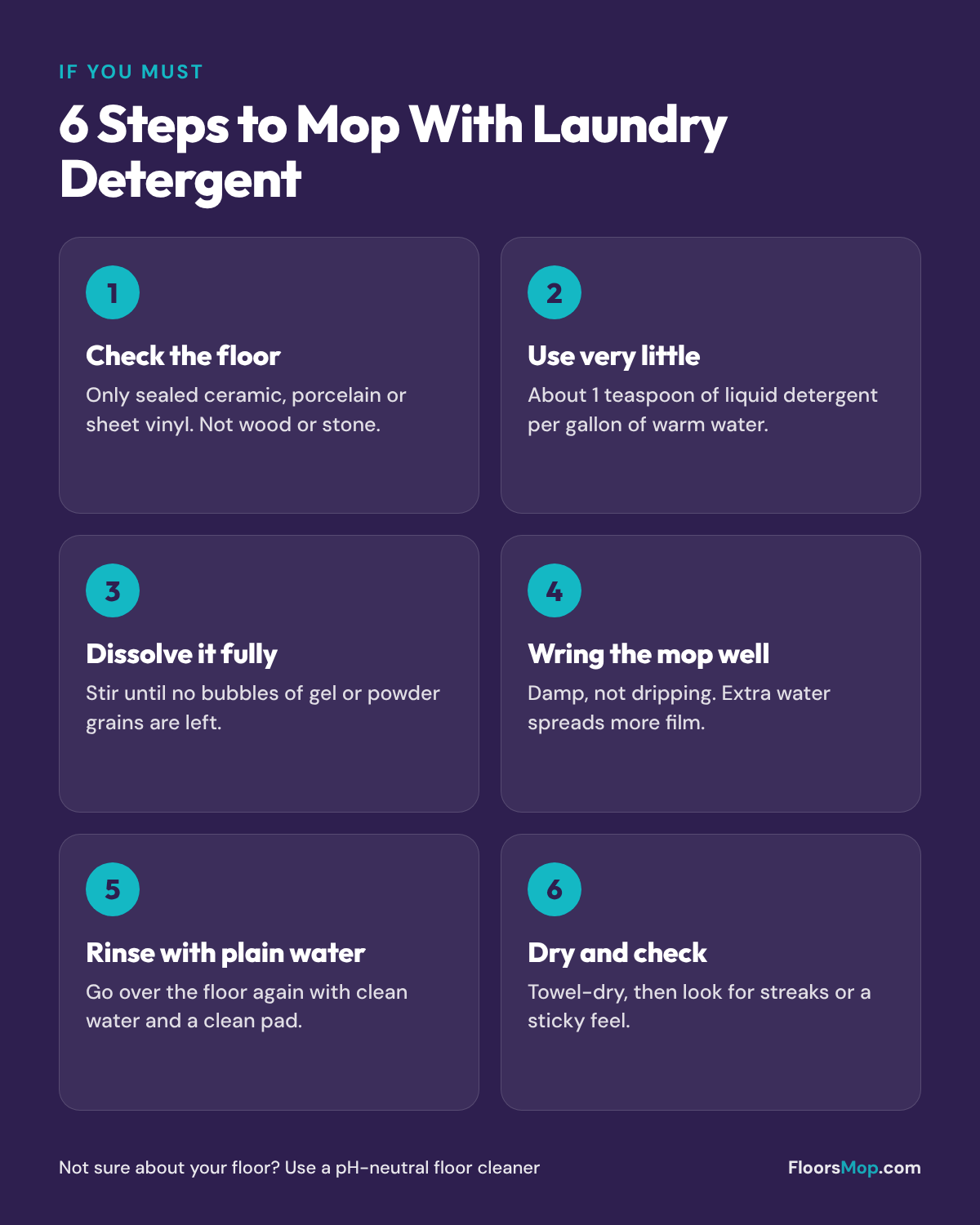
- Check the floor type. Only glazed ceramic, porcelain, sheet vinyl or sealed concrete. When in doubt, skip it.
- Use very little. Mix about 1 teaspoon of liquid laundry detergent in a gallon of warm water. Liquid dissolves better than powder; undissolved grains can leave grit and spots.
- Dissolve it fully. Stir until the water looks even. If you see a lot of suds, you used too much.
- Wring the mop well. The mop should be damp, not dripping. Work in small sections.
- Rinse with plain water. Fill a second bucket with clean water and go over the floor again with a clean mop or pad.
- Dry and check. Towel-dry or let the floor air-dry, then walk on it in socks. If it feels tacky, rinse again.
Do not mix laundry detergent with bleach, ammonia or vinegar in the same bucket. Some viral recipes combine several products, and mixing cleaners can release harmful fumes or simply cancel each other out. Use one product at a time.
Better Things to Mop With
For everyday mopping, a cleaner made for floors does a better job and leaves less behind.
| Floor | Better choice | Notes |
|---|---|---|
| Sealed hardwood | pH-neutral wood floor cleaner | Use a damp, well-wrung microfiber mop |
| Tile and porcelain | pH-neutral or mild all-purpose floor cleaner | Rinse grout lines in heavy-traffic areas |
| Vinyl and LVP | pH-neutral cleaner or a few drops of dish soap | Avoid oily soaps and wax-based products |
| Laminate | Laminate cleaner, used sparingly | Spray the mop, not the floor |
| Natural stone | Stone-safe neutral cleaner | No vinegar, no detergent, no bleach |
Dish soap in small amounts
A few drops of plain dish soap in a gallon of warm water is a gentler option for many sealed floors and rinses off more easily than laundry detergent. Our guide on using dish soap to mop the floor covers the right amount.
Vinegar for some floors
Diluted white vinegar works on many tile and vinyl floors, but it should not be used on stone and is not recommended by many wood floor makers. See how to mop floors with vinegar before you try it.
Plain warm water
For light daily dirt, a microfiber mop and warm water is often enough. It leaves no residue at all. Pair it with good habits from how to mop a floor properly: sweep or vacuum first, use a damp mop, and change the water when it turns gray.
Frequently Asked Questions
Can I put Tide in my mop bucket?
You can add a very small amount to a bucket for tile or sheet vinyl, about 1 teaspoon of liquid Tide per gallon of water, and then rinse the floor with plain water. Do not use it on hardwood, stone or laminate. A pH-neutral floor cleaner is the better everyday choice.
Can I use a laundry pod to mop?
It is not a good idea. One pod is measured for a full washing machine load, so it is far too strong for a mop bucket. It will leave a heavy film and may make the floor slippery.
Why does my floor feel sticky after mopping with detergent?
Too much soap stayed on the floor. Mop again with plain warm water and a clean mop head, changing the water often, until the floor no longer feels tacky.
Is laundry detergent safe for vinyl plank (LVP) floors?
Many LVP makers ask for pH-neutral cleaners and warn against soap-based products that leave a film. Check your floor’s care guide. If you use detergent, keep it extremely weak and rinse afterward.
Can I mix laundry detergent with bleach or vinegar to mop?
Do not mix cleaning products in a mop bucket. Bleach should never be mixed with ammonia or acids, and adding several products together adds residue and risk without making the floor cleaner. Use one product at a time.
The Bottom Line
Laundry detergent cleans floors, but it is the wrong tool for regular mopping. It is too concentrated for a bucket, leaves a sticky film, and can harm wood, stone and laminate. If you are stuck without floor cleaner, use about a teaspoon per gallon on tile or vinyl only, and rinse with clean water. For everyday cleaning, a pH-neutral floor cleaner, a few drops of dish soap, or plain warm water with a microfiber mop will give you a cleaner floor with less work.