
Can Steam Mops Cause Mold? What You Need to Know

Quick Answer
Steam mops do not directly create mold. However, they can contribute to mold growth when steam or condensed water gets trapped under flooring, inside seams, or in damp mop pads that stay wet. The EPA’s mold and moisture guidance makes the main principle clear: controlling moisture is the key to preventing indoor mold.
Where Mold Risk Can Increase
- Floor seams: Vapor can enter gaps in laminate, vinyl plank, engineered wood, or damaged flooring.
- Porous materials: Wood, damaged grout, unsealed concrete, and some subfloors can absorb moisture.
- Slow drying: High indoor humidity and poor airflow keep surfaces damp longer.
- Wet mop pads: Damp microfiber stored in a dark space can develop musty odors and microbial growth.
- Existing leaks: Steam may hide the real source when moisture already exists beneath the floor.
Quick Prevention Tip
- Use steam only on manufacturer-approved surfaces, keep the mop moving, ventilate the room, and dry the pad completely before storage.
I’ve found that the mold question usually comes up after someone notices damp seams, a musty smell, or a floor that takes unusually long to dry after steam mopping.
The important distinction is simple. A steam mop isn’t a mold generator, but poor moisture control can turn a normal floor-cleaning routine into a problem.
In This Guide
- Can Steam Mops Really Cause Mold?
- How Can Steam Mopping Trap Moisture?
- Which Floors Have the Highest Mold Risk?
- How Long Should a Floor Take to Dry?
- How Do You Prevent Mold After Steam Mopping?
- Can a Steam Mop Remove Existing Mold?
- What Are the Warning Signs of Trapped Moisture?
- Frequently Asked Questions
Can Steam Mops Really Cause Mold?
No, steam mops don’t directly cause mold. Mold needs suitable material plus enough persistent moisture to grow.
A steam mop can become part of that moisture problem when vapor reaches places that cannot dry quickly.
What actually causes the mold problem?
A steam mop heats water and releases hot vapor through a cleaning pad. Some vapor condenses back into liquid when it contacts the cooler floor.
On an intact, compatible tile surface, that small amount of moisture normally evaporates quickly. Problems begin when water moves beneath the visible surface.
- Open plank seams can allow vapor beneath laminate or LVP.
- Cracked grout can expose the setting material or subfloor.
- Damaged coatings may let moisture enter porous concrete or wood.
- Loose transitions can create openings near walls and doorways.
- Repeated over-wetting can keep hidden materials damp between cleanings.
The EPA explains that mold spores are common indoors and outdoors. Growth becomes a concern when those spores reach a damp surface and moisture remains available.
That means moisture control matters more than whether the water originally arrived as liquid or steam.
Steam cleaning versus a water leak
A properly used steam mop releases far less water than a leaking pipe or overflowing appliance. For a compatible floor, one normal cleaning session should not create a mold problem.
Repeated misuse changes the situation. Driving steam into the same vulnerable seams every week can introduce moisture faster than hidden areas release it.
Section Takeaway: Steam itself doesn’t create mold. The real risk is steam condensing into water where the flooring system cannot dry properly.
How Can Steam Mopping Trap Moisture?
Steam becomes risky when hot vapor travels through an opening and then cools beneath the finished surface.
You may never see that moisture from above. That’s why hidden moisture damage can appear weeks or months after the cleaning habit begins.
Steam can enter small gaps
Vapor can move into spaces that an ordinary barely damp microfiber pad might not reach. Joints, edges, cracks, and expansion gaps deserve particular attention.
This matters most with floating floors. Their top surface may resist spills while the edges, core, adhesive, or underlayment remain moisture-sensitive.
High humidity slows evaporation
Indoor humidity changes how quickly mopping moisture leaves the room. Cleaning on a humid day with closed windows and no air movement can extend drying time.
The EPA recommends keeping indoor relative humidity below 60%, ideally around 30% to 50% when practical.
You don’t need to obsess over one cleaning session. Look for a pattern of floors staying damp, window condensation, stale air, or a persistent musty odor.
Damp cleaning pads are another source
The floor isn’t the only place to watch. A used microfiber steam-mop pad can hold a surprising amount of water after cleaning.
I always remove mine as soon as the appliance cools. Leaving a wet pad attached overnight creates the warm, damp conditions you’re trying to avoid.
- Remove the pad after every cleaning session.
- Rinse or wash it according to its care label.
- Hang or lay it somewhere with good airflow.
- Wait until it is completely dry before storing it.
- Never place a damp pad in a closed cabinet or laundry hamper.
If a pad develops a stubborn musty smell even after washing and drying, replacing it is often the simpler option.
Which Floors Have the Highest Mold Risk?
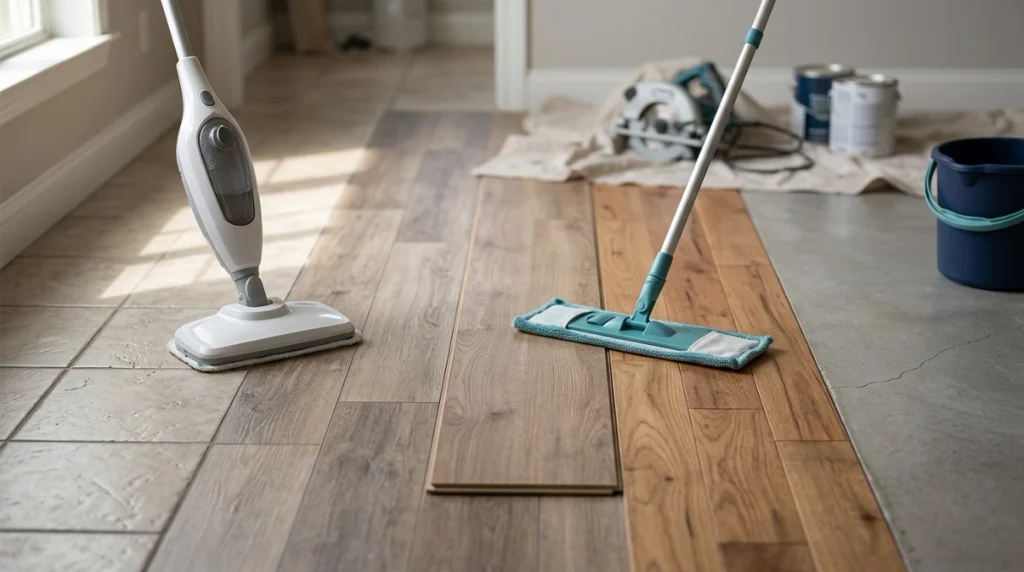
Risk depends less on the steam mop brand and more on the flooring material, installation, seams, finish, and manufacturer instructions.
Glazed tile usually handles moisture better than wood-based flooring. Even tile can become vulnerable when grout is badly cracked.
| Floor Type | General Steam Risk | Where Moisture Can Go | Safer Cleaning Choice |
|---|---|---|---|
| Glazed ceramic or porcelain tile | Lower when intact and approved | Cracked grout or loose tile edges | Steam or microfiber mop if manufacturer permits |
| Luxury vinyl plank | Moderate to high | Plank joints, edges, adhesive, underlayment | Damp microfiber mop with approved cleaner |
| Laminate | High unless explicitly approved | Joints and moisture-sensitive core | Barely damp microfiber mop |
| Solid or engineered hardwood | High | Wood fibers, board gaps, finish damage | Manufacturer-approved wood-floor cleaner |
| Sealed concrete | Varies | Cracks, failed sealer, porous areas | Damp mop or approved steam method |
Hardwood deserves extra caution
The National Wood Flooring Association advises against steam cleaners on wood flooring because vapor can penetrate the wood and finish.
Wood also changes dimension as moisture levels change. That can lead to cupping, swelling, finish damage, or gaps that worsen future moisture entry.
Safety note: Always follow the flooring manufacturer’s maintenance guide. A steam-safe claim for one product does not make every floor of the same material steam-safe.
What about waterproof floors?
“Waterproof” does not always mean “steam-safe.” A product may resist household spills without being designed for repeated exposure to high-temperature vapor.
The plank itself may resist water while its seams, adhesive, attached pad, or subfloor remain vulnerable.
Section Takeaway: Tile is usually the strongest steam candidate. Laminate, wood, and many vinyl products need much more caution because hidden seams and cores can trap moisture.
How Long Should a Floor Take to Dry After Steam Mopping?
A lightly steam-mopped hard floor should normally lose its visible dampness fairly quickly. In my own cleaning routine, compatible tile usually looks dry within roughly 10 to 30 minutes with ordinary airflow.
That range is a practical cleaning check, not an official mold-growth threshold. Temperature, steam output, room humidity, pad saturation, and ventilation all change drying time.
When should slow drying concern you?
Investigate when a hard floor remains obviously wet for 30 to 60 minutes after routine steam cleaning. The machine may be releasing too much water, or the room may lack ventilation.
More importantly, check for water appearing around seams after the top surface looks dry.
- Reduce the steam setting if the appliance allows it.
- Change a saturated pad instead of continuing with it.
- Open a door or window when outdoor humidity allows.
- Run an exhaust fan or air conditioner.
- Use a dehumidifier in persistently humid spaces.
The EPA’s broader moisture guidance recommends drying genuinely wet building materials within 24 to 48 hours to reduce mold risk.
A normal mopped floor should not need anything close to that long. If flooring or subflooring stays damp for hours, find out why.
How Do You Prevent Mold After Steam Mopping?
The safest routine uses the least moisture needed to clean the approved surface. Good preparation matters as much as the mop itself.
Use this steam-mopping routine
- Confirm floor compatibility. Read the floor manufacturer’s care instructions before using steam.
- Inspect seams and grout. Don’t steam over obvious cracks, lifting edges, or loose boards.
- Vacuum first. Remove grit, hair, crumbs, and dust before adding moisture.
- Start with a clean pad. A saturated dirty pad spreads moisture and residue.
- Use the lowest effective steam level. More steam is not automatically better cleaning.
- Keep the head moving. Don’t park an active steam mop on one spot.
- Change wet pads. Replace a heavy or saturated pad during larger jobs.
- Ventilate the room. Promote evaporation after cleaning.
- Dry the pad fully. Never store it damp.
Check indoor humidity when problems repeat
A small digital hygrometer can help when floors dry slowly throughout the home. Consistently high humidity points to a room-level moisture issue rather than a mop problem alone.
The EPA’s indoor air quality resources emphasize controlling excess indoor moisture and improving ventilation.
Safety note: Never add bleach, disinfectant, vinegar, essential oils, or another cleaner to a steam-mop tank unless the appliance manufacturer specifically allows it.
When a microfiber flat mop is the better choice
I switch to a microfiber flat mop whenever I’m uncertain about a floor’s tolerance for heat. It gives me much tighter control over moisture.
For laminate and wood especially, a properly wrung or lightly sprayed microfiber pad is usually easier to control than continuous hot vapor.
Section Takeaway: Mold prevention comes down to compatibility, moisture control, ventilation, and drying. Using more steam than necessary only increases risk without guaranteeing a cleaner floor.
Can a Steam Mop Remove Existing Mold?
A steam mop is not a complete solution for mold growing beneath flooring, inside walls, or in porous building materials.
Heat may affect surface organisms, but it cannot fix the moisture source that allowed mold to develop.
Why steaming visible mold can miss the real problem
Imagine dark staining appears repeatedly beside an LVP seam. Running a steam mop over it may clean the visible surface while pushing additional moisture toward the same opening.
If mold is underneath the plank, the problem remains hidden. You need to find and correct the source of moisture.
The CDC’s mold guidance likewise focuses on removing mold and correcting the moisture problem rather than relying on one cleaning method.
What should you do instead?
- Stop steam cleaning the affected area.
- Check for plumbing leaks or appliance leaks nearby.
- Inspect floor edges, transitions, and baseboards.
- Look for swollen boards, loose adhesive, or damp underlayment.
- Clean small amounts of surface mold using appropriate guidance.
- Seek professional help when mold or water damage is extensive or hidden.
Don’t repeatedly wet a suspicious area in an attempt to sanitize it. More moisture works against the main goal.
Safety note: Follow product labels and public-health guidance when cleaning mold. Never mix bleach with ammonia or other household cleaners.
What Are the Warning Signs of Trapped Moisture?

The earliest signs may look like flooring damage rather than mold. Catching those changes early can prevent a much larger repair.
Watch for these clues
- Musty odor: A persistent earthy smell may indicate hidden dampness or microbial growth.
- Raised seams: Laminate edges may swell when moisture reaches the core.
- Plank movement: LVP can lift or loosen when moisture or heat affects adhesive.
- Wood cupping: Board edges may rise as wood moisture changes.
- Dark grout: Repeated discoloration can signal persistent moisture or contamination.
- Cloudy finish: Heat and moisture can affect some coatings.
- Slow drying: One section staying damp longer than surrounding areas deserves investigation.
Don’t assume every dark spot is mold
Floor discoloration can also come from dirt, adhesive, rust, cleaner residue, worn finish, or water staining.
The important question is whether the area is staying damp. Moisture that repeatedly returns after cleaning usually means you should investigate further.
If you see or smell mold, the EPA’s mold resources recommend addressing both the growth and its moisture source.
As of 2026, that’s still the most useful principle I follow when evaluating any suspected steam-mop moisture problem: find the water first.
Frequently Asked Questions
Can mold grow under vinyl plank flooring after steam mopping?
It can if moisture gets through seams and stays trapped beneath the planks. Steam mopping alone doesn’t guarantee mold growth, but repeated moisture exposure can create favorable conditions. Use steam on vinyl only when the flooring manufacturer specifically permits it.
Can steam mopping laminate cause mold?
Laminate is vulnerable because many products have a fiber-based core. Moisture entering joints can cause swelling and may remain trapped. A barely damp microfiber mop is generally the safer option unless your laminate manufacturer explicitly approves steam cleaning.
Can a steam mop cause mold on tile?
Intact glazed tile has relatively low moisture absorption, so correctly used steam usually dries quickly. Risk increases when grout is cracked, tiles are loose, or moisture can reach the material beneath the finished surface.
Should I open windows after steam mopping?
Opening windows can speed drying when outdoor air is reasonably dry. In hot or humid weather, air conditioning or a dehumidifier may work better because humid outdoor air can slow evaporation.
Can leaving a wet steam-mop pad cause mold?
A damp pad stored without airflow can develop musty odors and microbial growth. Remove the pad after use, wash it according to its label, and let it dry completely before putting it in a cabinet or attaching it again.
Does steam kill mold spores on floors?
Heat may reduce some microorganisms on a surface, but a steam mop should not be treated as a complete mold-remediation method. Mold control requires removing visible growth where appropriate and correcting the moisture source that allowed it to develop.
What mop should I use if I’m worried about moisture?
A microfiber flat mop gives you excellent moisture control because you can use a lightly dampened pad rather than continuous steam. It’s particularly useful for laminate, wood, LVP, and other floors with moisture-sensitive seams or cores.
The bottom line: Steam mops don’t automatically cause mold, but trapped moisture can. Match your cleaning method to the floor, keep moisture under control, and investigate any area that remains damp or develops a musty smell.
If you’re unsure whether steam is safe, use a lightly damp microfiber mop and check your flooring manufacturer’s care guide before your next cleaning session.