
Can Steam Mops Damage Floors? Floor-by-Floor Safety Guide

Quick Answer
Yes, steam mops can damage floors when heat and moisture reach materials, seams, adhesives, coatings, or finishes that were not designed for steam. Hardwood, many laminate floors, and many vinyl or LVP floors are especially risky, while sealed ceramic and porcelain tile usually tolerate steam better. The safest approach is to follow your flooring manufacturer’s care instructions and recognized wood-floor maintenance guidance before steaming an unfamiliar surface.
Main Damage Risks
- Moisture intrusion: Steam can enter seams, joints, cracks, and worn finish areas.
- Heat damage: High temperatures may affect coatings, vinyl, adhesives, waxes, or finishes.
- Swollen edges: Laminate cores can expand when moisture reaches vulnerable joints.
- Wood movement: Excess moisture can contribute to cupping, gaps, raised grain, or finish problems.
- Adhesive problems: Heat and moisture may weaken some glued flooring installations.
Safer First Step
- If steam is not specifically approved, use a lightly damp microfiber mop with a floor-compatible cleaner instead.
I’ve tested steam mops on hard tile, resilient flooring, and surfaces where I wouldn’t risk steam twice. The difference often comes down to what sits below the visible surface.
Steam can loosen stubborn grime quickly. It can also push heat and moisture into places an ordinary microfiber mop never reaches.
In This Guide
- Why Can Steam Mops Damage Floors?
- Which Floors Can Be Damaged by a Steam Mop?
- Can a Steam Mop Damage Hardwood Floors?
- Can Steam Damage Laminate Flooring?
- Can Steam Mops Damage Vinyl or LVP?
- Are Tile, Stone, and Concrete Safe for Steam?
- How Do You Know if a Steam Mop Damaged Your Floor?
- How Can You Prevent Steam Mop Damage?
- Steam Mop Floor Damage FAQs
- The Safest Rule for Steam Cleaning Floors
Why Can Steam Mops Damage Floors?
Steam mops can damage floors because they combine high heat with concentrated moisture. That combination can affect flooring materials differently from ordinary damp mopping.
A steam mop is an electric floor-cleaning tool that heats water and directs vapor through a cleaning pad. The pad wipes away grime that the heat and moisture loosen.
Steam can reach tiny gaps
A floor can look waterproof without being steam-proof. Moisture may still enter joints, scratches, worn coatings, grout cracks, or plank edges.
- Wood: Moisture can enter between boards and affect the wood below the finish.
- Laminate: Vulnerable joints may allow moisture into the fiberboard core.
- Vinyl planks: Heat and moisture may affect joints or adhesive-based installations.
- Tile: Damaged grout or loose tiles can create moisture entry points.
Heat creates a second risk
Water alone isn’t the whole problem. Steam adds heat that may soften some adhesives or affect heat-sensitive finishes.
Holding the mop over one stubborn spot increases exposure. I’ve found slow scrubbing with a steam head is one of the easiest mistakes to make.
Safety note: Always check your flooring care guide and steam-mop manual before exposing the surface to heat or moisture.
Which Floors Can Be Damaged by a Steam Mop?
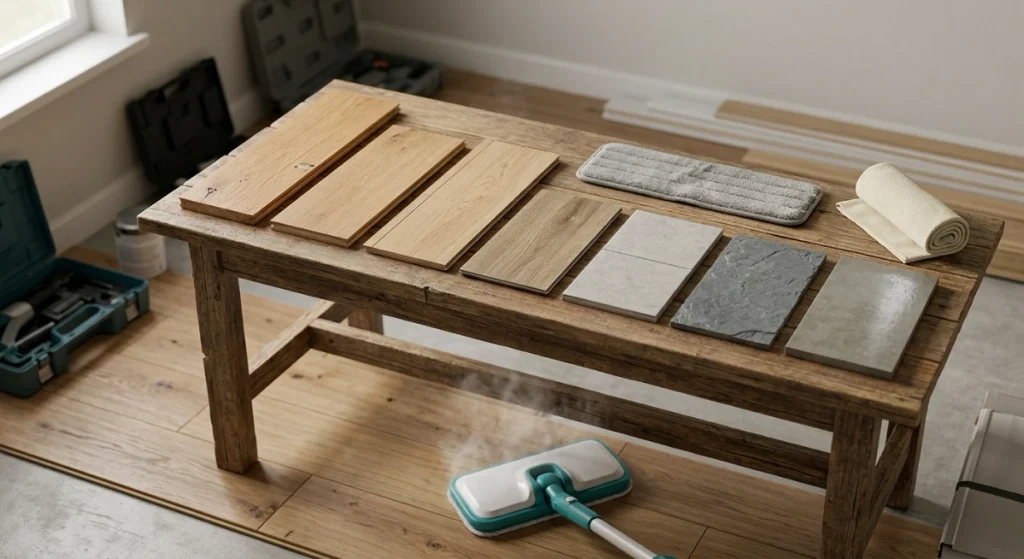
Hardwood and many laminate or vinyl floors present the highest concern. Sealed ceramic and porcelain tile are usually better candidates when the manufacturer allows steam.
The word sealed alone doesn’t guarantee safety. Construction, finish condition, joints, adhesives, and manufacturer instructions still matter.
| Floor Type | General Steam Risk | Main Concern | Safer Cleaning Choice |
|---|---|---|---|
| Solid hardwood | High | Moisture, finish damage, board movement | Near-dry microfiber mop |
| Engineered wood | High unless approved | Seams, veneer, adhesive layers | Manufacturer-approved cleaner |
| Laminate | High for many products | Swollen core and edges | Lightly damp microfiber |
| Vinyl/LVP | Moderate to high | Heat, seams, adhesive | Microfiber with neutral-pH cleaner |
| Ceramic/porcelain tile | Lower when sound and approved | Cracked grout or loose tile | Steam or damp microfiber when permitted |
| Natural stone | Varies | Stone porosity and sealer | Stone-approved pH-neutral cleaner |
| Sealed concrete | Varies | Heat-sensitive coating or sealer | Method approved for the coating |
As of 2026, product-specific instructions matter more than broad claims such as “safe for sealed floors.” Some manufacturers allow limited steam use on specific products while restricting it on others.
Section Takeaway: Treat steam compatibility as a property of your exact flooring product, not merely its general floor category.
Can a Steam Mop Damage Hardwood Floors?
Yes. Hardwood is one of the floor types where steam creates the clearest moisture risk.
The National Wood Flooring Association advises avoiding wet and steam mops because excessive water and steam can dull finishes or damage wood.
What can happen to wood?
- Cupping: Board edges may rise when moisture levels become uneven.
- Finish changes: A finish may become cloudy, dull, softened, or discolored.
- Raised grain: Moisture can make exposed wood fibers feel rough.
- Movement: Boards can expand, contract, or develop visible gaps.
Engineered wood also deserves caution. Its layered construction may resist movement differently, but seams and finishes can still be vulnerable.
For routine wood-floor cleaning, a microfiber spray mop with minimal liquid is the safer default. Bona likewise advises against steam cleaners on wood because moisture can reach between boards.
Safety note: Never assume a polyurethane finish makes hardwood steam-safe. Follow the flooring manufacturer’s maintenance instructions.
Can Steam Damage Laminate Flooring?
Yes, many laminate floors can be damaged by steam. Moisture that reaches the core may cause swollen seams or raised edges.
Laminate normally has a wear layer over a wood-fiber-based core. The surface can resist spills while the cut edges and joints remain more vulnerable.
Watch for swollen plank edges
Damage often appears first around seams. The edge may feel raised or look slightly darker than the surrounding plank.
- Peaking or raised joints
- Bubbling near seams
- Soft or swollen edges
- Permanent gaps after drying
- Changes in surface sheen
There are exceptions. Pergo, for example, permits carefully controlled steam cleaning on certain laminate products with specific wet-warranty construction and technique requirements.
That exception explains why blanket advice can be misleading. Check the exact product line instead of assuming every laminate floor follows the same rule.
Safety note: If you cannot identify the laminate product or confirm steam approval, use a well-wrung microfiber mop rather than testing steam on an exposed area.
Can Steam Mops Damage Vinyl or LVP?
Yes, steam can pose a risk to vinyl and luxury vinyl plank flooring. Heat, plank joints, and installation adhesives are the main concerns.
“Waterproof” vinyl does not automatically mean “steam-safe.” Waterproof ratings usually describe normal spills and water exposure, not continuous heated vapor.
Why LVP needs special care
A floating LVP installation contains many plank joints. A glued installation adds an adhesive layer that may have its own temperature and moisture limits.
Shaw’s current vinyl-care guidance recommends gentle cleaning methods and tells owners to follow the specific care guide for products and methods to avoid.
- Dry-remove grit before mopping.
- Wipe spills promptly.
- Use minimal moisture.
- Choose a neutral-pH cleaner when the manufacturer recommends one.
- Avoid harsh chemicals and abrasive pads.
If your LVP manufacturer explicitly approves steam, follow its steam level and movement instructions exactly. Otherwise, a microfiber mop is the lower-risk choice.
Safety note: Check both the flooring warranty and installation instructions because allowable care methods can differ between product lines.
Are Tile, Stone, and Concrete Safe for Steam?
Ceramic and porcelain tile are among the better candidates for steam cleaning. Natural stone and coated concrete require more caution.
Ceramic and porcelain tile
Sound ceramic or porcelain tile can generally tolerate heat and moisture better than wood-based flooring. Grout condition is often the weak point.
Avoid prolonged steaming over cracked grout, loose tiles, or failing sealant. Those defects can let moisture travel beneath the visible surface.
Natural stone
Stone varies widely. Marble, limestone, slate, granite, and travertine do not share identical porosity or sealer requirements.
A pH-neutral stone cleaner and microfiber mop are safer when steam compatibility is unknown. Never assume sealed stone is automatically suitable.
Sealed or coated concrete
Bare concrete handles heat differently from painted, epoxy-coated, polished, or sealed concrete. The coating may be less tolerant than the concrete itself.
Check the coating manufacturer’s instructions before steaming. Stop immediately if you notice tackiness, whitening, softening, or unexpected gloss changes.
Section Takeaway: Tile itself may handle steam well, but grout, sealers, coatings, and adhesives can still become the weak link.
How Do You Know if a Steam Mop Damaged Your Floor?
Steam damage can appear immediately or become more obvious after the floor dries. Look closely at seams, finish changes, and areas where the mop paused.
- Cloudy finish: A hazy or white appearance develops after cleaning.
- Raised edges: Laminate or wood joints no longer feel flat.
- Bubbling: The surface layer appears blistered or lifted.
- Curling: Vinyl edges begin lifting from the subfloor.
- New gaps: Boards or planks separate after moisture exposure.
- Sticky coating: A floor finish feels soft or tacky after heating.
- Persistent dullness: The affected path looks flatter than surrounding areas.
What should you do first?
Stop using the steam mop. Let the floor dry naturally with normal room ventilation.
Don’t immediately apply polish, wax, vinegar, detergent, or another aggressive cleaner. Those products can hide symptoms or make finish damage harder to diagnose.
For significant swelling, loose planks, cupping, or delamination, contact the flooring manufacturer or an experienced flooring professional.
How Can You Prevent Steam Mop Damage?
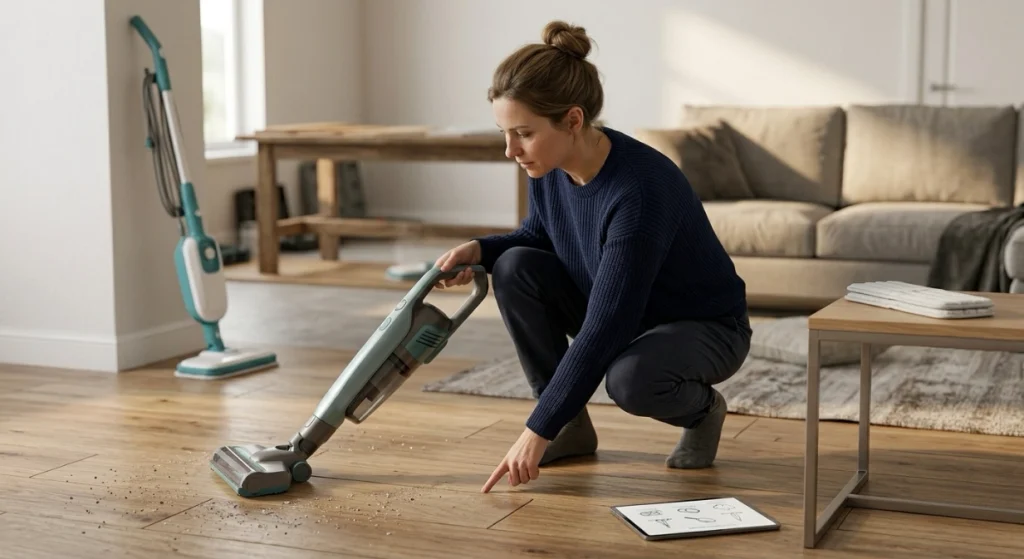
The easiest way to prevent damage is to confirm compatibility before switching the mop on. Technique matters after compatibility is established.
- Identify the flooring. Find the manufacturer and exact product line when possible.
- Read its care guide. Look specifically for steam, wet mopping, heat, and warranty restrictions.
- Inspect the floor. Avoid steaming damaged seams, cracked grout, loose tiles, or worn finishes.
- Vacuum or sweep first. Grit trapped under a pad can scratch a floor.
- Start with the lowest approved setting. More steam isn’t automatically better cleaning.
- Keep the mop moving. Don’t park a hot steam head over stubborn residue.
- Change dirty pads. A loaded pad spreads residue instead of lifting it.
- Watch the surface. Stop if you see cloudiness, swelling, softening, or discoloration.
Do you need steam to disinfect floors?
No, routine household floor cleaning does not automatically require disinfection. CDC guidance says regular cleaning is usually enough in most homes unless illness or another reason increases the need for disinfection.
The EPA also distinguishes cleaning, sanitizing, and disinfecting. A steam mop’s cleaning ability should not be treated as proof of disinfection unless the device has validated instructions for that purpose.
Safety note: When disinfecting is necessary, use only a method or product approved for the flooring and follow its label, including required contact time.
Steam Mop Floor Damage FAQs
Will using a steam mop once ruin my floor?
Not necessarily. A single brief use may leave no visible damage, especially if little moisture reached the seams. Stop using steam if your manufacturer prohibits it, and watch for swelling, cloudy finish, raised edges, or movement as the floor dries.
Can I use a steam mop on sealed hardwood?
Sealing does not make all hardwood steam-safe. Steam can still enter joints or damaged finish areas, and the NWFA advises avoiding steam mops on wood floors. Use a lightly damp microfiber method unless your flooring manufacturer specifically states otherwise.
Is a low steam setting safe for laminate?
Only if the exact laminate product allows steam. Some moisture-resistant laminate lines permit controlled low-power steam cleaning, while others prohibit it. Without product-specific approval, a nearly dry microfiber mop is the safer option.
Can I steam mop waterproof vinyl plank flooring?
Waterproof does not automatically mean heat-resistant or steam-safe. Steam may affect seams, adhesives, or other construction layers. Check the manufacturer’s maintenance guide before using a steam mop on waterproof LVP.
Can steam damage grout?
Sound grout generally handles ordinary floor moisture better than wood joints, but deteriorated or cracked grout deserves caution. Concentrated steam can introduce moisture into existing defects, so repair failing grout before steam cleaning.
Is steam safer than using floor cleaner?
It depends on the floor. Steam reduces the need for conventional cleaner on compatible surfaces, but heat and moisture create their own risks. Sensitive floors often do better with a small amount of manufacturer-approved cleaner and microfiber.
What is the safest mop if I don’t know my flooring type?
A soft microfiber flat mop used with minimal moisture is usually the conservative choice. Avoid steam, soaking, strong chemicals, and abrasive scrubbing until you identify the flooring and its care requirements.
The Safest Rule for Steam Cleaning Floors
Steam mops are useful tools, but they aren’t universal hard-floor cleaners. They make the most sense on surfaces specifically designed to tolerate both heat and moisture.
For hardwood, laminate, vinyl, LVP, natural stone, or an unknown floor, start with the manufacturer’s care instructions. When steam approval is unclear, choose microfiber and minimal moisture instead.
That small precaution can save you from swollen seams, damaged finishes, loose adhesive, and a much more expensive floor repair.