
Can You Put Floor Cleaner in Steam Mops? What to Use Instead

Quick Answer
In most steam mops, you should not put floor cleaner in the water tank. Manufacturers commonly design steam-mop reservoirs for water only, and BISSELL’s steam-mop guidance specifically warns against adding formula, chemicals, cleaning solutions, or vinegar. Using the wrong liquid can leave residue, clog internal parts, damage seals, or create a warranty problem.
What should you do instead?
- Use water only: Fill the tank with the type of water recommended in your steam mop manual.
- Check your model: Never assume a cleaner is compatible just because another mop brand allows it.
- Pre-clean heavy soil: Use a floor-safe cleaner separately when grease or sticky residue needs extra help.
- Protect the floor: Confirm that the flooring itself can tolerate steam before using the machine.
- Avoid DIY additives: Keep vinegar, essential oils, bleach, dish soap, and disinfectants out of a water-only tank.
Quick fix for dirtier floors
- Vacuum first, spot-clean stubborn grime with a floor-compatible product, then steam with plain water only if both the mop and flooring allow steam.
If you’re wondering, “can you put floor cleaner in steam mops?” you’re probably trying to get more cleaning power or a fresher smell. I’ve had the same temptation when plain steam wasn’t cutting through a greasy kitchen spot.
The safer answer is usually simpler: keep cleaner out of the steam mop tank. Below, I’ll explain why, what can go wrong, and how to get cleaner floors without risking your machine.
In This Guide
- Can You Put Floor Cleaner in a Steam Mop?
- Why Do Steam Mop Manufacturers Say Water Only?
- What Happens If You Put Cleaner in a Steam Mop?
- What Should You Put in a Steam Mop Tank?
- How Can You Get Better Cleaning Without Adding Solution?
- Which Floors Are Safe for Steam Mopping?
- What If You Already Put Floor Cleaner in the Steam Mop?
- Frequently Asked Questions
- The Bottom Line
Can You Put Floor Cleaner in a Steam Mop?
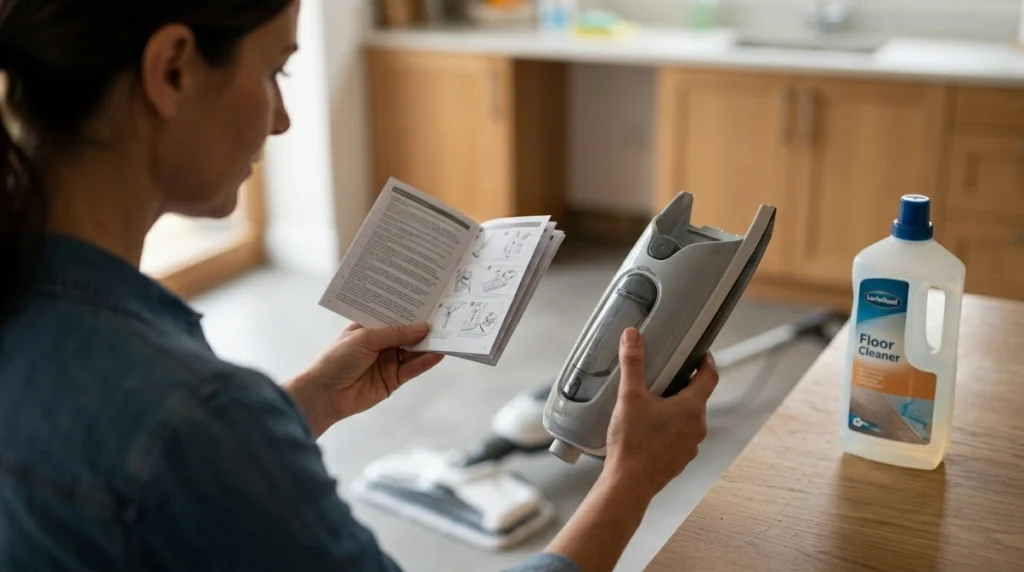
Usually, no. A standard steam mop is designed to turn water into hot vapor, not heat detergent, fragrance, disinfectant, or concentrated floor cleaner.
A steam mop is an electric floor-cleaning tool that heats water and sends steam through a cleaning head or microfiber pad. The heat loosens soil while the pad collects the loosened dirt.
That design is different from a cordless electric mop, spray mop, spin mop, or traditional string mop. Those tools may have systems specifically designed for cleaning solutions.
There are exceptions, but the manual decides
A few floor-cleaning machines have separate solution tanks or manufacturer-approved formulas. That doesn’t mean the same product belongs inside every steam mop.
Check the exact model instructions before adding anything besides water. If the manual says “water only,” treat that as a hard limit.
- Steam mop: Usually uses water and heat.
- Spray mop: Usually sprays diluted or ready-to-use floor cleaner.
- Spin mop: Uses a bucket, so compatible cleaner can normally be diluted in the water.
- Cordless wet cleaner: May use a brand-specific cleaning solution in a dedicated tank.
- Robot mop: Cleaner compatibility varies widely by model.
Safety note: Follow both the steam mop manual and your flooring manufacturer’s care instructions. Machine-safe does not automatically mean floor-safe.
Why Do Steam Mop Manufacturers Say Water Only?
Manufacturers restrict the tank because its internal parts were engineered around water. Detergents and other chemicals can behave differently when heated and pushed through small steam channels.
For example, Shark’s Steam and Scrub guidance says not to add cleaning solutions, vinegar, perfumes, or oils to the tank.
Cleaner can leave deposits inside the machine
Many floor cleaners contain surfactants. These ingredients help water spread and lift greasy soil, which is useful during normal mopping.
Inside a steam system, those ingredients can create residue where the manufacturer expected plain water. Fragrances, oils, dyes, and other additives can also leave material behind.
Heated chemicals are not automatically safe
A product that’s safe when diluted in a bucket isn’t automatically intended for heating. The floor-cleaner label may specify a particular dilution, application method, or rinse procedure.
Heating a product outside those directions changes how it’s being used. That’s reason enough not to experiment.
Your warranty may depend on correct use
If a manufacturer states that the tank is for water only, adding another product means you’re using the appliance outside its instructions. Damage resulting from that misuse may not be covered.
As of 2026, water-only guidance remains common across mainstream steam mop lines. Always give your exact model’s manual more weight than a general cleaning hack online.
Safety note: Never add bleach, ammonia, disinfectant, solvent, or another chemical to a steam mop unless the manufacturer explicitly instructs you to do so.
What Happens If You Put Cleaner in a Steam Mop?
The first problem may be minor, such as streaks or an unusual smell. Repeated use can create harder-to-correct issues inside the machine or on the floor.
- Internal residue: Detergent or fragrance ingredients may coat small passages and components.
- Reduced steam flow: Deposits can contribute to poor steam output or uneven delivery.
- Foaming: Some cleaners are designed to create suds when agitated, which a steam system doesn’t need.
- Floor streaks: Cleaner can concentrate on the microfiber pad and leave visible film.
- Sticky floors: Too much detergent often attracts new soil instead of leaving a clean finish.
- Odor: Heated fragrance or accumulated cleaner can create a stronger smell than expected.
- Machine damage: Seals, pumps, tanks, or other components may not tolerate unapproved chemicals.
More cleaner doesn’t mean a cleaner floor
This is one of the most common mopping mistakes I see. People increase detergent when a floor still looks dirty, then end up fighting residue instead of dirt.
When I’ve dealt with greasy tile, changing the pad midway through cleaning has often helped more than adding extra cleaner. A saturated pad simply moves dirty moisture around.
Safety note: If a chemical produces unexpected fumes, odor, leaking, or irritation, stop using the appliance and follow the product and machine safety instructions.
What Should You Put in a Steam Mop Tank?
Use the water specified by your steam mop manufacturer. For many models, that means plain water, with distilled or demineralized water often recommended in hard-water areas.
Tap water
Some steam mops accept ordinary tap water. The drawback is that hard tap water contains minerals that can build up inside heated appliances.
Check the manual before assuming tap water is ideal. Water hardness differs dramatically from one home to another.
Distilled or demineralized water
Distilled water contains far fewer dissolved minerals than normal tap water. That can help reduce mineral scale in models where the manufacturer recommends it.
It doesn’t make steam safe for every floor, though. Water choice protects the machine, while flooring compatibility is a separate question.
What not to add to a water-only tank
- General-purpose floor cleaner
- Hardwood floor cleaner
- Laminate cleaner
- Vinegar
- Bleach
- Disinfectant
- Dish soap
- Essential oils
- Fragrance concentrates
- Enzyme cleaner
Some of those products are useful when applied correctly with a microfiber flat mop or another suitable tool. The issue is putting them into a steam reservoir that wasn’t designed for them.
How Can You Get Better Cleaning Without Adding Solution?
You can get noticeably better steam-mopping results without changing what’s in the tank. Preparation, pad condition, and floor compatibility matter more.
1. Vacuum or sweep first
Remove crumbs, grit, pet hair, and loose dust before adding moisture. Steam hitting loose debris can turn fine dirt into muddy streaks.
2. Pre-treat stubborn dirt separately
For greasy or sticky areas, use a cleaner approved for the floor surface. Apply it according to its own label instead of pouring it into the steam mop.
The CDC recommends using cleaning products that are appropriate for the surface and following product directions. Its home cleaning and disinfecting guidance also distinguishes routine cleaning from situations where disinfection is needed.
3. Change dirty microfiber pads
A steam mop pad has limited capacity. Once loaded with grease and soil, it starts redistributing contamination instead of picking it up efficiently.
On a dirty kitchen or entryway, keep a second clean pad ready. Swap pads when the first looks visibly gray or begins leaving streaks.
4. Choose a suitable cleaner for separate mopping
If you need a chemical floor cleaner, look for one labeled for your exact floor material. A pH-neutral cleaner is often preferred for sensitive finishes, but the flooring manufacturer’s directions still come first.
The EPA maintains a searchable directory of Safer Choice-certified cleaning products, including floor-care options evaluated under its ingredient and performance criteria.
5. Use the right mop when chemicals are necessary
A steam mop isn’t the best tool for every job. Sometimes a lightly damp microfiber mop with the correct cleaner gives you more control.
- Microfiber flat mop: Good for low-moisture cleaning and controlled cleaner application.
- Spin mop: Useful when the floor allows a diluted solution and more rinsing water.
- Spray mop: Good for measured, small amounts of compatible floor cleaner.
- Steam mop: Best reserved for surfaces that tolerate heat and steam.
Safety note: Never mix cleaners together. Follow the cleaner label for dilution, ventilation, contact time, and surface restrictions.
Which Floors Are Safe for Steam Mopping?
Steam suitability depends on the flooring, not just the mop. Tile may tolerate steam well, while wood, laminate, and vinyl can be much more sensitive to heat and moisture.
The National Wood Flooring Association’s consumer guidance advises avoiding wet mops and steam mops on wood because excess water and steam can dull or damage the floor.
| Floor Type | Steam Mop Guidance | Safer Cleaning Approach |
|---|---|---|
| Ceramic or porcelain tile | Often suitable when tile, grout, and installation are intact | Steam with water only, or use a tile-safe cleaner separately |
| Natural stone | Depends on stone and sealer | Use a stone-approved pH-neutral cleaner and manufacturer-approved method |
| Solid hardwood | Generally avoid unless manufacturer specifically permits steam | Near-dry microfiber mop with wood-floor cleaner |
| Engineered wood | Manufacturer-dependent; many products discourage steam | Low-moisture microfiber cleaning |
| Laminate | Usually avoid because steam can enter seams | Lightly damp microfiber mop with laminate-safe cleaner |
| Vinyl / LVP | Often discouraged because heat can affect seams, layers, or adhesive | Damp microfiber mop with vinyl-approved cleaner |
| Sealed concrete | Often suitable if the coating tolerates heat | Follow the sealer manufacturer’s cleaning instructions |
Pay special attention to seams, worn finishes, damaged grout, lifted edges, and cracked coatings. Steam can reach weak points that ordinary damp mopping may not.
Safety note: Test an inconspicuous spot and check the floor warranty before using steam, especially on wood, laminate, vinyl/LVP, natural stone, or coated concrete.
What If You Already Put Floor Cleaner in the Steam Mop?

Stop using the mop and check its manual before running more solution through it. One accidental fill doesn’t automatically mean the machine is ruined, but continuing to heat the cleaner can make the situation worse.
What to do next
- Unplug the steam mop and allow it to cool completely.
- Empty the reservoir according to the manufacturer instructions.
- Check the manual for tank-rinsing or maintenance directions.
- Rinse only if permitted by the manufacturer.
- Do not add another chemical to neutralize the first cleaner.
- Contact manufacturer support if the mop leaks, smells unusual, foams, or stops steaming correctly.
Avoid automatically flushing the machine with vinegar. Vinegar is another chemical that many water-only steam mop manufacturers specifically tell users not to put into the reservoir.
What if the floor feels sticky afterward?
Let the floor cool, then clean it using the method recommended for that flooring. A clean microfiber mop and correctly diluted floor cleaner may help remove detergent film.
You may need a second pass with plain water if the floor manufacturer allows it. Keep moisture minimal on laminate, hardwood, and similar water-sensitive flooring.
Safety note: If different chemicals were accidentally mixed, don’t add anything else. Ventilate the area if needed and follow the chemical labels for exposure or spill instructions.
Frequently Asked Questions
Can I put Pine-Sol or another general floor cleaner in a steam mop?
Not unless your exact steam mop manufacturer specifically allows that product. Most standard steam mops use water-only reservoirs, so apply compatible floor cleaner separately with a microfiber or traditional mop instead.
Can I put Bona floor cleaner in a steam mop?
Don’t pour Bona or another hardwood cleaner into a water-only steam mop tank. If the cleaner is approved for your floor, use it with the application method listed on its label, such as a spray or microfiber mop.
Can I put vinegar in my steam mop?
Usually not. Major steam-mop manufacturers commonly warn against adding vinegar to water-only tanks because it can damage components or make the appliance unsafe to use.
Can I add essential oils to make my steam mop smell better?
Don’t add essential oils to the water reservoir unless the manufacturer explicitly permits them. Oils can leave residue inside the steam system, and concentrated essential oils may also be unsuitable around certain people, pets, or floor finishes.
Can I put disinfectant in a steam mop?
Don’t put disinfectant into a water-only steam mop. Use an EPA-registered disinfectant separately and exactly as its label directs when disinfection is needed, including any required surface contact time.
Why does my floor still look dirty after steam mopping?
Loose dirt, grease, an overloaded microfiber pad, old cleaner residue, or an unsuitable floor surface can all cause poor results. Vacuum first, replace dirty pads, and use a compatible floor cleaner separately for stubborn soil.
Is distilled water better for a steam mop?
It can be. Some manufacturers recommend distilled or demineralized water because it reduces minerals that can accumulate inside the machine, especially in hard-water areas. Follow your model’s instructions.
The Bottom Line
For most steam mops, the safest rule is simple: put only manufacturer-approved water in the tank. Don’t turn the reservoir into a bucket for floor cleaner, vinegar, essential oils, bleach, or disinfectant.
If plain steam isn’t cleaning well enough, improve the process rather than the tank contents. Vacuum first, use clean microfiber pads, pre-treat stubborn soil separately, and choose a cleaner made for your specific flooring.
Most importantly, check two sets of instructions before steaming: the steam mop manual and the flooring care guide. Following both is the best way to get clean floors without trading today’s grime for tomorrow’s repair bill.
