
Can You Steam Mop Carpet? A Safe, Practical Guide

Quick Answer
Yes, you can steam mop some carpets, but only when your steam mop supports carpet use and you have the correct carpet-glider attachment. A steam mop is best for lightly refreshing carpet fibers, not removing deep stains or extracting embedded dirt. Vacuum first and follow CDC guidance for cleaning soft surfaces when choosing your cleaning method.
When Steam Mopping Carpet Makes Sense
- Light refreshing: Steam can freshen carpet fibers between deeper cleaning sessions.
- Correct attachment: Use a carpet glider made for your exact steam-mop model.
- Vacuum first: Remove hair, crumbs, grit, and loose soil before adding moisture.
- Keep moving: Never leave the hot mop head sitting in one place.
- Check compatibility: Follow both the carpet manufacturer’s and steam-mop manufacturer’s instructions.
When to Choose Something Else
- Use a carpet extractor or professional carpet cleaner for deep soil, spills, stubborn stains, or heavy pet messes.
If you’re wondering, “can you steam mop carpet?” the answer needs more context than a simple yes or no. I’ve found that the attachment, carpet construction, moisture level, and goal all matter.
In this guide, I’ll show you where a steam mop helps, where it falls short, and how to avoid turning a quick refresh into a soggy carpet problem.
In This Guide
- Can You Steam Mop Carpet Safely?
- What Does a Steam Mop Actually Do to Carpet?
- Which Carpets Can You Steam Mop?
- How Do You Steam Mop Carpet Correctly?
- Steam Mop vs. Carpet Cleaner: What’s the Difference?
- What Are the Risks of Steam Mopping Carpet?
- What Should You Use for Stains, Odors, and Pet Messes?
- Frequently Asked Questions
- Final Takeaway
Can You Steam Mop Carpet Safely?
You can steam mop certain carpets when the steam mop is specifically approved for carpet use. You also need the manufacturer’s carpet-glider attachment rather than pressing the normal mop pad directly into the pile.
Definition: A steam mop is an electrically heated floor-cleaning tool that turns water into steam and sends it through a washable pad. Most models are designed mainly for compatible hard floors.
Why the carpet glider matters
A carpet glider is usually a smooth plastic frame that fits underneath the mop head. It helps the mop slide over carpet instead of dragging the microfiber pad through the fibers.
The glider also reduces direct pad-to-carpet contact. That makes the process closer to light steaming than wet mopping.
BISSELL’s guidance for its Symphony carpet glider describes the attachment as a way to refresh carpet, not as a replacement for a carpet cleaner.
- Use the correct glider: Don’t improvise with a generic plastic tray.
- Keep the mop moving: Heat should never sit over one carpet area for an extended period.
- Use the approved steam setting: More steam isn’t automatically better.
- Test first: Choose a hidden corner before treating an entire room.
I treat a carpet glider as an occasional maintenance accessory. I don’t treat it as a deep-cleaning tool.
That distinction prevents most unrealistic expectations.
What Does a Steam Mop Actually Do to Carpet?
A steam mop mainly adds heat and a small amount of moisture near the carpet surface. It does not provide the strong suction needed to pull dirty water from deep inside the pile.
That makes it useful for refreshing, but limited for serious cleaning.
What it can help with
- Surface freshening: Light steaming can make flattened or stale-feeling fibers feel fresher.
- Minor odors: Heat may help with some light surface odors when no deep contamination exists.
- Between-cleaning maintenance: It can supplement regular vacuuming and periodic carpet cleaning.
- Light surface grime: Heat can loosen some material near the top of the carpet pile.
What it cannot do well
- Extract dirty water: A steam mop normally has no extraction system.
- Flush deep soil: Sand and embedded debris stay in the carpet unless vacuumed or extracted.
- Remove major stains: Coffee, wine, grease, urine, and tracked-in dirt need targeted treatment.
- Guarantee disinfection: Steam output alone doesn’t prove that every carpet fiber reached a validated temperature for a required contact time.
Shark also describes compatible carpet-glider use as a way to groom and freshen carpet and area rugs. That language is important because “freshen” and “deep clean” are different jobs.
Think of a steam mop as a finishing tool. Your vacuum and carpet cleaner still do the heavier work.
Which Carpets Can You Steam Mop?
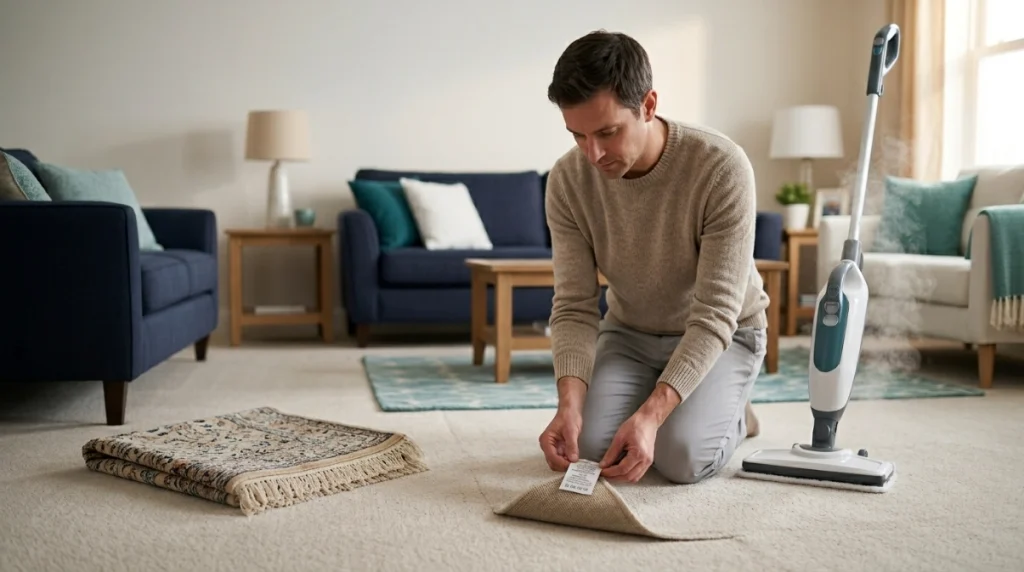
Carpet compatibility depends on fiber type, backing, adhesive, dye stability, and manufacturer instructions. Never assume every synthetic carpet can tolerate steam.
Start with the carpet’s care label or warranty information whenever you can identify it.
Better candidates for light steaming
- Low-pile synthetic carpet: Dense, shorter fibers usually let a glider move more easily.
- Commercial-style carpet: Some durable synthetic constructions handle light maintenance better.
- Compatible area rugs: Only steam them when their care instructions allow moisture and heat.
- Carpet approved by the appliance maker: Follow the exact model instructions and attachment requirements.
Carpets I would avoid steaming
- Wool: Heat and moisture can affect delicate natural fibers and finishes.
- Silk or viscose rugs: These materials can be highly sensitive to water, heat, and agitation.
- Handmade or antique rugs: Dyes and construction methods may react unpredictably.
- Loose-backed rugs: Heat or moisture may affect adhesives and backing materials.
- Unknown carpet: If you can’t identify the material or care requirements, choose a safer method.
Colorfastness matters too. A carpet can tolerate moisture yet still release or shift dye.
Test an inconspicuous area first and let it dry completely. Stop if you notice color transfer, texture changes, rippling, or an unusual odor.
Safety note: Always check your carpet manufacturer’s care guide and your steam-mop manual before using steam.
How Do You Steam Mop Carpet Correctly?
The safest process begins with dry cleaning, not steam. Vacuuming first removes material that steam would otherwise dampen and push deeper into the pile.
Step 1: Vacuum thoroughly
Vacuum in at least two directions in high-traffic areas. Pay special attention to edges, pet-hair zones, and entrances.
Empty the vacuum bin or bag before a large room if airflow has dropped.
Step 2: Check the carpet and machine
- Confirm the carpet can tolerate the method.
- Confirm your steam mop supports carpet use.
- Install the correct clean microfiber pad.
- Attach the manufacturer’s carpet glider.
- Fill the water tank as directed by the appliance maker.
Don’t pour carpet shampoo, vinegar, dish soap, or random fragrance into the steam-mop tank. Use only liquids specifically approved for that machine.
Step 3: Test a hidden area
Choose a small section behind furniture or near a corner. Make a few continuous passes and then let that section dry.
Look for shrinking, discoloration, texture changes, adhesive odor, or backing distortion.
Step 4: Work in small sections
- Place the heated mop onto the carpet using the glider.
- Move it continuously with overlapping forward-and-back passes.
- Avoid pressing hard into the carpet pile.
- Don’t repeatedly steam the same spot trying to remove a stain.
- Move to the next section before the carpet becomes noticeably wet.
When I use a carpet glider, my goal is a light pass rather than saturation. If a patch starts feeling wet underfoot, I stop adding steam.
Step 5: Let the carpet dry fully
Increase airflow with open doors, fans, or air conditioning when appropriate. Keep heavy furniture and foot traffic off damp carpet until it feels dry.
Moisture trapped deep in carpet or padding is exactly what you want to avoid.
Section Takeaway: Vacuum first, use the correct glider, keep the steam mop moving, and stop before the carpet becomes wet.
Steam Mop vs. Carpet Cleaner: What’s the Difference?
A steam mop and a carpet extractor solve different problems. The biggest difference is that a carpet cleaner can usually apply cleaning solution and recover dirty liquid with suction.
A steam mop generally cannot extract anything from the carpet.
| Method | Steam Mop + Glider | Carpet Extractor | Vacuum |
|---|---|---|---|
| Main job | Light refreshing | Deep wet cleaning | Dry soil removal |
| Uses heat | Yes | Model-dependent | No |
| Extracts liquid | No | Yes | No |
| Best for stains | Poor choice | Good choice when compatible | Dry debris only |
| Best routine | Occasional refresh | Periodic deeper cleaning | Frequent maintenance |
Consumer Reports’ steam-mop buying guidance also distinguishes light carpet freshening with a glider from deep carpet cleaning.
If your carpet only looks flat or stale, a compatible glider may be enough. If your rinse water would come out brown, you need extraction rather than more steam.
What Are the Risks of Steam Mopping Carpet?
The biggest risks are too much heat, too much moisture, and using steam on materials that were never designed for it. Problems often come from technique rather than from steam alone.
Common mistakes to avoid
- Holding the mop still: Concentrated heat can stress fibers, backing, or adhesive.
- Using steam on unknown rugs: Delicate fibers and dyes may react badly.
- Trying to erase stains: Repeated steaming can spread a stain or push moisture deeper.
- Skipping the vacuum: Damp dust and hair are harder to remove.
- Using too much steam: Carpet should be lightly treated rather than saturated.
- Adding unapproved chemicals: Cleaners may damage the machine or leave unwanted residue.
- Putting furniture back too soon: Damp carpet under furniture dries more slowly.
Don’t assume steam automatically sanitizes carpet
Steam can expose surfaces to high heat, but effective sanitizing depends on temperature, exposure time, coverage, and the target organism. A quick carpet-glider pass doesn’t automatically prove those conditions were met.
Use the word “refresh” unless your appliance manufacturer provides a validated sanitizing procedure for that exact application.
Safety note: Follow the carpet-care label, appliance manual, and cleaning-product label whenever heat, moisture, or chemicals could affect the material.
What Should You Use for Stains, Odors, and Pet Messes?
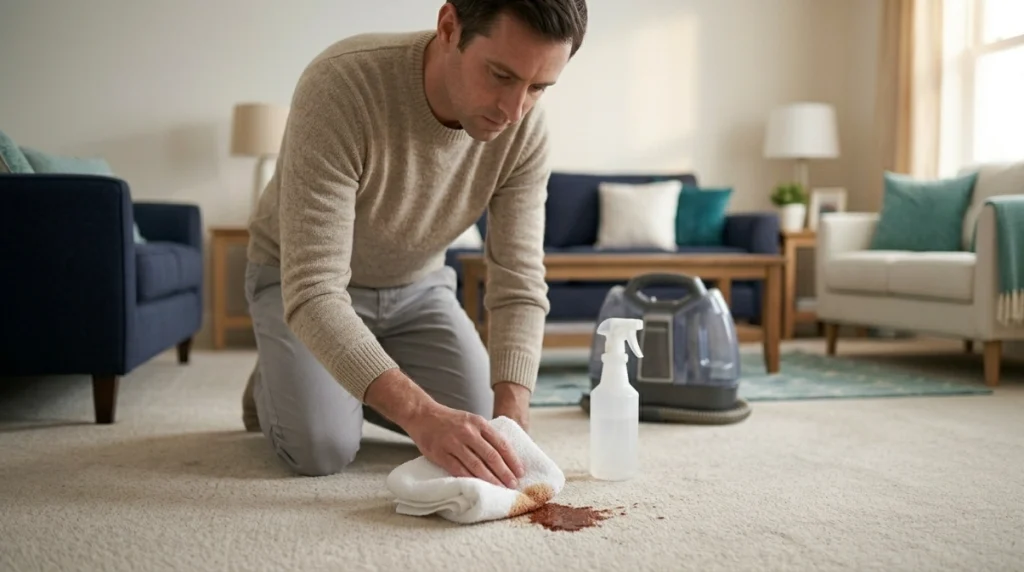
Match the cleaning method to the mess instead of asking one machine to do everything. Steam can be useful in a cleaning toolkit, but stain removal often needs a different approach.
For fresh spills
- Blot liquid immediately with a clean absorbent towel.
- Work from the outside of the spill toward the center.
- Use a carpet-safe spot treatment if the care instructions allow it.
- Avoid soaking the backing and padding.
For pet urine or organic odors
An enzyme cleaner labeled for compatible carpet can be more useful than surface steam because it targets organic residue. Test any product first for colorfastness.
For a large or repeated urine problem, extraction may be needed because contamination can travel below the visible carpet surface.
For greasy or colored stains
Use a stain remover specifically labeled for the carpet material and stain type. Heat can sometimes make stain removal harder, so don’t automatically steam a mystery stain first.
For general cleaner selection
If you want to reduce unnecessary exposure to harsher ingredients, the EPA maintains information on identifying greener cleaning products. A “natural” label alone doesn’t guarantee that a product is suitable for your carpet.
Safety note: Never mix cleaning products, and always follow dilution, ventilation, material-compatibility, and storage instructions on the label.
Frequently Asked Questions
Can I use a steam mop directly on carpet without a glider?
I wouldn’t recommend it unless the manufacturer specifically instructs you to do so. A normal steam-mop pad can drag against carpet, concentrate moisture, and make movement difficult, while a proper carpet glider is designed to keep the head moving over the fibers.
Does a steam mop deep clean carpet?
No. A steam mop can lightly refresh compatible carpet, but it normally doesn’t rinse the fibers and extract dirty water. For embedded soil, major stains, or heavily trafficked carpet, use a carpet extractor or another carpet-cleaning method approved by the manufacturer.
Can steam mopping remove carpet odors?
It may reduce some light surface odors, but it won’t reliably remove odor sources deep in the backing or padding. Pet urine, spills, and long-term contamination often require an enzyme treatment, extraction, or professional cleaning.
Can I steam mop an area rug?
Only if the rug’s care instructions permit heat and moisture and your steam mop supports rug use. Avoid steaming delicate wool, silk, viscose, handmade, antique, or unknown rugs unless their manufacturer or a qualified rug cleaner confirms the method is safe.
Should I vacuum before using a steam mop on carpet?
Yes. Vacuuming removes loose dust, grit, crumbs, and hair before moisture is introduced. It also lets the steam mop work on the carpet fibers instead of dampening a layer of surface debris.
Can a steam mop kill germs in carpet?
Heat can affect microorganisms, but a normal carpet-glider pass shouldn’t be treated as guaranteed disinfection. Effective germ reduction depends on temperature, contact time, coverage, and validated manufacturer instructions, so follow any specific sanitizing procedure supplied with your appliance.
How often should I steam mop carpet?
There is no universal schedule because carpet materials and household conditions differ. I would use a compatible steam mop only as an occasional refresher, while making regular vacuuming the primary maintenance method and using deeper carpet cleaning when soil builds up.
Final Takeaway: Should You Steam Mop Your Carpet?
Yes, you can steam mop carpet when both the carpet and the steam-mop manufacturer allow it. Use the correct carpet glider, vacuum first, test a hidden section, keep the mop moving, and avoid soaking the fibers.
Just keep the purpose clear. A steam mop is a light carpet refresher, while a carpet extractor is the better tool for deep dirt, stubborn stains, and heavily soiled areas.
If you’re unsure about the carpet material, choose the lower-risk option and check its care instructions first. Protecting the carpet is more important than forcing one cleaning tool to handle every job.
