
Can You Use Kitchen Checklist for Better Organization

Yes, a kitchen checklist can help you clean faster, stay organized, and protect your floors. The key is matching the checklist to your kitchen surfaces and using safe cleaning methods.
If you are asking can you use kitchen checklist as part of a better cleaning routine, the short answer is yes. A kitchen checklist can help you stay organized, clean more consistently, and protect your floors and surfaces from avoidable wear.
- Better routine: A checklist keeps daily and weekly kitchen tasks organized.
- Floor-safe care: Match water, cleaner, and mop type to the flooring.
- Fewer misses: Include edges, grout, and hidden areas in the plan.
- Lower risk: Dry floors well to reduce slips and residue buildup.
- Ask first: Check with a professional if the floor finish looks damaged.
Can You Use Kitchen Checklist for Better Organization in 2025?
Yes, a kitchen checklist can be one of the simplest ways to keep a busy home running smoothly. In 2025, many homeowners want cleaning routines that are fast, flexible, and easy to repeat without missing important steps.
A good checklist does more than remind you to wipe counters. It helps you group tasks by zone, match cleaning methods to the right surfaces, and avoid the common problem of doing too much in one area while forgetting another.
Keep your checklist in the kitchen where you can see it. A visible routine is easier to follow than one saved in a phone note you rarely open.
For homes with mixed flooring, the checklist can also help you choose safer cleaning methods. That matters if your kitchen includes tile, vinyl, laminate, hardwood, or a transition area that needs different care. If you are still deciding how often to clean certain floors, it can help to compare your routine with practical guidance like how often you should mop hardwood floors so you do not overclean sensitive surfaces.
What a Kitchen Checklist Actually Covers for Daily Cleaning and Maintenance
A kitchen checklist usually includes the tasks that keep the room sanitary, functional, and ready for the next meal. That can mean daily wipe-downs, floor care, trash removal, and small organization habits that prevent mess from building up.
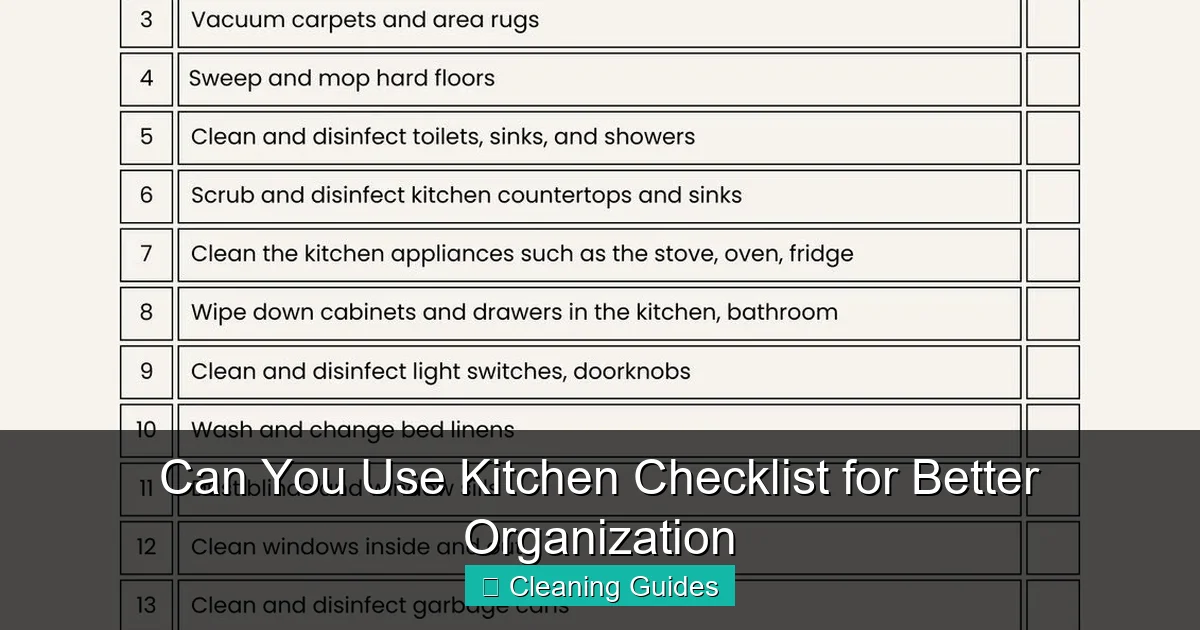
Visual guide about Can You Use Kitchen Checklist for Better Organization
Image source: bogiolo.com
The best checklists are specific. Instead of saying clean the kitchen, they break the room into surfaces, appliances, storage, and floor care so nothing gets skipped during a rushed morning or after dinner.
High-touch surfaces, appliances, and prep zones
High-touch areas are the places that collect fingerprints, crumbs, grease, and spills fastest. Think cabinet handles, faucet levers, light switches, fridge doors, counters, stove tops, and the area around the sink.
Prep zones matter too, especially if you cook often. A checklist can remind you to sanitize or wipe these areas after food prep, clear crumbs from cutting boards, and check for splatters behind appliances or near the backsplash.
- Wipe counters and sink edges
- Clean handles and appliance fronts
- Remove crumbs from prep areas
- Check stove top for grease spots
- Dry damp areas to prevent slipping
Storage areas, pantry items, and supply tracking
A kitchen checklist is also useful for organization, not just cleaning. It can include pantry rotation, fridge checks, expired item removal, and a quick review of cleaning supplies so you do not run out at the wrong time.
That is especially helpful in shared households. When everyone knows where items belong and what needs restocking, the kitchen stays easier to clean and less likely to become cluttered with duplicate supplies or forgotten food.
Why Homeowners Search “Can You Use Kitchen Checklist” for Cleaning and Workflow
People usually search this phrase because they want a routine that saves effort, not another complicated system. A kitchen checklist works well when the goal is to make cleaning feel more manageable during the busiest parts of the day.
It can also reduce the mental load of remembering every little task. Once the list is set up for your kitchen layout and floor type, the routine becomes easier to repeat with less second-guessing.
Saving time during busy mornings and meal prep
Morning kitchens often need fast resets. A checklist helps you handle the most visible tasks first, such as clearing counters, rinsing dishes, wiping spills, and making sure the floor is safe to walk on.
During meal prep, the same checklist can keep you from piling dirty dishes, wet towels, and food scraps in random spots. That saves time later because you are cleaning as you go instead of facing one large mess after cooking.
Reducing missed tasks and repeat messes
Many kitchen messes come back because the same spots are overlooked. Grease near the stove, crumbs under stools, and sticky patches near the trash can all return quickly if they are not part of a repeatable routine.
A checklist helps you catch those repeated problem areas before they become stubborn. It is also a good way to avoid cleaning the same surface twice while forgetting another area that needs attention more urgently.
If your kitchen floor gets wet often, build drying into the checklist. Leaving moisture behind can make floors slippery and may shorten the life of certain finishes.
How to Build a Kitchen Checklist That Fits Your Floor Type
Floor care should be part of any kitchen checklist because the kitchen is one of the most spill-prone rooms in the home. The right routine depends on whether your floor is tile, vinyl, laminate, or sealed hardwood, since each surface handles water and cleaners differently.
If you want a checklist that truly works, start by matching the cleaning method to the floor finish. That is one of the easiest ways to avoid dull spots, swelling, residue, or unnecessary wear.
Tile, vinyl, laminate, and sealed hardwood considerations
Tile floors usually handle routine damp cleaning well, especially when grout lines are kept in mind. Vinyl can also be manageable with the right cleaner and limited water, while laminate often needs a lighter touch to prevent edge damage.
Sealed hardwood is more sensitive than tile, so it usually benefits from minimal moisture and a floor cleaner that is safe for wood. If your kitchen includes wood or engineered wood, it is worth reviewing guidance such as can you mop engineered hardwood floors before setting a routine.
What to avoid on sensitive or water-prone flooring
Do not assume every cleaner is safe just because it works elsewhere in the house. Harsh chemicals, overly wet mops, and steam on the wrong surface can cause warping, streaking, or finish damage.
It also helps to avoid soaking the floor around dishwashers, sinks, and refrigerator edges. Those areas are more likely to trap moisture, especially if the flooring has seams, grout, or a vulnerable finish.
Do not flood a kitchen floor with water or use a cleaner that leaves a sticky film. Excess moisture and residue can create slip risks and make the floor look dirty again faster.
Practical Kitchen Checklist Examples for Real Homes
The most useful kitchen checklist is one you can actually keep up with. That means choosing a format that fits your household, your cooking habits, and how much time you realistically have each day.
Below are simple examples you can adapt. You may need to add or remove items depending on room size, floor type, family routine, and whether your kitchen sees heavy daily use.
Daily checklist for quick reset cleaning
A daily reset should focus on the most visible and most used areas. The goal is not deep cleaning every day, but keeping the kitchen sanitary and ready for the next round of cooking.
Remove dishes, crumbs, and food debris from counters, then wipe down prep zones, handles, and the sink area.
Pick up visible crumbs and spills, then use the safest method for your floor type to clean small messes before they spread.
Check for wet spots near the sink, trash, and stove, then make sure rugs, mats, and walkways are dry and clear.
If you mop frequently, it helps to use the right technique for your surface. For example, a tile kitchen may tolerate a different approach than wood, and a routine built around how to mop a floor properly can keep the process cleaner and more efficient.
Weekly checklist for deeper organization
A weekly checklist can include the tasks that do not need daily attention but still matter for hygiene and order. This is where you tackle the fridge, pantry, trash bins, and hidden grime around appliances.
- Clean inside the microwave and fridge shelves
- Check pantry for expired or open items
- Wipe cabinet fronts and appliance sides
- Clean behind small appliances
- Inspect floor edges and corners
- Wash or refresh kitchen mats
Weekly floor care also gives you a chance to notice residue, dullness, or sticky patches before they become harder to remove. If you use a cleaner regularly, make sure it is suitable for the surface and does not leave buildup behind.
Move-in, move-out, or post-renovation checklist
These situations usually require more detail than a normal weekly routine. Dust, construction residue, and leftover debris can settle into corners, vents, cabinet tops, and floor seams.
A move-in or post-renovation checklist should include a careful floor inspection, especially if the room has new finishes or recently sealed grout. If the surface is expensive or newly installed, ask a flooring professional before using any aggressive cleaner or scrubbing method.
For post-renovation kitchens, start with dry debris removal before any wet cleaning. That helps prevent gritty dust from scratching the floor as you mop.
Common Cleaning Mistakes When Using a Kitchen Checklist
A checklist is only helpful if the cleaning methods behind it are safe. Some of the most common mistakes happen when people rush, use too much product, or apply the same routine to every kitchen surface.
That is why the checklist should include not only what to clean, but also how to clean it. Small changes in technique can make a big difference in floor appearance and long-term durability.
Using the wrong mop, cleaner, or amount of water
Using the wrong mop can leave streaks, push dirty water around, or fail to pick up fine debris. The same is true for cleaners that are too strong, too oily, or not intended for your flooring.
Too much water is another common problem, especially on laminate and wood. If you are unsure about cleaner compatibility, it is safer to choose a product designed for your floor or review a guide like how to use Bona floor cleaner with regular mop before changing products.
Skipping edges, grout lines, and under-appliance areas
Edges and corners collect dust, crumbs, and grease faster than open floor space. If you skip them, the kitchen may look clean at first but still feel grimy around the perimeter.
Grout lines and under-appliance areas deserve special attention too. They often trap buildup that spreads back onto the floor after walking, sliding stools, or moving trash cans.
Overlooking safety hazards like grease buildup and slippery floors
Grease is not just a cleaning issue; it is also a safety issue. A thin layer near the stove or sink can make the floor slippery, especially if water or cleaning solution is added on top of it.
That is why a kitchen checklist should include drying the floor after mopping and checking for residue. If you need a practical reference for drying methods, see how to dry a floor after mopping for ideas that reduce slip risk.
When to Ask a Flooring Professional Before Following a Kitchen Checklist
Most kitchen checklists are safe for everyday use, but there are times when floor condition matters more than convenience. If your floor is expensive, newly installed, or showing signs of damage, it is smart to pause before using a routine that could make things worse.
This is especially true when the kitchen has specialty materials, old grout, or a finish that reacts badly to moisture or certain cleaners. When in doubt, ask before you scrub.
Signs your floor finish, grout, or sealant may be damaged
Watch for dull patches, sticky residue that keeps returning, cracked grout, lifting edges, or a cloudy finish that does not improve after normal cleaning. These can all suggest that the surface needs more than a routine checklist.
If the floor seems to absorb water too quickly or shows discoloration after mopping, stop using the same method until you know what is causing the problem. A professional can help identify whether the issue is wear, product buildup, or a failing sealant.
When cleaning methods may void warranties or cause wear
Some flooring warranties and care guides are specific about acceptable cleaners, mop types, and moisture levels. Even when the rule is not obvious, using the wrong method can still shorten the life of the surface.
This is why steam, abrasive pads, strong chemicals, and excessive water should be treated carefully. If your kitchen floor is new, high-value, or recently repaired, ask a flooring professional before building those methods into a checklist.
Cost, Time, and Convenience: Is a Kitchen Checklist Worth It?
For most households, yes, a kitchen checklist is worth it. It costs very little to create, and it can save time by turning cleaning into a simple routine instead of a daily decision.
The real value is consistency. When tasks are organized by frequency and floor type, you are less likely to miss important steps or create bigger cleaning problems later.
DIY checklist vs. recurring professional cleaning support
A DIY checklist is the most flexible option because you can adjust it to your schedule, cooking habits, and flooring. It works well for routine maintenance, especially when the kitchen is cleaned regularly and the surfaces are in good shape.
Recurring professional help may be better for deep cleaning, post-renovation work, or floors that need specialized care. If you are comparing long-term cleaning options, a tool like the floor cleaning cost calculator can help you think through value, even if your final choice depends on the home and the condition of the floor.
How better organization can reduce replacement and repair costs
Small habits often prevent bigger expenses. Wiping spills quickly, drying wet spots, and using the right cleaner can help preserve floor finish, keep grout cleaner, and reduce the chance of damage from buildup or trapped moisture.
Good organization also helps you catch problems early. If you notice a new stain, loose tile, or recurring sticky area during your checklist routine, you can address it before it turns into a repair issue.
A simple checklist is low-cost to maintain, but the wrong cleaner or repeated water damage can lead to expensive repairs. Matching the routine to the floor type is usually the best long-term value.
Final Recap: Using a Kitchen Checklist for a Cleaner, Safer, More Organized Kitchen
So, can you use kitchen checklist as part of a smarter cleaning routine? Absolutely. A well-built checklist can help you stay on top of daily messes, organize supplies, and protect your floors from avoidable damage.
The best results come when the checklist fits your kitchen’s real conditions. Keep it simple, match it to your floor type, and ask a professional when the surface finish, grout, or sealant seems uncertain.
🎥 Related Video: Restaurant Owners Kitchen Checklist and Prep List
📺 The Restaurant Boss
Restaurant Owners… If you work with a restaurant consultant or find somebody who does restaurant consulting, they will tell you …
Frequently Asked Questions
Yes, it can make cleaning faster and more consistent by breaking tasks into simple steps. It also helps you avoid forgetting floors, edges, and high-touch surfaces.
A useful checklist usually includes counters, sinks, appliance fronts, floor care, trash, and pantry checks. You can add or remove tasks based on how often you cook and what flooring you have.
Choose a cleaner that matches your floor type, such as tile, vinyl, laminate, or sealed hardwood. When in doubt, use less water and check the product label or manufacturer guidance.
Not always. Many homes only need spot cleaning daily and a full mop less often, depending on foot traffic, spills, and floor type.
Ask a professional if the floor finish, grout, or sealant looks damaged, or if you are unsure whether a cleaner is safe. This is especially important for expensive, newly installed, or specialty floors.
Yes, because it helps you catch spills, buildup, and floor damage early. Regular care can reduce the chance of stains, slippery residue, and moisture-related wear.
