
Can You Use Pet Home Checklist for a Safer Move

Yes, a pet home checklist can help you move cleaner and safer when it focuses on floor type, odor removal, and hidden pet buildup. It works best when you match the cleaning method to the surface and call a professional for deep damage or tricky materials.
If you’re asking can you use pet home checklist for a safer move, the short answer is yes—when the checklist is focused on floor protection, odor control, and pet hair removal. It can help you move out cleaner, reduce damage risk, and make inspections or handoffs less stressful.
- Floor-first planning: Match the checklist to hardwood, tile, vinyl, laminate, or carpet.
- Dry cleanup first: Remove hair and grit before using liquid cleaners.
- Odor source matters: Masking smells is not the same as removing them.
- Hidden spots count: Check vents, baseboards, corners, and under furniture.
- Call for help: Deep stains, warped boards, or warranty-sensitive floors may need a pro.
Can You Use Pet Home Checklist for a Safer Move? Understanding the Real Goal
A pet home checklist is more than a tidy-up list. For a move, its real job is to help you clean in the right order so fur, dander, stains, and odors do not get pushed deeper into floors, trim, or soft surfaces.
That matters because pet messes are not always obvious. Hair can collect in corners and vents, urine can seep into grout or carpet padding, and muddy traffic can leave dull film on hard floors long after the pet bowls are packed.
Used well, a checklist helps you avoid rushed cleaning. It also gives you a way to match the cleaning method to the floor type, which is important if you want to protect finishes and avoid moisture damage.
Before you start, walk the home slowly and note every pet hotspot: feeding areas, litter zones, doorways, crate corners, and any floor where accidents happened.
What a Pet Home Checklist Should Cover Before Moving Day
A good moving checklist should cover more than visible dirt. It should include pet-safe cleaning priorities, room-by-room prep, and the supplies you need to finish without over-wetting floors or leaving residue behind.
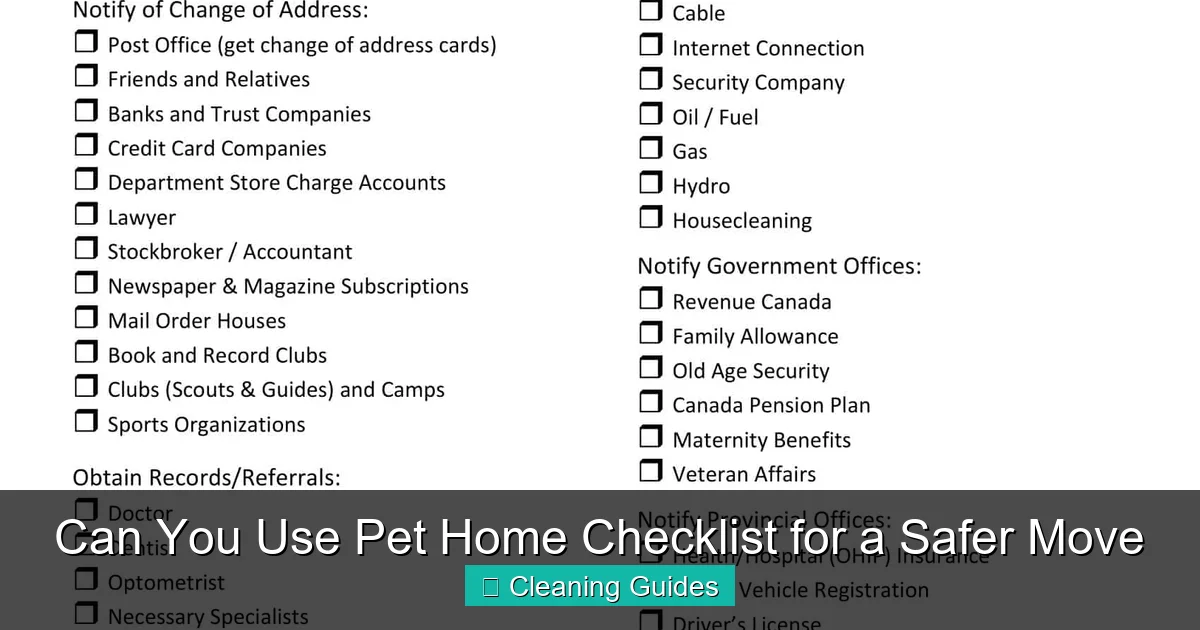
Visual guide about Can You Use Pet Home Checklist for a Safer Move
Image source: typecalendar.com
Pet-safe cleaning priorities for fur, dander, and odors
Start with dry debris first. Vacuum or dust-mop hair, litter dust, and dander before using any liquid cleaner, because wet cleaning can turn loose debris into a sticky film.
Then address odors at the source. That usually means removing waste, washing washable textiles, cleaning hard surfaces, and checking for hidden spots near baseboards, under appliances, and behind furniture.
If odor seems to come back after cleaning, it may have reached padding, underlayment, or subfloor material. In that case, surface cleaning alone may not solve the problem.
Room-by-room prep for kitchens, bedrooms, and entryways
In kitchens, focus on pet bowls, floor splashes, crumbs, and the area under feeding stations. Grease and pet residue can mix and leave a stubborn film on tile, vinyl, or sealed wood.
In bedrooms, check under beds, around corners, and along closet edges where fur gathers. If pets sleep on rugs or blankets, those textiles need to be cleaned or packed separately so odor does not travel with them.
Entryways often show the most wear because paws bring in grit, moisture, and mud. These spaces usually need the most attention before a move because dirt can be tracked through the home again during packing.
Supplies to include for a smoother move-out clean
Choose supplies that match the floor and the mess. A vacuum with a pet tool, microfiber cloths, a dust mop, a bucket, a floor-safe cleaner, and absorbent towels will handle most move-out jobs better than one all-purpose product.
It also helps to have a scraper for dried material, disposable gloves, and a soft brush for grout or textured edges. If you are cleaning multiple floor types, keep each cleaner clearly labeled so you do not mix products by mistake.
- Vacuum with pet attachments
- Microfiber dust mop and cloths
- Floor-safe cleaner matched to the surface
- Absorbent towels for spills and drying
- Soft brush for grout, corners, and trim
- Gloves and trash bags for waste removal
How the Checklist Changes by Floor Type
Floor type changes everything. The same pet mess can be easy to remove on sealed tile and risky on wood, laminate, or carpet, so the checklist should shift with the surface.
Hardwood and engineered wood: avoiding moisture and scratch damage
For hardwood and engineered wood, the biggest risks are too much water and abrasive debris. Always sweep or vacuum first, because grit can scratch the finish while you clean.
Use a lightly damp microfiber mop rather than a soaking-wet pad. If you need more guidance on timing and frequency for wood care, FloorsMop’s how often to mop hardwood floors guide can help you think through safe maintenance habits.
Watch for urine spots near seams or edges. If liquid sat too long, the finish may discolor or the board may cup, and that is a situation where a flooring professional is worth asking about.
Tile and grout: targeting pet stains without harsh residue
Tile can handle more moisture than wood, but grout is more absorbent and can hold odor, discoloration, and cleaner residue. A soft brush and a floor-safe cleaner usually work better than strong chemicals.
Be careful not to leave a film behind, especially near feeding areas. Sticky residue can attract dirt and make the floor look dirty again even after a full cleaning.
If you are cleaning porcelain, a method built for that surface is usually the safest starting point. See FloorsMop’s how to mop porcelain tile floors guide for more surface-specific advice.
Laminate and vinyl: safe cleaners and spill control
Laminate and vinyl are often easier to maintain than wood, but they still need the right cleaner. Avoid excess water, harsh bleach mixes, and anything that leaves a slippery or cloudy finish.
Spill control matters because pet water bowls, accidents, and muddy paws can work into seams. Dry the area quickly and use a cleaner that does not require heavy rinsing.
If you are unsure whether heat or steam is safe, check the product warranty and surface guidance first. Some floors tolerate more than others, and steam can be risky on certain vinyl or laminate constructions.
Carpet and area rugs: deep cleaning pet hair, accidents, and odor
Carpet holds onto pet hair, dander, and odor more than hard flooring does. Vacuum slowly in several directions, then treat any accident spots with a carpet-safe cleaner designed to lift residue rather than spread it.
Area rugs should be checked for backing damage and drying time. If the rug stays damp too long, odor can linger even after the visible stain is gone.
If the smell seems trapped below the surface, the padding may need more than spot cleaning. That is one of the clearest cases for calling a professional cleaner or floor specialist.
Always match the checklist to the weakest surface in the home, not the toughest one. A cleaner that is fine on tile may still be too wet, too strong, or too residue-heavy for wood or laminate.
Practical Moving Examples: Using the Checklist in Real Homes
Real homes rarely need one perfect method. They need a checklist that adapts to the pet, the room, and the floor condition.
Apartment move with a cat and litter-box odor
In a smaller apartment, litter dust and odor often collect in corners, near vents, and around the base of the litter area. A checklist should include vacuuming, wiping trim, washing nearby mats, and cleaning the floor under and around the box.
If the odor is strongest in one room, check whether litter tracked into carpet or under furniture. In a move-out, this kind of cleanup can make the difference between a quick walkthrough and a lingering complaint.
Family home with a dog, muddy traffic, and scratched floors
Dogs often create a different cleaning pattern: muddy entryways, water splashes, and fine scratches from grit. The checklist should prioritize the path from the door to the pet’s usual resting spots.
On wood or laminate, remove grit first and avoid aggressive scrubbing. On tile or vinyl, focus on corners and baseboards where mud dries and becomes harder to remove.
Rental move-out where pet deposits and inspection matter
For a rental, the checklist should be detailed enough to support a final inspection. That usually means cleaning visible surfaces, checking hidden corners, and making sure odor does not remain in fabrics or floor coverings.
Rental move-outs are also where documentation helps. If you find damage that seems beyond cleaning, note it before you try to scrub it harder, because over-cleaning can make the problem look worse.
Do not assume a strong scent will solve an odor problem. Fragrance can cover smell for a short time, but it does not remove urine, dander, or bacteria trapped in porous materials.
Common Cleaning Mistakes Pet Owners Make Before a Move
Many move-out problems come from trying to clean too fast. The most common mistakes are easy to avoid once you know what to watch for.
Using too much water on sensitive flooring
Too much water can seep into seams, edges, and wood grain. That can lead to swelling, dulling, or warping, especially if the floor is already worn or scratched.
Use damp, not dripping, tools. If a floor needs repeated passes, let it dry between them rather than flooding the surface at once.
Masking odors instead of removing them
Pet odor often comes from a source below the surface, not just from the air. Sprays and plug-ins may make a room smell better for a while, but they do not clean the material holding the odor.
Focus on the source first: litter areas, accidents, bedding, rugs, and any floor junctions where liquid may have reached the subfloor.
Skipping baseboards, vents, and hidden hair buildup
Hair and dander collect in places people forget during a move. Baseboards, vent covers, closet edges, and the underside of furniture can all hold enough buildup to affect the room’s smell and appearance.
A final vacuum pass along edges can make a bigger difference than a second pass over the open floor.
Choosing the wrong tool or chemical for the floor finish
Some cleaners are too strong for delicate finishes, while some tools are too rough for soft surfaces. A scrub pad that works on tile can scratch wood, and a steam tool that seems convenient may be a bad fit for laminate or sealed wood.
If you need a broader cleaning method reference, FloorsMop’s how to mop a floor properly guide is a useful place to compare technique before you start.
When a Flooring Professional Is Worth Calling
Sometimes the safest move is not a DIY clean. If pet damage has reached the floor structure or a manufacturer warranty may be affected, a professional opinion can save time and prevent a costly mistake.
Deep stains, warped boards, or lingering pet odor in subfloors
When staining has gone deep or boards have changed shape, surface cleaning will not fully fix the issue. Lingering odor that returns after cleaning is another sign that the problem may be below the top layer.
In those cases, it is smart to ask whether spot repair, sealing, or replacement is more realistic than repeated cleaning.
Luxury vinyl, hardwood, or specialty floors with manufacturer limits
High-end surfaces often come with specific care limits. Luxury vinyl, hardwood, bamboo, travertine, and other specialty floors can all react differently to moisture, pH, and tools.
If the floor is expensive or new, check the manufacturer guidance before using any cleaner you have not already tested in a hidden area.
Situations where repair costs may beat replacement
Not every damaged floor needs to be replaced. Sometimes a localized repair, refinishing step, or odor treatment is enough to restore the space for moving day.
That decision depends on the floor type, the size of the damage, and whether the issue is cosmetic or structural. When in doubt, get a professional assessment before spending on the wrong fix.
Cost, Time, and Product Comparison for a Pet-Safe Move
A pet-safe move can be done on a budget, but the cheapest product is not always the best value. The right choice depends on how much floor you need to clean, how severe the pet mess is, and how sensitive the surface may be.
DIY checklist cleanup versus professional cleaning costs
DIY cleaning usually costs less up front because you are buying supplies rather than labor. It can work well for light fur, normal dirt, and surface-level odor.
Professional cleaning may make more sense when odors are deep, stains have set in, or the floor is delicate. It can also save time when you are packing, coordinating movers, and trying to finish a move-out on a deadline.
Budget-friendly products that still protect floors in 2025
Look for products that are clearly labeled for your floor type and that rinse clean without sticky residue. Microfiber pads, neutral cleaners, and good-quality vacuums often deliver better results than harsh all-purpose formulas.
Cost Note
Budget cleaning usually works best when you spend on the right tool once and refill the cleaner as needed, rather than buying multiple strong products that may leave residue or damage finishes.
What to compare: pH balance, residue, scent, and drying time
When comparing products, think beyond the label claims. pH balance matters for sensitive floors, residue affects how quickly dirt returns, scent affects comfort, and drying time affects move-out speed.
For pet homes, a cleaner that dries quickly and leaves little residue is usually safer than a heavily scented formula. If you need help deciding between methods, FloorsMop’s how to dry a floor after mopping guide can help reduce slip risk and drying mistakes.
| Method / Product | Best For | Be Careful With |
|---|---|---|
| Microfiber dust mop | Pet hair, dander, and dry debris | Very rough grit that can scratch if dragged around |
| Neutral floor cleaner | Most sealed hard floors and move-out touchups | Overuse that leaves a film or sticky finish |
| Enzyme cleaner | Pet accidents and odor on carpet or fabric | Using it on floors without checking surface compatibility |
| Steam cleaning | Some sealed hard surfaces, if manufacturer allows | Wood, laminate, vinyl, and warranty-sensitive floors |
Final Recap: Using a Pet Home Checklist to Move Cleaner and Safer
Yes, you can use a pet home checklist for a safer move, and it is often one of the best ways to stay organized. The key is to make the checklist floor-specific, odor-aware, and realistic about what cleaning can and cannot fix.
Focus first on dry debris, then on the right cleaner for each surface, and finally on hidden areas that trap hair and odor. If the damage is deep, the floor is expensive, or the warranty is unclear, that is the point to ask a flooring professional before you keep scrubbing.
🎥 Related Video: What To Do When You First Bring Your Bunny Home? 🐰
📺 Milo, Luna & Hope The Bunns!
Frequently Asked Questions
Yes. A pet home checklist helps you clean fur, dander, stains, and odor in a more organized way before moving day. It is especially useful when you need to protect floors and leave the home in better condition.
It should include vacuuming, dust-mopping, spot cleaning, odor checks, and drying time. You should also adjust the steps for hardwood, tile, laminate, vinyl, or carpet.
No. Steam may work on some sealed surfaces, but it can damage or weaken hardwood, laminate, vinyl, and other sensitive floors. Always check the floor manufacturer’s guidance first.
Remove the source first, then clean the affected surface with a floor-safe or enzyme-based product as appropriate. If odor remains, it may have reached padding, grout, or the subfloor.
Call a professional if you see warped boards, deep staining, recurring odor, or damage on an expensive or warranty-sensitive floor. A pro can help you avoid making the problem worse.
Start with vacuuming, then use a microfiber dust mop or cloth for corners and trim. Dry cleaning first keeps hair from turning into residue when you add liquid cleaner.
