
Deck Floor Cleaning Checklist for a Spotless Deck

A deck floor cleaning checklist helps you clean safely, remove stains efficiently, and protect wood, composite, vinyl, and painted surfaces. The key is to match the tools and cleaners to the deck material, then rinse and dry thoroughly.
A clean deck does more than look nice. It helps reduce slips, protect finishes, and keep wood, composite, or vinyl surfaces in better shape for longer. This deck floor cleaning checklist gives you a simple, material-aware routine you can follow without overcleaning or causing damage.
- Match the material: Wood, composite, PVC, and coated decks need different cleaning care.
- Start dry: Sweep or blow off debris before adding water or cleaner.
- Use gentle methods: Soft brushes and mild cleaners are safer than harsh abrasion.
- Rinse and dry fully: Residue and standing water can cause slick spots and new buildup.
Why a Deck Floor Cleaning Checklist Matters in 2025
Outdoor living spaces are used more often now, which means deck floors collect dirt, pollen, food residue, and moisture faster than many homeowners expect. A checklist keeps the process organized, so you can clean thoroughly without skipping the small steps that prevent stains and surface wear.
If you like structured home-care routines, a deck checklist works much like a daily floor cleaning checklist for indoor spaces: it helps you stay consistent, avoid guesswork, and use the right method for the surface.
What a clean deck does for safety, curb appeal, and lifespan
Deck boards can become slippery when they hold algae, mud, pollen, or greasy residue. Regular cleaning improves traction and makes the space more comfortable for family, guests, and pets.
It also keeps the deck looking cared for. That matters for curb appeal, but it also matters for the material itself, since grime and standing moisture can speed up wear on wood finishes and some coatings.
How this checklist helps homeowners save time and avoid damage
Many deck-cleaning problems come from using the wrong tool or too much force. A checklist helps you match the cleaning method to the deck material and the type of soil or stain you are dealing with.
That matters because a quick wash is not always a safe wash. The right order—clear, sweep, rinse, treat, scrub, rinse again, dry—usually saves time and reduces the chance of streaks, residue, or surface damage.
Before You Start: Identify Your Deck Floor Type and Cleaning Needs
Before you reach for a hose or cleaner, identify what your deck is made of. Wood, composite, PVC, vinyl, painted, and sealed surfaces all react differently to water pressure, cleaners, and scrubbing.

Wood decks: pressure, moisture, and finish sensitivity
Wood decks often need the most caution. Too much water pressure can raise the grain, strip stain, or leave visible etching, especially on older boards or softwood surfaces.
For wood, use gentle cleaning methods and avoid soaking seams or leaving water sitting for long periods. If the deck is already weathered, test any cleaner in a small hidden spot first.
Composite decks: stain removal without harsh abrasion
Composite decking is often easier to maintain than wood, but it can still stain from grease, tannins, and mildew. The main concern is avoiding abrasive pads or overly aggressive scrubbing that may dull the finish.
Use cleaners that are labeled safe for composite materials when possible. If a stain resists normal cleaning, it is better to repeat a gentle treatment than to scrub harder with a rough brush.
PVC and vinyl deck surfaces: manufacturer-safe cleaning considerations
PVC and vinyl deck surfaces usually clean well with mild solutions, but product compatibility still matters. Some harsh chemicals can cloud the finish or leave a slippery film if not rinsed fully.
Check manufacturer guidance when available, especially if the deck is newer or still under warranty. That is the safest way to avoid accidental damage from a cleaner that seems harmless on paper but is not approved for the surface.
Painted or sealed deck floors: protecting coatings while cleaning
Painted or sealed decks need special care because the coating is part of the surface protection. Strong brushes, harsh chemicals, or over-wetting can wear the finish down faster.
Use the least aggressive method that still removes dirt. If the coating is peeling, chalky, or uneven, cleaning alone may not solve the problem, and a professional opinion may be helpful before you reseal or repaint.
Deck Floor Cleaning Checklist: Tools, Supplies, and Safety Prep
Gather everything before you start. Having the right tools ready makes the job smoother and helps you avoid switching methods halfway through, which is when many cleaning mistakes happen.
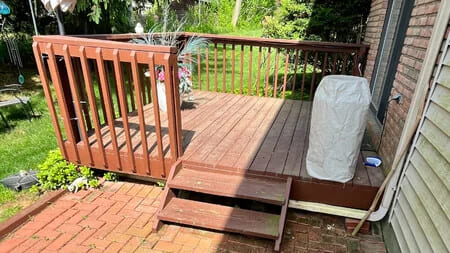
- Broom, leaf blower, or wet/dry vacuum
- Bucket, hose, and spray nozzle
- Soft-bristle brush or deck brush
- Microfiber cloths or nonabrasive pads
- Material-safe deck cleaner
- Protective gloves and eye protection
- Old towels or squeegee for drying
Essential tools for routine deck cleaning
A broom or blower handles loose debris, while a soft brush helps lift grime without scratching the surface. A hose with a controllable spray nozzle is usually enough for pre-rinsing and final rinsing.
If your deck collects fine dust or dry pollen, a wet/dry vacuum can be useful for corners and seams. That is especially helpful around railings, steps, and furniture feet where dirt tends to settle.
Recommended cleaners for different deck materials
Use a cleaner that matches the material whenever possible. Mild soap and water may be enough for routine maintenance, while tougher stains may need a product made specifically for wood, composite, or coated outdoor surfaces.
| Method / Product | Best For | Be Careful With |
|---|---|---|
| Mild soap and water | Light dirt, pollen, routine maintenance | Rinsing thoroughly so no film remains |
| Material-safe deck cleaner | Grease, mildew, and heavier buildup | Testing first on delicate finishes |
| Oxygen-based cleaner | Some wood stains and organic discoloration | Follow label directions carefully |
| Pressure washer | Large decks with heavy grime, if allowed | Too much pressure, especially on wood |
Protective gear and weather conditions to check before cleaning
Wear gloves, closed-toe shoes, and eye protection if you are using any cleaner beyond plain water. Even mild products can irritate skin if you are scrubbing for a while.
Choose a dry, mild day if you can. Extreme heat can make cleaners dry too quickly, while rain or high humidity can slow drying and leave the deck slick longer than expected.
Step-by-Step Deck Floor Cleaning Checklist for a Spotless Deck
Use this sequence for a dependable clean. If you are also building a broader routine for the season, it can help to pair this with a spring cleaning guide so your outdoor and indoor cleaning schedules stay in sync.
Remove everything you can before cleaning. This gives you access to the full deck and prevents dirt from hiding under heavy items.
Dry debris should come off first so it does not turn into muddy streaks once water is added. Pay attention to corners, board gaps, and stair edges.
Use a light rinse to loosen surface grime. On wood decks, avoid flooding the boards or letting water pool near joints and fasteners.
Apply cleaner only where needed when possible. Spot treatment is often safer than soaking the whole deck with a stronger product. [Source: Home Depot Guide]
Use a soft-bristle brush and follow the direction of the boards. This helps lift dirt more evenly and reduces visible scuffing.
Leftover soap can attract new dirt or leave a slippery film. Rinse until the water runs clear and the surface no longer feels slick.
Let the deck dry fully before putting rugs, cushions, or planters back. This helps prevent trapped moisture, mildew, and water rings.
Clear furniture, planters, rugs, and debris from the surface
Move portable items off the deck so you can clean every section evenly. If something is too heavy to move, clean around it carefully and lift it later if possible to remove trapped dirt underneath.
Sweep, vacuum, or blow off loose dirt and leaves
Dry cleanup is one of the most important parts of a deck floor cleaning checklist. Skipping it usually means you will spread grit around and create muddy streaks during rinsing.
Pre-rinse the deck without oversaturating wood or seams
A light pre-rinse loosens dust and surface grime, making the cleaner work better. Keep the spray controlled, especially on older wood or decks with open seams where water can collect.
Spot-treat stains, mildew, grease, and tannin marks
Different stains need different treatment. Grease usually responds better to a degreasing cleaner, while mildew and organic marks may need a product designed for outdoor growth and discoloration.
Work from the cleanest area toward the dirtiest area so you are not dragging grime back across boards you already cleaned.
Scrub along the grain or board direction for better results
On wood, scrubbing with the grain helps preserve the look of the boards. On composite and coated decks, gentle linear strokes are still a safer choice than circular scrubbing with a rough pad.
Rinse thoroughly and remove leftover cleaner residue
Residue can make a deck feel tacky or slippery after drying. If the deck still feels slick after rinsing, it likely needs another rinse rather than more cleaner.
Dry the deck properly before replacing furniture
Air drying is usually best, but towels or a squeegee can help speed the process on flat sections. Make sure the surface is dry enough that cushions and outdoor rugs will not trap moisture underneath.
How to Clean Common Deck Floor Problems Without Damaging the Surface
Most deck problems are manageable if you use the mildest effective method. The goal is not to make the surface look new at all costs; it is to clean it safely and preserve the finish or texture that is already there.
Mold and mildew on shaded or damp deck boards
Shaded decks often develop mildew faster because moisture lingers longer. Use a cleaner made for outdoor mildew when appropriate, then rinse well and improve airflow if the area tends to stay damp.
If mildew keeps returning in the same spot, the problem may be drainage, shade, or poor drying time rather than cleaning technique alone. In that case, it can help to ask a professional whether sealing, repair, or a different maintenance plan is needed.
Grill grease, food spills, and beverage stains from outdoor entertaining
Grease and food spills should be cleaned as soon as practical, because they can darken the surface and attract dirt. A small amount of mild degreaser or material-safe cleaner is usually better than a harsh all-purpose product.
For repeated grill staining, place a protective mat under the cooking area if the deck material allows it. Just make sure the mat does not trap moisture or discolor the surface beneath it.
Mud, pollen, and seasonal buildup after storms
Fresh mud and pollen often come off with sweeping and a light rinse. If you wait too long, they can settle into textured boards and become harder to remove without scrubbing.
This is where a consistent routine helps. A simple outdoor cleaning schedule can prevent seasonal buildup from becoming a bigger job later, much like keeping up with monthly deep cleaning indoors.
Rust marks from metal furniture or planters
Rust stains need caution because some rust removers are too strong for certain deck materials. Start with a product that is specifically labeled safe for your surface, and avoid acidic cleaners unless the manufacturer says they are acceptable.
If the rust mark comes from an object that continues to stain, move or protect that item first. Otherwise, the stain may return even after a successful cleaning.
Common Deck Cleaning Mistakes to Avoid
A few common mistakes can undo a lot of careful work. The biggest risks are overpressure, harsh chemicals, and leaving behind moisture or residue that causes new problems.
- Gentle cleaning with material-safe products
- Regular sweeping and seasonal rinsing
- Spot-treating stains before they set
- Very high pressure on wood or aged boards
- Bleach, acids, and unapproved cleaners
- Rough scrub pads on coated or composite surfaces
Using too much pressure from a pressure washer
Pressure washers can be useful, but they are easy to misuse. Too much pressure can etch wood, force water into seams, or strip protective finishes.
If you are unsure about pressure settings, it is safer to use a hose, brush, and cleaner first. For older decks or specialty materials, professional cleaning may be the better option.
Choosing bleach or acidic cleaners that can discolor materials
Bleach and acidic products can be effective in some situations, but they are not universal solutions. They may lighten wood unevenly, dull coatings, or create compatibility problems with composite and vinyl surfaces.
Always check the label and the deck manufacturer guidance when available. If you are cleaning a high-value deck, it is worth being conservative with chemical strength. [Source: Britannica]
Scrubbing too aggressively on composite or coated surfaces
Composite and coated decks usually do not need hard scrubbing. Aggressive brushing can leave a dull patch or visible wear pattern, especially in direct sunlight.
A softer brush and a little patience are usually enough. If a stain does not respond, switch products before increasing pressure.
Leaving standing water, soap film, or wet mats on the deck
Standing water can lead to slip hazards, mildew, and water marks. Soap film is just as problematic because it can make the deck look cloudy and feel slick.
Wet mats and damp cushions can trap moisture against the surface. Let everything dry fully before resetting the space, especially after a deep clean.
Do not assume a stronger cleaner will fix a tougher stain faster. On deck floors, stronger often means riskier, especially for wood finishes and coated materials.
When to Call a Flooring Professional for Deck Floor Cleaning or Restoration
DIY cleaning is often enough for routine maintenance, but some situations call for expert help. That is especially true when the deck has structural wear, finish failure, or a stain that may be permanent.
Signs of deep staining, warped boards, or failing sealant
If stains remain after careful cleaning, the problem may be deeper than the surface. Warped boards, soft spots, peeling sealant, or uneven color often point to restoration needs rather than basic cleaning.
Those issues can be hard to judge from the surface alone. When the deck is expensive, older, or already damaged, asking a professional can help you avoid making the problem worse.
When professional cleaning is safer than DIY for specialty materials
Some specialty surfaces need manufacturer-approved methods, and not every homeowner has the right equipment or product knowledge for that. This is especially true for premium composite, coated systems, or decks with unique finishes.
If the warranty matters, professional service may also reduce the risk of using an incompatible cleaner. In many cases, that peace of mind is worth more than a quick DIY attempt.
Situations where refinishing, sealing, or repair may be needed
Cleaning can improve appearance, but it cannot fix missing finish, loose boards, or water damage. If the deck has splintering wood, repeated mildew, or failing sealant, refinishing or repair may be necessary.
At that point, cleaning becomes just one part of the solution. A flooring professional or deck specialist can help determine whether cleaning, sealing, sanding, or replacement is the smarter next step.
Cost, Frequency, and Final Recap: Keeping Your Deck Spotless Year-Round
Deck cleaning costs vary widely depending on deck size, material, condition, and whether you do the work yourself or hire help. A simple DIY clean usually costs less in materials, while professional service may be more practical for large, delicate, or heavily stained decks.
Typical DIY vs professional cleaning cost considerations in 2025
DIY cleaning often centers on the cost of a cleaner, brush, and a few basic tools you may already own. Professional cleaning can make sense when you want specialized care, time savings, or help with restoration-level buildup.
If you are comparing options, think beyond the upfront price. Replacing damaged boards or refinishing a worn surface can cost more than paying for safe cleaning early.
Long-term value usually comes from matching the method to the material. A safer cleaner and softer brush can cost less overall than repairing finish damage from one aggressive cleaning session.
How often to clean based on climate, usage, and deck material
Decks in humid, shaded, or storm-prone areas usually need cleaning more often than decks in dry, sunny locations. Heavy entertaining, pets, grills, and nearby trees can also increase how often the surface needs attention.
Wood decks may need more frequent inspection because moisture and finish wear matter more. Composite and vinyl surfaces may stay looking clean longer, but they still benefit from regular sweeping and periodic washing.
Quick recap of the best deck floor cleaning checklist habits
The best routine is simple: remove debris, use gentle tools, match the cleaner to the material, rinse well, and dry completely. That approach protects the deck while keeping it ready for everyday use.
For homeowners who want a spotless deck without unnecessary risk, consistency matters more than intensity. A careful checklist is usually the safest path to a cleaner, longer-lasting outdoor floor.
Frequently Asked Questions
Most decks benefit from regular sweeping and a deeper wash as needed based on weather, shade, and use. Humid or heavily used decks usually need attention more often than dry, lightly used ones.
Sometimes, but only with caution and the right settings. Too much pressure can damage wood, so a hose, brush, and mild cleaner are often safer.
A cleaner labeled safe for composite decking is usually the best choice. Avoid harsh abrasion and always rinse thoroughly to prevent residue.
Use a cleaner made for outdoor mildew and follow the label directions carefully. Rinse well and improve drying conditions if the area stays shaded or damp.
Yes, a clean and fully dry surface is important before sealing. If the deck has peeling finish or damage, ask a professional whether repair is needed first.
Call a professional if the deck has deep staining, warped boards, failing sealant, or a specialty surface with warranty concerns. Professional help is also wise when you are unsure which cleaner is safe.
