
Different Types of Spin Mops: 2026 Guide to Choosing the Right One

Quick Answer
The main types of spin mops are single-bucket pedal models, dual-bucket clean-water systems, push-handle spin mops, flat-head spin-rinse systems, and electric rotating-pad mops. The biggest differences are how they wring water, whether clean and dirty water stay separated, and how precisely you can control moisture. An official spin mop system comparison shows how even similar-looking bucket models can use different water-management designs.
The five common spin mop styles
- Single-bucket pedal: A foot pedal spins the wringer while one bucket holds the cleaning water.
- Dual-bucket system: Separate clean and dirty water chambers reduce repeated rinsing in used water.
- Push-handle spin mop: Pumping the handle activates the spinning mechanism instead of a foot pedal.
- Flat-head spin-rinse: A flat microfiber pad combines edge reach with a bucket-based rinsing or wringing system.
- Electric spin mop: Motorized rotating pads scrub the floor without a traditional centrifugal wringer bucket.
Best starting point
- Choose a model that lets you control moisture easily, especially on wood and laminate floors.
Spin mops look simple until you compare two models side by side. I pay more attention to the wringing system, bucket layout, mop-head shape, and moisture control than to flashy accessories.
This guide explains the different types of spin mops, where each design works best, and what matters for hardwood, laminate, vinyl, tile, stone, and other hard floors.
In This Guide
- What Is a Spin Mop?
- What Are the Different Types of Spin Mops?
- How Do Spin Mop Types Compare?
- Which Spin Mop Type Works Best on Each Floor?
- How Do You Choose the Right Spin Mop?
- How Should You Use a Spin Mop Without Leaving Streaks?
- Spin Mop vs Other Mop Types
- How Do You Clean and Maintain a Spin Mop?
- Frequently Asked Questions
What Is a Spin Mop?
A spin mop is a floor-cleaning system that uses centrifugal rotation to remove water from a mop head or cleaning pad. That spinning action lets you adjust how wet the mop remains before it touches the floor.
Traditional string mops usually require hand wringing or a lever-style wringer. Spin mops replace that step with a rotating basket, rotating mop head, or powered pads.
- Wetter setting: Useful for washable tile or sealed concrete with heavier soil.
- Damp setting: Better for routine vinyl, laminate, and many sealed-floor applications.
- Near-dry setting: Helpful when the flooring manufacturer calls for minimal moisture.
There isn’t one universal industry classification for spin mops. A single model can belong to several categories, such as a dual-bucket, pedal-operated microfiber spin mop.
As of 2026, water separation is one of the most useful distinctions. It changes whether each rinse returns the mop to relatively fresh water or back into the same increasingly dirty bucket.
What Are the Different Types of Spin Mops?

Most household spin mops fit into five practical groups. I classify them by the mechanism that affects the cleaning experience rather than by marketing names.
1. Single-Bucket Pedal Spin Mops
This is the classic design most people picture. The bucket holds cleaning water and includes a wringer basket powered by a foot pedal.
You place the wet mop head into the spinner and press the pedal until the mop reaches the dampness you want.
- Main advantage: Simple operation with no need to twist the mop by hand.
- Moisture control: Usually good because extra spins remove more water.
- Storage: Usually easier than larger multi-chamber systems.
- Main drawback: Rinse water and cleaning water generally share the same bucket.
I like this format for routine cleaning when simplicity matters more than water separation. It works especially well when you change dirty water instead of stretching one bucket through several rooms.
2. Dual-Bucket or Clean-Water Spin Mops
A dual-bucket spin mop separates fresh cleaning water from the water removed during rinsing or wringing. Some designs use two removable buckets, while others use separate reservoirs inside one larger system.
This solves one of the classic mop problems. You aren’t deliberately dipping the mop into the same dirty water after every pass.
- Water chambers: Two instead of one.
- Best for: Kitchens, entryways, pet areas, and larger cleaning sessions.
- Main benefit: Better separation between fresh and used water.
- Tradeoff: More components usually mean a larger bucket to clean and store.
O-Cedar, for example, currently distinguishes its classic EasyWring system from its RinseClean design largely through this clean-and-dirty-water separation.
For muddy footprints or a busy kitchen, I prefer this arrangement. The water-management advantage becomes more noticeable as the cleaning session gets longer.
3. Push-Handle or Pump-Action Spin Mops
Push-handle models transfer the spinning mechanism into the mop handle. You unlock the handle and pump it vertically to rotate the mop head or wringer.
That makes them useful for people who don’t want to repeatedly operate a foot pedal.
- Activation: Vertical handle pumping.
- Foot pedal: Usually unnecessary.
- Bucket layout: Available in single- and multi-chamber variations.
- Watch for: Handle locks, gears, and telescoping joints that should feel solid.
The technique takes a little practice. I keep the handle upright during spinning so the mechanism engages smoothly instead of forcing it at an angle.
4. Flat-Head Spin-Rinse Mops
Flat-head systems use a rectangular or compact flat microfiber pad instead of a round string-style head. Some include bucket mechanisms that rinse, scrape, spin, or squeeze the pad.
The biggest advantage is contact near edges. A flat profile also slides beneath low furniture more easily than many round mop heads.
- Best for: Apartments, narrow kitchens, bathrooms, walls, and detailed edge cleaning.
- Head style: Flat washable microfiber pad.
- Strength: Good reach under furniture and along baseboards.
- Limitation: A compact pad may need more frequent rinsing on heavily soiled floors.
5. Electric Spin Mops
Electric spin mops are a different branch of the category. Instead of spinning a mop head inside a bucket, a motor rotates two or more pads against the floor.
Some models dispense cleaning solution from an onboard tank. Others expect you to dampen the pads or apply cleaner separately.
- Power source: Corded or rechargeable battery.
- Cleaning action: Motorized rotating pads.
- Traditional bucket: Usually not required.
- Best for: Users who want powered scrubbing with less manual movement.
An electric model can reduce scrubbing effort, but it adds weight, charging, motors, and more parts. I wouldn’t choose one just because the word “spin” appears in the name.
Section Takeaway: Spin mops differ most in how they wring, manage water, and contact the floor. For many households, the meaningful choice is between a simple single-bucket system and a clean-water-separating design.
How Do Spin Mop Types Compare?
The table below shows the differences I would check first. Remember that individual products can combine features from more than one category.
| Spin Mop Type | Typical Water Chambers | Wringing Method | Best Fit | Main Tradeoff |
|---|---|---|---|---|
| Single-bucket pedal | 1 | Foot pedal | Everyday household cleaning | Clean and dirty water mix |
| Dual-bucket | 2 | Usually pedal or handle spin | High-traffic and dirtier areas | Larger system |
| Push-handle | 1 or 2 | Pump-action handle | Users avoiding foot pedals | More moving parts in handle |
| Flat-head spin-rinse | Varies | Bucket rinse/spin/squeeze | Edges and small spaces | Smaller cleaning surface |
| Electric spin mop | 0 traditional chambers | Motorized pads | Powered scrubbing | Charging, weight, and cost |
For most homes, I wouldn’t automatically equate more features with better cleaning. A reliable wringer and washable microfiber head can matter more than extra attachments.
Which Spin Mop Type Works Best on Each Floor?
The floor should determine how wet you allow the mop to become. The mop itself doesn’t make an unsuitable cleaning method safe.
Hardwood and Engineered Wood
Moisture control matters most here. The National Wood Flooring Association emphasizes minimal moisture and cleaning products recommended for the specific flooring or finish.
I would choose a spin mop only when I can wring the microfiber head until it feels lightly damp rather than wet.
- Better choices: Pedal or handle-spin models with precise wringing.
- Avoid: Leaving puddles, soaking seams, or repeatedly passing a saturated head over wood.
- Cleaner: Use a product approved by the floor or finish manufacturer.
Bona’s wood-floor cleaning guidance also stresses limiting excess liquid and using floor-appropriate cleaner.
Safety note: Always check the flooring manufacturer’s care guide before wet mopping, using steam, or trying a new cleaning chemical.
Laminate
Laminate often tolerates damp cleaning better than standing water. I favor a strongly wrung microfiber spin mop and quick drying.
Pay special attention to seams and damaged edges. Water that sits there can create more trouble than dirt on the wear layer.
Vinyl and Luxury Vinyl Plank
Vinyl and LVP are usually straightforward to mop when the manufacturer permits damp cleaning. A standard pedal spin mop or dual-bucket system works well for larger areas.
I still avoid flooding the surface. Too much cleaner can leave residue even when water itself isn’t the main concern.
Tile and Grout
Tile is where a traditional string-style spin mop feels most at home. The flexible microfiber strands reach textured surfaces and collect loose soil around grout lines.
- Routine dust and spills: Standard microfiber head.
- Textured tile: String-style heads usually conform better than rigid flat pads.
- Dirty kitchens: Dual-bucket systems help keep rinse water separated.
Natural Stone
Natural stone needs more attention to cleaner chemistry than mop style. Acidic DIY solutions can be inappropriate for some stone surfaces.
Choose a well-wrung mop and a cleaner approved for your specific stone.
Safety note: Don’t assume vinegar is safe because it is homemade. Check the stone supplier or manufacturer’s instructions first.
Sealed Concrete
Sealed concrete can handle many spin mop styles. A larger microfiber head is convenient for utility rooms, garages, and open spaces when the finish allows wet cleaning.
Section Takeaway: The best spin mop is the one that matches your floor’s moisture tolerance. Wood and laminate demand tighter water control, while tile and sealed concrete usually give you more flexibility.
How Do You Choose the Right Spin Mop?
Start with the problems you want the mop to solve. Don’t start with the longest feature list.
Choose by Cleaning Area
- Small apartment: Favor a compact bucket and easy storage.
- Large home: Look for comfortable carrying and good water capacity.
- Busy kitchen: Consider clean-and-dirty-water separation.
- Lots of furniture: Prioritize a low-profile swivel head.
- Textured tile: Consider flexible microfiber strands.
Check Moisture Control
This is the feature I care about most for mixed-floor homes. The mop should go from wet to lightly damp without requiring hand wringing.
If the basket wobbles or stops spinning under normal pressure, moisture control becomes inconsistent.
Look at Replacement Heads
A reusable mop is only useful if replacement heads remain easy to find. Check whether the refill attaches securely and can be machine washed according to its care instructions.
I also prefer owning two heads. One can be drying while the other is ready for the next cleaning session.
Consider Bucket Cleaning
A complicated bucket can become unpleasant if you can’t rinse its corners. Removable tanks and wide openings make a bigger difference than they seem in the store.
How Should You Use a Spin Mop Without Leaving Streaks?
Streaks usually come from too much cleaner, dirty water, loose grit, or an overly wet mop. Better technique often fixes the problem without changing equipment.
- Remove dry debris first. Vacuum or sweep grit, hair, crumbs, and dust.
- Use the correct cleaner. Follow the floor and cleaning-product directions.
- Wet the mop head evenly. Don’t begin with one dry section and one saturated section.
- Spin out excess water. Use extra wringing on moisture-sensitive flooring.
- Work in small sections. A roughly 4-by-4-foot area is an easy practical starting point.
- Rinse when the pad looks dirty. Don’t keep redistributing visible grime.
- Change dirty water. Cloudy or gritty water is a sign to refresh it.
The CDC’s cleaning guidance distinguishes ordinary cleaning from sanitizing and disinfecting. For routine household surfaces, cleaning is often the first and most important step.
If disinfection is necessary, follow the disinfectant label rather than adding extra product to the mop bucket.
The EPA explains the difference between cleaning, sanitizing, and disinfecting. Product labels matter because cleaners and disinfectants aren’t interchangeable.
Safety note: Never mix cleaning chemicals unless a product label specifically directs you to do so. Check both the chemical label and the flooring manufacturer’s care instructions.
Spin Mop vs Other Mop Types
A spin mop isn’t automatically the best floor-cleaning tool for every room. I choose based on moisture, soil level, storage space, and how much manual work the job requires.
| Mop Type | Best Strength | Main Limitation |
|---|---|---|
| Spin mop | Adjustable wringing and reusable microfiber | Bucket storage and cleanup |
| Flat microfiber mop | Precise moisture and edge cleaning | Pad soils quickly on dirty floors |
| Traditional string mop | Large wet-cleaning jobs | Harder moisture control |
| Steam mop | Steam-based cleaning on approved surfaces | Not suitable for every floor or finish |
| Robot mop | Automated maintenance cleaning | Less manual control on stubborn messes |
For routine hardwood cleaning, I usually value a carefully dampened microfiber surface more than a large water capacity. On ceramic tile after a messy cooking day, the balance shifts toward rinsing capacity and easy wringing.
That’s why there is no single mop type that wins every floor-cleaning job.
How Do You Clean and Maintain a Spin Mop?
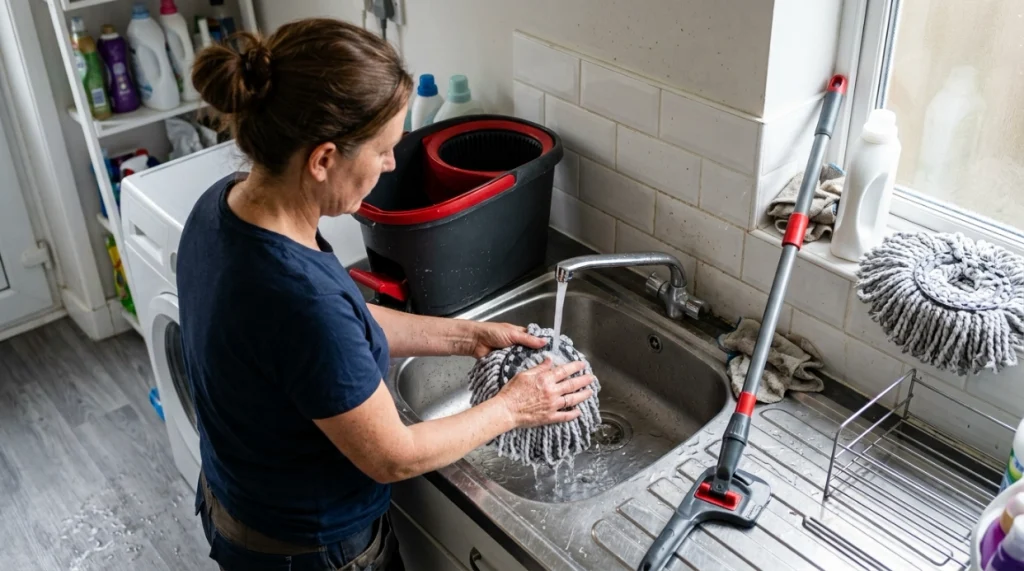
A clean mop head matters as much as clean water. If the microfiber smells stale or contains trapped grit, you can move odor and residue around the floor.
After Each Use
- Empty the bucket: Don’t store used mop water.
- Rinse the bucket: Remove grit from corners and wringer areas.
- Rinse the mop head: Flush out visible dirt before it dries into the fibers.
- Dry everything: Leave components open until moisture evaporates.
Wash the Microfiber Correctly
Follow the refill manufacturer’s washing directions. Many reusable microfiber heads are machine washable, but bleach, high heat, or fabric softener may be restricted.
Fabric softener can coat microfiber and reduce how well the fibers interact with water and soil. Product-specific care instructions should take priority.
Inspect the Spinner
Check the wringer basket, foot pedal, handle lock, and rotating connection periodically. Hair or string wrapped around moving parts can make spinning feel rough.
Replace damaged components rather than forcing a jammed mechanism. A failing spinner can splash dirty water or leave the mop much wetter than expected.
Frequently Asked Questions About Different Types of Spin Mops
What type of spin mop is best for most homes?
A pedal-operated microfiber spin mop is a practical choice for many homes because it combines simple wringing with reusable cleaning heads. If you regularly clean muddy, greasy, or high-traffic areas, a dual-bucket design may be more convenient because it separates fresh and dirty water.
Is a two-bucket spin mop better than a one-bucket spin mop?
A two-bucket system has a clear water-management advantage because used rinse water stays separate from fresh cleaning water. A one-bucket model can still clean effectively, especially if you replace the water whenever it becomes visibly dirty.
Are spin mops safe for hardwood floors?
They can be appropriate for some sealed hardwood floors when the manufacturer allows damp mopping and the mop is wrung thoroughly. Avoid excess moisture, standing water, and unapproved cleaners because wood-floor finishes and construction vary.
Are pedal spin mops better than handle-operated spin mops?
Neither mechanism is automatically better. Pedal systems let your foot control the wringer, while pump-handle systems transfer the spinning action to your arms and hands. Choose the motion that feels more comfortable and check the mechanism for stability.
Do spin mops clean better than flat mops?
Spin mops usually offer easier bucket rinsing and moisture adjustment, while flat microfiber mops provide excellent edge reach and controlled damp cleaning. The better choice depends on floor type, room size, soil level, and how often you want to rinse or replace the pad.
What is the difference between a spin mop and an electric spin mop?
A traditional spin mop uses centrifugal motion mainly to rinse or wring the mop head. An electric spin mop uses powered rotating pads against the floor itself, so it provides mechanical scrubbing rather than relying on a spinning bucket.
How often should I replace a spin mop head?
There is no universal replacement schedule. Replace the head when washing no longer removes odor or soil, the fibers stay flattened, the attachment becomes loose, or the material begins to fray enough that cleaning performance drops.
The takeaway: Don’t shop for a spin mop by brand name alone. Decide whether you need one or two water chambers, pedal or handle activation, a round or flat head, and strong moisture control for your flooring.
Once those four choices are clear, finding the right spin mop becomes much easier. For most homes, a washable microfiber system with dependable wringing and simple replacement parts is the most practical place to start.
