
Do Steam Mops Actually Work? An Honest Floor-by-Floor Guide

Quick Answer
Yes, steam mops work well for loosening dried spills, lifting surface dirt, and cleaning many sealed tile floors without detergent. However, whether you should use one depends on the flooring material, its condition, and its manufacturer’s instructions. Understanding what steam mops do helps you avoid expecting them to vacuum debris, remove deep stains, or safely clean every hard floor.
Where steam mops perform best
- Sealed ceramic tile: Steam loosens sticky residue and dirt from the tile surface.
- Sealed porcelain: The durable surface usually tolerates heat and limited moisture well.
- Grout maintenance: Steam softens surface grime, although stained grout may still need brushing.
- Everyday spills: Heat and a microfiber pad lift many kitchen marks without added cleaner.
- Low-residue cleaning: Properly used steam leaves little cleaning-product film behind.
Use caution on moisture-sensitive floors
- Avoid steam unless the flooring manufacturer specifically approves it for hardwood, laminate, engineered wood, vinyl, LVP, or natural stone.
I’ve tested steam mops on kitchen tile, sealed grout, vinyl samples, and several moisture-sensitive floor materials. They can make cleaning faster, but they are not a universal replacement for a vacuum, scrub brush, or microfiber mop.
This guide explains where steam cleaning works, where it can cause damage, and how to get better results safely.
In This Guide
- How Do Steam Mops Work?
- How Effective Are Steam Mops?
- Which Floors Can You Clean With a Steam Mop?
- Do Steam Mops Disinfect Floors?
- Steam Mop vs. Regular Mop: Which Works Better?
- How Do You Use a Steam Mop Effectively?
- Why Might a Steam Mop Not Work Well?
- Frequently Asked Questions
- Are Steam Mops Worth It?
How Do Steam Mops Work?
A steam mop is an electric floor-cleaning tool that heats water and sends vapor through a washable or disposable pad. The hot moisture softens dirt while the pad wipes it from the floor.
The appliance does not suck dirt into a tank. You must remove crumbs, hair, sand, and loose dust before steaming.
What happens inside the mop?
- Water moves from the reservoir into a heating chamber.
- The heating element converts the water into hot vapor.
- The vapor travels through openings beneath the mop head.
- Steam softens residue while the pad collects loosened dirt.
Most household units heat within roughly 20 seconds to several minutes. Tank size, wattage, and model design affect the exact time.
Does steam replace scrubbing?
Steam reduces the effort needed for many dried spills. It does not automatically remove grease layers, stained grout, wax buildup, or dirt trapped in damaged flooring.
During my testing, a dried splash on sealed tile softened after several slow passes. Dark grout discoloration still needed a small brush and a suitable cleaner.
Section Takeaway: A steam mop combines hot vapor with mechanical wiping. It works best after loose debris has already been removed.
How Effective Are Steam Mops?
Steam mops are effective at routine surface cleaning on approved, sealed floors. Their strongest advantage is loosening sticky residue without leaving much detergent behind.
What a steam mop can do well
- Loosen food spills: Moist heat softens many dried kitchen marks.
- Lift light grease: Several passes can remove a thin surface film.
- Collect fine dust: A clean microfiber pad captures dust left after vacuuming.
- Reduce residue: Plain water does not leave the same film as an overused detergent.
- Refresh sealed grout: Steam loosens surface dirt around grout lines.
What a steam mop cannot do
- Vacuum loose debris: Sand and crumbs can drag beneath the pad and scratch a floor.
- Repair discoloration: Heat cannot reverse worn finishes or faded flooring.
- Remove every stain: Dye, rust, and deeply absorbed stains may need targeted treatment.
- Clean beneath damaged seams: Steam may push moisture into those openings instead.
- Replace deep grout cleaning: Porous, neglected grout often requires a brush.
Pad condition matters more than many people expect. Once a pad becomes saturated with dirty water, it starts redistributing grime.
I normally replace the pad when it looks gray across most of its surface. Large or heavily soiled rooms may require two or three clean pads.
Section Takeaway: Steam mops handle light-to-moderate surface soil well. They are less successful against loose debris, deep staining, and neglected buildup.
Which Floors Can You Clean With a Steam Mop?
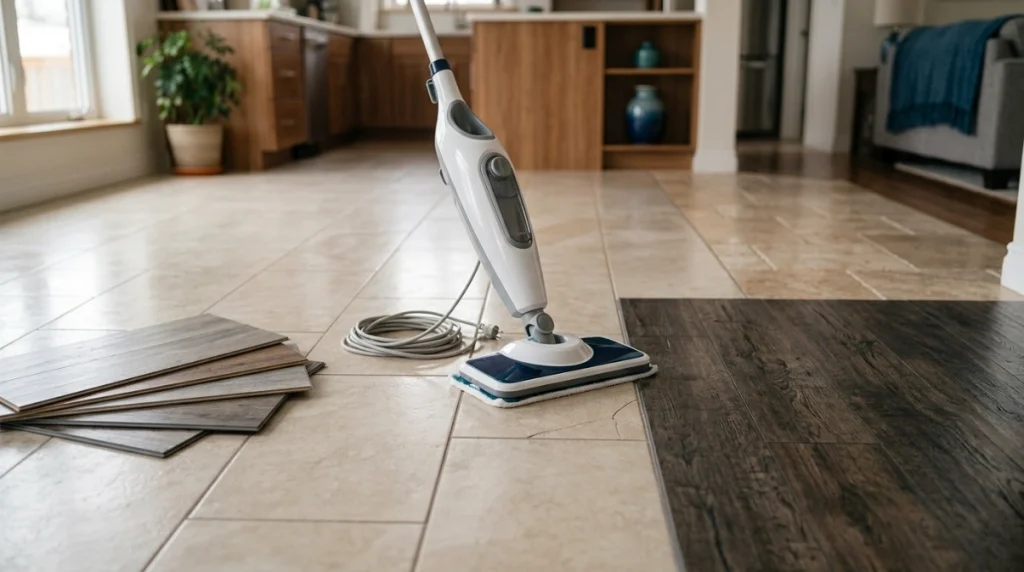
Steam is generally most suitable for intact, sealed ceramic or porcelain tile. Other materials require explicit approval from their flooring manufacturer.
Heat is only part of the risk. Moisture can enter seams, weaken adhesives, swell fiberboard, dull finishes, or expose hidden floor damage.
| Floor type | General guidance | Main concern |
|---|---|---|
| Sealed ceramic tile | Usually suitable | Loose or cracked grout |
| Sealed porcelain tile | Usually suitable | Damaged seams or grout |
| Hardwood | Use only if specifically approved | Finish damage, cupping, or swelling |
| Engineered wood | Usually avoid unless approved | Veneer, adhesive, and seam damage |
| Laminate | Usually avoid unless approved | Fiberboard core can swell |
| Vinyl or LVP | Check manufacturer instructions | Heat, adhesive, and joint damage |
| Natural stone | Ask the stone or sealer manufacturer | Porosity and sealer deterioration |
Can you steam hardwood or laminate?
Do not assume that “sealed” means steam-safe. Follow the care instructions supplied by the flooring manufacturer and review the National Wood Flooring Association for general wood-floor guidance.
Our detailed guides explain the risks of using steam on hardwood floors and laminate flooring.
What about vinyl and LVP?
Some manufacturers prohibit steam because heat may affect adhesives or joints. Read your warranty and care guide before cleaning luxury vinyl plank with a steam mop.
Safety note: Test any approved method in a hidden area first. Stop if the surface turns cloudy, tacky, raised, or unusually dull.
Section Takeaway: Floor compatibility matters more than the steam mop’s power. Manufacturer approval should always override general cleaning advice.
Do Steam Mops Disinfect Floors?
A steam mop may reduce some microorganisms when the surface receives sufficient heat for the required time. You should not treat every quick pass as proven disinfection.
Temperature at the heater is not necessarily the temperature reaching the floor. Mop speed, pad thickness, floor temperature, and model design change the result.
Cleaning and disinfecting are different
Cleaning removes dirt and many germs from a surface. Disinfecting uses a validated process or registered product to kill specified microorganisms.
The CDC’s home-cleaning guidance says regular cleaning is usually enough unless someone is sick or has a higher risk of illness. It also advises using products suitable for each surface.
Check the appliance instructions
If a manufacturer makes a sanitizing claim, follow its stated contact time exactly. Moving too quickly may not keep one area hot for long enough.
For situations requiring verified disinfection, use a floor-compatible product according to its label. The EPA’s registered disinfectant information can help you understand product claims and contact times.
Safety note: Never add bleach, disinfectant, vinegar, essential oils, or detergent to a steam mop unless its manual expressly permits that substance.
For a closer look at this distinction, read whether a steam mop can kill bacteria.
Steam Mop vs. Regular Mop: Which Works Better?
A steam mop is better for sticky marks on approved tile. A microfiber flat mop is safer and more flexible across moisture-sensitive surfaces.
| Feature | Steam mop | Microfiber flat mop | Spin mop |
|---|---|---|---|
| Sticky spills | Strong on approved floors | Good with suitable cleaner | Good with light scrubbing |
| Floor compatibility | Limited | Broad when lightly damp | Moderate |
| Loose dirt removal | Poor | Fair | Fair |
| Drying time | Often fast with correct use | Fast when lightly damp | Varies with wringing |
| Electricity required | Yes | No | No |
Choose by floor type instead of advertised power. A well-wrung microfiber mop may be the better tool for a mixed-floor home.
If you are still deciding, this guide to choosing the best mop compares practical cleaning needs.
How Do You Use a Steam Mop Effectively?
Effective steam mopping starts with preparation and steady movement. Never hold an active mop in one place unless the manual specifically instructs you to do so.
- Check compatibility: Confirm that your floor and its current finish permit steam cleaning.
- Inspect the floor: Look for open seams, loose tiles, cracked grout, peeling finish, or water damage.
- Remove debris: Vacuum or sweep sand, hair, crumbs, and pet litter.
- Attach a clean pad: Secure it before filling or heating the machine.
- Fill as directed: Use the water type recommended by the manufacturer.
- Test a hidden spot: Check for changes in gloss, texture, color, or adhesion.
- Work in small sections: Use slow, overlapping passes without soaking one area.
- Change dirty pads: Replace the pad before it begins spreading gray moisture.
- Let the floor dry: Keep children and pets away until the surface is dry and cool.
How often should you steam mop?
There is no universal schedule. Use steam only when the approved floor needs damp cleaning, not simply because the appliance is available.
Busy tile kitchens may need weekly cleaning. Low-traffic rooms may need it less often.
Safety note: The mop head, vapor, and pad can cause burns. Unplug the unit and let it cool before removing the pad or emptying the reservoir.
Section Takeaway: Vacuum first, use a clean pad, and keep the mop moving. Those three habits improve results while reducing damage risk.
Why Might a Steam Mop Not Work Well?
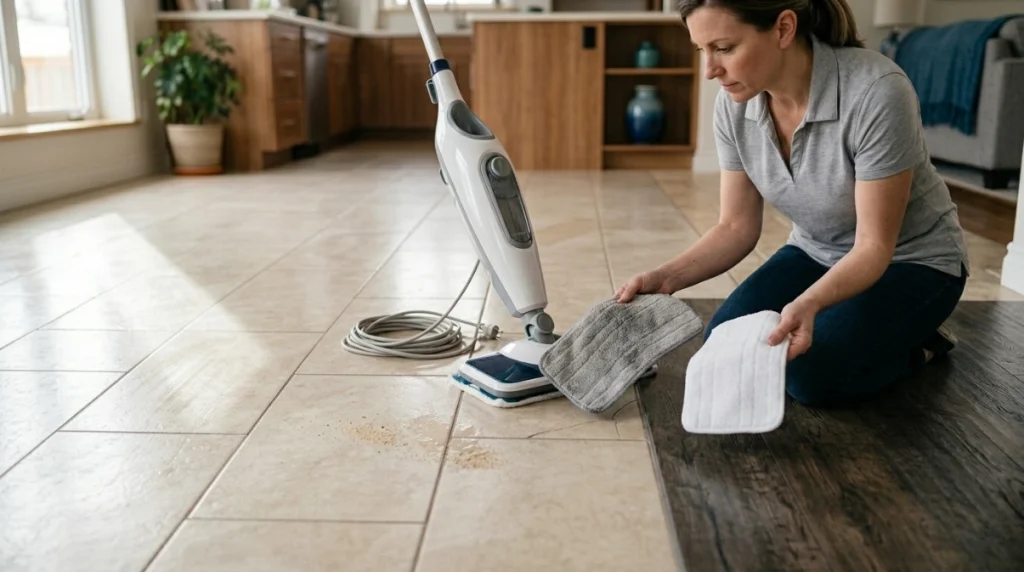
Poor results usually come from dirt redistribution, mineral buildup, unsuitable flooring, or unrealistic expectations. The mop itself is not always defective.
- Streaky floor: The pad may be dirty, or old cleaner residue may remain on the surface.
- Weak steam: Mineral deposits may be obstructing the water path.
- Wet patches: The mop may be stationary too long or releasing excessive moisture.
- Floor still gritty: Loose debris was not vacuumed before mopping.
- Sticky finish: Steam may have softened cleaner, polish, grease, or wax buildup.
- No visible improvement: The mark may be a stain, scratch, etch, or damaged finish rather than dirt.
How can you improve the result?
Start with a freshly washed pad and a thoroughly vacuumed floor. Clean a small section and inspect it under side lighting.
If streaks remain, stop adding steam. Identify whether old cleaning residue needs a manufacturer-approved removal method.
Use only the maintenance procedure listed in the appliance manual. Improvised descaling mixtures can damage seals, tubing, or heating components.
Frequently Asked Questions
Do steam mops clean better than normal mops?
Steam mops can clean sticky residue more easily on approved tile. Normal microfiber mops offer wider floor compatibility and better control over moisture and cleaning solution.
Do steam mops need cleaning solution?
Most steam mops are designed to operate with water. Do not add floor cleaner, vinegar, fragrance, or essential oil unless the manufacturer specifically approves it.
Can a steam mop remove old stains?
Steam may loosen surface residue covering a stain, but it cannot remove every absorbed or chemically bonded mark. Rust, dye, grout discoloration, and damaged finishes often need separate treatment.
Do you vacuum before using a steam mop?
Yes. Vacuuming removes hair, sand, crumbs, and other debris that the steam mop cannot collect effectively. This also lowers the chance of dragging abrasive particles across the floor.
Can you use tap water in a steam mop?
Follow the appliance manual. Some models accept tap water, while others recommend distilled or demineralized water in hard-water areas to reduce mineral buildup.
Why does my floor look dull after steam mopping?
Dullness may come from a dirty pad, loosened cleaner residue, excess moisture, or heat-related finish damage. Stop steaming and check the flooring manufacturer’s care instructions before trying another treatment.
How long does a floor take to dry after steam mopping?
A lightly steamed tile floor may dry within several minutes under good ventilation. Longer drying suggests excessive moisture, slow movement, a saturated pad, or poor airflow.
Are Steam Mops Worth It?
Steam mops are worth considering if most of your cleaning area is intact, sealed ceramic or porcelain tile. They are convenient for sticky kitchen messes and low-residue routine cleaning.
They are a weaker investment for homes dominated by hardwood, laminate, engineered wood, or floors with uncertain care instructions. A microfiber flat mop offers more control in those situations.
As of 2026, my practical verdict remains simple: buy for your flooring, not the marketing claim. The right steam mop works well within a narrow, clearly defined job.
Before using one, check the appliance manual and your floor’s care guide. Then test a hidden area and start with the lowest suitable steam setting.
