
Do Steam Mops Clean Grout? What Works and What Doesn’t

Quick Answer
Yes, steam mops can clean grout by loosening surface dirt, grease, and everyday grime with heat and moisture. They work best on sound tile installations with compatible grout, but a standard mop head may not reach deeply recessed grout lines. Steam cleaning tile and grout works better when loosened dirt is wiped away instead of left to dry again.
When a Steam Mop Works Best
- Light soil: Steam loosens tracked-in dirt and cooking residue well.
- Sound grout: Intact cement-based grout often handles occasional steam when its manufacturer permits it.
- Shallow joints: A microfiber steam-mop pad reaches grout better when joints sit close to the tile surface.
- Regular maintenance: Steam is more effective before grout becomes heavily stained.
- Targeted tools: A compatible grout brush or handheld steamer reaches recessed lines better than a flat mop head.
Quick-Fix Tip
- Vacuum first, steam a small section, then immediately wipe the grout with a clean microfiber cloth to remove the released soil.
I’ve tested steam mops on ceramic and porcelain tile where the tile looked clean long before the grout did. That difference matters because a floor-cleaning mop glides across tile, while the grout often sits slightly below it.
This guide explains when steam works, when you need more agitation, and when I’d keep heat away from the floor completely.
In This Guide
Do Steam Mops Actually Clean Grout?
Yes. A steam mop can remove loose dirt and soften grime sitting on or near the surface of grout.
The limitation is physical contact. Most steam-mop pads ride across the tile instead of pressing deeply into recessed grout joints.
Why can the tile look cleaner than the grout?
Glazed ceramic and porcelain tiles have relatively smooth surfaces. Grout joints have a rougher texture that catches soil more easily.
- Tile surface: The microfiber pad makes broad, direct contact.
- Shallow grout: The pad may contact much of the joint.
- Deep grout: Steam reaches it, but the pad may not collect loosened dirt.
- Textured grout: Soil can remain in tiny surface pits after one pass.
This is why I treat a steam mop as both a cleaner and a soil-loosening tool. I don’t expect one slow pass to restore a neglected grout line.
On my own test sections, crossing the grout from two directions worked better than repeatedly following the same line. A final microfiber wipe also picked up gray residue the mop pad had left behind.
The Tile Council of North America’s grout-cleaning guidance emphasizes removing dirty cleaning water from grout rather than allowing it to settle back into the joint. That principle matters with steam cleaning too.
Section Takeaway: Steam mops clean surface grout well, but recessed or heavily soiled joints usually need direct wiping or gentle brushing after steaming.
How Does Steam Clean Grout?
Steam cleaning uses heated water vapor and moisture to soften attached soil. The softened grime can then be lifted by a pad, microfiber cloth, or appropriate brush.
Definition: A steam mop is an electric floor-cleaning tool that heats water and sends steam through a washable or disposable floor pad. It is designed primarily for compatible sealed hard floors.
Steam still needs mechanical removal
Heat alone does not make dirt disappear. Once grease and soil loosen, something must physically carry them away.
- A clean microfiber pad absorbs loosened surface dirt.
- A microfiber cloth reaches narrow grout lines after steaming.
- A soft nylon grout brush adds agitation to stubborn soil.
- A handheld steam nozzle can target recessed joints when the grout manufacturer allows it.
This explains why an old, saturated mop pad performs poorly. Once the pad fills with dirty moisture, it can redeposit residue across the tile and grout.
Does steam disinfect grout?
Cleaning and disinfecting are different jobs. Steam may have sanitizing claims when a specific machine is used exactly as directed, but I wouldn’t assume every steam mop disinfects every porous grout joint.
If disinfection matters, follow the appliance instructions and any required surface-contact procedure. Don’t substitute a generic steaming routine for a verified disinfecting method.
How Do You Clean Grout With a Steam Mop?
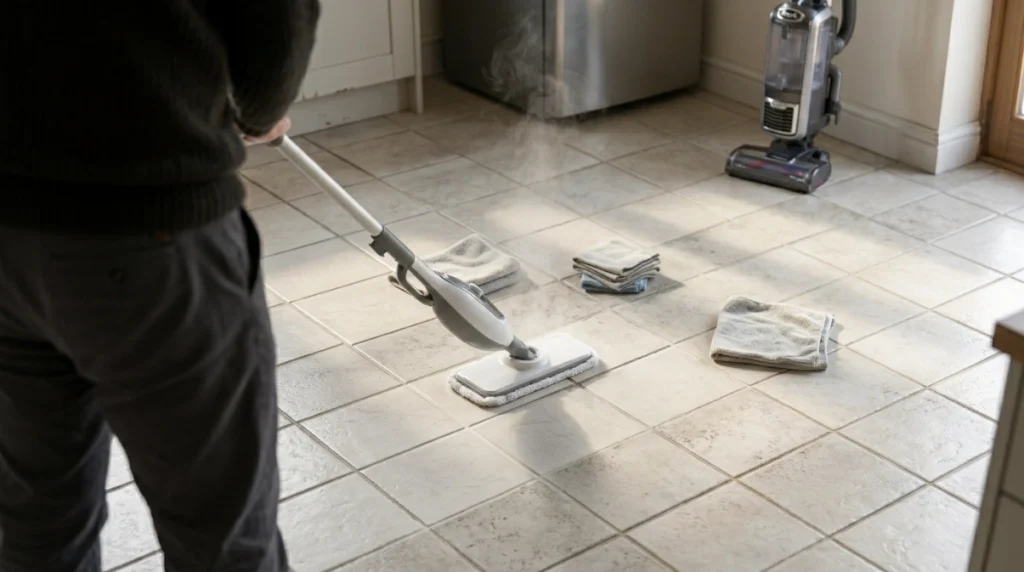
Start with dry soil removal, then work in small sections. The goal is to loosen grime without flooding the grout or repeatedly cooking one spot.
Step-by-step method
- Vacuum or sweep first. Remove hair, grit, crumbs, and dust before adding moisture.
- Check the floor instructions. Confirm that both the tile and grout are suitable for steam cleaning.
- Install a clean pad. A dirty microfiber pad reduces pickup and can leave gray streaks.
- Fill the machine correctly. Use the water type specified in your steam-mop manual.
- Work in small sections. I prefer roughly 2-by-2-foot areas when the grout needs extra attention.
- Cross the grout lines. Move over them from more than one direction instead of only following the joint.
- Keep the mop moving. Don’t park a steaming head over one grout joint.
- Wipe released dirt away. Follow with a clean microfiber cloth when the grout still looks gray or wet.
- Let the floor dry. Increase ventilation and keep foot traffic off damp tile until it is dry.
What if one pass is not enough?
Repeat a light pass rather than holding concentrated heat in one place. Stubborn grout usually responds better to mild agitation than prolonged steaming.
If your machine includes an approved grout brush or handheld attachment, it can provide more direct contact. Otherwise, use a soft nylon brush after loosening the soil.
Safety note: Check the steam-mop manual, flooring care guide, and grout manufacturer before using steam. Never add vinegar, disinfectant, essential oil, or cleaning solution to a steam-mop tank unless the appliance maker specifically permits it.
Steam Mop vs Other Grout-Cleaning Methods
A steam mop is strongest as a whole-floor maintenance tool. For isolated dark grout, a brush or targeted steam cleaner often provides better contact.
| Method | Best Use | Grout Contact | Main Limitation |
|---|---|---|---|
| Steam mop | Routine tile and light grout cleaning | Moderate | Flat pad may miss recessed joints |
| Handheld steamer | Targeted grout lines | High | Heat may not suit every grout |
| pH-neutral cleaner + nylon brush | Stubborn grime and detailed cleaning | High | Requires more manual work |
| Flat microfiber mop | Frequent maintenance | Low to moderate | Little deep-grout agitation |
| Spin or string mop | Large tile areas | Moderate | Dirty water can settle into joints |
A cordless electric mop with rotating pads adds useful agitation, but it still may bridge deep grout lines. Robot mops are excellent for frequent tile maintenance yet rarely scrub recessed grout effectively.
For chemical cleaning, I start with the mildest floor-compatible option. An EPA Safer Choice product search can help when you want cleaners that meet the program’s ingredient criteria.
Safety note: Never mix household cleaners. Check the cleaner label and your tile, grout, and sealer instructions before applying any chemical product.
Which Grout Types Can You Steam Clean?
Grout type matters as much as the steam mop itself. “Tile floor” does not automatically mean “steam-safe floor.”
Cement-based grout
Traditional sanded and unsanded cementitious grout is common in homes. Sound installations may tolerate occasional steam, but the grout and sealer manufacturers should have the final say.
- Sanded grout: Common in wider floor joints and has a textured surface.
- Unsanded grout: Smoother and traditionally used in narrower joints or with scratch-sensitive surfaces.
- Sealed grout: Easier to maintain, but sealer does not automatically make unlimited heat safe.
Epoxy and pre-mixed grout
Epoxy grout resists many stains and moisture, but formulations differ. Some ready-to-use and single-component grouts have specific heat restrictions.
MAPEI’s steam-cleaning guidance notes that steam is generally suitable for many tile-and-grout installations while warning that certain pre-mixed grouts may be damaged by high temperatures.
Old, cracked, or loose grout
I avoid steaming compromised joints. Heat and moisture won’t repair missing grout, cracked joints, or a loose tile assembly.
Natural stone also deserves extra caution. Marble, limestone, travertine, stone sealers, adhesives, and grout may each have separate care requirements.
Safety note: When you cannot identify the grout, test your cleaning method in a hidden area and consult the installation or product manufacturer before using repeated steam.
Section Takeaway: Healthy ceramic or porcelain tile does not guarantee the grout is steam-safe. Identify the grout and follow its care guidance first.
What Won’t a Steam Mop Fix?
Steam is a cleaning method, not a repair method. Some “dirty grout” problems will remain even after all removable soil is gone.
Permanent discoloration
Grout can change color from age, pigments, absorbed spills, previous cleaners, or uneven sealing. More steam will not necessarily restore the original shade.
Efflorescence and mineral residue
White or chalky deposits can involve minerals rather than ordinary dirt. Scrubbing harder without identifying the residue can make the cleaning process less predictable.
Failed or damaged grout
- Cracked joints need inspection or repair.
- Loose grout should not be treated as a cleaning problem.
- Missing grout needs replacement.
- Repeatedly damp grout may point to a moisture source that needs attention.
Deep mold or recurring mildew
A surface cleaning may remove visible residue, but recurring growth can signal persistent moisture. Fix the moisture source rather than repeatedly steaming the same area.
This is also where I stop chasing a bright-white appearance at any cost. Aggressive acid, bleach, abrasive powder, and repeated high heat can create a bigger maintenance problem.
How Often Should You Clean Grout?
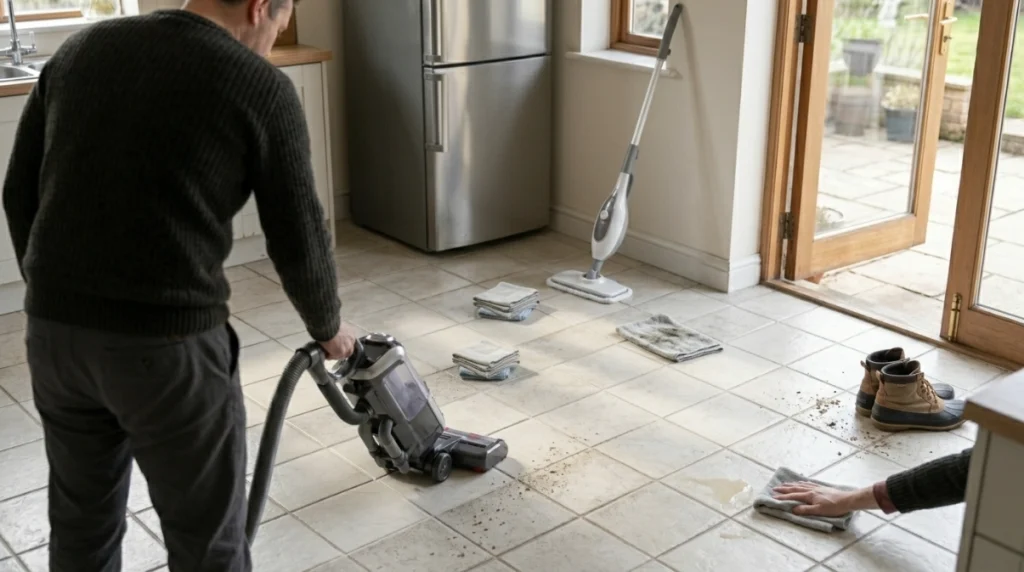
There is no universal grout-cleaning calendar. I base the schedule on traffic, moisture, cooking residue, pets, and how quickly the joints darken.
As a practical 2026 maintenance routine, these are useful starting points rather than strict rules:
- Kitchen tile: Mop weekly and inspect grout every 2 to 4 weeks.
- Bathroom floor: Clean the surface weekly and detail grout about monthly, or sooner if visibly dirty.
- Entryway tile: Vacuum frequently and deep-clean grout every 2 to 4 weeks during wet or muddy seasons.
- Low-traffic tile: Detail cleaning every 4 to 8 weeks may be enough.
- Spills: Clean them promptly instead of waiting for the regular schedule.
Prevent dirty grout before it needs deep cleaning
The biggest improvement I’ve found comes from keeping loose grit off the floor. Vacuuming before any wet or steam mop prevents muddy residue from being pushed into grout lines.
- Use a clean microfiber flat mop for quick maintenance.
- Change steam-mop pads when they become visibly dirty.
- Empty dirty spin-mop water rather than continuing with gray water.
- Use a robot mop for frequent surface maintenance, not as your only grout cleaner.
- Keep bathroom ventilation running long enough for surfaces to dry.
A pH-neutral cleaner is often a sensible option when steam is not appropriate. It also avoids the routine use of strongly acidic DIY mixtures on sensitive grout or stone.
Steam Mop and Grout FAQ
Can a steam mop make grout white again?
A steam mop can brighten grout when the dark color comes from removable dirt, grease, or surface residue. It cannot reliably reverse permanent staining, uneven grout color, damaged sealer, or natural discoloration.
Can steam damage grout?
Yes, some grout products can be damaged by excessive heat or repeated steam exposure. The risk is more important with unknown grout, pre-mixed products, damaged joints, and installations whose manufacturer does not approve steam cleaning.
Can I use a steam mop on unsealed grout?
Do not assume unsealed grout is steam-safe. Cement grout is porous, so check the grout and tile manufacturer’s guidance before introducing repeated heat and moisture.
Should I put grout cleaner in my steam mop?
Not unless the steam-mop manufacturer specifically says you can. Many steam appliances are designed for water only, and adding vinegar, detergent, disinfectant, or essential oils can damage the machine or create unwanted residue.
Is a steam mop better than scrubbing grout?
A steam mop is faster for cleaning an entire tile floor, while a nylon grout brush provides better direct contact on stubborn or recessed joints. I often combine them by steaming first and lightly brushing only the lines that still look dirty.
Does steam kill bacteria or mold in grout?
Do not treat every steam mop as a universal disinfecting device. The CDC distinguishes cleaning from disinfecting, so follow your appliance’s validated sanitizing directions when germ reduction is the specific goal.
What is the best mop for tile floors with dirty grout?
A steam mop with an approved grout attachment is useful when the installation allows steam. For frequent maintenance, a microfiber flat mop or spin mop works well, while a soft grout brush handles joints that sit too deep for a floor pad.
Final Takeaway
So, do steam mops clean grout? Yes—they’re good at loosening everyday soil and keeping compatible tile grout from becoming heavily grimy.
They’re less impressive when grout is deeply recessed, permanently stained, cracked, or made from a heat-sensitive material. In those situations, more steam is not automatically better.
- Vacuum first.
- Confirm the grout is steam-safe.
- Keep the mop moving.
- Use clean microfiber pads.
- Wipe away released soil.
- Brush stubborn joints gently when needed.
If the grout remains dark after the removable dirt is gone, identify the stain or grout condition before reaching for stronger chemicals. That approach protects the floor and usually saves more work later.
