
Do Steam Mops Damage Grout? What You Need to Know Before Cleaning

Quick Answer
Steam mops do not usually damage sound, fully cured grout when the grout and surrounding tile are approved for steam cleaning. Problems are more likely with cracked grout, deteriorated sealers, some premixed grouts, or repeated concentrated heat. Grout manufacturer guidance should always take priority over general cleaning advice.
When steam becomes risky
- Cracked grout: Heat and moisture can enter existing gaps and make deterioration easier to notice or worsen.
- Unknown grout type: Some ready-to-use or premixed grouts have specific temperature restrictions.
- Failing sealer: Worn or peeling sealers may not tolerate repeated heat and moisture well.
- Stationary steaming: Holding the mop over one grout line concentrates unnecessary heat.
- Wrong flooring: Heat-sensitive flooring can be damaged even when the visible grout itself looks fine.
Safest first move
- Check the tile and grout care instructions, test a hidden area, and keep the steam mop moving instead of dwelling over stains.
I have used steam mops on plenty of tiled kitchens and bathrooms, and intact grout usually handles normal cleaning without drama. The trouble starts when steam gets blamed for damage that was already developing underneath dirt or old sealer.
This guide explains when a steam mop is safe, when I would choose a microfiber mop instead, and how to protect grout while still getting it clean.
In This Guide
- Can a Steam Mop Damage Grout?
- Which Types of Grout Can Handle Steam?
- How Does Steam Affect Grout and Grout Sealer?
- How Do You Steam Mop Grout Without Damaging It?
- Steam Mop vs Other Grout Cleaning Methods
- Which Floors With Grout Are Safe for Steam Mopping?
- What Are the Signs Steam Is Damaging Grout?
- Frequently Asked Questions
- Final Takeaway
Can a Steam Mop Damage Grout?
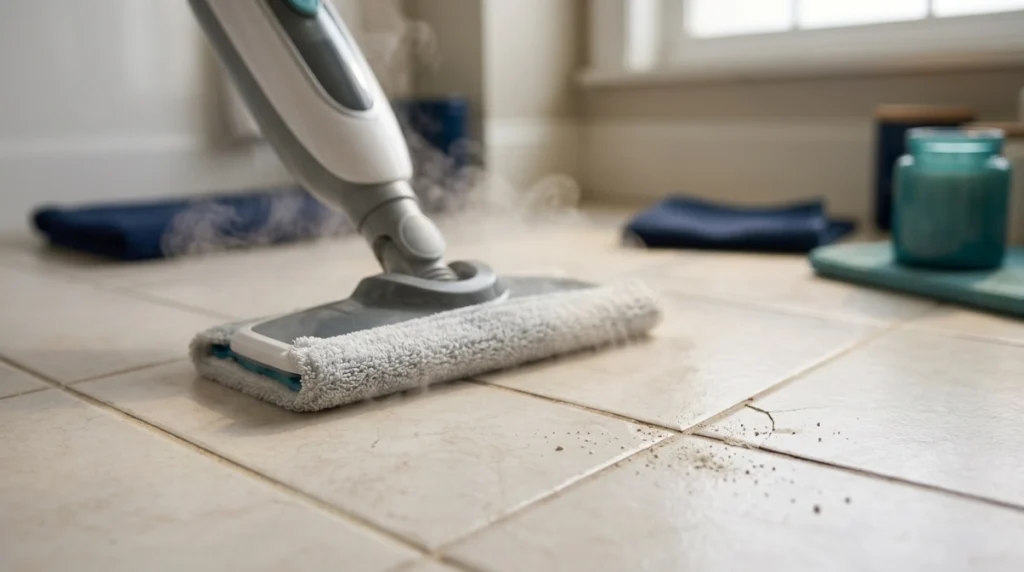
Yes, a steam mop can damage vulnerable grout, but normal steam cleaning does not automatically ruin healthy grout. The condition and composition of the grout matter more than the fact that steam is being used.
Definition: A steam mop is an electric floor-cleaning tool that heats water and sends steam through or around a washable pad. Grout is the joint material filling the spaces between tiles.
Healthy grout and damaged grout behave differently
Fully cured grout that is firm, intact, and compatible with steam has a much lower risk. Manufacturers even sell steam tools specifically for cleaning tile and grout.
Old grout is different. If I can see cracks, missing pieces, powdery areas, or joints separating from tile edges, I skip the steam.
- Firm grout: Usually better suited to controlled steam cleaning when the manufacturer allows it.
- Cracked grout: Moisture can enter openings instead of staying on the surface.
- Powdery grout: Indicates deterioration that cleaning cannot repair.
- Loose grout: Needs repair before aggressive cleaning.
Steam can expose an existing problem
This is something I see often during deep cleaning. A dark grout line looks solid until the dirt comes away, revealing tiny cracks that were already there.
Steam may make that weakness more obvious. That does not necessarily mean the steam created the original failure.
Safety note: Check both the grout manufacturer’s instructions and the flooring manufacturer’s care guide before exposing an unfamiliar installation to steam.
Which Types of Grout Can Handle Steam?
There is no single steam-cleaning rule for every grout formula. Cement-based, epoxy, and ready-to-use grouts have different compositions and care requirements.
Sanded and unsanded cement grout
Traditional cementitious grout is common in older kitchens, bathrooms, and entryways. Sanded grout contains aggregate for wider joints, while unsanded grout has a smoother texture.
BISSELL’s current tile and grout cleaning guidance describes steam cleaning as an option for both sanded and unsanded grout. It still recommends checking the flooring manufacturer’s instructions first.
- Sanded grout: Durable, but its textured surface traps soil easily.
- Unsanded grout: Smoother and often paired with surfaces that scratch more easily.
- Older cement grout: Inspect carefully because age, moisture, and previous cleaning can weaken joints.
Epoxy grout
Epoxy grout is less porous than standard cement grout and resists staining well. It is common where moisture and frequent cleaning are expected.
However, the surrounding tile finish still determines what cleaning method makes sense. A steam-compatible grout does not make every tile steam-safe.
Premixed and ready-to-use grout
This is where I become more cautious. Some modern ready-to-use grout products have specific limits for repeated high-temperature cleaning.
MAPEI states that steam cleaning tile and grout is generally safe, while also warning that certain premixed products can be affected by high temperatures. Product-specific instructions win here.
Safety note: If you cannot identify the grout type, start with a damp microfiber mop or soft brush and pH-neutral cleaner instead of guessing.
How Does Steam Affect Grout and Grout Sealer?
Steam works by combining heat with moisture to loosen greasy film and soil. That makes it useful around textured grout lines where a flat mop pad cannot physically reach every low spot.
Heat loosens dirt
Dried kitchen residue and bathroom buildup can soften under steam. A microfiber pad then lifts much of that loosened soil instead of requiring hard scrubbing.
Consumer Reports’ steam mop guidance also treats tile and grout as durable surfaces that may benefit from stronger steam settings when the flooring allows them.
Moisture finds existing openings
The problem changes when grout has cracks. Steam and condensed water can reach places that ordinary surface moisture might not enter as quickly.
You should also look beyond the visible grout. Loose tiles, failed caulk, and damaged waterproofing can turn a simple cleaning problem into a repair problem.
What about grout sealer?
A sealer helps resist stains and moisture, but it is not indestructible. Age, abrasion, chemicals, and repeated cleaning all affect its condition.
- Good sealer: Water tends to stay near the surface rather than immediately darkening the grout.
- Worn sealer: Grout may darken quickly when wet.
- Peeling coating: Stop using heat until you identify what coating or topical sealer is failing.
Safety note: Do not assume a sealed floor is automatically approved for steam. Follow the sealer and grout manufacturer’s temperature and maintenance guidance.
How Do You Steam Mop Grout Without Damaging It?
The safest approach is simple: inspect first, remove grit, use the lowest effective steam level, and keep moving. I would rather make two gentle passes than park a hot mop over one stubborn line.
1. Inspect the grout before adding heat
Look closely around doorways, sinks, showers, and other high-traffic or damp areas. These spots often show deterioration first.
- Check for cracks or missing grout.
- Press lightly for loose or powdery areas.
- Look for tiles that move under pressure.
- Check whether a coating or sealer is peeling.
2. Vacuum or sweep first
Loose grit should come off before floor cleaning starts. Otherwise, the mop can drag debris across tile and push particles into low grout joints.
I pay special attention to wall edges and corners. Those areas usually hold more hair and grit than the center of the room.
3. Test a hidden area
Choose a small spot behind a door or appliance. Run the steam mop over it normally, then let the area cool and dry before checking the grout.
Watch for unexpected color changes, softening, flaking, or damage to the tile finish. Stop if anything looks different.
4. Use water unless your machine says otherwise
Many steam mops are designed for water rather than ordinary floor-cleaning chemicals. Adding vinegar, disinfectant, essential oil, or detergent can damage some machines or leave unwanted residue.
For mineral-heavy tap water, follow your steam mop manual regarding distilled or demineralized water.
5. Keep the mop moving
I normally divide a tiled room into roughly 3-by-3-foot working areas. That keeps my passes controlled and makes it easy to notice loose grout before I cover the whole floor.
- Move continuously: Do not park the hot pad over one grout joint.
- Use light pressure: Steam should loosen soil without aggressive force.
- Change dirty pads: A saturated pad can redeposit grime.
- Let the floor dry: Keep foot traffic off wet tile to reduce slipping and new dirt.
The CDC’s household cleaning guidance also makes an important distinction: routine cleaning is often enough in normal homes. Do not assume a steam pass automatically replaces an EPA-registered disinfectant when true disinfection is required.
Safety note: Follow your steam mop manual and floor-care instructions for steam level, water type, compatible surfaces, and any sanitizing claims.
Section Takeaway: Healthy, steam-compatible grout is best cleaned with moving passes, clean pads, and minimal unnecessary heat. Stop immediately when grout is cracked, loose, or unidentified.
Steam Mop vs Other Grout Cleaning Methods
A steam mop is useful, but it is not always the best grout-cleaning tool. I choose the method based on whether I am dealing with general floor soil or one stained grout joint.
| Method | Heat | Best Use | Main Grout Concern |
|---|---|---|---|
| Steam mop | High | Routine cleaning across intact tiled floors | Repeated heat on damaged or incompatible grout |
| Handheld steamer | High and concentrated | Targeted grime in individual joints | Easy to overheat one small area |
| Microfiber flat mop | None | Routine low-risk floor cleaning | May not reach deep recessed grout |
| Soft grout brush | None | Small stains and detailed cleaning | Excessive scrubbing can wear weak grout |
For weekly cleaning, a microfiber flat mop is often enough. I save steam for surfaces that are compatible and need more help with stuck-on residue.
For one dirty grout line, a targeted soft brush can give you more control than steaming the entire room.
Which Floors With Grout Are Safe for Steam Mopping?
Do not judge steam safety by the grout alone. Tile material, adhesives, finishes, sealers, and the construction underneath the floor all matter.
Ceramic and porcelain tile
Intact ceramic and porcelain are among the more common steam-mop candidates. BISSELL recommends steam cleaning for many ceramic and porcelain installations while still telling users to check manufacturer instructions.
Glazed and polished finishes can scratch from grit, so vacuuming first still matters.
Natural stone
Marble, limestone, travertine, slate, and other natural stones need more individual care. Some are porous, some have sensitive finishes, and many depend heavily on the correct sealer.
I use a pH-neutral stone cleaner and microfiber mop when I cannot confirm that steam is approved. That is slower, but the risk is lower.
Vinyl, laminate, and engineered flooring
A grout-like appearance does not mean the floor should be steamed. Heat and moisture can harm some resilient floors, adhesives, laminate cores, or engineered materials.
- Ceramic or porcelain: Often compatible when intact and manufacturer-approved.
- Natural stone: Check the exact stone and sealer guidance.
- Vinyl or LVP: Avoid steam unless the flooring manufacturer expressly approves it.
- Laminate: Steam can enter seams and cause swelling or edge damage.
- Wood-based floors: Use the manufacturer’s recommended low-moisture cleaning method.
Safety note: The floor manufacturer’s care instructions should override generic steam-mop advice, even when the grout itself appears durable.
What Are the Signs Steam Is Damaging Grout?
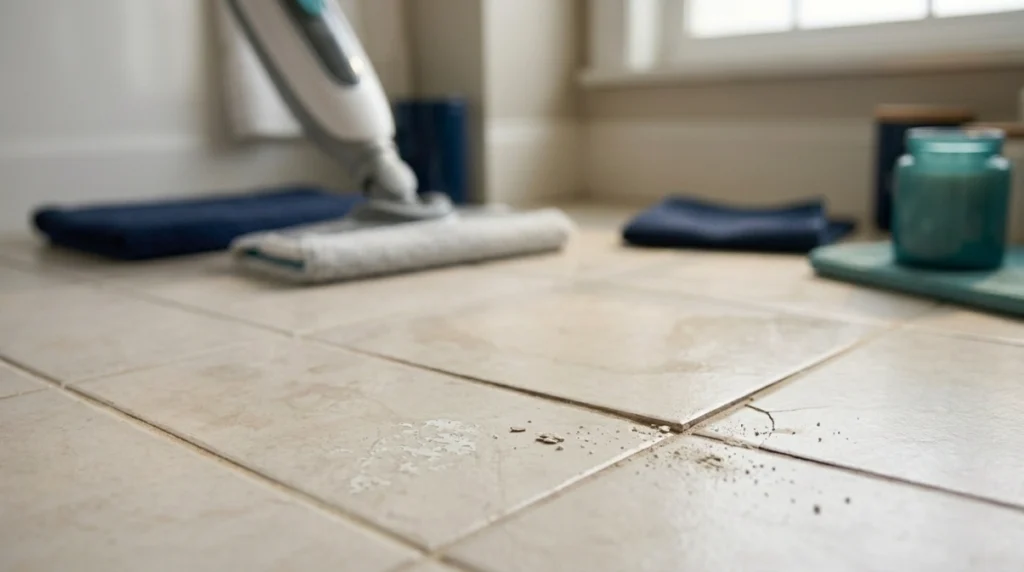
Stop steam cleaning when the grout begins changing physically rather than simply becoming cleaner. Damage usually appears as loss of material, new cracking, or persistent surface changes.
- New flakes or crumbs: Material comes away during or after mopping.
- Growing cracks: Hairline openings become wider or longer.
- Missing edges: Grout breaks away where it meets the tile.
- Persistent soft spots: A joint no longer feels firm after drying.
- Peeling sealer: A topical coating bubbles, lifts, or turns patchy.
- Loose tiles: Movement can indicate a problem below the finished surface.
What should you do if damage appears?
Stop adding steam and let the area dry completely. Do not cover failing grout with fresh sealer in an attempt to hide structural damage.
Small grout defects may need removal and regrouting. Loose tiles, repeated cracking, widespread moisture, or recurring mold deserve professional inspection because cleaning alone will not solve the cause.
Frequently Asked Questions
Can steam cleaning make grout crumble?
Steam can worsen grout that is already cracked, loose, poorly cured, or incompatible with high-temperature cleaning. Sound grout should not normally crumble from a routine manufacturer-approved steam-mopping session, so crumbling is a reason to stop and inspect the joint.
Does steam remove grout sealer?
Steam does not automatically remove every grout sealer, but repeated heat and moisture may affect some sealers or coatings. Check the sealer manufacturer’s care instructions, especially if the coating is old, peeling, or recently applied.
Is a Shark or Bissell steam mop safe for grout?
Many Shark and BISSELL steam mops are designed for sealed hard floors, and some BISSELL machines specifically include grout-cleaning tools. Compatibility still depends on your grout, tile, sealer, and the instructions for the exact machine.
How often can you steam mop grout?
There is no universal schedule that fits every grout product. For routine cleaning, use steam only as often as your flooring and grout manufacturers allow, and rely on dry soil removal or a damp microfiber mop between deeper cleans.
Can I put vinegar in a steam mop to clean grout?
Do not put vinegar into a steam mop unless the appliance manufacturer specifically permits it. Acidic vinegar can also be unsuitable for some grout, sealers, and natural stone, so a pH-neutral floor cleaner is the safer alternative when compatible.
Is a steam mop better than scrubbing grout?
A steam mop is better for covering a large intact tiled floor with less manual scrubbing. A soft grout brush gives more control over one stained joint and avoids exposing the entire floor to heat.
Should grout be sealed before steam cleaning?
Sealing can improve stain and moisture resistance for grout products designed to be sealed, but it does not automatically make them steam-safe. Allow newly installed grout and sealer to cure for the full manufacturer-specified period before wet or steam cleaning.
Final Takeaway: Should You Use a Steam Mop on Grout?
Steam mops usually do not damage healthy, compatible grout when you use them correctly. The bigger risks are existing cracks, unknown grout products, deteriorated sealers, concentrated heat, and flooring that should never be steamed.
My rule is straightforward: inspect first, verify compatibility, test a hidden area, and keep the mop moving. If the grout is already crumbling or separating, put the steam mop away and repair the problem before doing another deep clean.
