
Do Steam Mops Get Moldy? Causes, Cleaning, and Prevention

Quick Answer
Yes, steam mops can get moldy when moisture remains in the mop pad, water tank, mop head, or internal passages during storage. Mold is most likely on dirty microfiber pads because they combine moisture with trapped organic debris. The best prevention is to empty, clean, and completely dry the machine after use, which follows the same moisture-control principle described in EPA mold guidance.
Common signs and causes
- Musty odor: A damp, earthy smell often appears before obvious growth becomes visible.
- Wet mop pad: A dirty microfiber pad stored while damp provides ideal conditions for mildew and mold.
- Standing tank water: Water left for days can develop odor, film, or microbial growth.
- Dark spotting: Black, green, brown, or pink discoloration may indicate biological growth or staining.
- Hidden moisture: Condensation can remain around the mop head, tank cap, seals, and steam channels.
Quick prevention
- Remove and wash the pad, empty the tank, drain remaining moisture, and store everything completely dry.
Do steam mops get moldy even though they produce hot steam? They can, and I see the problem most often when a wet mop pad stays attached after floor cleaning.
The good news is that steam mop mold is usually preventable. This guide covers where it grows, how to recognize it, how to clean the machine safely, and how to keep it from returning.
In This Guide
- Can a Steam Mop Actually Grow Mold?
- Where Does Mold Grow in a Steam Mop?
- How Can I Tell If My Steam Mop Has Mold?
- Why Does a Steam Mop Get Moldy?
- How Do You Clean Mold From a Steam Mop Safely?
- How Do You Prevent Steam Mop Mold After Every Use?
- Which Mop Types Are Most Likely to Get Moldy?
- Can a Moldy Steam Mop Spread Mold to Your Floor?
- Frequently Asked Questions
- Final Takeaway
Can a Steam Mop Actually Grow Mold?

Yes. A steam mop can develop mold or mildew whenever parts of the appliance remain damp long enough during storage.
The fact that the machine produces hot steam doesn’t keep it permanently sterile. Once unplugged, it cools and becomes another damp cleaning tool.
Definition: A moldy steam mop is a steam-cleaning appliance with fungal growth or persistent musty contamination on its pad, reservoir, mop head, seals, or other moisture-holding parts.
Why doesn’t the steam prevent mold?
Heat is present while the mop operates. Mold usually develops later, after the machine has cooled and remains wet in a closet or utility room.
- During cleaning: The heater creates steam and warms the steam pathway.
- After cleaning: Condensation and unused water may remain inside the machine.
- During storage: Damp pads and stagnant water can sit at room temperature for days.
Dirty mop pads carry more than water. They collect dust, food residue, pet debris, grease, and other material from the floor.
That combination makes the removable pad my first inspection point whenever a steam mop develops a musty smell.
Section Takeaway: Steam heat during use does not protect a damp steam mop during storage. Mold prevention starts after you unplug the machine.
Where Does Mold Grow in a Steam Mop?
Mold can appear anywhere moisture becomes trapped, but some steam mop parts deserve closer attention. The microfiber cleaning pad is usually the highest-risk component.
1. Microfiber mop pads
Microfiber is a synthetic fabric made from extremely fine fibers that trap soil and absorb moisture. That cleaning ability also means a used pad can stay damp for hours.
If I finish mopping and leave the dirty pad attached overnight, it often smells stale by the next cleaning session. Warm, humid storage makes the problem worse.
2. Removable water tanks
A reservoir with leftover water can develop odor or surface film. Contamination can collect around caps, valves, corners, and rubber seals.
Clear tanks make inspection easier. Cloudy plastic tanks require a flashlight to spot residue around the bottom and seams.
3. Mop heads and pad attachment areas
The underside of the mop head receives condensation, floor grime, and moisture from the cleaning pad. Hook-and-loop strips and recessed edges can remain wet after the visible surface dries.
4. Internal hoses and steam passages
These areas are harder to inspect. Persistent odor despite a clean tank and fresh pad can suggest contamination deeper inside the appliance.
Don’t disassemble a sealed boiler or electrical housing unless the manufacturer specifically provides a service procedure. Appliance repair may be safer than opening the unit yourself.
How Can I Tell If My Steam Mop Has Mold?
A musty smell is one of the clearest warning signs. Visible growth makes the diagnosis easier, but not every stain is mold.
Look for these warning signs
- Earthy or musty odor: The smell returns even after the machine has dried.
- Dark specks: Black, green, gray, or brown patches appear on the pad or tank.
- Colored film: Pink, orange, or dark residue develops around standing water.
- Slimy surfaces: The reservoir feels slippery rather than simply wet.
- Recurring odor: A freshly washed pad smells clean, but the assembled mop smells stale again.
Mold or mineral buildup?
White, chalky deposits are usually mineral scale rather than mold. Hard-water minerals can collect around steam openings, heaters, and tank surfaces.
Mineral scale feels crusty and often appears white or beige. Biological film tends to look slimy, spotted, fuzzy, or irregular.
A steam mop that stops producing steam may also have mineral buildup rather than mold. Treat those as separate maintenance problems.
Why Does a Steam Mop Get Moldy?
Persistent moisture is the main cause. Mold becomes more likely when dampness combines with trapped dirt, poor airflow, and long storage periods.
The EPA’s household mold guidance also centers prevention around controlling moisture and drying damp materials.
Common habits that create the problem
- Leaving water in the tank: Standing water remains inside until the next cleaning day.
- Storing a wet pad: The damp microfiber stays pressed against the mop head.
- Using a dirty pad repeatedly: Soil and organic residue accumulate between uses.
- Closing the tank while wet: Trapped moisture receives little airflow.
- Using too much water: Heavy steam settings can leave the pad wetter before storage.
- Storing in humid rooms: Closets, basements, and unventilated laundry rooms slow drying.
Does distilled water stop mold?
No. Distilled water helps reduce mineral scale, but it doesn’t make a dirty reservoir permanently mold-proof.
Spores and residue can enter while you fill, empty, handle, or store the tank. Drying still matters.
Some Bissell, Shark, Black+Decker, and other steam mop models have different water recommendations. Follow your specific owner’s manual rather than assuming every machine requires distilled water.
Section Takeaway: Mold isn’t caused by steam itself. It develops when water, residue, and limited airflow remain after cleaning.
How Do You Clean Mold From a Steam Mop Safely?
Start by unplugging the steam mop and letting it cool completely. Never clean the tank, pad, or mop head while the appliance remains hot or connected to power.
- Remove the mop pad. Keep it away from clean laundry until it has been washed.
- Empty the water tank. Pour stagnant water into a sink and inspect the tank for film or discoloration.
- Wash the removable pad. Follow its care label and use normal laundry detergent unless the manufacturer states otherwise.
- Rinse a washable reservoir. Use clean water and only manufacturer-approved cleaners for removable tank surfaces.
- Wipe accessible surfaces. Clean the mop head, tank exterior, cap, and attachment points with a suitable damp cloth.
- Dry every component. Leave removable pieces apart until no trapped moisture remains.
- Inspect before reassembly. Replace pads, tanks, seals, or other parts that remain contaminated or damaged.
Can I put bleach in a steam mop?
Don’t pour bleach into a steam mop unless the manufacturer explicitly says the machine accepts it. Heat, seals, plastics, and internal components may not tolerate concentrated cleaning chemicals.
The CDC’s mold cleanup guidance also warns against mixing bleach with ammonia or other cleaners.
Safety note: Never mix bleach with vinegar, ammonia, or other household cleaners. Follow both the product label and your steam mop manual.
Can I clean steam mop mold with vinegar?
Vinegar is commonly associated with descaling, but descaling and mold cleanup are different jobs. Some machines permit acidic descaling solutions while others do not.
Don’t fill the boiler with vinegar based on a generic internet recipe. Check the exact model manual first.
If an inaccessible internal component continues smelling moldy after approved maintenance, stop using the machine. Manufacturer support, professional repair, or replacement may be the safer option.
How Do You Prevent Steam Mop Mold After Every Use?
A five-minute shutdown routine prevents most problems. I treat drying the mop as part of the cleaning job rather than something to remember later.
My practical after-use routine
- Unplug the mop. Let hot components cool safely.
- Remove the pad. Don’t leave wet microfiber pressed against the mop head.
- Empty leftover water. Drain the removable reservoir after each cleaning session.
- Wash dirty pads. Clean them after every use rather than waiting for visible stains.
- Air-dry the parts. Keep the tank, cap, and pad separated until completely dry.
- Wipe the mop head. Remove hair, soil, and damp residue from attachment areas.
- Store in a dry location. Avoid a humid bathroom or damp basement corner when possible.
Should you leave the water tank open?
If the tank is removable and the manual allows it, leaving the cap open while drying improves airflow. Reinstall it only when the inside is dry.
Don’t leave loose components where children or pets can reach them. Keep the appliance unplugged throughout drying.
How often should steam mop pads be washed?
I recommend washing a reusable pad after every floor-cleaning session. That prevents dirt, grease, and odor from accumulating between uses.
Avoid fabric softener unless the pad manufacturer specifically permits it. Fabric softener can coat microfiber and reduce its ability to absorb and trap soil.
Section Takeaway: Empty, wash, dry, and separate. Those four habits do more for mold prevention than adding chemicals to the tank.
Which Mop Types Are Most Likely to Get Moldy?
Any reusable mop can become moldy if stored wet. The risk depends mainly on how much moisture the tool retains and how easily its washable parts dry.
| Mop Type | Main Moisture Area | Relative Mold Risk When Stored Wet | After-Use Care |
|---|---|---|---|
| Steam mop | Microfiber pad and water tank | Medium to high | Empty tank and wash pad after every use |
| Spin mop | Dense mop head and bucket | High | Rinse head and empty bucket after every use |
| Microfiber flat mop | Removable pad | Medium | Wash and fully dry pad after every use |
| String mop | Thick cotton or synthetic strands | High | Rinse, wring thoroughly, and air-dry |
| Cordless/electric mop | Rollers, pads, and water tanks | Medium to high | Empty tanks and clean rollers after each use |
| Robot mop | Reservoir and reusable pad | Medium to high | Remove wet pad and drain tank after each run |
A traditional string mop often holds more water than a flat microfiber mop. A steam mop adds another moisture-holding component because it also has a reservoir.
Whether you’re using a Tineco electric floor cleaner, O-Cedar spin mop, Swiffer-style flat mop, or iRobot Braava, the same principle applies. Don’t store washable floor-cleaning parts wet.
Can a Moldy Steam Mop Spread Mold to Your Floor?
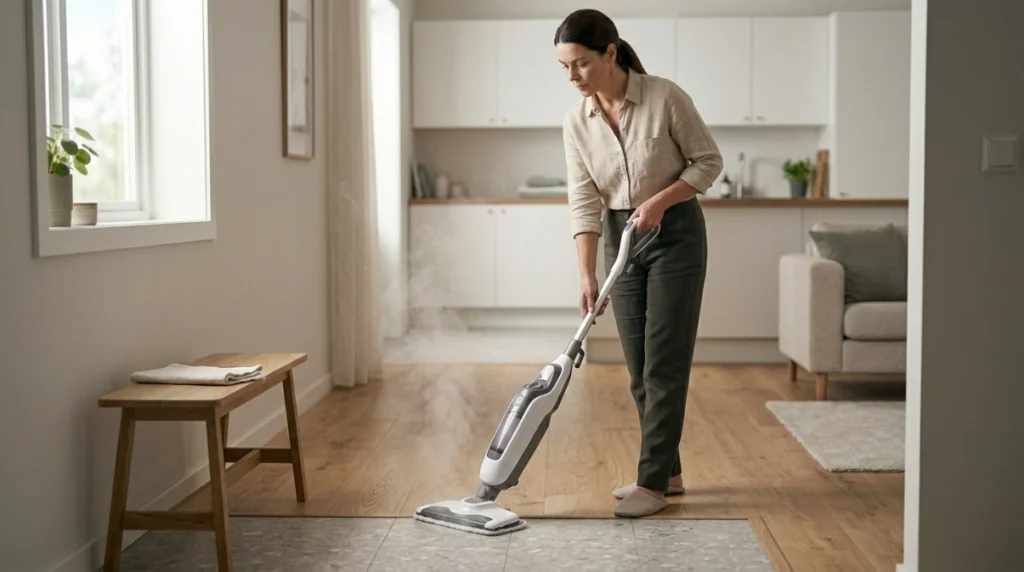
A contaminated mop can deposit dirty moisture, odors, spores, and residue on surfaces. That doesn’t mean mold will automatically establish itself across a dry floor.
Ongoing mold growth still requires suitable moisture conditions. The larger concern is leaving contaminated water in seams, grout, damaged finishes, or other areas that stay damp.
Hardwood and engineered wood
Use as little moisture as possible on wood flooring. Repeated wetting can affect finishes, joints, and the wood beneath.
Laminate and vinyl/LVP
These floors can have moisture-sensitive seams even when their surfaces resist spills. A lightly damp microfiber flat mop is often safer when the flooring manufacturer discourages steam.
Tile, grout, stone, and concrete
Tile and sealed concrete generally tolerate moisture better, but grout and porous surfaces can hold water longer. Natural stone also requires care because acidic DIY cleaners may damage certain materials.
Safety note: Check your flooring manufacturer’s care guide before using steam, vinegar, disinfectant, or another chemical cleaner on hardwood, laminate, LVP, stone, or sealed surfaces.
What should I do if I already used a moldy pad?
- Stop using the pad: Wash it thoroughly or replace it.
- Clean the mop: Empty and dry the reservoir and accessible components.
- Re-clean the floor: Use the floor manufacturer’s recommended cleaner.
- Dry the surface: Don’t leave moisture around seams, edges, or grout.
- Check recurring problem areas: Investigate leaks or persistent dampness if mold keeps returning.
For broader household contamination, the EPA’s mold cleanup resources explain when moisture problems need more extensive attention.
Frequently Asked Questions
Can mold grow in steam mop water?
Yes. Water left standing in a contaminated reservoir can develop microbial growth, especially when dirt or residue enters the tank. Empty the reservoir after use and allow it to dry before long-term storage.
Why does my steam mop smell musty?
A musty steam mop often has a damp or dirty cleaning pad, stagnant reservoir water, or moisture trapped around the mop head. Clean each removable component separately to identify where the odor originates.
Should I leave water in my steam mop between uses?
It’s better to empty the tank before storage unless your specific owner’s manual says otherwise. Removing standing water also reduces mineral deposits, stale odors, and the chance of contamination.
Can I run the steam mop to kill mold inside it?
Don’t rely on running the appliance as a self-sanitizing method. Hidden components may not receive the same heat exposure, and contaminated residue still needs physical removal.
Can I put disinfectant in a steam mop water tank?
Only if your exact model’s manufacturer approves that product. Many steam mops are designed for water alone, and unapproved chemicals may damage seals, heaters, tanks, or flooring.
Should I throw away a moldy steam mop pad?
A washable pad can often be cleaned if the care label permits thorough laundering and the odor disappears. Replace the pad if staining, odor, deterioration, or contamination remains after washing and drying.
When should I replace a moldy steam mop?
Consider replacement when mold or persistent odor appears inside inaccessible components and manufacturer-approved cleaning doesn’t solve it. Replacement can also make sense when the tank, seals, hoses, or electrical housing show contamination or damage.
For health-focused information about household mold exposure and cleanup, see the CDC’s mold information.
Final Takeaway
So, do steam mops get moldy? Yes, but the problem usually comes from storing a damp pad, standing tank water, or condensation rather than from the steam-cleaning process itself.
My rule is simple: remove the pad, empty the tank, clean dirty parts, and let everything dry before storage. That routine keeps a steam mop fresher and ready for the next floor-cleaning session.
