
Do Steam Mops Kill Bed Bugs? What Actually Works in 2026

Quick Answer
Yes, a steam mop can kill exposed bed bugs and eggs when enough heat reaches them directly. However, a floor steam mop isn’t a complete bed bug treatment because bugs usually hide in cracks, furniture, mattresses, and other areas the mop cannot reach. The EPA recommends appropriately used steam cleaners as one part of bed bug control, not steam mopping alone.
What matters most
- Direct heat: The steam must reach the bed bug rather than pass over its hiding place.
- Enough temperature: EPA guidance says steam used for bed bug treatment should be at least 130°F.
- Slow coverage: Moving too quickly may leave cooler spots and untreated insects.
- Limited reach: A floor mop cannot effectively treat most mattress seams, furniture joints, or narrow crevices.
- Floor safety: Steam can damage wood and other heat- or moisture-sensitive flooring.
Best quick approach
- Use steam only where the surface and appliance manufacturer allow it, then combine it with inspection, vacuuming, laundering, monitoring, and professional treatment when needed.
If you’re wondering, “do steam mops kill bed bugs,” the short answer needs an important qualification. Heat can kill bed bugs, but ordinary floor cleaning doesn’t automatically eliminate an infestation.
I’ve found that the biggest mistake with steam mops is assuming hot visible steam means every surface receives the same heat. This guide explains where a steam mop can help, where it cannot, and how to avoid damaging your floor.
In This Guide
- Can a Steam Mop Really Kill Bed Bugs?
- How Hot Does Steam Need to Be to Kill Bed Bugs?
- Steam Mop vs. Steam Cleaner for Bed Bugs
- Where Can You Safely Use Steam?
- How Should You Use a Steam Mop Around Bed Bugs?
- Why Isn’t Steam Mopping Enough?
- What Should You Do Instead?
- Frequently Asked Questions
- Final Takeaway
Can a Steam Mop Really Kill Bed Bugs?
A steam mop can kill a bed bug that receives enough direct heat. The problem is getting that heat to every insect and egg in an infested room.
A steam mop is an electric floor-cleaning appliance that heats water and directs steam through or around a cleaning pad. It is mainly designed for compatible hard flooring, not pest control.
Bed bugs behave differently from ordinary floor dirt. They hide during the day and often stay close to sleeping areas.
The CDC’s bed bug guidance lists places such as mattress seams, box springs, bed frames, headboards, furniture, and cracks as common hiding locations.
Why direct contact makes the difference
Steam loses useful heat as it moves away from its source and contacts cooler materials. A quick pass over the middle of a tile floor may therefore do nothing to a bug hidden beneath a baseboard.
- Visible insects: Direct steam may provide lethal heat.
- Hidden insects: Heat may never reach them.
- Eggs in crevices: They can remain untreated if steam cannot penetrate the hiding place.
- Nearby rooms: Mopping one floor does nothing to insects living elsewhere.
This is why I wouldn’t judge success by how hot the mop pad feels. Coverage is more important than the amount of visible vapor.
Section takeaway: A steam mop can kill bed bugs it reaches, but reaching every bed bug is the real challenge.
How Hot Does Steam Need to Be to Kill Bed Bugs?
Bed bugs are vulnerable to heat, but temperature must reach the insect itself. EPA guidance says steam cleaners used against bed bugs should produce steam of at least 130°F.
The EPA also notes that bed bugs die when their body temperature reaches about 113°F. The surrounding treatment area needs to be hotter so sufficient heat reaches hidden insects.
Why your steam mop’s advertised temperature isn’t enough
A manufacturer may advertise water temperatures near boiling inside an appliance. That doesn’t guarantee the floor, crack, or insect stays at that temperature.
Several things affect the heat reaching the target:
- The distance between the steam outlet and insect
- The thickness and moisture level of the mop pad
- The speed of each cleaning pass
- The temperature of the floor
- Whether the insect sits inside a crack or under an object
When I use a steam mop for normal tile cleaning, I can see how quickly the pad absorbs moisture and cools against the surface. That is one reason I don’t treat a floor mop like professional heat-treatment equipment.
More heat isn’t always better, either. Excessive heat and moisture can damage flooring, adhesives, finishes, furniture, and other materials.
Steam Mop vs. Steam Cleaner for Bed Bugs

A dedicated steam cleaner is usually more suitable for targeted bed bug work than a floor steam mop. Attachments let you work around seams, edges, frames, upholstery, and crevices.
| Feature | Steam Mop | Steam Cleaner |
|---|---|---|
| Main purpose | Hard-floor cleaning | Targeted steam cleaning |
| Flat floor coverage | Good | Depends on attachment |
| Cracks and crevices | Poor | Better with suitable attachment |
| Bed frames and furniture | Usually impractical | More practical |
| Mattress seams | Not recommended unless designed for it | Possible when appliance and mattress guidance allow |
| Floor-material risk | Can be significant | Depends on surface and attachment |
EPA guidance also warns against forceful steam airflow because it can scatter bed bugs. A diffuser or broad attachment can reduce that risk.
For normal floor-cleaning performance and steam-mop limitations, the Consumer Reports steam mop buying guide is also useful.
Safety note: Always follow the appliance manual before using attachments or directing steam at fabrics, furniture, walls, or other surfaces.
Where Can You Safely Use Steam?
Steam should only be used on flooring that its manufacturer approves for steam cleaning. Pest control isn’t a good reason to risk permanent floor damage.
Tile and sealed hard surfaces
Ceramic and porcelain tile are among the more practical surfaces for a steam mop. Even then, inspect grout, sealants, transitions, and nearby materials first.
If a bed bug crosses an open tile floor, direct treatment may kill it. The bigger infestation is still likely hiding somewhere else.
Hardwood and engineered wood
I would avoid steam on wood unless the flooring manufacturer gives explicit approval. Heat and moisture can affect the finish, joints, and wood itself.
The National Wood Flooring Association’s maintenance guidance advises against wet and steam mops on wood floors.
Laminate and vinyl or LVP
These materials vary by manufacturer, construction, seam design, and warranty. Hot moisture may enter joints or affect adhesive and surface layers.
Don’t assume “water resistant” means “steam safe.” Check the exact flooring care guide first.
Natural stone
Stone, grout, and sealers respond differently to heat and moisture. Follow the stone or sealer manufacturer’s cleaning instructions before steaming.
Safety note: When there’s any risk of heat, moisture, finish, adhesive, or warranty damage, use another bed bug control method instead.
How Should You Use a Steam Mop Around Bed Bugs?
If you find an exposed bed bug on a steam-safe hard floor, a steam mop can be a supporting tool. Don’t turn routine mopping into your complete treatment plan.
- Confirm the pest. Make sure you’re dealing with bed bugs rather than fleas, ticks, or another insect.
- Check the floor instructions. Confirm that steam cleaning is allowed for your exact surface.
- Vacuum loose debris first. This gives the mop better contact with the floor.
- Use a clean pad. A heavily soiled pad can reduce effective steam distribution.
- Work slowly. Avoid racing over the suspected area with one quick pass.
- Pay attention to edges. Inspect baseboards and transitions, but don’t force a floor mop where it doesn’t fit.
- Handle the pad carefully. Let the appliance cool and follow its cleaning instructions.
- Continue inspecting. Finding another bug means the infestation source may remain untreated.
Never put pesticides, alcohol, essential oils, bleach, or improvised chemicals into a steam mop unless the appliance manufacturer expressly allows that substance. Water tanks and internal seals aren’t designed for random chemical mixtures.
The EPA’s bed bug safety guidance also stresses careful treatment choices and following pesticide labels when pesticides are used.
Safety note: Hot steam can burn skin. Keep children and pets away while the appliance is operating and cooling.
Why Isn’t Steam Mopping Enough to Eliminate Bed Bugs?
Bed bug infestations are three-dimensional problems, while a steam mop mainly treats one flat surface. That mismatch is the central limitation.
Bed bugs can hide inside furniture joints, cracks, headboards, mattresses, box springs, and objects near sleeping areas. Many of those locations never touch the mop.
Steam has no lasting protective effect
Once an area cools, the heat is gone. A bed bug moving into that area later won’t be killed by yesterday’s steam treatment.
Eggs or insects can be missed
You may kill several exposed insects and still leave hidden bugs behind. New activity can then appear after the room seems clear.
Bed bugs may be outside the floor area
A clean floor doesn’t mean a clean bed frame, nightstand, couch, luggage item, or adjacent room. Inspection must extend beyond visible walking surfaces.
- Check mattress and box-spring seams.
- Inspect the bed frame and headboard.
- Look around baseboards and nearby furniture.
- Check luggage and stored fabric items when relevant.
- Use monitoring devices to detect continued activity.
This is why I see steam mopping as cleanup support rather than eradication. It may help in the right place, but it doesn’t replace a complete control plan.
Section takeaway: A hot floor can kill exposed bugs, but an untreated hiding place can keep the infestation going.
What Should You Do Instead of Relying on a Steam Mop?
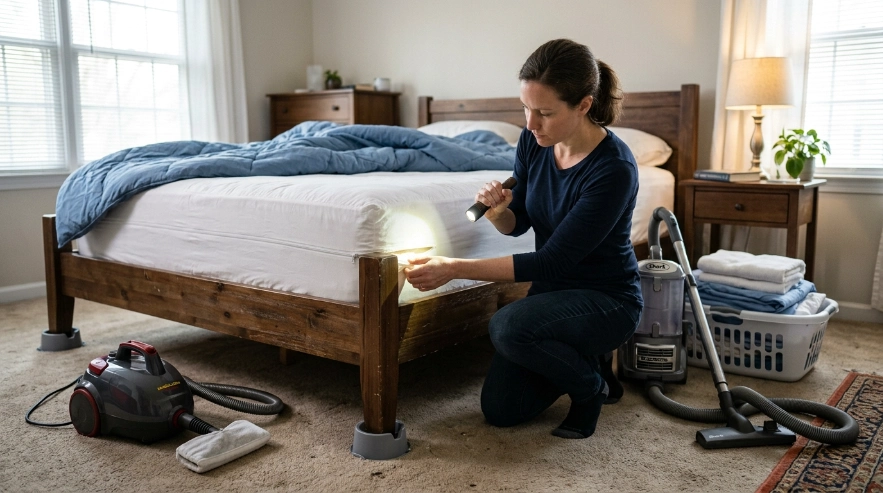
Use several compatible control methods together. This approach targets more hiding locations and makes it easier to see whether the infestation is declining.
As of 2026, EPA guidance continues to describe bed bug control as a process that can require repeated treatment. It recommends combining appropriate non-chemical and chemical approaches rather than depending on one shortcut.
A practical bed bug control checklist
- Identify the insect: Confirm that the pest is a bed bug.
- Inspect thoroughly: Check beds, nearby furniture, cracks, baseboards, and surrounding areas.
- Reduce clutter: Remove unnecessary hiding places without spreading infested belongings.
- Vacuum carefully: Target rugs, floors, furniture, bed frames, and crevices, then dispose of vacuum contents securely.
- Heat-dry washable items: Follow suitable laundering and dryer instructions for bedding and clothing.
- Use appropriate steam: A proper steam cleaner can target suitable cracks, fabrics, frames, carpets, and furniture.
- Use encasements: Bed-bug-rated mattress and box-spring encasements can support control efforts.
- Monitor activity: Interceptors and repeated inspections can reveal continuing problems.
- Get professional help: Persistent, widespread, or apartment infestations often need an experienced pest-management professional.
Don’t try to heat an entire room with a thermostat, fireplace, or portable space heater. Improvised whole-room heating can be ineffective and dangerous.
Also avoid spraying random household chemicals on beds and floors. If you use a pesticide, choose one legally labeled for bed bugs and follow its directions exactly.
Frequently Asked Questions
Will a Shark steam mop kill bed bugs?
A Shark or similar steam mop may kill exposed bed bugs if sufficient heat reaches them directly. However, the brand name doesn’t solve the coverage problem. Most infestations include hidden insects in beds, furniture, cracks, and other areas a floor mop cannot treat.
Does steam kill bed bug eggs?
Proper steam treatment can kill bed bugs and their eggs when enough heat reaches them. Hidden eggs may survive if the steam doesn’t penetrate their location, so steam should be part of a wider inspection and treatment plan.
Can I steam mop my bedroom floor for bed bugs?
You can steam a bedroom floor only if the flooring manufacturer approves steam cleaning. This may kill exposed bugs on the surface, but it won’t treat insects hiding in the mattress, box spring, furniture, wall gaps, or bed frame.
Can I use a steam mop on a mattress?
A standard floor steam mop usually isn’t the right appliance for mattress treatment. If your appliance has a manufacturer-approved handheld fabric attachment, follow its manual and the mattress care instructions. Otherwise, use equipment specifically designed for targeted steam cleaning.
How often should I steam for bed bugs?
There isn’t one universal steam-mopping schedule that eliminates an infestation. EPA guidance recommends continued inspection and possible retreatment because bugs or eggs may remain. Base repeated treatment on ongoing evidence and the directions for your chosen equipment or pest-control plan.
Is steam better than pesticide for bed bugs?
Neither method is automatically best in every situation. Steam can provide non-chemical contact treatment, while properly selected pesticides may reach or protect other locations. An integrated approach often makes more sense than relying entirely on either one.
Final Takeaway: Do Steam Mops Kill Bed Bugs?
Yes, a steam mop can kill exposed bed bugs when sufficient heat reaches them. But that doesn’t mean steam mopping your floors will eliminate a bed bug infestation.
Use a steam mop only on approved flooring and treat it as one limited tool. For a real infestation, combine careful inspection, vacuuming, appropriate heat treatment, laundering, monitoring, and professional pest control when necessary.
If you’re choosing between protecting your flooring and forcing steam into a questionable surface, protect the floor. There are safer ways to target the bugs without creating a second problem.
