
Do Steam Mops Kill Dust Mites? What Really Works

Quick Answer
Yes, steam can kill dust mites when the mites receive enough heat for enough time. Research on domestic steam cleaning for dust mites found that steam treatment killed mites in treated carpet samples and lowered mite allergen levels. However, a steam mop only treats surfaces it can safely reach, so it should be one part of a broader dust-mite control routine.
What matters most
- Heat exposure: Steam must contact the area long enough to transfer lethal heat to the mites.
- Surface type: Tile may tolerate steam, while wood, laminate, and many vinyl floors may not.
- Allergen removal: Killing mites does not automatically remove every allergen particle left behind.
- Vacuuming: HEPA-filter vacuuming helps remove dust, mite waste, and other settled allergens.
- Humidity control: Keeping the home dry makes conditions less favorable for dust mites.
My quick approach
- Use steam only on surfaces the flooring or appliance manufacturer approves, then combine it with regular vacuuming, hot bedding washes, and humidity control.
If you are wondering, “do steam mops kill dust mites,” the answer is more useful than a simple yes or no. A steam mop can expose mites to damaging heat, but good floor cleaning for allergy control requires more than running a mop across the room.
I treat a steam mop as a targeted cleaning tool. It can help on suitable surfaces, but it cannot reach every mattress fiber, carpet layer, upholstered seam, or dusty corner where mite allergens collect.
In This Guide
- Do Steam Mops Actually Kill Dust Mites?
- How Does Steam Kill Dust Mites?
- Where Can You Safely Use a Steam Mop for Dust Mites?
- Steam Mop vs Vacuuming and Hot Washing
- How Should You Steam Mop for Dust-Mite Control?
- Does Killing Dust Mites Remove Their Allergens?
- How Do You Keep Dust Mites From Coming Back?
- Frequently Asked Questions
Do Steam Mops Actually Kill Dust Mites?
Yes. Sufficiently hot steam can kill live dust mites that receive direct heat exposure, and research has shown meaningful reductions in mite allergens after steam treatment.
The important word is direct. A steam mop cannot kill mites hiding in areas where its heat does not reach.
What research tells us
A published domestic steam-cleaning study treated carpet squares containing house dust mites. Researchers found no live mites in the treated samples during follow-up.
The same research reported a substantial reduction in the dust-mite allergen known as Der p 1. This supports steam as a useful physical control method rather than proof that one cleaning session makes a home mite-free.
Another high-temperature study used a cleaner producing about 96°C heat on carpet and mattress material. It reported complete mortality of exposed mites under the study conditions.
Those results are encouraging. Your home, however, is less controlled than a laboratory.
- Thick carpet: Heat may not penetrate deeply enough through every fiber.
- Fast passes: Moving too quickly reduces heat transfer.
- Cold surfaces: A cool floor can lower the temperature reaching mites.
- Hidden areas: Mites in mattresses, rugs, upholstery, and fabric remain untreated.
- Unsafe flooring: Some floors should never receive steam.
A steam mop is a floor-cleaning appliance that heats water and releases hot vapor through a cleaning pad. The combination of moisture, heat, and the pad helps loosen and collect surface soil.
That makes steam useful for certain hard surfaces. It does not make every steam mop an allergy-treatment device.
How Does Steam Kill Dust Mites?
Steam works through heat. Dust mites are vulnerable to sufficiently high temperatures, especially when the heat reaches them directly rather than briefly warming the surrounding material.
Steam also adds mechanical cleaning. The mop pad can lift some loosened dust and debris as you move across the surface.
Temperature is only one part of the process
It is tempting to judge a steam mop by the temperature printed on its box. That number does not tell you the exact temperature reaching mites inside a rug or porous surface.
Heat drops as steam leaves the machine and touches cooler material. Contact time, steam volume, surface thickness, and cleaning speed all affect the result.
That is why I avoid promises such as “one pass kills every dust mite.” Real cleaning conditions vary too much.
Steam can help with mites and allergen residue
Dust-mite control has two goals. You want to reduce living mites and reduce the allergenic material they leave in household dust.
Research suggests steam treatment can help with both. Yet physical removal still matters because mite body fragments and fecal particles can remain after mites die.
The U.S. Environmental Protection Agency recommends frequent cleaning to reduce indoor dust and allergens. Its guidance also includes damp cleaning and regular vacuuming rather than relying on one method alone.
Section Takeaway: Steam can kill exposed dust mites, but temperature, contact, penetration, and physical removal all affect the final result.
Where Can You Safely Use a Steam Mop for Dust Mites?
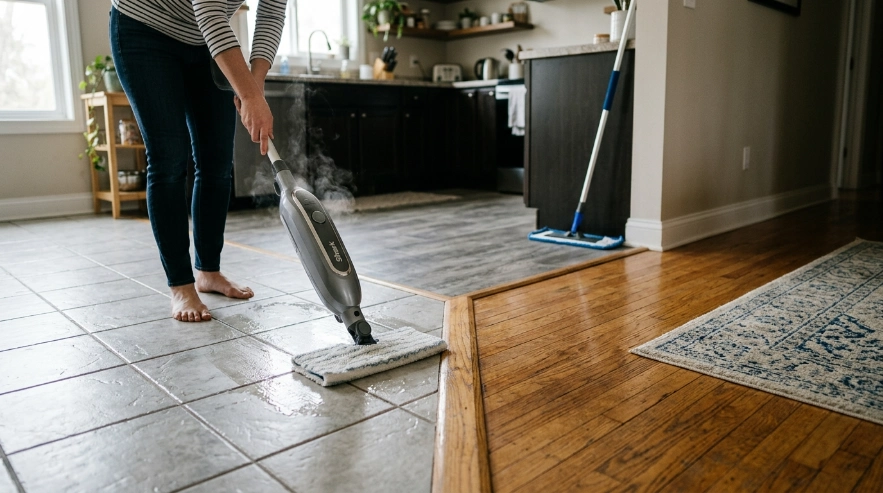
A surface must tolerate heat and moisture before mite control matters. Damaging an expensive floor is not a worthwhile trade for killing a small number of mites.
Always check both your flooring instructions and steam-mop manual first.
| Surface | Steam Mop? | Dust-Mite Use | Main Concern |
|---|---|---|---|
| Glazed ceramic or porcelain tile | Often suitable | Useful for surface cleaning | Check grout, sealers, and manufacturer guidance |
| Sealed concrete | Sometimes suitable | Useful on exposed surface dust | Coatings or sealers may react to heat |
| Hardwood | Avoid | Use another method | Heat and moisture may harm wood and finish |
| Laminate | Usually avoid | Vacuum and damp-clean instead | Moisture can enter seams |
| Vinyl or LVP | Often not recommended | Use manufacturer-approved cleaning | Heat may affect planks, seams, or adhesive |
| Carpet | Only with approved attachment | Potentially useful | Ordinary mop heads are not carpet extractors |
The National Wood Flooring Association advises homeowners not to use wet mops or steam mops on wood floors. Moisture and heat can damage the finish and wood over time.
Safety note: Check your flooring manufacturer’s care guide before steam cleaning. If the manufacturer says no steam, use a microfiber mop or approved floor cleaner instead.
What about carpets and rugs?
Carpet is where steam research becomes especially interesting because dust mites and their allergens can collect in textile fibers. A standard hard-floor steam mop is still not automatically suitable for carpet.
Use a carpet glider or textile attachment only when your machine specifically allows it. For deeper carpet cleaning, an appliance designed for textile steam cleaning or extraction may be more appropriate.
Steam Mop vs Vacuuming and Hot Washing
Steam is useful, but it solves only one part of the problem. Dust-mite control works better when you combine cleaning methods that target different places.
| Method | Best For | Main Advantage | Limitation |
|---|---|---|---|
| Steam cleaning | Heat-safe surfaces | Heat can kill exposed mites | Cannot reach every hiding place |
| HEPA vacuuming | Carpets, rugs, upholstery, floors | Physically removes dust and allergen particles | Does not guarantee mite death |
| Hot washing | Sheets, pillowcases, washable fabrics | Treats bedding thoroughly | Limited to washable items |
| Humidity control | Whole home | Makes conditions less favorable for mites | Does not remove existing allergen dust |
The CDC’s asthma-control guidance recommends regular HEPA-filter vacuuming, weekly bedding washing, and keeping indoor relative humidity around 30% to 50% for people managing dust-mite triggers.
I would prioritize the bedroom before repeatedly steam mopping a kitchen floor. Mattresses, pillows, bedding, rugs, and upholstered furniture usually offer mites more favorable habitat than exposed hard flooring.
How Should You Steam Mop for Dust-Mite Control?
Start by confirming the surface is steam-safe. Then remove loose dust before adding moisture and heat.
This keeps your mop pad from turning loose debris into wet residue.
- Vacuum first. Remove hair, dust, grit, and loose allergen particles.
- Fill the mop correctly. Use the water type recommended in your manual.
- Install a clean pad. A dirty pad can redistribute soil across the floor.
- Let the mop reach operating temperature. Follow the manufacturer’s warm-up instructions.
- Work in small areas. Controlled passes provide more consistent heat than racing across the room.
- Keep the mop moving. Holding it in one spot can damage finishes or flooring.
- Change dirty pads. Replace or rinse pads rather than spreading collected debris.
- Let the surface dry. Ventilate the room and avoid leaving damp materials behind.
Do not add bleach, disinfectant, essential oil, vinegar, or floor cleaner to the water tank unless the appliance manufacturer specifically permits it. Many steam mops are designed for water only.
Safety note: Steam can cause serious burns. Keep hands, bare feet, children, and pets away from the hot mop head and escaping vapor.
Should you leave the mop in one spot longer?
No. Longer contact may increase heat transfer, but parking a hot steam mop on flooring can also damage the finish or material.
Follow your machine’s instructions instead of improvising a long dwell time. Pest control is never worth ruining the floor underneath it.
Does Killing Dust Mites Remove Their Allergens?
Not completely. Dead mites, body fragments, and fecal particles can remain in household dust after the living mite has been killed.
This distinction matters for anyone reacting to mite allergens. Killing an organism and removing its allergenic material are separate jobs.
Why vacuuming after treatment can help
A HEPA-filter vacuum can collect loosened particles from compatible surfaces. The EPA’s indoor particulate guidance recommends regular cleaning and HEPA vacuuming to help reduce indoor dust buildup and allergens.
Give steam-treated carpet or fabric enough time to dry before vacuuming. Follow the instructions for both machines.
- Steam: Targets exposed mites with heat.
- Vacuum: Removes loose dust and allergen-containing particles.
- Hot wash: Treats washable bedding and fabrics.
- Damp dusting: Captures settled particles without throwing as much dust into the air.
- Humidity control: Helps make the home less favorable for mites.
This combination makes more sense than expecting a mop to handle the entire allergen problem.
Section Takeaway: Killing dust mites is only half the job. Cleaning away mite debris and controlling the conditions that support mites are just as important.
How Do You Keep Dust Mites From Coming Back?

You probably cannot eliminate every dust mite from a home. A better goal is lowering exposure and making the indoor environment less favorable to them.
As of 2026, major indoor-air guidance still emphasizes moisture control and regular cleaning rather than relying on a single pesticide or appliance.
Keep indoor humidity under control
Dust mites favor warm, humid environments. The EPA recommends keeping indoor relative humidity below 60%, with about 30% to 50% considered ideal for indoor air quality.
A small hygrometer can help you monitor the room. If humidity stays high, air conditioning or a dehumidifier may help.
Wash bedding every week
Beds deserve special attention because they provide warmth, moisture, skin flakes, and fabric where mites can live. Wash sheets and other washable bedding regularly and dry them completely.
Use the hottest temperature that the fabric care label safely allows. Don’t damage expensive bedding just to chase a temperature number.
Vacuum carpets and fabric furniture
Use a vacuum with a HEPA filter when possible. Work slowly over carpets, rug edges, upholstered furniture, and areas around beds.
People with asthma or strong allergies may want to leave the room while vacuuming. Cleaning can temporarily disturb settled particles.
Use damp cleaning on hard surfaces
A microfiber flat mop or damp cloth can capture settled dust without requiring steam. This is especially useful on floors that cannot tolerate high heat.
Microfiber consists of extremely fine synthetic fibers that trap small particles effectively. Keep the pad slightly damp rather than soaking the floor.
Protect mattresses and pillows
Allergen-resistant mattress and pillow covers create another barrier between sleepers and mite-containing dust. Choose covers designed to fully encase the item.
A consistent routine is more useful than occasional aggressive cleaning.
- Weekly: Wash bedding and vacuum key rooms.
- Regularly: Damp-dust hard surfaces and mop appropriate floors.
- Continuously: Watch indoor humidity.
- As needed: Steam-clean compatible surfaces using approved equipment.
Safety note: Always follow your flooring, textile, appliance, and cleaning-product labels. Heat, excess water, or the wrong cleaner can permanently damage some materials.
Section Takeaway: The best dust-mite routine combines moisture control, physical allergen removal, bedding care, and targeted heat treatment where the surface allows it.
Frequently Asked Questions
Can a Shark or Bissell steam mop kill dust mites?
A Shark, Bissell, or another steam mop may kill exposed dust mites if it transfers sufficient heat to them. Effectiveness depends on the model, steam output, contact, and surface. Use the machine only on surfaces specifically approved in its instructions.
Does steam kill dust-mite eggs too?
Dust-mite eggs can tolerate some conditions that kill adult mites, but sufficiently high heat can destroy them. Real-world results depend on whether the heat reaches eggs hidden deep inside carpet, fabric, cracks, or other protected areas.
What temperature kills dust mites?
Dust mites are heat-sensitive, but there is no single practical steam-mop temperature that guarantees whole-home elimination. Research has demonstrated strong mite mortality with high-temperature steam treatment, while public-health guidance also recommends hot laundering for washable bedding.
Can I steam mop hardwood floors to kill dust mites?
No. The National Wood Flooring Association advises against steam mops on wood floors because moisture and heat can damage the finish and wood. Use a vacuum, microfiber dust mop, and wood-floor cleaner recommended for your specific finish.
Should I vacuum before or after steam cleaning?
Vacuum before steaming to remove loose dirt and dust. For steam-treated carpet or fabric, vacuuming again after the material has dried may help collect loosened allergen particles, provided both appliance manufacturers allow that cleaning method.
How often should I steam clean for dust mites?
There is no universal schedule. Steam only as often as the surface and appliance manufacturer permit. Regular vacuuming, weekly bedding care, damp dusting, and humidity management should form the routine, while steam remains a periodic targeted treatment.
Are steam mops enough for someone with a dust-mite allergy?
No. A steam mop treats only compatible surfaces it touches. People managing dust-mite exposure should also consider regular HEPA vacuuming, bedding care, allergen-resistant covers, damp dusting, and indoor humidity control as part of a broader routine.
So, do steam mops kill dust mites? Yes, high-temperature steam can kill mites it reaches, and research shows that steam cleaning can also reduce mite allergen levels.
Just don’t treat the steam mop as a complete solution. Use it where your flooring allows, remove allergen-containing dust regularly, and focus heavily on bedding, carpets, upholstery, and indoor humidity.
If your floor manufacturer warns against steam, skip it. A safe microfiber mop and good vacuuming routine are far better than killing mites while damaging your floor.
