
Do Steam Mops Kill Germs? Complete 2026 Guide

Quick Answer
Yes, steam mops can kill many germs when the steam stays hot enough and touches the surface long enough. However, steam mopping is not automatically the same as verified disinfection, and dirty floors should be cleaned first. The CDC’s home cleaning guidance also stresses cleaning surfaces before disinfecting when disinfection is needed.
What matters most
- Enough heat: Steam uses high temperatures that can damage or kill many microorganisms.
- Enough contact: Moving the mop too quickly may reduce the time heat reaches the germs.
- Clean first: Grease, crumbs, dust, and soil can interfere with effective surface treatment.
- Right flooring: Steam is best reserved for surfaces your flooring manufacturer approves for steam cleaning.
- Clean mop pads: A heavily soiled pad can spread grime instead of removing it.
My quick rule
- I use steam mainly on approved sealed tile and other heat-tolerant surfaces, never as a reason to ignore the flooring care guide.
I understand why people ask whether steam mops kill germs. A floor can look spotless while still making you wonder what may be left behind.
After using steam mops on different hard surfaces, I’ve learned that the answer depends on more than hot steam. Temperature, contact time, dirt, mop technique, and the flooring itself all matter.
In This Guide
- Do Steam Mops Really Kill Germs?
- How Does Steam Kill Germs?
- What Germs Can a Steam Mop Kill?
- Steam Mop vs Disinfectant: Which Works Better?
- How Do You Use a Steam Mop to Reduce Germs?
- Which Floors Are Safe for Steam Mopping?
- Common Steam-Mopping Mistakes
- When Do You Actually Need to Disinfect a Floor?
- Steam Mop Germ-Killing FAQ
Do Steam Mops Really Kill Germs?
Yes. Heat from steam can kill or inactivate many microorganisms when the surface receives enough heat for enough time.
The important part is the word can. Owning a steam mop does not mean every fast pass disinfects your floor.
Definition: A steam mop is an electric floor-cleaning tool that heats water and sends hot vapor through a cleaning pad onto the floor.
The steam loosens stuck-on grime. The microfiber pad then picks up much of that loosened soil.
Why temperature alone doesn’t tell the whole story
Water boils at about 212°F, or 100°C, at sea level. Yet the temperature inside the mop is not necessarily the temperature maintained across your floor.
Steam cools after leaving the machine. The floor itself also absorbs heat.
That means germ reduction depends on several conditions:
- Steam output: Different machines produce different amounts of steam.
- Surface temperature: The floor can cool the steam quickly.
- Contact time: A very fast pass gives heat less time to work.
- Surface soil: Dirt and grease can protect microorganisms from treatment.
- Floor texture: Cracks and grout lines are harder to treat evenly.
Consumer Reports notes that steam can kill pathogens, including viruses. It also points out that the steam must reach the organism with enough heat and exposure.
I treat manufacturer germ-kill claims the same way. I check the instructions instead of assuming one technique works for every machine.
Section Takeaway: Steam can kill germs, but effectiveness depends on heat, exposure time, surface condition, and correct use.
How Does Steam Kill Germs?
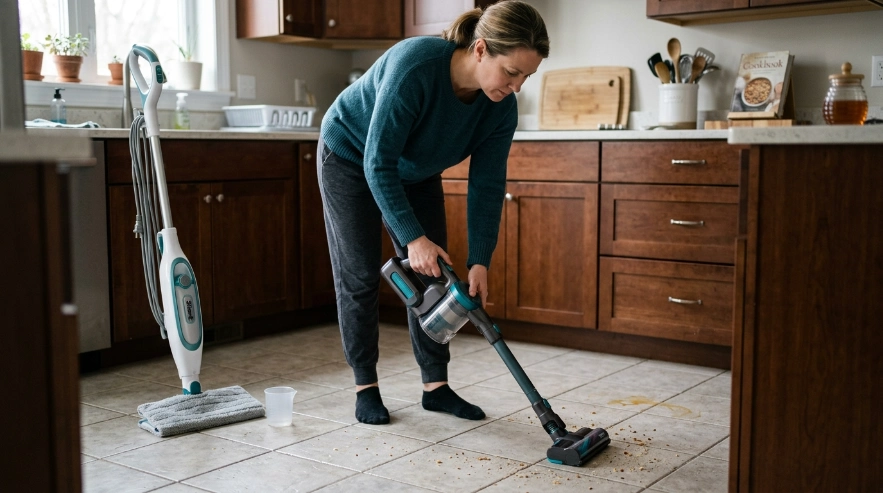
Steam works mainly through heat. High temperatures damage structures and proteins microorganisms need to remain functional.
This is why steam has long been used in controlled sanitation and sterilization processes. A household steam mop, however, is not the same as medical sterilization equipment.
Cleaning and disinfecting are not the same
Cleaning removes dirt, food residue, grease, and many germs from a surface. Physical removal is a major part of normal household hygiene.
Disinfecting aims to kill germs remaining on a surface. Products sold as disinfectants normally have specific label directions and contact times.
The CDC recommends cleaning surfaces first because dirt can make effective disinfection harder.
That lesson applies to steam cleaning too. I get better results when I remove loose soil before switching on the steam mop.
Why I vacuum or sweep first
I once steam-mopped a kitchen floor without picking up crumbs first. The floor became damp, but the mop pad quickly turned into a muddy mess.
Now I follow a simple order:
- Vacuum or sweep loose dust and debris.
- Spot-clean sticky or greasy messes.
- Fill the steam mop as its manual directs.
- Install a clean mop pad.
- Allow the machine to heat fully.
- Steam the approved floor using the recommended pace.
This gives the steam a cleaner surface to reach.
What Germs Can a Steam Mop Kill?
Steam heat can affect many bacteria, viruses, fungi, mites, and other microorganisms. The exact level of reduction depends on the machine and how you use it.
I avoid broad claims such as “a steam mop kills every germ.” Household appliances vary too much for that statement to be useful.
Can steam mops kill bacteria?
Yes, sufficient heat can kill many bacteria. Steam cleaning can therefore reduce bacterial contamination on suitable hard surfaces.
What you should not assume is a universal percentage. A claim such as 99.9% should come from testing for the specific machine and operating method.
Can steam mops kill viruses?
Heat can inactivate many viruses. Consumer Reports has also reported that properly applied heat and steam can kill viruses.
Still, a quick sweep across the room is not proof that every virus on the floor was destroyed.
What about mold and fungi?
Heat can damage many fungal organisms, but visible mold is a different cleaning problem. Moisture trapped in porous materials may make the underlying problem worse.
If mold is caused by a leak or ongoing moisture, fix the moisture source. Do not depend on a steam mop alone.
Does a steam mop sterilize floors?
No household floor should be described as sterile just because it was steam-mopped. Sterilization is a much stricter process than routine home cleaning.
The CDC’s infection-control guidance describes steam sterilization as a controlled process with specific time and temperature requirements. That is far beyond ordinary floor mopping.
Section Takeaway: Steam can reduce many types of germs, but routine steam mopping should not be confused with laboratory or medical sterilization.
Steam Mop vs Disinfectant: Which Works Better?
Neither method is automatically better. The right choice depends on the floor, the contamination, and what result you need.
Steam has one obvious benefit. It can clean using water without adding a chemical disinfectant to the floor.
| Method | Main Strength | Main Limitation | Best Fit |
|---|---|---|---|
| Steam mop | Uses heat and water | Can damage heat- or moisture-sensitive floors | Manufacturer-approved sealed hard surfaces |
| Microfiber mop | Good physical soil removal | Does not disinfect by itself | Routine floor cleaning |
| EPA-registered disinfectant | Provides specific label-based germ claims | Must suit the floor and stay wet for label contact time | Situations where disinfection is specifically needed |
The EPA maintains information about registered disinfectants for people who need a product with specific pathogen claims.
*Safety note: Never add bleach, disinfectant, vinegar, essential oils, or ordinary floor cleaner to a steam mop tank unless its manufacturer specifically permits it. Check both the mop manual and flooring care instructions.*
How Do You Use a Steam Mop to Reduce Germs?
Start with a clean floor and follow the machine’s instructions. Technique matters more than trying to make the mop produce as much steam as possible.
1. Remove loose debris
Vacuum or sweep first. Hair, grit, crumbs, and dust make the steam pad dirty faster.
2. Pre-clean heavy soil
Wipe up grease, food spills, mud, and other thick residue. Steam works better when it can reach the actual floor surface.
3. Start with a clean pad
I change the pad once it becomes visibly dirty. Continuing with a gray, saturated pad can drag soil around the room.
For larger areas, I keep a second clean pad nearby.
4. Let the mop heat fully
Wait for the manufacturer’s ready signal. Starting too soon can mean you’re wiping with warm moisture before normal steam output begins.
5. Follow the recommended movement speed
Do not assume slower is always better. Holding hot steam in one spot can damage some finishes.
Use the speed or sanitizing procedure stated in your mop’s manual if it provides one.
6. Work in manageable sections
I prefer sections of roughly 3 to 4 feet at a time. This makes it easier to see where I’ve already cleaned.
It also helps me avoid stepping on the damp surface.
7. Wash the pad after use
Remove the pad after the mop cools. Wash and dry it according to its care label.
A clean pad is important for the next session.
*Safety note: Steam can cause burns. Keep hands and bare feet away from the steam outlet, and never direct steam toward people or pets.*
Section Takeaway: Pre-clean, use a fresh pad, let the mop heat fully, and follow the manufacturer’s movement and sanitizing instructions.
Which Floors Are Safe for Steam Mopping?
This is where I become cautious. Germ reduction is not useful if the process ruins the flooring underneath.
Always check the floor manufacturer’s instructions before using steam.
Ceramic and porcelain tile
Sealed ceramic and porcelain tile are among the most practical surfaces for steam mopping. The tile itself generally handles heat and moisture well.
Pay attention to damaged grout or loose tiles. Moisture can enter cracks.
Hardwood and engineered wood
I do not steam-mop wood floors. The National Wood Flooring Association warns against steam cleaning wood because vapor can enter the wood and damage the flooring or finish.
The safest alternative is usually a barely damp microfiber mop with a manufacturer-approved wood cleaner.
You can review the National Wood Flooring Association for wood-floor care and technical guidance.
Laminate flooring
I treat laminate as steam-sensitive unless the flooring manufacturer clearly approves steam. Heat and moisture can reach joints and affect the fiber-based core.
Use a damp microfiber mop instead when the care guide does not allow steam.
Luxury vinyl plank and vinyl tile
Steam recommendations vary, so check the exact flooring brand. High heat can affect seams, adhesives, and some wear layers.
If the manufacturer does not clearly approve steam cleaning, I choose a microfiber mop and compatible cleaner.
Natural stone
Natural stone needs special care. Stone type, grout, sealers, and previous treatments can all affect what cleaning methods are safe.
Follow the stone or sealer manufacturer’s instructions instead of assuming all sealed stone tolerates steam.
Concrete
Finished or coated concrete varies widely. Bare, sealed, painted, and epoxy-coated concrete do not all have the same care requirements.
Check the coating instructions before applying high heat.
*Safety note: Flooring warranties can contain stricter rules than general cleaning advice. The manufacturer’s care guide should win whenever recommendations conflict.*
Section Takeaway: Steam is most practical on approved, heat-tolerant sealed surfaces. Avoid wood and treat laminate, LVP, stone, and coated floors cautiously.
Common Steam-Mopping Mistakes

The most common steam-mop problems I see come from technique rather than the machine itself.
- Skipping vacuuming: Loose grit mixes with moisture and dirties the pad quickly.
- Using a filthy pad: A loaded pad spreads residue across the floor.
- Moving too fast: Heat gets less time to act on each area.
- Holding still too long: Concentrated heat can harm some finishes.
- Adding chemicals to the tank: Unapproved additives can damage the mop or create unwanted vapors.
- Steam-mopping every floor: Heat and moisture are unsafe for some flooring materials.
- Believing the floor is sterile: Steam cleaning reduces contamination but does not create a sterile home environment.
More steam isn’t always better
I made this mistake when I first started testing steam mops. I thought the highest steam setting had to clean best.
It often made the floor wetter than necessary. I now match the steam level to the surface and mess.
That gives me better control and quicker drying.
When Do You Actually Need to Disinfect a Floor?
Most household floors do not need constant disinfection. Routine cleaning removes dirt and reduces many germs during normal daily life.
The CDC says regular cleaning is usually enough in many household situations. Disinfection becomes more useful when someone is sick or when there is a specific contamination concern.
Situations where extra care may make sense
- Someone in the home is sick with a contagious illness.
- Body fluids have contaminated a hard floor.
- Raw food juices have spilled in a kitchen area.
- A pet accident has contaminated the floor.
- A high-risk household member needs additional infection precautions.
Even then, use the cleaning method suited to the specific mess and surface. Steam is not the correct response to every contamination problem.
For example, some situations call for an EPA-registered disinfectant used exactly as its label directs.
*Safety note: Never mix cleaning chemicals. Follow the disinfectant label for dilution, ventilation, protective equipment, surface compatibility, and required contact time.*
Steam Mop Germ-Killing FAQ
Do steam mops kill 99.9% of germs?
Some steam-mop manufacturers make 99.9% germ-reduction claims under specific test conditions. Do not assume that percentage applies to every steam mop, floor, germ, or cleaning technique. Check the exact model’s instructions and test claims.
Can a steam mop disinfect a bathroom floor?
A steam mop can reduce germs on bathroom flooring that is approved for steam cleaning. Clean visible dirt first, use a fresh pad, and follow the machine’s sanitizing instructions. Damaged grout or moisture-sensitive flooring may require another method.
Do I need disinfectant in a steam mop?
Usually, no. Most steam mops are designed to work with water. Adding disinfectant, bleach, vinegar, detergent, or oils may damage the machine unless its manufacturer specifically allows that product.
Does a steam mop kill germs instantly?
Do not assume instant germ killing. Heat needs sufficient contact with the microorganism, and performance changes with steam output, surface temperature, soil, and technique. Follow any sanitizing procedure provided for your exact steam-mop model.
Should I mop before using a steam mop?
You normally do not need to wet-mop twice. However, sweep or vacuum first and remove heavy grease or sticky residue. Pre-cleaning gives steam better access to the floor instead of forcing it through layers of dirt.
Can I use a steam mop on hardwood to kill germs?
I would not. The NWFA advises against steam-cleaning wood flooring because moisture and vapor can penetrate the material and damage the floor or finish. Use a wood-floor cleaning method approved by your flooring manufacturer.
Is steam mopping better than regular mopping for germs?
Steam adds heat, which can kill many microorganisms. A regular microfiber mop mainly cleans through moisture and physical removal. For routine home cleaning, either may be useful; when verified disinfection is required, follow recognized disinfectant or equipment instructions.
So, Do Steam Mops Kill Germs?
Yes, steam mops can kill many germs when they deliver enough heat for enough time. But steam temperature alone does not guarantee complete disinfection.
I get the best results by vacuuming first, using a clean pad, letting the mop heat fully, and following its operating instructions.
Floor safety matters just as much. I reserve steam for surfaces whose manufacturers allow it and keep it away from wood floors.
If your main goal is normal household cleanliness, regular cleaning is often enough. When genuine disinfection is necessary, use a method with clear instructions for the surface and situation.
That simple approach protects both your floors and the people walking on them.
