
Do Steam Mops Kill Mold? What Actually Works in 2026

Quick Answer
A steam mop may expose surface mold to enough heat to damage or inactivate some growth, but I would not rely on it to remove a mold problem. The safer approach is to physically remove visible mold from cleanable hard surfaces, dry the area completely, and fix the moisture source, which matches EPA mold cleanup guidance.
What you need to know
- Heat isn’t enough: Killing or weakening mold does not physically remove mold, spores, stains, or contaminated debris.
- Moisture matters: Mold usually returns if a leak, damp area, or humidity problem remains.
- Hard surfaces differ: Sealed ceramic or porcelain tile is easier to clean than porous grout, wood, carpet, or damaged flooring.
- Wood needs caution: Steam can push moisture into wood and floor seams, causing damage.
- Scrubbing still matters: For small patches on hard surfaces, detergent, water, physical cleaning, and thorough drying are more dependable.
My quick rule
- Use the steam mop for routine cleaning only when your flooring manufacturer allows it. Don’t treat it as a mold-remediation tool.
I understand why people ask whether steam mops kill mold. Hot steam feels like it should solve the problem without scrubbing or strong cleaners.
I’ve found that mold cleanup is more complicated. The important job is removing the growth, drying the floor, and stopping whatever made the area damp.
In This Guide
- Do Steam Mops Really Kill Mold?
- Why Isn’t Steam Alone Enough for Mold?
- Which Floors Can You Steam When Mold Is Present?
- How Should You Clean Mold From a Floor?
- Steam Mop vs Other Mold-Cleaning Methods
- Why Does Mold Keep Coming Back After Mopping?
- When Should You Stop Cleaning and Call a Professional?
- Frequently Asked Questions
- Final Takeaway
Do Steam Mops Really Kill Mold?
A steam mop produces hot water vapor and sends it through a cleaning pad onto the floor. That heat can affect microorganisms that receive enough direct heat exposure.
That doesn’t make a steam mop a complete mold-removal system. Mold cleanup involves more than making mold cells nonviable.
What does “kill mold” actually mean?
Mold is a type of fungus that grows when spores find suitable moisture and material. Visible growth can contain spores, fungal fragments, dirt, and material damaged by the growth.
Even dead mold material can remain on the surface. That is one reason physical removal matters.
When I see a small mold patch on a cleanable floor, I focus on four jobs:
- Find the moisture source: Check for leaks, condensation, wet mats, damp grout, or water below the flooring.
- Remove visible growth: Clean the affected hard surface instead of only heating it.
- Dry the area: Don’t leave damp seams, grout, or corners behind.
- Watch for recurrence: Mold returning quickly can point to a hidden moisture problem.
The EPA says moisture control is the key to mold control. It also advises cleaning mold from hard surfaces with detergent and water before drying them completely.
That makes steam a supporting cleaning tool at best. I would never make it the only step.
Does a hotter steam mop work better?
I wouldn’t judge mold cleanup by the temperature printed on a steam mop box. The temperature at the heater is not necessarily the temperature maintained at the floor surface.
Movement speed, pad thickness, surface temperature, and contact time all change what reaches the mold. A quick pass therefore gives no guarantee that every part of a mold patch received the same heat exposure.
A manufacturer may also make sanitizing claims for specific test organisms and conditions. That doesn’t automatically prove the mop can remediate household mold growing in grout, cracks, wood, or other materials.
Why Isn’t Steam Alone Enough for Mold?
Steam does not solve the condition that caused mold to grow. If moisture remains, new growth can appear after the floor looks clean.
Steam can add moisture
A steam mop converts water into vapor. Some of that vapor condenses back into water when it touches the cooler floor.
On an intact tile surface, that moisture may dry quickly. Inside grout, seams, cracks, or porous flooring, it may linger longer.
This is the part I watch closely. I don’t want a mold-cleaning method to leave extra moisture in the same place where mold developed.
Mold can extend below the visible surface
Porous materials contain tiny spaces that can hold water and contamination. Examples include carpet backing, unfinished wood, damaged grout, underlayment, and some subfloor materials.
The EPA warns that mold can grow within porous materials and may become difficult or impossible to remove completely. Steam reaching the top surface does not prove the material underneath is clean.
Physical removal is still important
I treat visible mold like material that needs to come off the floor. Heat without removal can leave debris behind.
The CDC’s mold cleanup guidance emphasizes cleaning visible mold and controlling moisture. It also recommends ventilation and safe handling when cleaning moldy areas.
Safety note: Always check your flooring manufacturer’s care instructions and the label of any cleaning product before applying heat, detergent, bleach, or another chemical.
Which Floors Can You Steam When Mold Is Present?
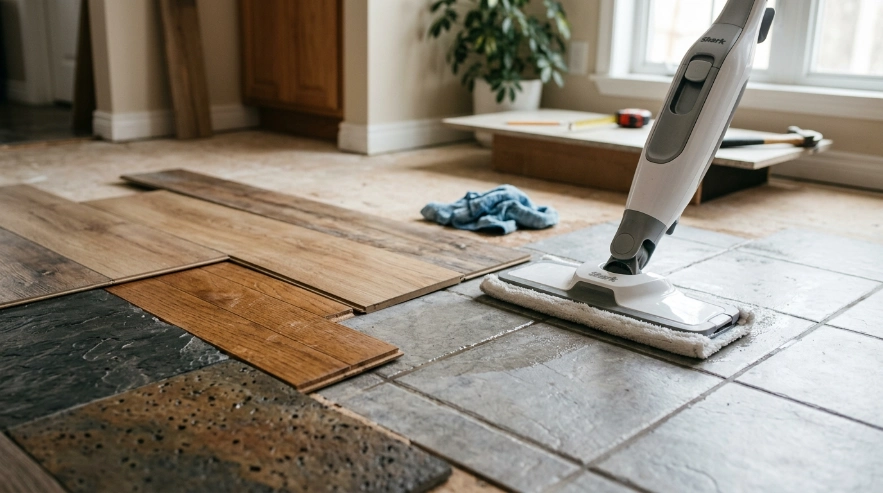
The answer depends heavily on the floor. A method that works on sealed ceramic tile can damage hardwood or get moisture beneath floating planks.
| Floor Type | Steam Mop? | Main Concern | Better Mold Approach |
|---|---|---|---|
| Sealed ceramic or porcelain tile | Sometimes | Porous or damaged grout can hold moisture | Clean, scrub, rinse if needed, then dry thoroughly |
| Hardwood | Avoid | Heat and moisture can affect wood and finishes | Use the floor maker’s approved cleaning method |
| Engineered wood | Usually avoid | Moisture can enter seams or layers | Follow manufacturer care instructions |
| Laminate | Avoid unless specifically approved | Steam can reach seams and moisture-sensitive core material | Use a lightly damp, manufacturer-approved method |
| Vinyl/LVP | Check manufacturer | Heat and moisture may affect seams or adhesives | Clean with an approved damp method and dry |
| Natural stone | Check stone and sealer guidance | Stone, grout, and sealers vary | Use a stone-safe, pH-neutral method |
Why I avoid steam on wood floors
The National Wood Flooring Association’s maintenance guidance advises against wet mops and steam mops on wood floors. Moisture can affect both the finish and the wood over time.
If mold appears on or beside a wood floor, I would investigate the moisture first. A leak underneath the boards is a bigger problem than the surface stain.
What about bathroom tile?
Sealed ceramic and porcelain tile usually tolerate moisture better than wood. The grout lines still deserve attention because they can be more absorbent than the tile face.
Steam may help loosen ordinary soil on a steam-safe tile floor. For visible mold, I still clean the growth directly and dry the area afterward.
Safety note: Never assume a floor is steam-safe because it looks waterproof. Check the flooring and steam-mop instructions first.
How Should You Clean Mold From a Floor?
For a small mold patch on a cleanable hard surface, my process is simple. I prioritize removal and drying rather than trying to cook the mold with steam.
Step 1: Stop the moisture
Look around the affected area before cleaning. Mold beside a bathtub, refrigerator, dishwasher, exterior door, or toilet often has an obvious moisture source.
- Repair active plumbing leaks.
- Dry standing water immediately.
- Move wet rugs and mats.
- Check nearby seams and baseboards.
- Improve ventilation in persistently damp rooms.
If the source stays wet, cleaning alone won’t solve the problem.
Step 2: Protect yourself
A small patch can still release material while you scrub it. Gloves and eye protection are sensible precautions.
The EPA also discusses N95 respiratory protection when limiting exposure to airborne mold during cleanup. People with health concerns should consider getting appropriate professional or medical guidance before handling mold.
Step 3: Clean the hard surface
The EPA’s basic recommendation for hard surfaces is detergent and water followed by complete drying. I start gently instead of reaching immediately for the strongest chemical in the cabinet.
- Prepare water and a suitable detergent.
- Clean the visible mold from the hard surface.
- Scrub crevices gently when the material allows it.
- Remove loosened residue with clean cloths or pads.
- Dry the entire area completely.
Replace or wash contaminated cleaning pads before using them elsewhere. I don’t want to drag dirty residue across another room.
Step 4: Dry it fast
Drying is part of the cleaning process, not an optional final touch. Use ventilation, fans, or a dehumidifier when appropriate.
The EPA advises drying wet or damp materials within about 24 to 48 hours after a leak or spill when possible. Fast drying helps make conditions less favorable for mold growth.
Safety note: If you choose a disinfectant or bleach product, follow its label exactly. Never mix bleach with ammonia or other household cleaners.
Steam Mop vs Other Mold-Cleaning Methods
A steam mop has one major advantage: heat. Its weakness is that mold remediation also requires removal, drying, and moisture control.
- Steam mop: Useful for routine cleaning on approved sealed floors, but not my first choice for visible mold.
- Microfiber cloth or flat mop: Gives better control over moisture and lets you physically remove residue.
- Brush and detergent: Useful on durable hard surfaces and grout when the surface tolerates scrubbing.
- Wet vacuum: Can help remove water during some cleanup situations but doesn’t replace drying or mold removal.
- Professional remediation: Better when growth is extensive, recurring, hidden, or related to major water damage.
Does bleach work better than steam?
Bleach and steam solve different problems, so I don’t treat this as a simple contest. CDC guidance says household bleach can be used for some mold-cleaning situations, while detergent can also be used.
If bleach is used, the CDC advises careful dilution and ventilation. Never mix bleach with ammonia or another cleaner.
I still wouldn’t use bleach automatically on every floor. It can discolor materials, affect finishes, and may not be appropriate for natural stone or other sensitive surfaces.
Safety note: A floor manufacturer’s care guide takes priority when deciding whether a chemical cleaner is safe for the surface.
Why Does Mold Keep Coming Back After Mopping?
Recurring mold usually tells me that cleaning was only part of the problem. Persistent moisture gives new mold growth another chance.
Common moisture sources I check
- Slow plumbing leaks: Water may travel under flooring before becoming visible.
- Wet bathroom grout: Poor ventilation can keep corners damp for long periods.
- Condensation: Cold floors or pipes can collect moisture in humid rooms.
- Wet mats: Rubber-backed rugs can trap moisture against flooring.
- Appliance leaks: Dishwashers, refrigerators, and washing machines can leak slowly.
- Water below the floor: A surface may look dry while the underlayment remains damp.
I once cleaned a dark patch beside a floor mat and saw it return. The problem wasn’t my cleaning method; the mat was trapping moisture underneath.
Once I kept the area dry and allowed airflow around it, the recurring dampness stopped. That experience changed how I approach every suspected mold patch.
Humidity can also be the problem
A bathroom or basement can stay damp without an obvious leak. Fans, open ventilation where suitable, and dehumidification can help remove moisture from the air.
The key is making the area dry enough that mold cannot keep growing. Cleaning the same spot every week is not a real solution.
When Should You Stop Cleaning and Call a Professional?

File Name: when-to-call-mold-professi
A small surface patch and a large water-damage problem are not the same job. Knowing when to stop DIY cleaning can prevent bigger damage.
The EPA says that mold covering less than about 10 square feet can often be handled by homeowners following its cleanup guidance. Larger areas or significant water damage deserve greater caution.
Get professional help when:
- The mold covers more than about 10 square feet.
- Mold repeatedly returns after cleaning and drying.
- You suspect mold beneath flooring or inside walls.
- A sewage backup or contaminated water caused the damage.
- The floor feels swollen, soft, loose, or structurally damaged.
- There was major flooding or long-term water exposure.
- Your HVAC system may be contaminated.
- You have health concerns about performing the cleanup yourself.
Hidden growth is especially important with laminate, hardwood, engineered wood, and floating floors. A steam mop cannot inspect or dry the layers underneath them.
Frequently Asked Questions
Can steam kill black mold?
Heat may damage mold receiving enough direct exposure, but a steam mop is not a complete treatment for so-called black mold. You still need to remove visible growth, clean the surface, dry it, and solve the moisture source.
Can I use a steam mop on moldy grout?
You may use steam on some tile-and-grout installations when the floor manufacturer permits it. However, grout can hold moisture, so I prefer direct cleaning and thorough drying for visible mold instead of relying only on steam.
Will steam stop mold from coming back?
No cleaning method can reliably stop recurring mold while the area stays damp. Fix leaks, condensation, humidity, trapped water, or other moisture sources first.
Does steam remove mold spores from floors?
A steam mop pad may collect some surface debris as you clean, but steam alone does not guarantee that mold spores or fragments have been removed. Physical cleaning and safe disposal or washing of contaminated pads matter.
Can I steam mop after cleaning mold?
You can use a steam mop afterward only if the flooring manufacturer says steam is safe. I would first make sure the visible mold is removed and the underlying moisture problem has been solved.
Can you steam mold off hardwood floors?
I would not use a steam mop for mold on hardwood. The National Wood Flooring Association advises against steam mops because moisture can damage the wood and its finish over time.
What is the safest way to remove a small mold patch from hard flooring?
For a small cleanable hard surface, EPA guidance recommends scrubbing mold away with detergent and water, then drying the surface completely. Also identify and correct the moisture source so the mold is less likely to return.
Final Takeaway
So, do steam mops kill mold? Heat may affect mold on direct contact, but I would never depend on a steam mop as the main mold-removal method.
The better approach is simple: **remove the mold, dry the floor, and eliminate the moisture source**. Those three steps matter far more than how hot your mop gets.
Be extra careful with hardwood, engineered wood, laminate, vinyl plank, porous grout, and damaged flooring. Steam can introduce moisture where you least want it.
For small patches on suitable hard surfaces, start with controlled cleaning and complete drying. If mold is widespread, hidden, caused by contaminated water, or keeps returning, bring in an experienced professional.
