
Do Steam Mops Remove Stains From Carpets?

Quick Answer
Steam mops can loosen some fresh, water-based carpet stains, but they usually do not remove deep or set-in stains completely. A steam mop adds heat and moisture, yet most models cannot extract the dissolved dirt afterward like a dedicated carpet cleaner can.
What Steam Can and Cannot Do
- Fresh spills: Heat may help loosen light, recent water-based marks.
- Old stains: Steam alone rarely lifts discoloration that has bonded deeply with carpet fibers.
- Grease stains: Heat may soften oily residue, but extraction or a suitable cleaning product is normally needed.
- Pet accidents: Steam is not my first choice because odor-producing material may remain beneath the surface.
- General refreshing: A compatible steam mop can help freshen carpet fibers when used carefully.
Best Quick Fix
- Blot the stain first, use a carpet-safe treatment if needed, then extract moisture rather than repeatedly steaming the same spot.
If you’re asking do steam mops remove stains from carpets, the useful answer depends on the stain and the machine. A steam mop is built mainly for floor cleaning, while carpet stain removal often needs agitation, chemistry, and moisture extraction.
I’ve tested enough cleaning methods to know that heat can make a stain look promising at first. The real test is what the carpet looks like after it dries.
In This Guide
- Can Steam Mops Really Remove Carpet Stains?
- Why Doesn’t a Steam Mop Remove Every Stain?
- Which Carpet Stains Can Steam Help With?
- Steam Mop vs Carpet Cleaner: Which Removes Stains Better?
- How Do You Use a Steam Mop on a Carpet Stain?
- Which Carpet Stains Should You Not Steam?
- When Should You Use a Carpet Cleaner or Call a Professional?
- Frequently Asked Questions
Can Steam Mops Really Remove Carpet Stains?
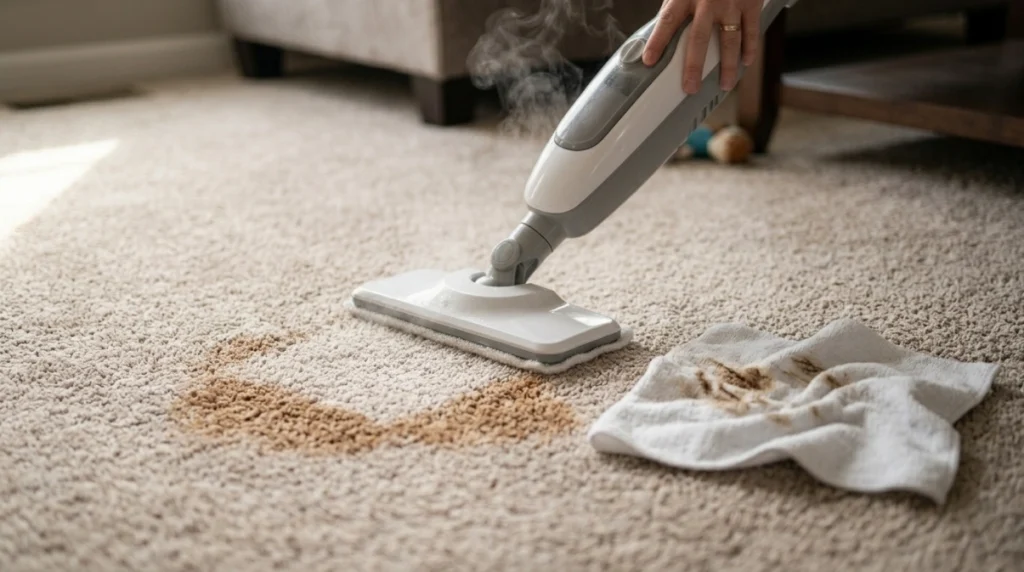
Yes, steam can help loosen certain carpet stains, especially when the spill is fresh and mostly water-based. However, a normal steam mop usually lacks the suction needed to pull dissolved soil back out of the carpet.
That distinction matters. Loosening a stain and removing a stain are not the same job.
What a steam mop actually does
A steam mop heats water and sends hot vapor or moisture through a cleaning pad. On hard floors, the pad collects loosened surface grime as you move the mop.
Carpet is different because dirt can travel below the visible fiber tips. The mop pad touches the top while moisture and soil may remain deeper down.
- Heat: Can soften some dried residue.
- Moisture: Can rehydrate water-soluble material.
- Pad contact: May lift light surface soil.
- Missing extraction: Most steam mops cannot vacuum dirty water from the carpet pile.
Why the stain may return after drying
Sometimes a mark disappears while the carpet is damp, then slowly becomes visible again. This can happen when remaining residue moves upward as moisture evaporates.
In hands-on cleaning, I judge the result only after complete drying. A white microfiber towel also helps me see whether color or soil is still transferring.
Why Doesn’t a Steam Mop Remove Every Stain?
Carpet stains vary in chemistry, age, depth, and fiber type. Steam addresses only part of that problem.
A stain may need a detergent, enzyme treatment, controlled agitation, rinsing, or suction. Heat by itself cannot provide all five.
Heat does not replace extraction
Dedicated carpet cleaners apply liquid and then pull it back out through suction. Better machines also use brushes to work cleaning solution around the carpet fibers.
Consumer Reports notes that effective carpet cleaners combine agitation with extraction for embedded dirt. That is a different cleaning process from passing a steam mop over the surface.
Carpet fibers react differently
Synthetic carpet, wool, natural-fiber rugs, glued carpet tiles, and delicate area rugs do not all tolerate heat and moisture equally. Always check the carpet or rug manufacturer’s care instructions first.
Safety note: Test any steam or cleaning product on a hidden area first, and stop if you see color transfer, distortion, shrinkage, or adhesive movement.
Which Carpet Stains Can Steam Help With?
Steam is most useful on light surface marks that respond to heat and moisture. It becomes less useful as the stain gets oily, chemically reactive, old, or deeply absorbed.
Fresh water-based spills
Light marks from washable drinks or tracked-in dirt may respond after you blot away as much contamination as possible. Work before the stain dries if you can.
Consumer Reports’ general stain guidance also emphasizes blotting rather than aggressively rubbing carpet fibers. You can review its broader stain-removal guidance before treating an unfamiliar spill.
Muddy footprints
Let thick mud dry first, then vacuum away loose soil. Adding steam to wet mud too early can spread dirty moisture across a larger patch.
Once loose particles are gone, a small amount of controlled moisture may help with the remaining surface discoloration.
Light food residue
Some mild food marks soften with heat, but remove solids before adding moisture. Avoid scrubbing because friction can spread pigments and roughen the carpet pile.
Greasy and oily spots
Steam may soften oily material, yet it usually will not carry that oil out of the carpet. A carpet-compatible spot cleaner is generally more useful.
For households that prefer products screened under environmental criteria, the EPA maintains a searchable list of Safer Choice-certified cleaning products.
Safety note: Never combine cleaning chemicals unless their labels specifically allow it. Follow the carpet manufacturer’s guidance and the cleaner’s dilution and safety directions.
Steam Mop vs Carpet Cleaner: Which Removes Stains Better?
A carpet cleaner is usually the better tool for stain removal because it can wash and extract. A steam mop is better viewed as a light refreshing tool when its manufacturer approves carpet use.
| Tool | Heat | Agitation | Dirty-Water Extraction | Best Use |
|---|---|---|---|---|
| Steam mop | Yes | Low | Usually no | Light refreshing and compatible surface marks |
| Portable spot cleaner | Usually warm solution rather than steam | Moderate | Yes | Small spills, pet messes, localized stains |
| Full-size carpet cleaner | Model-dependent | Moderate to high | Yes | Larger areas and deeper soil |
| Microfiber cloth | No | Low and controlled | Absorbs small amounts | Fresh spills and blotting |
If I had one fresh coffee spot, I would start with blotting before bringing out a machine. If I had a large traffic lane full of embedded soil, I would choose extraction cleaning instead.
Section Takeaway: A steam mop supplies heat, but carpet stain removal often requires removing the loosened contamination too. Extraction is the major advantage of a carpet cleaner.
How Do You Use a Steam Mop on a Carpet Stain?
Use a steam mop only if the machine manufacturer allows carpet use and you have the correct carpet-glider attachment. Keep moisture controlled and treat a small area first.
- Check the labels. Confirm that both the carpet and steam mop permit the method.
- Remove solids. Pick up food, debris, or dried material without grinding it into the fibers.
- Vacuum thoroughly. Remove loose dirt before introducing moisture.
- Blot fresh liquid. Press clean white towels onto the area instead of rubbing.
- Test a hidden spot. Check for color transfer, pile distortion, shrinkage, or adhesive problems.
- Use the carpet glider. Never press a bare steam-mop pad heavily into carpet.
- Make brief passes. Keep the mop moving instead of holding steam over one location.
- Blot again. Use a clean absorbent towel to remove loosened moisture and residue.
- Increase airflow. Open windows when conditions allow, or run a fan to encourage drying.
How wet should the carpet get?
The goal is damp treatment, not saturation. If water reaches the backing or pad, drying becomes slower and the risk of odor or moisture problems rises.
The CDC recommends using cleaning products appropriate for soft surfaces such as carpet and drying cleaned items completely where applicable. Its household guidance is available on the CDC cleaning and disinfecting page.
EPA moisture guidance also recommends drying water-damaged materials within 24 to 48 hours to help prevent mold growth. That does not mean routine carpet cleaning should stay wet for that long; faster drying is preferable.
Safety note: If carpet becomes soaked, smells musty, or stays wet unusually long, stop adding moisture and focus on extraction, airflow, and the manufacturer’s care instructions.
Which Carpet Stains Should You Not Steam?
Some stains need specialized treatment before heat is introduced. In those situations, a steam mop may spread the mark or make later removal harder.
- Pet urine: Treat the source and odor-producing residue with a carpet-safe method rather than relying on heat alone.
- Blood: Avoid starting with heat because protein-based stains need careful treatment.
- Paint or ink: Identify the product first because different solvents and binders require different methods.
- Heavy grease: Steam may soften oil without extracting it.
- Unknown dye stains: Test carefully because heat and moisture may move color.
- Delicate rugs: Wool, silk, natural fibers, vintage rugs, and unstable dyes deserve manufacturer or professional guidance.
What about mold or musty carpet?
Do not treat visible mold as an ordinary stain. Mold involves a moisture problem, and porous carpet may be difficult to clean completely once contamination becomes established.
EPA explains that moisture control is central to preventing mold and notes that moldy porous materials such as carpet may sometimes need replacement. See the agency’s mold and moisture guidance for broader cleanup advice.
Safety note: If you see widespread mold, sewage contamination, or extensive water damage, avoid experimenting with household steam and seek appropriate professional help.
When Should You Use a Carpet Cleaner or Call a Professional?

Switch to an extraction cleaner when the stain extends below the surface, covers a larger area, or keeps returning. Professional cleaning makes more sense when the carpet is delicate, expensive, heavily contaminated, or difficult to dry safely.
Use a portable spot cleaner when
- The spill is localized.
- You need suction after applying cleaning solution.
- You frequently deal with small pet or food accidents.
- The carpet manufacturer approves wet extraction.
Use a full-size carpet cleaner when
- Large traffic areas look dull or dirty.
- Several rooms need deep cleaning.
- Soil is embedded beyond the surface pile.
- You need stronger agitation plus extraction.
Call a professional when
- A stain keeps returning after repeated cleaning.
- You have wool, silk, antique, or specialty carpeting.
- There is sewage, flooding, mold, or unknown contamination.
- The carpet backing or pad may be saturated.
- Previous cleaning caused bleeding, shrinkage, or texture changes.
As of 2026, I still see steam mops marketed as multi-surface tools. That does not make them substitutes for carpet extractors.
The right machine depends on the job. Use heat for appropriate light cleaning and extraction when contamination needs to come back out.
Frequently Asked Questions
Can a steam mop remove an old carpet stain?
A steam mop may soften part of an old stain, but set-in discoloration usually needs more than heat. Spot treatment, controlled agitation, and extraction are often more effective because they help remove dissolved soil instead of leaving it inside the carpet.
Can a steam mop remove pet urine stains?
I would not rely on a steam mop for pet urine. Urine can reach the backing and pad, while a steam mop mainly treats the upper fibers. A carpet-safe enzyme treatment or extraction method is usually better for addressing both visible staining and odor-producing residue.
Can steam remove coffee stains from carpet?
Steam may help loosen some fresh coffee residue, but blotting should come first. Remove as much liquid as possible with clean white towels, then use a carpet-compatible stain treatment if discoloration remains.
Does steam cleaning make carpet stains come back?
A stain can appear to return when residue remains below the surface and moves upward as the carpet dries. Proper rinsing, extraction, and thorough drying reduce this problem better than repeatedly adding steam.
Can I use a Shark or Bissell steam mop on carpet?
Only use a specific Shark, Bissell, or other steam-mop model on carpet when its manual approves that use. Some machines require a carpet glider, while others are intended only for sealed hard floors.
Do I need carpet cleaner solution with a steam mop?
Do not put carpet cleaner, vinegar, detergent, essential oils, or other chemicals inside a steam mop tank unless the manufacturer explicitly allows them. Many steam mops are designed for water only, so check the product manual before adding anything.
Is a steam mop better than a carpet cleaner for stains?
No, not usually. A carpet cleaner is better designed for stain removal because it can apply cleaning liquid, agitate fibers, and extract dirty moisture. A steam mop is more useful for light surface refreshing when the carpet and machine both permit it.
The bottom line: Steam mops can help with a few light carpet stains, but they are not deep stain-removal machines. Start by blotting, identify the stain, control moisture, and choose extraction when you need to pull contamination out of the fibers.
If the stain keeps returning, spreads, smells, or involves a delicate carpet, stop repeated steaming. The safer next step is a carpet-specific cleaner or qualified professional.
