
How Do Steam Mops Work? A Complete Floor-Care Guide

Quick Answer
Steam mops heat water inside a small reservoir and send hot vapor through a microfiber pad. The heat loosens grime while the pad lifts and traps it. Understanding what steam mops do helps you decide whether one suits your floors.
How a Steam Mop Cleans
- Water heats: An electric heating element turns reservoir water into hot vapor.
- Steam travels: Internal channels direct the vapor toward the mop head.
- Grime loosens: Heat and moisture soften dried spills, grease, and light residue.
- Pad collects: A microfiber pad absorbs moisture and lifts loosened dirt from the surface.
- Floor dries: The thin layer of moisture usually evaporates faster than conventional mop water.
Important Limitation
- Use steam only on flooring whose manufacturer specifically permits it.
I have tested steam mops on tile, sealed concrete, vinyl samples, and several wood-look floors. They can make floor cleaning quicker, but heat and moisture are not safe for every material.
This guide explains how steam mops work, what they remove, and where damage can occur. It also covers correct technique, common mistakes, and practical alternatives.
In This Guide
- What Is a Steam Mop?
- How Do Steam Mops Work Step by Step?
- What Dirt Can a Steam Mop Remove?
- Do Steam Mops Clean or Disinfect Floors?
- Which Floors Are Safe for Steam Mops?
- Steam Mop vs Regular Mop: What Is the Difference?
- How Do You Use a Steam Mop Correctly?
- Common Steam Mop Mistakes and Maintenance Tips
- Frequently Asked Questions
- Should You Use a Steam Mop?
What Is a Steam Mop?
A steam mop is an electric floor-cleaning appliance that uses heated water vapor and a washable pad. It cleans without requiring a bucket of dirty mop water.
Most models have four main parts:
- Water reservoir: Holds the clean water used to produce steam.
- Heating element: Raises the water temperature and creates vapor.
- Steam channel: Moves the vapor from the heater to the floor head.
- Microfiber pad: Wipes the surface and traps the released grime.
Microfiber is a fabric made with extremely fine synthetic fibers. Those fibers create more surface area for collecting dust and moisture than a plain cotton cloth.
A steam mop is not a vacuum cleaner. It does not pull crumbs, hair, or grit into a collection bin.
You must sweep or vacuum first. Otherwise, the damp pad pushes loose debris around the room.
How is it different from a carpet steam cleaner?
A steam mop releases limited moisture onto hard floors. A carpet cleaner normally applies water or solution and extracts it with suction.
The two appliances are not interchangeable. A standard steam mop lacks the extraction power needed to rinse and recover dirty water from carpet.
How Do Steam Mops Work Step by Step?
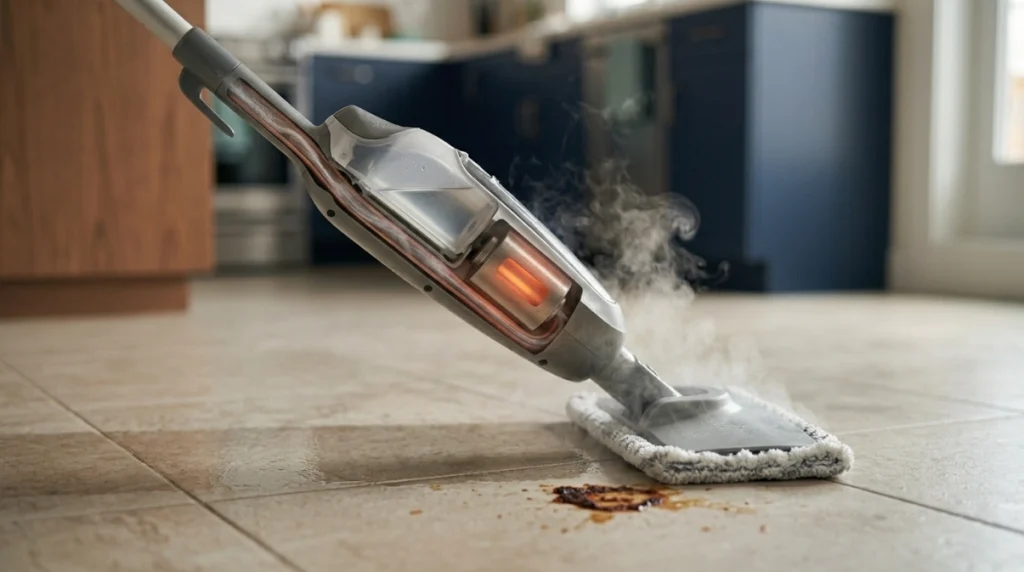
A steam mop completes a simple heat-and-wipe cycle. Electricity heats the water, vapor loosens soil, and the pad removes that soil.
- You add water. The reservoir supplies a controlled amount of water to the heating chamber.
- The heater warms up. Most household models become ready within roughly 20 seconds to several minutes.
- Water becomes vapor. Pressure moves the hot vapor through internal tubes or channels.
- Steam reaches the pad. Openings in the mop head distribute moisture across the cleaning area.
- Heat softens residue. Dried food, grease, and tracked-in dirt become easier to release.
- Microfiber lifts the soil. The pad wipes the loosened material away from the floor.
- Moisture evaporates. A properly used steam mop leaves less standing water than a soaked string mop.
Does steam blast dirt off the floor?
Not exactly. Most home steam mops release a gentle flow rather than a forceful jet.
The pad still performs much of the physical cleaning. Steam mainly softens residue and keeps the pad warm and damp.
How hot does a steam mop get?
The water must become hot enough to produce vapor, but floor-level temperature varies. Pad thickness, steam setting, movement speed, and room temperature all affect the result.
Do not assume every point beneath the pad remains at one temperature. This matters when evaluating sanitizing claims.
During testing, I find the pad cools quickly when moved over a cold tile floor. Holding it still adds heat, but that also raises the risk of surface damage.
Safety note: Never touch the steam outlet or remove a hot pad with bare hands. Unplug the mop and let it cool first.
What Dirt Can a Steam Mop Remove?
Steam mops work best on light-to-moderate grime attached to a compatible hard surface. They are less effective against loose debris and thick buildup.
Problems steam handles well
- Dried drink splashes on sealed tile
- Light kitchen grease
- Muddy shoe marks after loose soil is removed
- Water-based food spills
- Surface dust missed during sweeping
- Light soap residue on compatible bathroom tile
Problems requiring another method
- Hair and crumbs: Vacuum or sweep before mopping.
- Thick wax: Use the flooring maker’s approved remover.
- Paint or adhesive: Choose a product made for that contaminant and floor.
- Deep grout staining: Use a suitable grout brush and approved cleaner.
- Odor below the surface: Steam cannot extract contamination from under flooring.
- Heavy grease: Pre-clean with a floor-safe degreasing method.
Steam contains no surfactant unless the appliance uses an approved solution system. A surfactant is an ingredient that helps water separate grease from a surface.
This explains why steam may loosen a greasy film without removing all of it. The microfiber pad must collect the residue before it spreads.
Why pad changes matter
A dirty pad eventually stops collecting soil. It begins transferring grime from one section of the floor to another.
On a medium kitchen, I often need two pads rather than one. Changing the pad halfway produces a cleaner finish and fewer streaks.
Replace the pad when it looks gray, feels loaded, or leaves visible lines. Let the appliance cool before handling it.
Do Steam Mops Clean or Disinfect Floors?
A steam mop can clean visible dirt, but you should not automatically treat every pass as disinfection. Effective disinfection depends on temperature, contact time, surface coverage, and product instructions.
The CDC’s household cleaning guidance distinguishes cleaning from disinfecting. Cleaning removes dirt and many germs, while disinfection uses a suitable process to kill remaining germs.
Why contact time matters
Moving the mop quickly may not keep one area hot long enough to meet a sanitizing claim. Holding the mop still may damage flooring or its finish.
Follow the appliance manual exactly if sanitizing is your goal. The manufacturer should state the required setting, movement, and contact time.
You can read more about whether a steam mop kills bacteria, but avoid applying one claim to every model. Designs and instructions differ.
Cleaning is usually the first priority
Routine floor cleaning is enough for many homes. Disinfection becomes more relevant during illness or when contamination creates a specific health concern.
Use an EPA Safer Choice resource when comparing lower-hazard cleaning products. Check whether any chosen cleaner is approved for your floor.
Never pour bleach, disinfectant, detergent, or vinegar into a steam mop unless its manual expressly permits that product. Heat may produce irritating vapor or damage internal parts.
Safety note: Follow both the appliance manual and the cleaning-product label. Never mix household cleaning chemicals.
Which Floors Are Safe for Steam Mops?
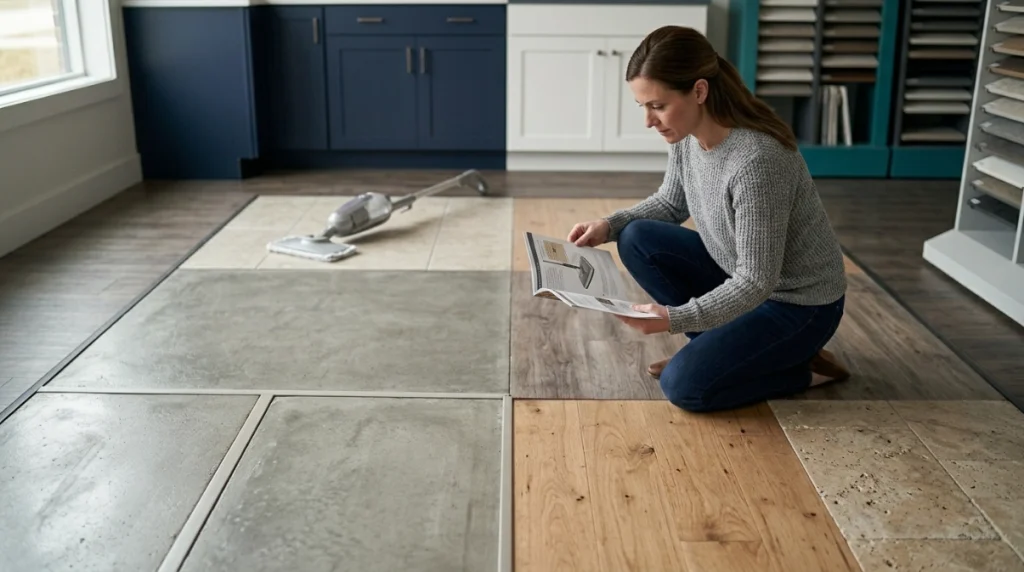
Steam is safest on sealed, heat-tolerant surfaces whose manufacturer permits steam cleaning. Floor type alone does not guarantee compatibility.
| Floor type | General steam suitability | Main concern |
|---|---|---|
| Sealed ceramic or porcelain tile | Often suitable | Cracked grout or loose tiles |
| Sealed concrete | Often suitable | Damaged sealer or surface coating |
| Sheet vinyl or LVP | Manufacturer-dependent | Heat, adhesive, and joint damage |
| Laminate | Frequently discouraged | Swelling at seams and core damage |
| Hardwood or engineered wood | Frequently discouraged | Moisture penetration and finish damage |
| Natural stone | Stone- and sealer-dependent | Porosity, sealer wear, and thermal stress |
Can you steam mop hardwood?
Many wood-floor manufacturers advise against steam because vapor can enter seams and small finish defects. Repeated exposure may contribute to whitening, swelling, cupping, or finish separation.
Check both your warranty and the flooring maker’s care instructions. The National Wood Flooring Association is also a useful starting point for wood-floor care information.
Our guide to whether a steam mop is good for wood floors explains the material-specific risks in more detail.
Can you steam mop vinyl or LVP?
Some waterproof floors still have heat-sensitive adhesives, joints, or wear layers. “Waterproof” does not automatically mean “steam safe.”
Review the manufacturer’s instructions before using steam on luxury vinyl plank. This steam-mopping guide for LVP covers the main precautions.
Can you steam mop laminate?
Laminate often contains a wood-fiber core beneath its decorative wear layer. Moisture entering an unsealed edge can make that core swell.
A lightly damp microfiber flat mop is usually the lower-risk option. Never let water collect along joints or wall edges.
Safety note: Test any approved method in a hidden area. Stop if you notice haze, softening, discoloration, raised seams, or coating changes.
Section Takeaway: A sealed appearance does not prove steam compatibility. Your floor manufacturer’s current care guide should make the final decision.
Steam Mop vs Regular Mop: What Is the Difference?
A steam mop uses electricity and heat, while regular mops rely on water, cleaner, and manual rinsing. Neither type is best for every floor or mess.
| Feature | Steam mop | Microfiber flat mop | Spin or string mop |
|---|---|---|---|
| Main cleaning action | Heat, moisture, and wiping | Damp wiping | Water, cleaner, and agitation |
| Loose debris pickup | Poor | Fair | Fair |
| Water control | Usually good | Excellent when lightly damp | Depends on wringing |
| Floor compatibility | Most limited | Broad with correct cleaner | Best for water-tolerant floors |
| Drying speed | Often fast | Fast | Usually slower |
| Best use | Stuck-on grime on approved surfaces | Controlled routine cleaning | Large, heavily soiled tile areas |
A steam mop may save time on sealed kitchen tile. A microfiber mop gives you better moisture control on sensitive flooring.
A spin mop holds more water and suits larger, water-tolerant areas. It also allows you to choose a floor-approved cleaning solution.
If you are comparing several designs, use this guide to choose the best mop for your floors. Start with surface compatibility before considering convenience.
How Do You Use a Steam Mop Correctly?
Correct steam-mop technique uses a clean pad, controlled movement, and the lowest effective steam setting. Preparation matters as much as the steaming itself.
- Check compatibility. Read the flooring care guide and steam-mop manual.
- Inspect the surface. Look for open seams, damaged grout, peeling finish, or loose tiles.
- Remove loose dirt. Vacuum or sweep hair, sand, crumbs, and grit.
- Attach a clean pad. Secure it before filling or heating the appliance.
- Fill with approved water. Follow the manual’s instructions about tap, filtered, or distilled water.
- Select low steam first. Increase output only when the surface and mess require it.
- Test a hidden spot. Check for haze, discoloration, softening, or finish changes.
- Keep the mop moving. Use slow, overlapping passes without holding the head still.
- Change loaded pads. A dirty pad spreads residue and causes streaks.
- Let the floor dry. Keep children and pets away until the surface is cool and dry.
How slowly should you move?
Use a steady walking pace and overlap each pass slightly. There is no universal speed because steam output and manufacturer directions vary.
Do not park a hot mop on the floor while moving furniture. Rest it on the supplied tray or another approved heat-resistant surface.
Should you add cleaner to the water tank?
Only add a solution when the manufacturer specifically approves it. Many steam mops are designed for water alone.
Detergent can foam, clog channels, leave residue, or damage seals. Fragrances and oils can create similar problems.
Before adding scent, review the risks of putting essential oils in a steam mop. Never assume a natural ingredient is safe to heat or inhale.
Safety note: Do not fill, empty, or service a plugged-in steam mop. Let the appliance cool before removing its pad or opening hot components.
Common Steam Mop Mistakes and Maintenance Tips
The most damaging steam-mop mistakes involve incompatible flooring, poor preparation, and excessive heat exposure. Basic maintenance also prevents weak or uneven steam.
Mistakes to avoid
- Skipping the vacuum: Hard grit can become trapped under the pad and scratch finishes.
- Holding the mop still: Concentrated heat and moisture may mark or soften the surface.
- Using a dirty pad: A loaded pad redistributes grease and leaves streaks.
- Overfilling the tank: Excess water can interfere with normal heating or create leaks.
- Adding unapproved chemicals: Cleaners may clog the system or release irritating vapor.
- Ignoring floor seams: Vapor can enter joints even when the visible surface looks sealed.
- Storing it wet: Remaining moisture can create odor and mineral buildup.
How to maintain a steam mop
- Unplug the appliance and let it cool after use.
- Empty the reservoir when the manual recommends it.
- Wash reusable pads separately from fabric softener.
- Air-dry pads completely before storage.
- Wipe the mop head to remove lint and residue.
- Inspect the cord, plug, tank cap, and seals regularly.
- Use the manufacturer’s descaling process when mineral buildup appears.
Fabric softener coats microfiber fibers and reduces absorbency. High dryer heat can also shorten the life of some pad materials.
Hard-water minerals may collect inside the heater or steam outlets. Warning signs include spitting water, reduced output, long heating times, or uneven steam.
Never force a pin or sharp object into a steam outlet unless the manual instructs you to do so. You could damage the channel or create an unsafe spray pattern.
Frequently Asked Questions
Do steam mops vacuum dirt?
No. Most steam mops do not create suction or store loose debris. Vacuum or sweep the floor first so hair, crumbs, and abrasive grit do not collect beneath the damp pad.
Do steam mops need cleaning solution?
Most models are designed to work with water and a microfiber pad. Only use cleaning solution if the manufacturer approves a specific formula and explains where to add it.
How long does a steam mop take to heat?
Heating time commonly ranges from about 20 seconds to several minutes. Tank size, heater power, water temperature, and model design affect how quickly steam becomes available.
Why is my floor sticky after steam mopping?
Sticky floors often result from old cleaner residue, a dirty pad, or soil being spread instead of collected. Change the pad and clean a small test area using a manufacturer-approved method.
Can steam damage grout?
Sound, properly sealed grout may tolerate steam when the surface manufacturer allows it. Cracked, crumbling, or poorly sealed grout can admit moisture and should be repaired before steam cleaning.
Can you use tap water in a steam mop?
That depends on the appliance and local water hardness. Some manuals permit tap water, while others recommend distilled or demineralized water to reduce scale inside the heating system.
How often should you steam mop?
Use it when compatible floors develop attached grime rather than by a rigid schedule. Busy tile kitchens may need weekly cleaning, while low-traffic rooms may need it less often.
Should You Use a Steam Mop?
A steam mop is useful when you have sealed, manufacturer-approved flooring and stubborn surface residue. It combines controlled moisture, heat, and microfiber wiping without a bucket.
It is not the safest choice for every hardwood, laminate, vinyl, or natural-stone floor. A lightly damp microfiber mop often provides better control on sensitive surfaces.
Check your floor warranty first. Then vacuum, attach a clean pad, start with low steam, and keep the mop moving.
The best result comes from matching the cleaning method to the floor—not from using the hottest appliance available.
