
How Does a Spin Mop Work? A Complete 2026 Guide

Quick Answer
A spin mop works by soaking a microfiber mop head in water, then spinning that head rapidly inside a bucket wringer to remove excess moisture. Foot-pedal or handle-powered mechanisms rotate the wringer, letting you control how wet the mop stays without squeezing it by hand. You can see this process in a typical manufacturer’s spin-mop use and care guidance.
How a spin mop works in 5 steps
- Wet the mop: Dip the microfiber head into water or a floor-safe cleaning solution.
- Move to the wringer: Place the wet mop head inside the spinning basket.
- Start the spin: Press the foot pedal or activate the handle mechanism.
- Remove excess water: Fast rotation throws water from the fibers into the bucket.
- Mop the floor: The damp microfiber loosens and collects dirt while leaving less water behind.
Why the spinning matters
- Moisture control: More spinning generally leaves the mop head drier.
- Hands-free wringing: You don’t need to twist or squeeze a wet mop manually.
- Faster rinsing: The system makes repeated wetting and wringing easier during larger cleaning jobs.
Spin mops look simple, but the bucket does more work than many people realize. I’ve used them on everything from messy kitchen tile to carefully maintained sealed flooring, and moisture control is where the design earns its place.
This guide explains the mechanism, correct technique, floor compatibility, microfiber cleaning, and common mistakes. I’ll also compare a spin mop with flat, string, and steam mops.
In This Guide
- What Is a Spin Mop and How Does It Work?
- What Happens Inside the Spin Wringer?
- How Do You Use a Spin Mop Step by Step?
- Does a Spin Mop Keep Clean and Dirty Water Separate?
- How Does Microfiber Actually Clean the Floor?
- Which Floors Can You Use a Spin Mop On?
- Spin Mop vs Flat Mop vs String Mop vs Steam Mop
- How Do You Keep a Spin Mop Working Properly?
- Frequently Asked Questions About Spin Mops
What Is a Spin Mop and How Does It Work?
A spin mop is a floor-cleaning system with a reusable mop head and a bucket containing a rotating wringer. The wringer spins the wet mop rapidly, forcing extra water out before the mop touches your floor.
Definition: A spin mop is a manual damp-mopping system that uses rotational force to wring water from a washable mop head, usually microfiber, without requiring you to squeeze the fibers by hand.
The spinning feature doesn’t power the mop across the floor. You still guide and scrub with the handle unless you’re using an electric spin mop with motor-driven pads.
Instead, the bucket’s spinning mechanism solves one of the oldest mopping problems: controlling how much water remains in the mop head.
- Soaking: Water and cleaner enter the mop fibers.
- Wringing: The mop head rotates inside a perforated basket.
- Moisture removal: Water leaves the fibers and falls back into the bucket or dirty-water compartment.
- Cleaning: Damp fibers loosen and pick up soil from the floor.
- Rinsing: You return the mop to the bucket and repeat the cycle.
When I test spin mops, I pay more attention to wringing consistency than maximum spin speed. A wringer that leaves the head evenly damp makes floor cleaning easier than one that leaves one section dripping.
As of 2026, you’ll commonly see foot-pedal systems, handle-activated systems, and dual-tank versions. The basic cleaning principle remains the same.
What Happens Inside the Spin Wringer?
The wringer converts your foot or hand movement into rapid rotation. That rotation pushes water outward from the saturated mop fibers.
You don’t need to understand the engineering to use one, but knowing the process helps with moisture control.
Foot-pedal spin mops
A foot-pedal model connects the pedal to the rotating basket through a mechanical drive. Each press makes the wringer spin while the mop handle remains loosely positioned above it.
Repeated presses remove more water. That gives you practical control over whether the mop is wet for durable tile or much drier for moisture-sensitive flooring.
Handle-powered spin mops
Some systems put the spinning action in the handle. Pressing or pumping the handle engages an internal mechanism that rotates the mop head or wringer.
The result is similar. You create fast rotation without twisting the wet fibers with your hands.
Why water leaves the mop head
As the mop spins, its wet fibers move rapidly around the center of the wringer. Water that isn’t strongly held by those fibers moves outward and passes through openings in the basket.
- Short spin: Leaves more water in the mop.
- Longer spin: Produces a drier mop head.
- Even positioning: Helps the head wring more consistently.
- Overfilling: Can make the bucket messier and reduce control.
The process is fast, which is why a spin mop feels less labor-intensive than manually twisting a traditional string mop.
How Do You Use a Spin Mop Step by Step?
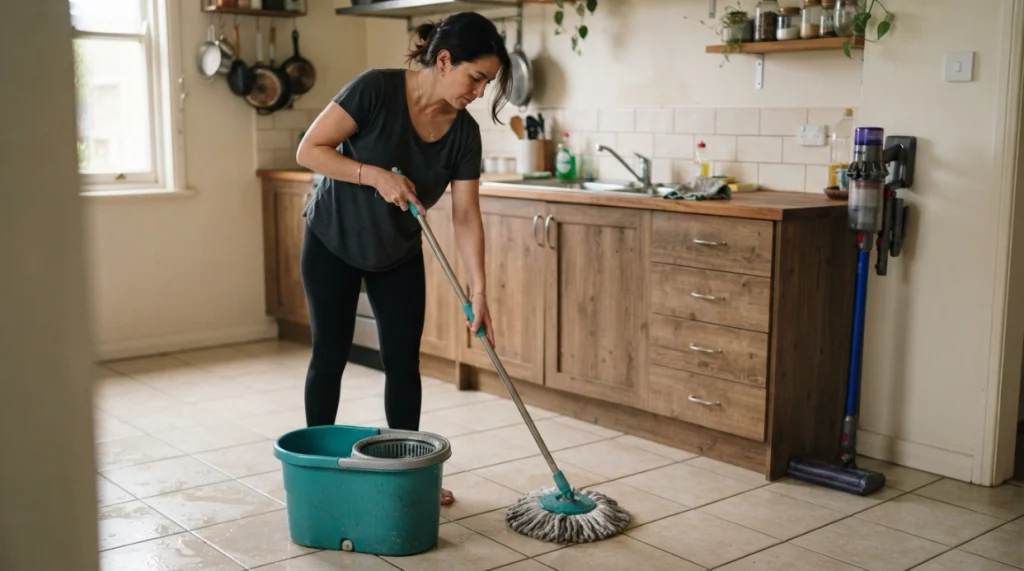
For good results, remove loose debris first and use the smallest practical amount of moisture. Starting with dust, hair, sand, and crumbs still on the floor can turn that debris into muddy residue.
- Sweep or vacuum first. Remove hair, grit, crumbs, and loose dirt before adding moisture.
- Fill the bucket. Use water at the temperature recommended by your mop and flooring manufacturer.
- Add cleaner only if needed. Choose a product suitable for both the flooring and the mop system.
- Wet the mop head. Immerse the fibers so they become evenly damp.
- Place it in the wringer. Center the head to avoid an uneven spin.
- Spin out excess water. Use the pedal or handle until the head reaches the moisture level you want.
- Mop a small section. I prefer overlapping figure-eight or sweeping passes rather than pushing dirt forward.
- Rinse before the head becomes heavily soiled. Don’t wait until the microfiber looks completely gray.
- Repeat the wringing cycle. Keep moisture consistent as you move through the room.
- Allow the floor to dry. Avoid unnecessary foot traffic while the surface remains wet.
How wet should a spin mop be?
For most routine cleaning, the mop should feel damp rather than dripping. You shouldn’t see pools of water sitting behind each pass.
Tile and sealed concrete may tolerate more moisture than hardwood or laminate. That doesn’t mean extra water cleans them better.
For finished wood, the National Wood Flooring Association’s maintenance guidance emphasizes dry cleaning first, quick spill removal, and avoiding wet mops or excessive moisture.
Safety note: Always check the flooring manufacturer’s care instructions before using water, steam, vinegar, disinfectant, or a new cleaner.
Do you need cleaning solution?
Not for every job. Light soil may respond to water and a clean microfiber head, while greasy or sticky residue often benefits from a compatible cleaner.
If you’re choosing household cleaning products, the EPA Safer Choice product search provides a way to find products meeting its ingredient and performance criteria.
Section Takeaway: A spin mop works best when you remove dry debris first, control moisture carefully, and rinse the head before it becomes overloaded with dirt.
Does a Spin Mop Keep Clean and Dirty Water Separate?
Some spin mops do, but many basic models don’t. A standard single-bucket design usually returns the rinsed mop to the same water you started with.
That means the water becomes progressively dirtier as you clean.
Single-bucket systems
- Simple design: One main water reservoir keeps the bucket compact.
- Lower complexity: Fewer tanks and valves mean fewer parts to clean.
- Main drawback: Soil removed from the floor eventually enters the same water used for rinsing.
If the water turns dark or greasy, replace it. Fresh water matters more than trying to stretch one bucket across the entire house.
Dual-tank systems
A dual-tank spin mop separates clean water from collected dirty water. The mop can therefore receive fresher rinse water during repeated cleaning cycles.
- Clean-water chamber: Stores unused water or cleaning solution.
- Rinse area: Wets the mop using the cleaner supply.
- Dirty-water area: Receives liquid removed during wringing.
I find this design especially useful in kitchens and entryways. Those areas can load a mop head with visible soil surprisingly quickly.
How Does Microfiber Actually Clean the Floor?
Microfiber consists of extremely fine synthetic fibers that create a large contact area against the floor. The fibers can collect fine dust, moisture, hair, and loosened grime while you move the mop.
The spin mechanism doesn’t replace this cleaning action. It mainly controls the water held by the microfiber.
Why a clean mop head matters
Microfiber has limited capacity. Once the fibers become loaded with dirt and oily residue, cleaning performance drops and streaking becomes more likely.
- Rinse frequently: Don’t keep pushing a visibly dirty head across clean sections.
- Keep spare heads: Changing to a fresh refill can help on larger jobs.
- Avoid excessive detergent: Too much cleaner may leave sticky or dull residue.
- Wash after use: Soil left inside damp microfiber can contribute to odors.
Routine cleaning and disinfection also aren’t the same task. The CDC’s household cleaning guidance explains that regular cleaning is usually enough in many home situations, while disinfection becomes more relevant when illness is involved.
Safety note: Never mix household cleaning chemicals unless the product labels explicitly say the combination is safe.
Which Floors Can You Use a Spin Mop On?
A spin mop can work on many sealed hard floors, but the safe moisture level changes by surface. The flooring manufacturer’s care instructions should always take priority.
| Floor Type | Spin Mop Use | Moisture Approach | Main Concern |
|---|---|---|---|
| Finished hardwood | Conditional | Barely damp | Standing water and seams |
| Engineered wood | Check manufacturer | Minimal | Moisture at joints |
| Laminate | Usually damp-clean only | Low | Water entering plank edges |
| Vinyl/LVP | Often suitable | Low to moderate | Residue and seams |
| Ceramic/porcelain tile | Well suited | Moderate | Dirty grout and slippery wet areas |
| Natural stone | Conditional | Controlled | Cleaner and sealer compatibility |
| Sealed concrete | Often suitable | Moderate | Sealer compatibility |
Hardwood and laminate need the most restraint
For these surfaces, spin longer and leave the head lightly damp. A floor-safe hardwood cleaner or laminate-safe cleaner may also reduce the risk of residue compared with improvised mixtures.
Tile gives you more flexibility
Sealed ceramic and porcelain tile generally tolerate damp cleaning better. A spin mop also reaches textured surfaces and grout lines better than some rigid flat pads.
Natural stone is different. Marble, limestone, travertine, and similar materials may react poorly to acidic cleaners such as vinegar.
Safety note: Test unfamiliar cleaners in a hidden area and follow the floor or sealer manufacturer’s instructions before cleaning the full surface.
Spin Mop vs Flat Mop vs String Mop vs Steam Mop
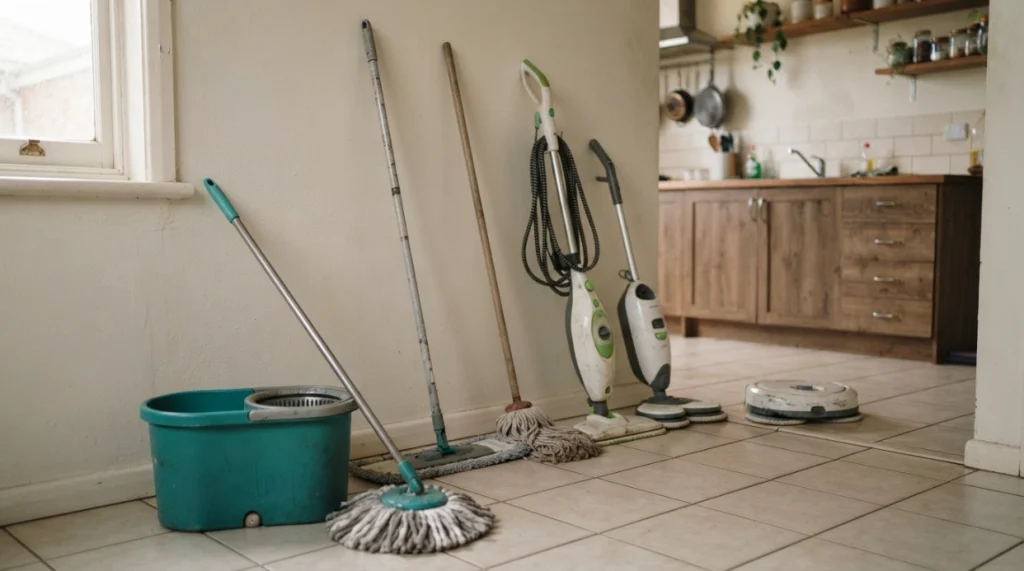
A spin mop offers strong rinsing and adjustable moisture, but it isn’t automatically the best mop for every cleaning job. Your floor type and mess level matter more than the label on the tool.
| Mop Type | Best Use | Moisture Control | Main Limitation |
|---|---|---|---|
| Spin mop | Larger damp-cleaning jobs | Good to very good | Bucket setup and storage |
| Microfiber flat mop | Routine mixed-floor cleaning | Excellent | Pads load with dirt quickly |
| Traditional string mop | Durable water-tolerant floors | Lower | Easy to leave too much water |
| Steam mop | Steam-approved hard surfaces | Depends on steam output | Heat and moisture restrictions |
| Electric spin mop | Powered scrubbing | Varies by model | Battery and pad maintenance |
| Robot mop | Frequent light maintenance | Usually controlled | Less effective on heavy soil |
I reach for a microfiber flat mop when I want precise low-moisture cleaning. For a larger tile area with tracked-in dirt, a spin mop gives me easier rinsing and more scrubbing flexibility.
A steam mop is a different tool. It uses heat rather than a spinning wringer, so it should only go on flooring specifically approved for steam.
How Do You Keep a Spin Mop Working Properly?
Most spin mop problems come from dirty mop heads, clogged bucket parts, overloaded water, or storing everything while damp. A few minutes of care after cleaning prevents many odors and mechanical problems.
- Empty dirty water: Don’t leave used solution sitting in the bucket.
- Rinse the bucket: Remove grit from the bottom and wringer area.
- Wash the mop head: Follow the refill manufacturer’s washing instructions.
- Skip fabric softener when prohibited: It can coat microfiber and reduce absorbency.
- Dry components fully: Airflow helps prevent musty smells.
- Inspect the wringer: Remove hair or debris wrapped around moving parts.
- Replace worn refills: Flattened, damaged fibers clean less effectively.
Why isn’t my spin mop spinning?
First check whether the mop is seated correctly in the wringer. Then inspect the pedal, handle joint, basket, and moving components for debris or visible damage.
Don’t force a jammed mechanism. Forcing the pedal or handle can turn a minor blockage into a broken drive component.
Why does my floor look streaky afterward?
Streaks often come from excess cleaner, dirty water, an overloaded mop head, or too much moisture. Rinse the head, refresh the water, and reduce the amount of cleaning solution.
Also keep the freshly mopped area clear until it dries. OSHA’s wet-floor safety guidance highlights the slip hazard created by wet walking surfaces.
Frequently Asked Questions About Spin Mops
Does the mop itself spin while you clean the floor?
Usually, no. With a manual spin mop, the spinning happens mainly inside the bucket wringer. You move the mop across the floor normally. Electric spin mops are different because their motor-driven pads rotate while they clean.
How does a spin mop remove water?
The wet mop head rotates quickly inside a perforated wringer basket. That rotation pushes loose water outward from the fibers, where it passes through the basket. Repeating the spin generally produces a drier mop head.
Do you put soap in a spin mop bucket?
You can use a compatible floor cleaner when the mop and flooring manufacturers allow it. More cleaner isn’t better. Excess detergent can leave residue, create streaks, or make the floor slippery, so follow the product’s dilution directions.
Can a spin mop be used on hardwood floors?
Only when the specific hardwood finish allows damp cleaning. Wring the mop until it’s barely damp and never leave standing water behind. For real wood, follow your flooring or finish manufacturer’s care instructions rather than treating all sealed floors alike.
Why is a spin mop better than a regular mop?
Its main advantage is easier moisture control. The spinning wringer removes water without hand squeezing, while reusable microfiber can collect fine dirt. A spin mop also makes repeated rinsing easier during larger jobs, though the bucket requires more storage space.
How often should you wash a spin mop head?
Wash it after dirty cleaning sessions and whenever it develops visible buildup or odor. If you’re cleaning several dirty rooms, swapping to a fresh mop head during the job can prevent soil from being redistributed across cleaner areas.
Can I use vinegar in a spin mop?
Only if both the flooring and mop manufacturers permit it. Vinegar is acidic and isn’t appropriate for every finish or surface, especially certain natural stone. A pH-neutral cleaner designed for your floor is often the safer choice.
The bottom line: A spin mop works by combining reusable floor-cleaning fibers with a fast rotating wringer that controls how much water reaches your floor. The technique is simple, but clean water, correct wringing, fresh microfiber, and floor-safe cleaner make the biggest difference.
For everyday floor cleaning, don’t judge success by how wet the floor looks. A controlled, lightly damp surface that dries quickly is usually the better target.