
How Fast Does a Spin Mop Spin? Speeds, RPM, and What Affects Drying

Quick Answer
A spin mop’s speed depends on its design. Manual spin-mop buckets use a foot pedal or pumping handle to rotate the wringer basket, while cordless electric spinning mops commonly operate around 120–200 RPM, with some models reaching higher speeds. For a manual mop, the important question is how effectively the wringer removes excess water, not a universal RPM rating.
What determines spin-mop speed?
- Mop design: Foot-pedal, pump-handle, and motorized models use different spinning mechanisms.
- Published RPM: This means rotations per minute and should refer to a specific component, such as the wringer basket or electric mop head.
- Water removal: A well-designed wringer removes excess water without requiring the mop head to become completely dry.
- Mop-head condition: Dirt, tangled fibers, and worn microfiber can affect wringing and cleaning performance.
- Floor type: Hardwood and laminate generally need less moisture than many sealed tile floors.
Quick practical tip
- For sealed hardwood or laminate, spin or wring the mop until it’s damp rather than dripping, and follow the flooring manufacturer’s care instructions.
- For a motorized mop, check the manufacturer’s stated RPM instead of assuming every spinning mop runs at the same speed.
When you’re choosing a spin mop or trying to improve your cleaning routine, the advertised speed can sound like the most important number. In practice, the way the mop removes water and cleans your floor matters just as much.
In this guide, I’ll explain the difference between manual spin-mop wringers and electric rotating mop heads, how RPM affects performance, and how to choose the right moisture level for different floors.
In This Guide
- How fast does a spin mop spin in RPM?
- How does a spin mop create rotation?
- Manual spin mop vs electric spin mop: speed comparison
- Does a faster spin mop clean better?
- How long should you spin a mop to remove water?
- What spin speed and moisture level suit each floor?
- Why is your spin mop spinning slowly?
- What should you check before buying a spin mop?
- Frequently asked questions
- Final takeaway
How fast does a spin mop spin in RPM?
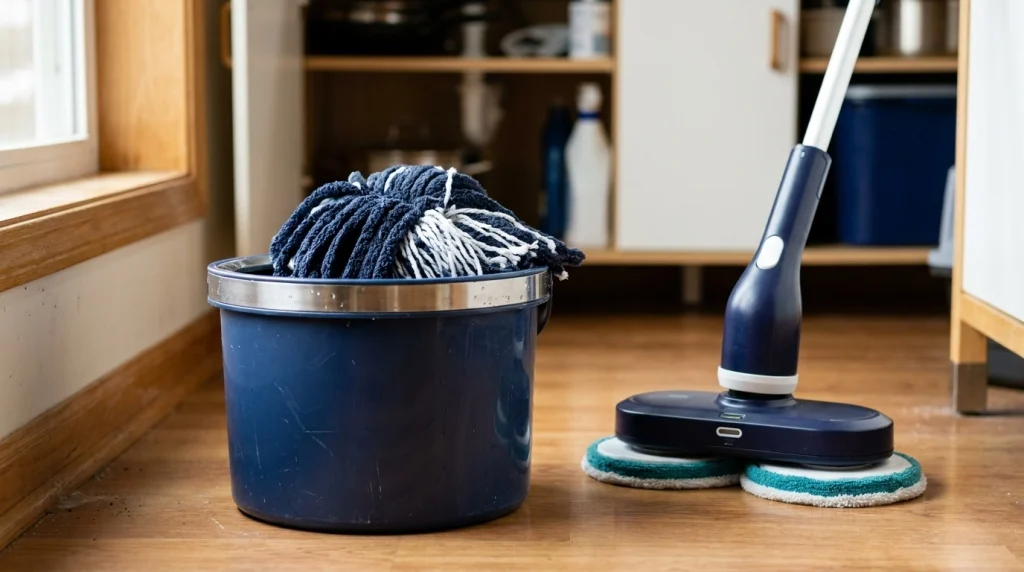
A spin mop doesn’t have one standard speed. Manual models rely on your pumping action, while electric models use a motor to rotate their cleaning pads.
RPM stands for rotations per minute. It describes how many complete turns a rotating component makes in 60 seconds.
Typical speeds for different spin-mop designs
Use the following figures as practical reference points, not universal specifications for every product.
- Manual pedal or pump wringers: Speed varies with the mechanism and how quickly you operate it; many manufacturers don’t publish an RPM rating.
- Cordless electric spinning mops: Some models operate around 120–200 RPM, although specifications vary considerably.
- Higher-speed electric cleaning devices: Some powered floor-cleaning machines operate at several hundred RPM or more, depending on their design and purpose.
For example, a cordless electric cleaner listed at 120 RPM makes approximately two rotations per second. A model rated at 180 RPM makes three rotations per second.
Those calculations describe rotational speed only. They don’t establish how well either machine removes dirt, handles dried spills, or protects delicate flooring.
Why manual spin mops rarely have a useful single RPM figure
A traditional spin mop usually spins inside a bucket to remove water rather than continuously rotating against the floor. Its actual wringing speed changes with each pedal press or handle pump.
Some products advertise the maximum rotational speed of their wringer basket. Others provide no speed figure at all.
Check which component the manufacturer measured. A wringer basket’s RPM isn’t directly comparable to the RPM of a motorized mop head that scrubs the floor.
How does a spin mop create rotation?
A spin mop is a floor-cleaning tool that uses a rotating wringer or cleaning head to help control moisture or scrub a hard surface. Its mechanism depends on whether the mop is manual or motorized.
How a manual spin-mop bucket works
In a typical manual system, a mop handle connects to a circular microfiber head. The bucket contains a spinning basket that squeezes water out of the fibers as it rotates.
- Dip the mop head into the cleaning solution or rinse water.
- Place the mop head inside the wringer basket.
- Press the foot pedal or pump the handle according to the manufacturer’s instructions.
- Stop when the mop reaches the moisture level appropriate for your floor.
- Remove the mop and clean the floor using normal back-and-forth movements.
The spinning action helps remove excess water through centrifugal effects. The microfiber strands retain some moisture, allowing them to pick up dirt during mopping.
How a motorized spinning mop works
An electric spin mop uses a motor to rotate one or more cleaning pads. Depending on the design, the rotating pads may scrub the floor directly rather than simply wringing water from a mop head.
Some machines have dual rotating heads, adjustable speeds, rechargeable batteries, or built-in water tanks. Others provide only a simple powered rotation setting.
These differences affect cleaning technique, battery life, noise, maneuverability, and the amount of physical effort required. A higher RPM alone doesn’t tell you whether a machine is a better choice.
Manual spin mop vs electric spin mop: speed comparison
Manual and electric spin mops solve related problems in different ways. A manual bucket wringer helps control moisture, whereas an electric rotating head uses powered movement to scrub the floor.
| Feature | Manual spin mop | Electric spinning mop |
|---|---|---|
| Power source | Foot pedal or hand-operated handle | Rechargeable battery or electrical power |
| Rotating component | Usually the bucket wringer | One or more cleaning heads |
| Typical published speed | Often not specified | Varies by model; some are around 120–200 RPM |
| Water removal | Performed by the wringer basket | Depends on the machine’s design and pad |
| Physical effort | Requires manual mopping and wringing | Motor assists with rotating-pad movement |
| Best comparison criteria | Moisture control and wringer usability | Cleaning performance, runtime, and control |
Which design should you choose?
A manual spin mop is a practical choice if you want straightforward cleaning, a washable microfiber head, and control over how much water remains in the mop.
An electric rotating mop may suit you better if you want powered scrubbing and less repetitive effort. Consider its weight, battery runtime, replacement pads, and cleaning-head design alongside its speed.
Don’t compare two products using RPM alone. Their rotating parts perform different jobs, so a direct speed comparison can be misleading.
Does a faster spin mop clean better?
Not necessarily. A faster wringer may remove water more quickly, but cleaning performance depends on the mop head, the amount of moisture, the cleaning solution, and the type of dirt on the floor.
When higher speed helps
A well-designed wringer can remove excess water efficiently, helping you prepare a mop for floors that need limited moisture. This can make routine cleaning easier and reduce dripping between the bucket and the floor.
On a powered mop, rotating pads can help loosen everyday grime. The motor’s performance still depends on pad contact, pressure, rotation design, and the condition of the surface.
When speed isn’t enough
Dried food, greasy marks, and sticky spills may need a suitable cleaner and additional dwell time rather than faster spinning alone. A clean microfiber head also matters because a saturated, dirty pad can spread soil instead of collecting it.
For example, when cleaning a dried drink spill from sealed tile, I would first loosen the residue with a floor-compatible cleaner. I’d then wipe it away with a clean pad instead of assuming maximum rotation would solve the problem.
Using a suitable cleaning method prevents unnecessary scrubbing. It also helps protect delicate finishes from avoidable wear.
Can a fast spin mop damage floors?
Speed by itself doesn’t determine whether a mop damages a floor. Moisture, abrasive dirt, pad condition, cleaning chemicals, and excessive pressure are also important factors.
For sealed hardwood and laminate, too much water can cause problems even when the mop spins quickly. Follow the flooring manufacturer’s instructions and use a well-wrung, damp mop.
Safety note: Check the floor manufacturer’s care guide and the cleaner’s label before using any chemical solution, disinfectant, or DIY mixture.
How long should you spin a mop to remove water?
There’s no universal number of seconds or pedal presses that works for every spin mop. Stop when the mop reaches the moisture level your floor requires and the manufacturer’s instructions recommend.
Adjust the wringing process to the floor
- Sealed hardwood: Wring thoroughly and use a barely damp mop when permitted by the flooring manufacturer.
- Laminate: Use minimal moisture and avoid leaving standing water or wet seams.
- Vinyl and LVP: Use a damp mop with a compatible cleaner and follow the flooring care instructions.
- Glazed ceramic or porcelain tile: A moderately damp mop often works for routine cleaning, although grout and surface finishes may require special care.
- Natural stone: Use a stone-compatible cleaner and avoid acidic solutions unless the stone manufacturer specifically approves them.
How can you tell when the mop is ready?
Look for a head that feels damp rather than heavy and dripping. When you lift it from the wringer, it shouldn’t leave a trail of pooled water across the floor.
On moisture-sensitive surfaces, test your technique in a small, inconspicuous area first. If water collects in joints or remains on the surface, wring the mop further and reduce the amount of solution you apply.
Remember that a mop head doesn’t need to be bone-dry to clean effectively. Microfiber needs enough moisture to lift and collect soil without flooding the surface.
Does a faster wringer make floors dry faster?
It can help indirectly by removing more excess water before mopping, but the final drying time also depends on the amount of water applied, room ventilation, temperature, and the flooring material.
A well-wrung mop usually leaves less water behind than a dripping one. Even so, don’t assume a particular RPM guarantees a specific drying time.
Keep foot traffic away from wet floors until they’re safe to walk on. Wet surfaces can be slippery, especially around smooth tile and polished stone.
What spin speed and moisture level suit each floor?
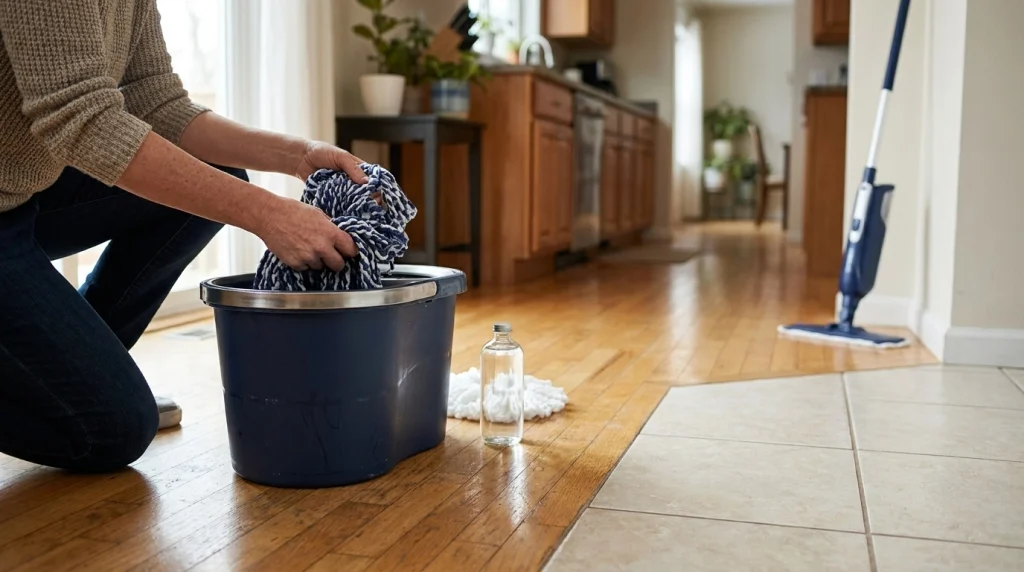
The right moisture level depends more on your flooring than on a particular spin-speed number. Start with the manufacturer’s care guidance and adjust the wringing process accordingly.
| Floor type | Recommended mop condition | Important precaution |
|---|---|---|
| Sealed hardwood | Barely damp | Avoid standing water and excess moisture |
| Engineered wood | Barely damp, if approved | Follow the product-specific care instructions |
| Laminate | Very lightly damp | Keep seams and edges dry |
| Vinyl or LVP | Damp | Use a compatible cleaner |
| Ceramic or porcelain tile | Damp to moderately wet, as appropriate | Manage water around grout and nearby surfaces |
| Natural stone | Damp | Use a stone-safe, manufacturer-approved cleaner |
| Concrete | Depends on the finish and sealer | Protect sealed or coated surfaces |
These are general starting points, not replacements for product-specific care instructions. An unsealed floor, damaged finish, or specialty coating may need a different approach.
Choose the right cleaning solution, too
A fast-spinning mop won’t compensate for an unsuitable cleaner. Use a product designed for your flooring and follow its dilution instructions rather than adding extra detergent to make the mop seem more effective.
- Hardwood and engineered wood: Choose a cleaner approved for the particular finish.
- Laminate and vinyl: Use a compatible product that doesn’t leave a sticky film.
- Natural stone: Prefer a suitable pH-neutral stone cleaner when recommended.
- Tile and concrete: Match the cleaner to the tile, grout, sealer, or coating.
Safety note: Never assume vinegar, bleach, or another household chemical is safe for every floor. Check the product label, avoid mixing cleaning chemicals, and follow the flooring manufacturer’s guidance.
Why is your spin mop spinning slowly?
If your mop suddenly spins more slowly or fails to wring out the head properly, check the mechanism before replacing the entire set. The cause may be simple maintenance, an assembly problem, or a worn component.
Common causes and practical fixes
- Incorrect assembly: Check that the mop head and wringer basket are positioned correctly according to the instructions.
- Blocked mechanism: Remove loose hair, lint, and debris from accessible parts after emptying the bucket.
- Worn pedal or gears: If the pedal slips or no longer engages properly, inspect the mechanism and consult the manufacturer’s repair guidance.
- Damaged mop head: Replace a heavily worn, tangled, or misshapen head with a compatible refill.
- Low battery: For an electric mop, charge the battery and check the manufacturer’s troubleshooting steps.
- Motor or drive problem: If an electric head remains slow after basic checks, stop using it and seek authorized service.
How to maintain a spin-mop wringer
After cleaning, empty the bucket, rinse away residue, and allow the components to dry. Remove accumulated hair and lint from accessible areas without forcing or dismantling parts the manufacturer says should remain assembled.
Inspect the pedal, handle, and basket periodically. Unusual grinding, cracked plastic, or a loose rotating basket can indicate a problem that routine cleaning won’t fix.
Don’t add oil or lubricant unless the manufacturer’s instructions call for it. The wrong product can damage plastic parts or interfere with the wringer mechanism.
What should you check before buying a spin mop?
The best spin mop is one that controls moisture reliably, cleans comfortably, and suits your flooring. RPM is worth considering when the manufacturer provides a clear, comparable specification.
Five features worth comparing
- Wringing control: Look for a pedal or handle mechanism that lets you adjust moisture without excessive effort.
- Mop-head quality: Check whether the microfiber head is washable, replaceable, and easy to attach.
- Bucket stability: A stable base and secure wringer make routine cleaning easier.
- Replacement-part availability: Confirm that compatible mop heads and any service parts are available.
- Clear specifications: If RPM is advertised, verify whether it refers to the wringer basket or the powered cleaning head.
Should you buy the mop with the highest RPM?
Not automatically. A high advertised speed may sound impressive, but it doesn’t establish how well a mop cleans, how much water it removes, or how long it will last.
For a manual mop, prioritize smooth operation and reliable moisture control. For an electric mop, compare measured head speed alongside battery runtime, pad movement, ease of use, and the manufacturer’s care recommendations.
If you’re cleaning a small apartment with laminate or hardwood, careful moisture control may matter more than extra rotation speed. For larger tiled areas, a comfortable bucket system or a powered cleaner may better suit your routine.
Frequently asked questions
1. How many RPM does a regular spin mop have?
A regular manual spin mop often has no published RPM specification because the user operates the wringer with a pedal or pumping handle. Electric spinning mops vary by model, and some operate around 120–200 RPM. Always check the manufacturer’s stated speed and which component it measures.
2. Is 150 RPM fast for an electric spin mop?
A speed of 150 RPM equals 2.5 rotations per second. That provides a useful measure of rotational speed, but it doesn’t establish cleaning quality by itself. Pad design, pressure, motor performance, and the type of dirt all affect how well an electric mop cleans.
3. Does a spin mop spin while cleaning the floor?
Most traditional bucket spin mops rotate inside the wringer to remove excess water, then move across the floor manually. Electric spinning mops are different because their powered heads rotate against the floor during cleaning. Check the product design before comparing advertised speeds.
4. How many times should I press a spin-mop pedal?
There’s no universal number of pedal presses for every mop. Start with the manufacturer’s instructions, then stop when the mop is damp enough for your floor. Hardwood and laminate usually need minimal moisture, while other sealed surfaces may tolerate more, depending on their care requirements.
5. Why does my spin mop leave the floor too wet?
The mop may need additional wringing, or the head may be too saturated for your flooring. Check that the wringer engages correctly and that the mop head isn’t overloaded with water. Reduce the moisture further for hardwood or laminate and wipe up any standing water promptly.
6. Does a faster spin mop dry the floor faster?
A faster wringer can help remove excess water before mopping, which may reduce the moisture left on the floor. However, drying also depends on how much liquid you apply, room conditions, ventilation, and the flooring material. RPM alone can’t guarantee a particular drying time.
7. Is a spin mop better than a flat microfiber mop?
A spin mop offers a bucket-based way to rinse and wring a reusable head, while a flat microfiber mop can be lighter and easier to maneuver in tight spaces. Neither is best for every home. Choose according to your floor type, cleaning area, storage space, and preferred moisture-control method.
Final takeaway: Focus on moisture control, not just speed
A spin mop’s rotational speed varies with its mechanism, and many manual models don’t publish an RPM figure. Electric models may list a specific head speed, but that number should never be the only measure of performance.
For everyday floor cleaning, focus on a clean microfiber head, a suitable cleaning solution, and the right amount of moisture. These choices will usually matter more to your results than chasing the highest advertised rotation speed.
Before buying a new mop, compare its wringer design, ease of use, replacement parts, and compatibility with your flooring. A well-matched mop makes regular cleaning simpler without exposing your floors to unnecessary water or harsh chemicals.
For more practical floor-cleaning advice, choose your mop based on the surface you clean most often and follow the manufacturer’s care instructions. The right moisture level and a suitable cleaning routine are the foundations of a cleaner floor.