
How Does a Foot Pedal Wringer Work?

Quick Answer
A foot pedal wringer removes excess water from a mop using a foot-operated mechanical system. In a spin mop, pressing the pedal drives a gear or linkage that rotates the wringer basket, using centrifugal force to throw water from the microfiber strands into the bucket. Traditional pedal wringers work differently: they use connected levers to squeeze a mop between rollers or plates.
How the mechanism works
- Pedal pressure: Your foot pushes a spring-loaded or linked mechanism inside the bucket.
- Mechanical movement: Gears, a drive linkage, or connected levers transfer that movement to the wringer.
- Water removal: A spinning basket flings water outward, while a roller-style wringer squeezes water out mechanically.
- Water collection: The removed water drains back into the bucket.
- Moisture control: Repeated pedal presses usually remove more water from a spin mop head.
Quick operating tip
- Keep the mop centered in the wringer, hold the handle upright, and start with a few gentle pedal presses. Check the mop’s dampness before cleaning moisture-sensitive flooring.
A foot pedal wringer makes floor cleaning easier by letting you control excess water without twisting a mop by hand. The mechanism is simple, but understanding how it transfers your foot pressure into wringing action helps you use it properly and spot common problems.
In this guide, I’ll explain how spin mop pedals work, how they differ from traditional squeeze wringers, and what to check when a pedal stops working as expected. I’ll also cover how to adjust mop dampness for hardwood, laminate, vinyl, and tile.
In This Guide
- What Is a Foot Pedal Wringer?
- How Does a Spin Mop Foot Pedal Work?
- How Do You Use a Foot Pedal Wringer?
- Spin Wringer vs. Roller Wringer: What’s the Difference?
- How Do You Control Mop Dampness for Different Floors?
- Why Is Your Foot Pedal Wringer Not Working?
- How Do You Maintain and Use a Pedal Wringer Safely?
- When Is a Foot Pedal Wringer Worth Using?
- Frequently Asked Questions
What Is a Foot Pedal Wringer?
A foot pedal wringer is a mop-bucket mechanism that uses pressure from your foot to remove excess liquid from a wet mop. It reduces the need to squeeze, twist, or handle a saturated mop head directly.
Two common types of foot pedal wringers
Not every pedal-operated wringer works the same way. The two main designs use different mechanical actions.
- Spin mop wringer: A circular basket holds the mop head while a pedal-driven mechanism makes the basket rotate, throwing water outward and down into the bucket.
- Roller or squeeze wringer: A pedal operates a linkage that moves rollers or squeezing plates together, pressing water from the mop as it passes through or sits between them.
Most household spin mop systems use the first design. Commercial mop buckets may use squeeze-style mechanisms, depending on their construction.
What parts make the system work?
A typical pedal-operated spin mop has several connected parts that work together:
- Foot pedal: The surface you press to activate the mechanism.
- Drive mechanism: Gears, a shaft, or a mechanical linkage that transfers pedal movement.
- Wringer basket: The perforated basket that holds and supports the mop head while it spins.
- Return mechanism: Depending on the design, a spring or another component helps the pedal return after pressure is released.
- Bucket: Collects the water removed from the mop.
Some systems also have separate wetting and wringing zones. Their pedals may operate a more complex mechanism than a basic single-basket spin mop.
The key distinction is that a spin wringer removes water through rotation, while a squeeze wringer relies on direct pressure.
How Does a Spin Mop Foot Pedal Work?
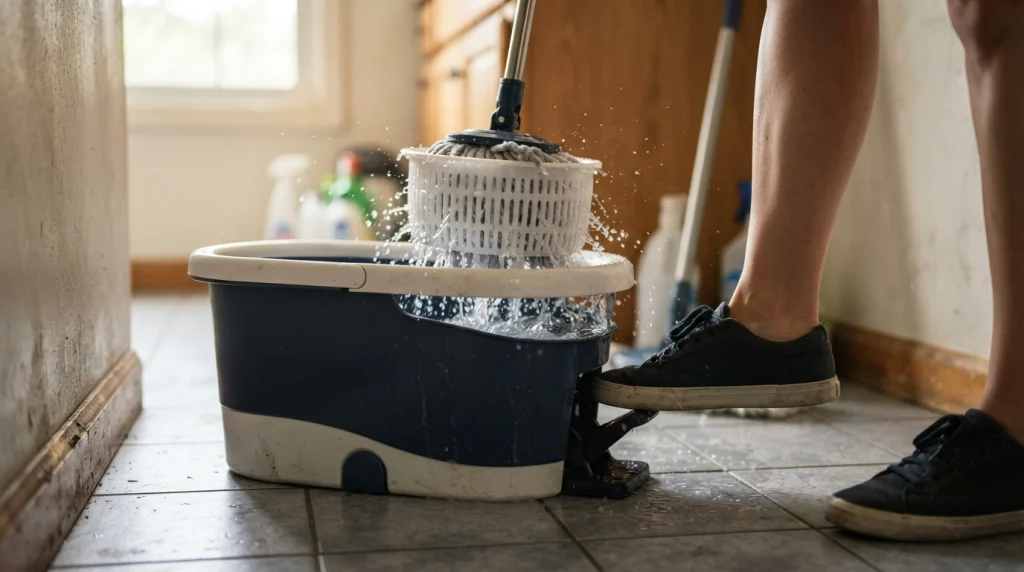
A spin mop foot pedal converts downward foot pressure into rotational movement. The exact arrangement varies by model, but the basic principle is the same: the pedal activates a drive system that spins the wringer basket.
Step 1: Your foot pushes the pedal down
When you press the pedal, it moves around a pivot or operates a linked drive mechanism inside the bucket. Your leg supplies the force that starts the wringing action.
The pedal’s movement is transferred through the mop’s mechanical assembly. You don’t need to twist the mop handle manually to make the basket spin.
Step 2: The drive mechanism rotates the basket
Inside the bucket, the pedal connects to a system of gears, shafts, or linkages. That system converts the pedal’s movement into rotation, allowing the wringer basket to spin around its central axis.
Some designs use a ratcheting action, which allows repeated pedal presses to build or maintain rotational movement. Other designs use different drive arrangements, so the operating feel varies between models.
Step 3: Rotation throws water from the mop head
As the basket spins, the wet microfiber strands move rapidly around the center. The water in those strands is driven outward and passes through the basket’s openings into the bucket.
This effect is commonly described as centrifugal force, or the outward effect observed in a rotating system. The result is a mop head that holds less water than it did after rinsing.
Step 4: Repeated presses adjust the moisture level
Each pedal press can contribute to the wringing cycle, depending on the design. On many household models, additional presses remove more excess water and leave the mop head progressively drier.
For example, O-Cedar’s EasyWring instructions recommend pumping the pedal several times to control how much water remains in the mop head.
Don’t assume every model needs the same number of presses. Start gently, check the result, and follow your mop’s instructions.
Why doesn’t the pedal spin continuously?
Many manual pedal systems are designed to rotate the basket through repeated strokes rather than run continuously. The pedal may return between presses, allowing you to pump it again.
The mechanism’s design determines how each press affects rotation. A pedal that behaves differently from another brand’s model isn’t necessarily faulty.
Section takeaway: A spin mop pedal activates a mechanical drive that rotates the wringer basket, allowing water to escape through its openings and collect in the bucket.
How Do You Use a Foot Pedal Wringer?
Use a foot pedal wringer by rinsing the mop head, positioning it correctly, and pressing the pedal until the mop reaches the dampness required for your floor. Correct positioning matters because a tilted or poorly seated mop head may spin unevenly.
Follow these operating steps
- Prepare the bucket. Add water and an appropriate floor cleaner if needed, staying below the marked maximum fill line.
- Wet the mop. Dip the microfiber head into the cleaning water until it is sufficiently saturated.
- Position the mop. Lift the head into the wringer basket and center it according to the manufacturer’s instructions.
- Hold the handle upright. Keep the handle steady and vertical if your model requires this position for spinning.
- Press the pedal. Use controlled, repeated presses rather than stamping hard on the pedal.
- Check the dampness. Stop and inspect the mop head before adding more spinning time.
- Resume cleaning. Rinse and wring the head again whenever it becomes dirty or too wet.
How can you tell when the mop is wrung enough?
The mop should feel damp rather than saturated, with no obvious stream of water dripping from its strands. The correct amount of moisture depends on your flooring and the cleaning task.
For a quick kitchen spill on tile, you may want to leave more moisture in the head. For routine cleaning on laminate or sealed wood, a much drier mop is generally the safer choice.
What if the mop head wobbles while spinning?
Stop pressing the pedal and check whether the mop head sits securely in the basket. An off-center head can vibrate, splash water, or place extra strain on the mechanism.
Remove any tangled strands or debris only after the mechanism stops completely. Never reach into a moving wringer to reposition the mop.
Section takeaway: Center the mop, keep the handle in the recommended position, and use controlled pedal strokes. Check moisture instead of relying on a fixed number of presses.
Spin Wringer vs. Roller Wringer: What’s the Difference?
Both designs use a foot pedal to remove water, but they transfer force in different ways. A spin wringer rotates a mop head, while a roller wringer uses pressure to squeeze liquid from mop fibers.
| Feature | Spin wringer | Roller or squeeze wringer |
|---|---|---|
| Main action | Rotates the mop head | Compresses mop fibers |
| Typical mop type | Round or compatible microfiber spin head | Compatible string or commercial mop |
| Water removal | Rotation throws water into the bucket | Rollers or plates squeeze water out |
| User control | Often adjusted through repeated spinning | Depends on pressure and the wringer design |
| Common limitation | Needs a compatible head and centered placement | Requires the mop to fit the rollers or plates |
| Best-known setting | Household spin mop buckets | Some traditional and commercial mop systems |
Which mechanism is easier to operate?
A household spin mop is often convenient for routine cleaning because you can adjust dampness with repeated pedal presses. It also avoids manually twisting a wet microfiber head.
A squeeze-style wringer can suit compatible commercial mop heads, but its operation depends on how the pedal moves the rollers or plates. Neither design is automatically better for every cleaning job.
How does a foot pedal wringer compare with other mop systems?
- Flat microfiber mop: Usually uses a hand-operated wringing method, a separate rinse bucket, or a spray reservoir rather than a pedal-driven basket.
- Steam mop: Uses heated water to produce steam and generally has no bucket wringer pedal.
- Spray mop: Dispenses cleaning solution from a reservoir and typically uses a washable flat pad.
- Robot mop: Automates floor cleaning, with water handling and pad washing depending on the model and docking system.
A pedal wringer is most useful when you want hands-free moisture control and a reusable mop head. A flat or spray mop may be more convenient for small daily touch-ups.
How Do You Control Mop Dampness for Different Floors?
The goal of wringing is not to make every mop head completely dry. It’s to leave enough moisture for effective cleaning without depositing excess water on the floor.
Choose the right dampness for each surface
| Floor type | Recommended approach | What to avoid |
|---|---|---|
| Sealed hardwood | Use a well-wrung, barely damp mop and an approved cleaner. | Standing water and prolonged dampness |
| Engineered wood | Use minimal moisture according to the flooring instructions. | Water entering seams or edges |
| Laminate | Use a lightly damp microfiber head when the manufacturer permits wet mopping. | Pooling water and wet joints |
| Vinyl or LVP | Use a damp mop and a compatible floor cleaner. | Excess liquid and unapproved chemicals |
| Ceramic or porcelain tile | Use a damp mop; adjust moisture for the grout and surrounding materials. | Slippery puddles and residue |
| Natural stone | Use a stone-compatible cleaner and the approved cleaning method. | Acidic cleaners or excess water where unsuitable |
| Concrete | Follow the care requirements for sealed or unsealed concrete. | Unapproved chemicals on protective coatings |
Safety note: Check the flooring manufacturer’s care guide and the cleaning product label before using water, vinegar-based mixtures, disinfectants, or other chemicals. Never assume a cleaner is safe for every surface.
Why does too much water cause problems?
Excess moisture can seep into joints, seams, and unfinished edges. On susceptible wood and laminate floors, that exposure can contribute to swelling, warping, or finish damage.
Too much cleaning solution can also leave a film that attracts dirt or creates streaks. If your floor looks cloudy after mopping, try using the recommended dilution and a cleaner suited to the surface.
How can you get streak-free results?
Start with a clean microfiber head, use the recommended amount of cleaner, and wring out excess water. Rinse the head when it becomes visibly dirty instead of spreading contaminated water across the room.
For practical floor-care guidance, the National Wood Flooring Association provides resources about wood flooring and its care. Follow the specific instructions for your installed floor and finish.
Section takeaway: Use a drier mop on moisture-sensitive flooring and a compatible cleaning solution. The right wringing level depends on the floor, not simply the pedal’s maximum spinning power.
Why Is Your Foot Pedal Wringer Not Working?
A foot pedal wringer may stop working because of debris, a jammed basket, a worn drive component, or incorrect assembly. The best first step is to identify whether the pedal moves normally and whether that movement reaches the wringer.
Why does the pedal move but the basket doesn’t spin?
If the pedal moves freely without rotating the basket, the drive mechanism may not be engaging correctly. A disconnected linkage, damaged gear, or worn internal part could be responsible.
- Check the basket position: Make sure it sits correctly in its housing.
- Inspect for obstructions: Look for tangled fibers or debris around accessible moving parts.
- Check the assembly: Confirm that removable components are seated according to the manual.
- Look for damage: Cracks, unusual looseness, or broken plastic parts may indicate a mechanical failure.
Don’t force the pedal to make the basket move. Excessive pressure can worsen damage to gears or plastic linkages.
Why does the pedal feel stiff or get stuck?
A stiff pedal can indicate debris in the mechanism, a misaligned part, or a damaged pivot. Some resistance is normal, but sudden changes in movement deserve attention.
Empty the bucket and inspect the accessible parts after the mechanism has stopped. If the pedal remains stuck, consult the manufacturer’s troubleshooting instructions rather than dismantling a sealed assembly.
Why does the mop spin but stay too wet?
A spinning mop head can still retain substantial water if the wringing cycle is too short or the head is overloaded. A poorly centered head can also prevent smooth operation.
- Use the mop head designed for the wringer.
- Position it centrally inside the basket.
- Press the pedal repeatedly as directed by the manufacturer.
- Allow water to drain back into the bucket before removing the head.
- Replace a damaged or badly worn mop head if it no longer performs properly.
Why does the pedal make a clicking or grinding sound?
A light mechanical sound may be normal for some pedal systems, especially those using ratchets or gears. A new grinding noise, repeated skipping, or a sudden increase in noise may indicate worn or misaligned parts.
Stop using the wringer if it makes unusual noises or vibrates excessively. Check the manual for approved maintenance and contact the manufacturer if the mechanism appears damaged.
Section takeaway: Start troubleshooting with positioning, assembly, and accessible debris. A pedal that slips, grinds, or requires unusual force may need repair or replacement rather than harder pressing.
How Do You Maintain and Use a Pedal Wringer Safely?
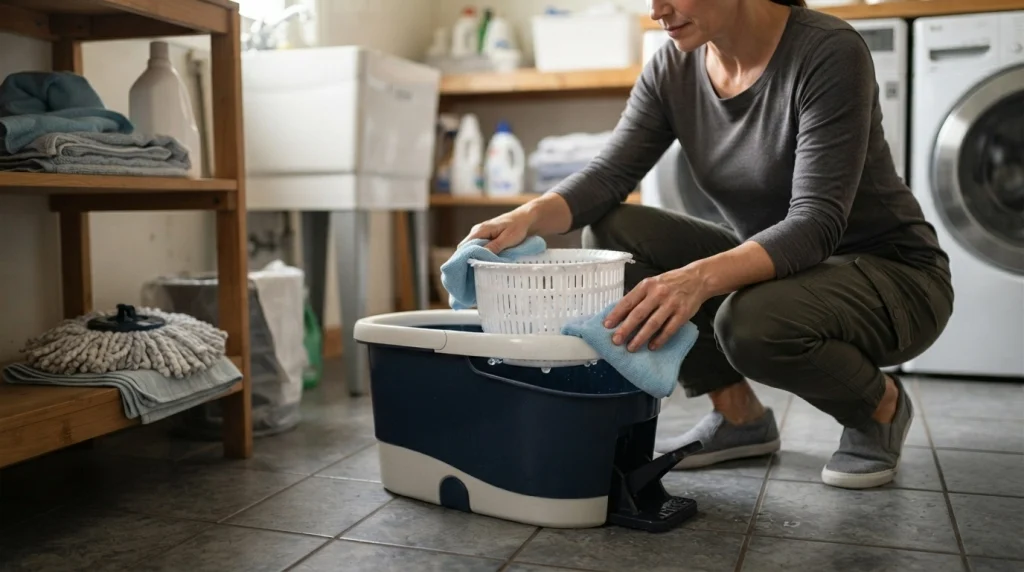
Regular cleaning and careful operation help a pedal wringer work smoothly for longer. The most useful habits are removing debris, emptying dirty water, drying the bucket, and keeping your hands away from moving parts.
Clean the bucket and wringer after use
Dirty water can leave residue around the basket and pedal assembly. Hair, lint, and loose mop fibers can also collect in accessible areas.
- Empty the bucket after cleaning.
- Rinse away loose dirt and cleaner residue.
- Remove visible fibers from accessible areas once the mechanism has stopped.
- Wipe the bucket and exterior components with a suitable cloth.
- Let the parts dry before storing the system in a suitable location.
Don’t immerse a pedal mechanism in water unless the manufacturer explicitly permits it. Some internal components may not be designed for that type of cleaning.
Inspect the parts regularly
Check the pedal, basket, handle, and bucket for cracks or loose connections. If your model includes a removable basket or replaceable components, reinstall them securely before use.
Follow the manufacturer’s guidance for lubricating moving parts. Household oils or improvised lubricants may damage plastic components or interfere with the mechanism.
Follow basic safety precautions
- Keep hands clear: Never touch the basket while it’s rotating.
- Wear suitable footwear: Use stable shoes rather than operating a pedal in slippery socks.
- Use a level surface: Keep the bucket steady and prevent it from tipping during operation.
- Respect fill limits: Avoid overfilling, which can cause splashing during wringing.
- Protect children: Keep children away from the bucket and moving parts, and never leave a bucket of water unattended around young children.
- Avoid excessive force: Press the pedal with controlled movements instead of jumping or stamping on it.
Water on the floor can create a slipping hazard, particularly around kitchens and bathrooms. Clean up splashes promptly and allow the floor to dry before walking across it.
For broader household cleaning and disinfecting guidance, consult the U.S. Environmental Protection Agency and follow the directions on the cleaner’s label. Ordinary floor cleaning and disinfection are different tasks, so choose products according to the actual need.
Safety note: Check the mop and floor-care instructions before using bleach, disinfectants, acidic cleaners, or other chemical products. Never mix cleaning chemicals unless the product instructions explicitly permit it.
Section takeaway: Keep the mechanism clean, store the bucket dry, and stop using any damaged pedal or basket. Safe operation protects both the wringer and the person using it.
When Is a Foot Pedal Wringer Worth Using?
A foot pedal wringer is useful when you clean hard floors regularly and want to control mop moisture without manually twisting the mop head. It’s especially convenient for repeated rinsing during kitchen, bathroom, and general household cleaning.
Who benefits most from a spin mop wringer?
- Regular home cleaners: Repeated pedal presses make it convenient to rinse and wring a mop during a full cleaning session.
- Homes with mixed hard flooring: Adjustable dampness helps you use less water on sensitive surfaces and more on suitable tile floors.
- People who prefer reusable pads: Compatible microfiber heads can be washed and reused according to the care instructions.
- Small households: A compact spin mop can handle routine spills and floor cleaning without the setup of a larger cleaning machine.
When might another mop work better?
A pedal wringer isn’t necessary for every home. A flat microfiber mop may be easier to store in a small apartment, while a spray mop can suit quick cleanups that don’t require a bucket.
A traditional string mop with a squeeze wringer may be preferable for compatible commercial cleaning tasks. An electric floor cleaner may suit people who want powered scrubbing, although its maintenance and cleaning requirements differ from a manual spin mop.
What should you check before buying one?
- Pedal durability: Look for a design with clear care instructions and accessible replacement parts where available.
- Bucket stability: A stable base helps reduce tipping and splashing during wringing.
- Head compatibility: Confirm that replacement mop heads fit the wringer and its attachment system.
- Moisture control: Check whether repeated pedal presses allow you to adjust how wet the mop remains.
- Storage and cleaning: Consider the bucket’s size, drainage options, and how easily accessible parts can be cleaned.
As of 2026, the same basic operating principle remains common across many household spin mop systems, although pedal designs and maintenance requirements vary by model.
Section takeaway: Choose a pedal wringer for convenient, repeatable moisture control. Match the mechanism, mop head, and cleaning method to your flooring and household routine.
Frequently Asked Questions
1. Does a foot pedal wringer use centrifugal force?
Yes, a spin mop wringer uses rotation to throw water outward from the mop head through the basket openings. A traditional roller-style foot pedal wringer works differently by mechanically squeezing water from the mop fibers.
2. How many times should I press a spin mop pedal?
The number of presses depends on the mop model, how wet the head is, and the dampness your floor requires. Start with a few controlled presses, check the moisture level, and repeat if necessary while following the manufacturer’s instructions.
3. Can a foot pedal wringer remove all the water from a mop?
No. A wringer removes excess water but generally leaves some moisture in the mop fibers. The goal is to reach a useful dampness level for cleaning rather than make every mop head completely dry.
4. Why does my spin mop pedal keep returning to its original position?
Many pedal systems are designed to return after each press so you can operate them repeatedly. A spring, ratchet, or other mechanical arrangement may control that movement. If the pedal no longer engages the basket, check the manual for troubleshooting steps.
5. Can I use a spin mop wringer on hardwood floors?
Yes, if you use a mop head and cleaning method approved for your flooring. Wring the head until it is barely damp, avoid standing water, and use a compatible cleaner. Follow the flooring manufacturer’s guidance for sealed hardwood.
6. Why is my foot pedal wringer difficult to press?
A stiff pedal may result from debris, misalignment, a jammed basket, or a damaged internal component. Check accessible parts with the mechanism stopped and the bucket emptied. Never force a stuck pedal; seek repair guidance if the problem continues.
7. Is a foot pedal wringer better than twisting a mop by hand?
A pedal wringer offers convenient, repeatable wringing without manually twisting a saturated mop head. It can also help control moisture more consistently. However, the best option depends on the mop design, the user’s needs, and the cleaning task.
Final Takeaway: How a Foot Pedal Wringer Works
A foot pedal wringer turns a simple downward press into a practical way to remove excess water from a mop. In a spin mop, the pedal drives a rotating basket; in a traditional squeeze wringer, it operates rollers or plates that compress the mop fibers.
For the best results, center the mop head, use steady pedal strokes, and check its dampness before cleaning. Keep the mechanism clean, avoid forcing a jammed pedal, and use the moisture level and cleaning solution recommended for your floor.
A well-maintained pedal wringer makes everyday floor cleaning more convenient while helping you avoid the excess water that can leave streaks, create slippery patches, or damage moisture-sensitive flooring.