
How Long Do Steam Mop Pads Last? The Complete Guide

Quick Answer
A high-quality, washable microfiber steam mop pad typically lasts for 50 to 100 wash cycles, which translates to about three to six months of regular weekly mopping. However, using fabric softeners, boiling water, or harsh chemicals can degrade the fibers much faster. For optimal hygiene and streak-free mopping, always follow guidelines from floor authorities like the National Wood Flooring Association when maintaining your floors.
Signs Your Pad Needs Replacing
- Thinning fabric: The pad feels noticeably thinner or lacks its original plush texture.
- Persistent odors: A sour or musty smell remains even after a thorough machine wash.
- Floor streaks: The mop starts leaving cloudy streaks or pushing dirt around instead of absorbing it.
- Frayed edges: The velcro backing fails to stick, or the edges begin to unravel.
Pro Tip For Longer Life
- Air dry your mop pads instead of using the dryer to protect the microfiber loops from melting.
I have tested hundreds of mops across every common floor type, from delicate engineered wood to stubborn textured tile. One question pops up in my inbox almost daily: exactly how long do steam mop pads actually last?
It is a great question because a worn-out pad completely ruins a good mopping session. Let’s break down exactly when to toss those old pads and how to squeeze more life out of your current replacements.
In This Guide
- How Long Do Steam Mop Pads Last on Average?
- 5 Signs It’s Time to Replace Your Steam Mop Pad
- Factors That Shorten the Life of Your Pads
- Washable vs. Disposable Steam Mop Pads
- How to Wash Steam Mop Pads the Right Way
- Does Floor Type Impact Pad Durability?
- What Happens If You Use an Old Pad?
- Frequently Asked Questions (FAQ)
How Long Do Steam Mop Pads Last on Average?

Most reusable steam mop pads last between three and six months under normal household conditions. This timeline assumes you mop your floors once a week and wash the pad after every single use.
However, measuring lifespan by months can be a little misleading. A better metric is total wash cycles.
- Light Duty: Lasts 75 to 100 washes. Usually seen in homes with minimal foot traffic and no pets.
- Medium Duty: Lasts 50 to 75 washes. Typical for a busy family home mopping once or twice weekly.
- Heavy Duty: Lasts 30 to 50 washes. Common for homes with multiple dogs, heavy mud tracking, or rough textured tile.
Quality matters significantly here. Generic, cheap replacement pads often wear out twice as fast as the original pads from brands like Bissell or Shark.
I always keep at least three pads in my cleaning rotation. This prevents me from overusing a single pad and extends the life of my entire set.
Section Takeaway: Expect your reusable steam mop pad to survive about 50 to 100 trips through the washing machine before needing replacement.
5 Signs It’s Time to Replace Your Steam Mop Pad
You cannot always rely on a calendar to tell you when to buy new mop pads. Your floors will usually give you the first warning sign.
Here are the clear physical indicators that your microfiber flat mop pad is completely exhausted.
- The Velcro fails: If your pad falls off the mop head mid-stroke, the backing is destroyed.
- Bald spots appear: Look closely at the microfiber loops. Bald patches mean it can no longer trap dirt.
- The fabric smells sour: Microfiber holds onto bacteria if not properly sanitized. A permanent smell means the fibers are compromised.
- Stains refuse to lift: While some discoloration is normal, deep, crusty stains block steam from penetrating the floor.
- Your floors dry streaky: Worn pads push dirty water around instead of absorbing it, leaving cloudy streaks behind.
Why Does My Floor Smell After Mopping?
A foul odor after mopping is the number one symptom of an expired or improperly washed pad. The steam heat activates trapped bacteria in the old fabric, spreading a wet-dog smell across your living room.
If a hot wash with vinegar does not cure the smell, throw the pad away. There is no saving it at that point.
I once tried to rescue a deeply sour Shark steam mop pad with heavy bleach. It instantly ruined the microfiber loops and melted the backing.
Section Takeaway: Replace your pad immediately if it loses its grip, smells permanently sour, or leaves cloudy streaks on your hard floors.
Factors That Shorten the Life of Your Pads
Some cleaning habits destroy steam mop pads surprisingly fast. You might be cutting your pad’s lifespan in half without even realizing it.
Avoid these common pad-killing mistakes during your weekly routine.
- Fabric softeners: Softeners coat microfiber in a waxy residue, destroying its ability to absorb water.
- High-heat drying: The extreme heat of a clothes dryer literally melts the microscopic plastic fibers in the pad.
- Harsh chemicals: Using bleach or heavy degreasers will eat through the delicate stitching very quickly.
- Scrubbing grout lines: Forcing a soft pad into deep, abrasive grout lines shreds the material instantly.
Safety note: Always check your floor manufacturer’s care guide before using steam. Excessive heat can permanently warp laminate and luxury vinyl plank (LVP).
Another major factor is the pressure you apply. Steam mops are designed to glide gently over the surface.
If you have to press down hard to remove a stain, you are using the wrong tool. Grab a scrub brush instead of crushing your mop pad.
Section Takeaway: Keep fabric softeners, bleach, and clothes dryers far away from your steam mop pads to double their usable lifespan.
Washable vs. Disposable Steam Mop Pads
Many popular mop brands now offer both washable and disposable pad options. Deciding between them depends heavily on your lifestyle and cleaning volume.
Let’s look at the hard data comparing these two distinct styles.
| Feature | Washable Microfiber Pads | Disposable Pads |
|---|---|---|
| Average Lifespan | 3 to 6 months (50-100 uses) | 1 single mopping session |
| Cost per Use | Pennies (cost of water/detergent) | $0.50 to $1.50 per pad |
| Absorption Power | Excellent (holds 7x its weight in water) | Poor (saturates very quickly) |
| Best Used For | Whole-house weekly cleaning | Pet accidents, biohazards, quick spills |
Reusable pads win the financial battle easily. Buying a three-pack of quality Bissell or O-Cedar washable pads costs roughly $20 and lasts half a year.
However, disposables have one massive advantage. They are perfect for cleaning up gross pet accidents where you don’t want to wash the pad afterward.
I keep a small box of Swiffer-style disposable pads tucked under my sink. They only come out when my dog has an indoor accident.
Section Takeaway: Reusable pads offer superior scrubbing power and long-term value, but keep a few disposables on hand for unsanitary emergencies.
How to Wash Steam Mop Pads to Make Them Last Longer
A proper washing routine is the secret to extending pad life. Treat these tools like delicate athletic wear, not rugged shop towels.
What is the Best Way to Machine Wash Microfiber?
Washing your pads requires a specific method to protect the fibers. Follow this exact routine for the best results.
- Step 1: Shake the pad outside to remove loose hair, dust, and heavy debris.
- Step 2: Toss them in the washing machine alone. Never wash them with cotton towels, as microfiber will trap the cotton lint.
- Step 3: Add a small amount of liquid, free-and-clear laundry detergent. Avoid powder detergents which can leave gritty residue.
- Step 4: Wash on a warm or hot water cycle. This helps open the fibers to release trapped dirt.
- Step 5: Air dry the pads completely. Lay them flat on a drying rack or hang them by a clip.
If your pads are incredibly dirty, pre-soaking is a great trick. I drop mine in a bucket of warm water and a splash of white vinegar for thirty minutes before washing.
Vinegar acts as a natural, safe fabric softener. It strips away mineral buildup without clogging the sensitive microfiber material.
Never toss damp pads into a dark closet. They will grow mold within 48 hours, forcing you to throw them out early.
Section Takeaway: Wash pads in warm water with mild liquid detergent, avoid mixing them with cotton laundry, and strictly air dry them.
Does Floor Type Impact Pad Durability?
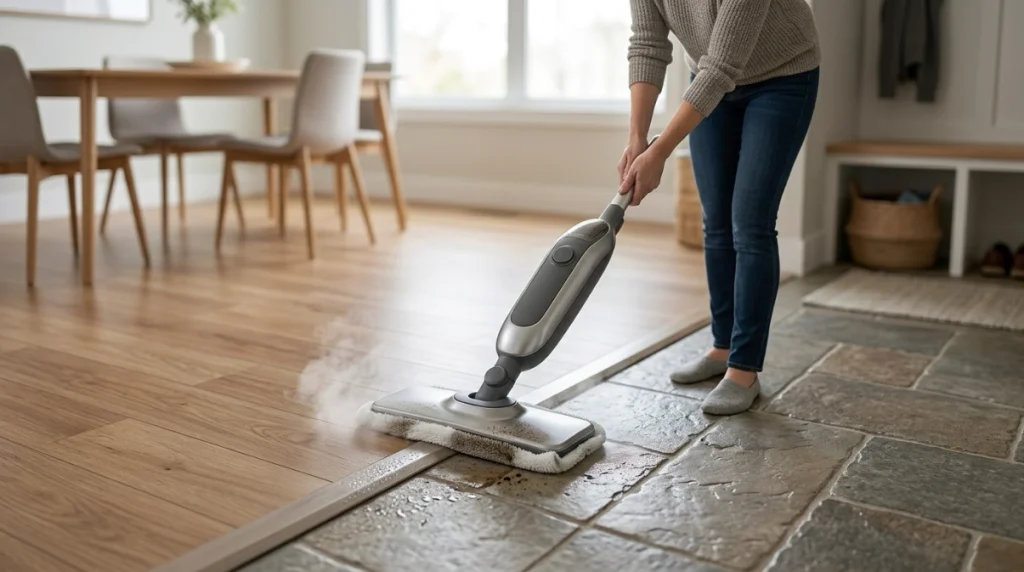
The type of flooring in your home heavily dictates how fast your mop pads deteriorate. Smooth floors are gentle, while textured floors are practically sandpaper.
Let’s look at how different surfaces impact your cleaning equipment.
- Laminate and Vinyl/LVP: These smooth surfaces are very gentle. A pad used exclusively on LVP can easily survive 100 washes.
- Sealed Hardwood: Also smooth and gentle. However, splinters from older, unsealed wood can snag and rip the microfiber loops.
- Ceramic Tile: The smooth tile is fine, but the recessed grout lines create friction. This medium wear usually limits pads to 60 washes.
- Natural Stone and Slate: These highly textured floors are pad killers. Expect to replace pads every 30 to 40 washes on raw stone.
- Concrete: Polished concrete is safe, but brushed concrete will shred a steam mop pad in just a few weeks.
If you have a mix of flooring, consider assigning specific pads to specific rooms. I use my older, slightly worn pads for the textured kitchen tile.
I save my brand-new, plush pads for the delicate hardwood in the living room. This prevents tile grit from accidentally scratching the wood finish.
Using a dedicated pad for your bathrooms is also a smart hygiene practice. You never want to drag bathroom bacteria into your kitchen.
Section Takeaway: Textured floors like slate and wide-grout tile will destroy steam mop pads twice as fast as smooth laminate or vinyl flooring.
What Happens If You Use an Old or Worn Out Pad?
Pushing a steam mop with a dead pad is worse than not mopping at all. You are essentially just heating up dirt and smearing it around.
Here are the direct consequences of refusing to replace your worn-out equipment.
- Floor scratches: Once the plush microfiber wears flat, the hard plastic base of the mop head can scrape against your floorboards.
- Residue buildup: Old pads cannot absorb dissolved dirt. The dirty water dries on the floor, leaving a cloudy, sticky film.
- Water damage risk: A flat pad doesn’t trap condensation well. This leaves excess boiling water on the floor, which can swell laminate seams.
- Machine damage: If a pad loses its velcro grip and bunches up, it can block the steam vents, potentially overheating your mop.
I ruined the finish on a beautiful patch of engineered wood years ago because of this exact mistake. The pad was paper-thin, and the plastic mop frame dug a permanent scratch across the planks.
A replacement pad costs roughly seven dollars. Replacing a damaged vinyl plank costs hundreds.
Always inspect the bottom of your mop before plugging it in. If the pad looks sketchy, throw it in the trash immediately.
Section Takeaway: Mopping with an expired pad leads to cloudy streaks, sticky residue, and potential scratch damage to delicate hard floors.
Frequently Asked Questions (FAQ)
Can I wash steam mop pads with bleach?
No, you should never use bleach on microfiber mop pads. Bleach breaks down the synthetic fibers very quickly, ruining their ability to absorb water and trap dirt. Use white vinegar instead if you need to sanitize or remove heavy odors.
Why is my steam mop leaving the floor sticky?
A sticky floor usually means your mop pad is completely saturated with old dirt, or you previously used a chemical floor cleaner that left a heavy residue. Steam mops only use water, so any stickiness is from pre-existing soap residue being reactivated by the heat.
How many steam mop pads do I need?
You should own at least three to four mop pads for an average-sized house. This allows you to swap out a dirty pad halfway through your cleaning routine, ensuring you aren’t just pushing muddy water across your clean floors.
Can I put steam mop pads in the dryer?
It is highly recommended to air dry steam mop pads. The high heat of a tumble dryer can melt the microscopic synthetic fibers, permanently destroying their scrubbing texture and absorption capabilities.
How often should I change the pad while mopping?
Change your mop pad the moment it stops picking up dirt or begins leaving wet, cloudy streaks behind. For most homes, you should swap for a fresh pad every 300 to 400 square feet of flooring.
Is it safe to use fabric softener on reusable pads?
Absolutely not. Fabric softener leaves a waxy, waterproof coating on materials. If you use it on microfiber, the mop pad will simply push water around the floor instead of absorbing it.
Final Thoughts on Steam Mop Pad Care
Taking care of your floors starts with taking care of your tools. A premium steam mop is totally useless if you attach a crusty, worn-out pad to the bottom of it.
Keep a close eye on the thickness of the fabric and the smell of the pad after a wash. When the loops flatten out and the edges start to fray, it is time to hit the store.
By skipping the fabric softener, avoiding the dryer, and keeping your pads out of deep grout lines, you can easily stretch their lifespan to that six-month mark. Happy mopping!
